

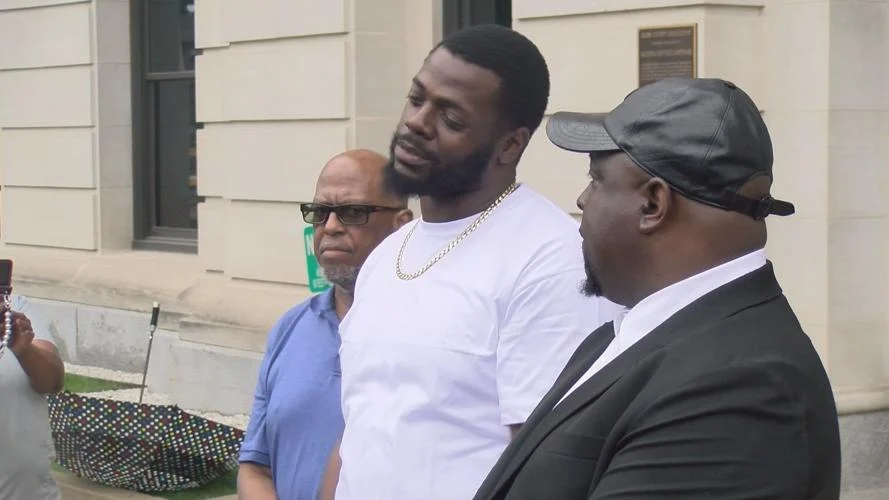
On May 30, 2025, James Simmons, a Black man, was viciously attacked inside Pike’s Pub in Fort Wayne, Indiana. The brutal beating, caught on video, showed multiple white men—allegedly affiliated with an outlaw motorcycle club—assaulting Simmons while using racial slurs. The incident was unprovoked, and Simmons posed no threat. Despite the graphic footage and racial overtones, national media outlets barely covered the story, and there was no uproar from conservative politicians or mainstream commentators.
Meanwhile, a street fight that erupted in downtown Cincinnati in late July, involving a white man and woman being attacked by a group of mostly Black individuals, triggered immediate national outrage. Footage from the incident went viral within hours. Right-wing politicians and media outlets flooded the airwaves with commentary. Conservative voices called it a “hate crime,” some even claiming it was evidence of “urban chaos” or “reverse racism.” Several Black suspects were arrested and charged with felonious assault, aggravated riot, and other serious offenses. Yet the white man who allegedly instigated the fight with a slap to a Black man’s face has not been arrested.
The contrast between these two incidents exposes a deeply rooted double standard in how racial violence is perceived, reported, and prosecuted in America.
Why was there no media frenzy for James Simmons? Why didn’t the same talking heads who called for justice in Cincinnati mention the Fort Wayne attack at all? Where was the outrage? Where was the empathy?
The silence is deafening.
When white people are victims of violence, especially at the hands of Black individuals, the reaction is swift, emotional, and often political. But when a Black man is the target of a racially charged, violent attack by a group of white men—there is barely a whisper. Simmons was hospitalized, traumatized, and humiliated. He and his family are still demanding accountability. As of this writing, no public arrests have been made in his case.
Yet in Cincinnati, six Black people have been arrested and charged within days. Videos were released to the public. Press conferences were held. Politicians issued statements. Donations flooded in for the victims. National platforms shared the story around the clock.
The man who instigated the Cincinnati fight—slapping a Black man and triggering the violent chain of events—has faced no charges. Despite clear video evidence, no accountability. That fact alone speaks volumes about the imbalance in our legal and media responses.
We must ask: Is justice truly blind, or does it wear a partisan lens?
Right-wing figures wasted no time weaponizing the Cincinnati footage to further narratives about crime, race, and social decay. They blamed Democratic city leadership, activists, and even cultural attitudes. They labeled the Black suspects “thugs,” “animals,” and “savages.” But when Simmons was ambushed by white men—there was nothing. No tweets. No pressers. No GoFundMe campaigns or donation drives. No calls for a federal investigation.
This isn’t about defending violence on any side. The Cincinnati attack was horrific and unjustified. Those responsible should face consequences. But the selective outrage is where the real danger lies.

We can’t pick and choose which victims matter based on their race or which political points can be scored. The justice system should not be a tool of retribution or a mirror of media bias. It should serve everyone equally—regardless of color, class, or political convenience.
James Simmons’ case should have been a national story. Instead, it’s been buried. The lack of arrests or public pressure from state and federal officials reinforces the painful message Black Americans already know too well: that our pain doesn’t always count, our safety isn’t always a priority, and our lives are too often negotiable.
If justice is truly to be served in both Fort Wayne and Cincinnati, the legal response must be consistent and rooted in principle—not politics.
We must hold violent attackers accountable no matter their skin color. We must denounce hate wherever it festers. And we must demand equal attention, empathy, and justice for Black victims—just as fiercely as we do for anyone else.
Because if we only care when it’s convenient, then we’re not seeking justice at all—we’re only reinforcing the same racial hierarchy that has plagued this country since its founding.
It’s time to break the silence. It’s time to ask why James Simmons’ life didn’t spark the same rage, the same noise, the same flood of justice.
And it’s time to demand better—from the media, from the courts, and from each other.
Amen… So true.