


What Is Gerrymandering — And Why It Matters
Gerrymandering is the manipulation of electoral district boundaries to benefit a political party, often at the expense of fair representation. This is done by “packing” opponents into a few districts or “cracking” them across many to dilute their voting power. While the practice dates back centuries, its modern form often undermines communities of color, particularly Black and Latino voters.
Throughout U.S. history, gerrymandering has been used as a tool to suppress Black political power. In many Southern states, after the Civil War and into the Jim Crow era, Black voters were systematically excluded from political representation through racially gerrymandered maps. While the Voting Rights Act of 1965 was designed to protect against such tactics, recent court decisions have weakened its provisions, making it easier for states to redraw maps with little federal oversight.
Texas Republicans’ Latest Power Grab
In 2025, Republican leaders in Texas launched an aggressive mid-decade redistricting effort aimed at dismantling districts with strong Black and Latino representation. By redrawing the lines of congressional districts in key urban areas such as Houston and South Texas, Republicans are attempting to shift political power toward predominantly white, conservative areas.
The redistricting plan would eliminate or dramatically alter several districts held by minority Democrats. If enacted, these changes would result in Republicans gaining up to five new congressional seats, dramatically shifting the state’s representation in Washington and undermining the voting strength of communities of color.
The timing of this effort is no coincidence. Political analysts predict that Republicans may face significant losses in the 2026 midterm elections due to shifting demographics and national political trends. The redistricting effort in Texas is widely seen as a preemptive strike to offset those losses and maintain power.
Democratic Lawmakers Take a Stand
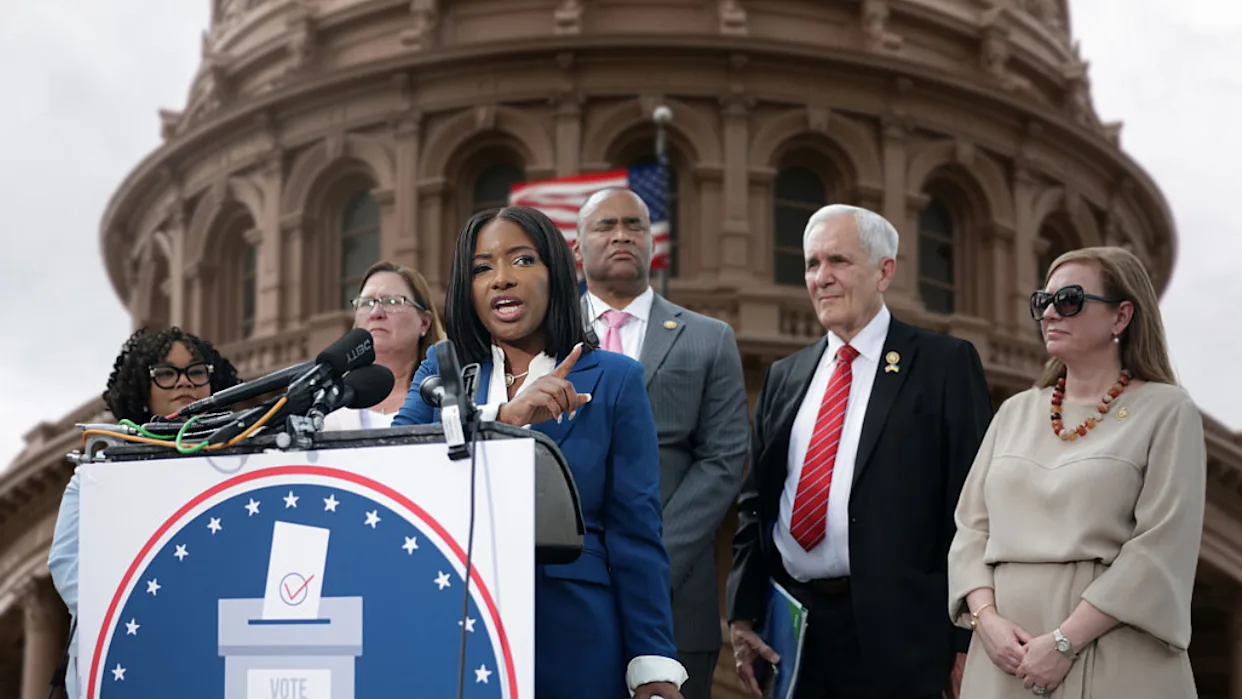
In response, dozens of Democratic lawmakers in Texas fled the state to deny the legislature the quorum required to pass the new maps. By leaving Texas, they halted the redistricting process temporarily and drew national attention to the issue. It was a bold act of civil disobedience, highlighting the severity of what many view as an attack on democracy and minority representation.
In retaliation, Republican leaders in the Texas House issued arrest warrants for the absent lawmakers. These warrants are civil, not criminal, and are enforceable only within state borders. That means unless the lawmakers voluntarily return to Texas, they cannot legally be forced to do so. Some Republican officials have even suggested felony charges could be pursued, but legal experts widely agree such actions would likely be thrown out in court.
The issuance of arrest warrants reflects just how far the Texas GOP is willing to go to push its agenda. It also raises constitutional questions about legislative immunity and the balance of power between political branches.

A Warning to the Nation
What’s happening in Texas has ripple effects beyond the state’s borders. If Texas is successful in redrawing its maps and increasing Republican representation through gerrymandering, other states may follow. Some Democratic governors in blue states have already warned they will consider using similar tactics to offset Texas’s gains if federal action isn’t taken to stop the abuse.
This kind of tit-for-tat gerrymandering risks turning American democracy into a cynical game of who can manipulate maps more effectively. Rather than allowing voters to choose their representatives, politicians are choosing their voters. That undermines the foundational principle of representative democracy.
Voter Suppression and Corruption
This redistricting effort is part of a broader pattern of voter suppression and political corruption. In recent years, Texas has passed strict voter ID laws, limited voting by mail, reduced early voting access, and purged voter rolls. Each of these measures disproportionately affects Black and brown voters, many of whom already face barriers to voting.
These policies, combined with gerrymandering, create a system where the political power of minority communities is systematically diminished. It is no longer just about winning elections—it’s about rigging the rules so that elections are decided before a single vote is cast.
At the same time, key Republican officials in Texas have been plagued by ethical and legal scandals. Their attempts to consolidate power through redistricting—while under investigation or indictment themselves—reflect a broader culture of corruption. These are not the actions of a party confident in its ideas; they are the tactics of a party afraid of losing power in a changing America.
How Texans Can Fight Back
Despite the odds, Texans still have tools to fight back against gerrymandering and voter suppression:
- Engage in public comment periods: During the redistricting process, residents can submit written or in-person testimony to object to unfair maps.
- Support legal challenges: Civil rights organizations are already preparing lawsuits against the new maps. These cases can delay or overturn discriminatory districts.
- Vote in every election: Even in heavily gerrymandered states, local and statewide races matter. Changing leadership at the state level is critical to long-term reform.
- Advocate for independent redistricting commissions: These nonpartisan bodies can remove politicians from the process and create fair maps. Though difficult to enact in Texas, public pressure can lay the groundwork for future reform.
How the Rest of the Country Can Help
If you don’t live in Texas, you can still support the fight against gerrymandering:
- Donate to organizations on the ground: Groups like the ACLU, NAACP Legal Defense Fund, and local Texas voting rights organizations need financial support.
- Raise awareness: Share stories, data, and updates about the redistricting fight with your networks. National media attention puts pressure on lawmakers.
- Push for federal legislation: Congress has the power to restore the Voting Rights Act and establish national standards for redistricting. Call your representatives and demand action.
- Support grassroots organizing: The fight for fair maps starts at the community level. Help fund or volunteer with organizers working to educate voters and mobilize turnout.

A Fight for the Future of Democracy
The gerrymandering battle in Texas is more than a state-level political dispute—it’s a frontline in the national struggle for democracy and civil rights. By attempting to strip power from Black and Latino voters, Republican leaders are not just playing politics—they are waging war on representative government.
Democratic lawmakers who fled the state to prevent this injustice have taken a bold stand. The arrest warrants issued against them are a sign of how far the other side is willing to go. But Texans—and Americans—have faced voter suppression before and fought back. They must do so again now.
Stopping gerrymandering in Texas is not just about preserving a fair map. It’s about protecting the very idea that every vote should count equally—no matter your race, your ZIP code, or your political party.