

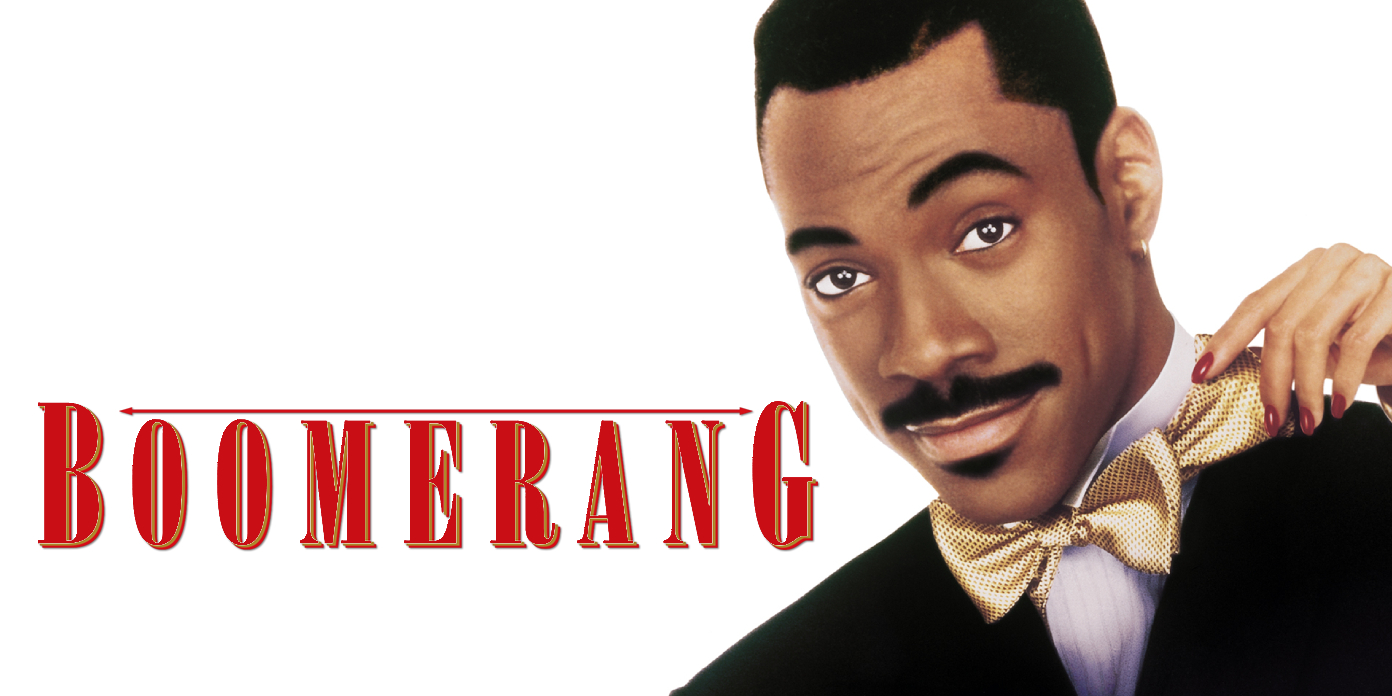
Eddie Murphy Leads a Brilliant Star-Studded Cast in this timeless classic

By the start of the 1990s, Eddie Murphy had transcended his origins as a standup comedy genius to become one of the biggest stars in Hollywood. Having grown used to relying on his motormouth shtick with classics like 48 Hours and Beverly Hills Cop, Murphy sought to evolve how audiences saw him on-screen. After the smash success of Coming to America, where he’d first unveiled his talent for playing multiple characters in one film, Murphy cooked up a film that would show him in a brand-new light and pair him with a cadre of prominent Black talent, including an up-and-coming Halle Berry. That film was the unfairly maligned Boomerang.
What is ‘Boomerang’ About?
Marcus (Murphy) is a successful advertising executive who is notorious for his selfish sexual conquests of women. He regularly holds court with his best friends, Gerald (David Alan Grier) and Tyler (Martin Lawrence), where they constantly compare each other’s egos with their sexual prowess. When his company gets acquired by a major cosmetics company led by Lady Eloise (Eartha Kitt), he’s forced to contend with a new boss, Jacqueline (Robin Givens), and the two develop a heated dynamic where, for once, he finds himself the one being pursued. Their rocky romance will both interfere with his job and force him to question how he’s approached his attitude toward women, especially when he finds himself falling for Jacqueline’s colleague, Angela (Berry). While much hilarity does ensue, underneath the humor is a surprisingly adept commentary on gendered power dynamics and the pressures of making “commercial” art in a capitalist structure, delivered by a hysterical cast.
Eddie Murphy Leads a Brilliant Star-Studded Cast
Boomerang succeeds largely due to its cast and how director Reginald Hudlin allows them room to blossom and develop different dynamics with each other. Murphy lets himself be shown in a myriad of ways that utilize more sides of him than previous films allowed, here tasked with playing a fuller character who doesn’t rely on his usual bag of tricks. His early scenes with Lawrence and Grier let him indulge in his more standard fare, to make the audience comfortable, sniping at them with fast one-liners and even letting out one of his signature laughs. His scenes with Givens let him go on a full character arc, one that gives him room to be a confident player, but then a confused and lovestruck simp, and then a truly vulnerable man who doesn’t know how to process being treated the way he’s treated women in the past. Still riding the momentum of her appearance in Jungle Fever, Berry sparkles in a role that could easily be the throwaway “true” love interest, but she brings the gravitas and heart to keep the film from flying off the rails into being just a collection of funny scenes.
Special shoutouts should be given to a young Chris Rock as the office mail carrier who has regular riff sessions with Marcus, Grace Jones as an important client whose diva behavior goes well past unhinged into avant-garde performance art, and Geoffrey Holder as a commercial director with a deep infatuation for keeping things artistically horny at all times. Each character is given ample room to steal scenes, making the film roll along smoothly on the back of its collective chemistry.
‘Boomerang’ Did Something Few Films At the Time Had the Confidence to Do
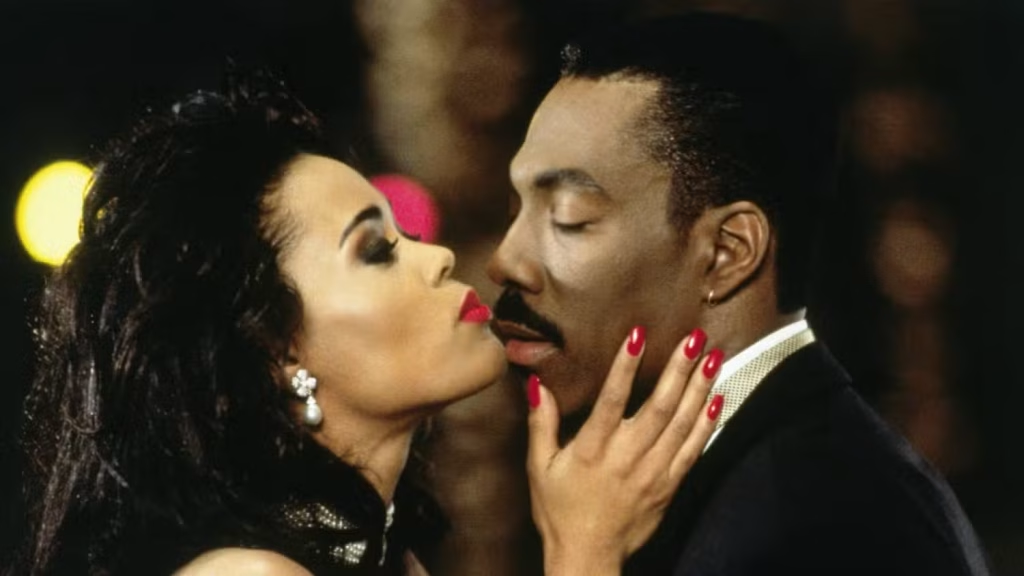

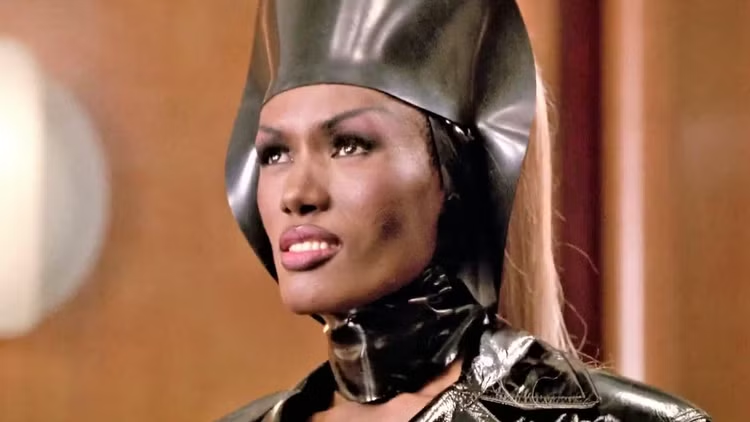
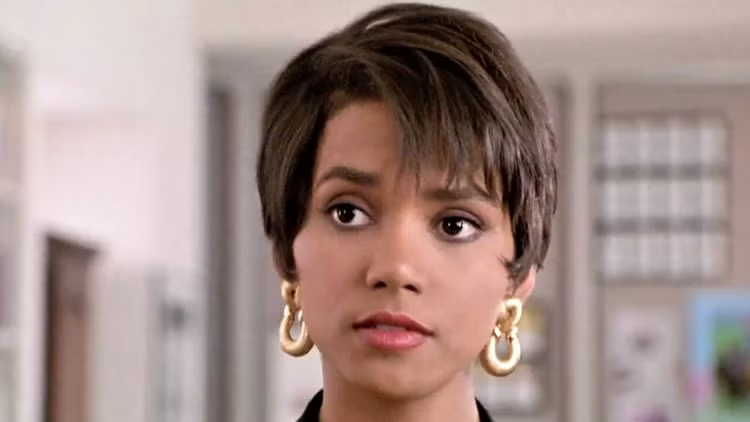
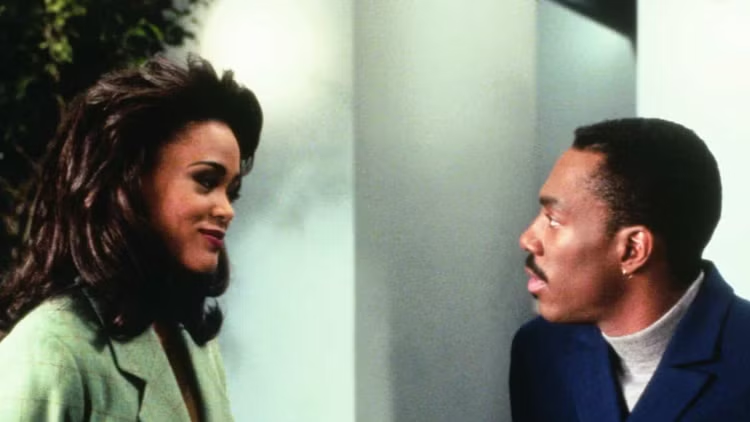
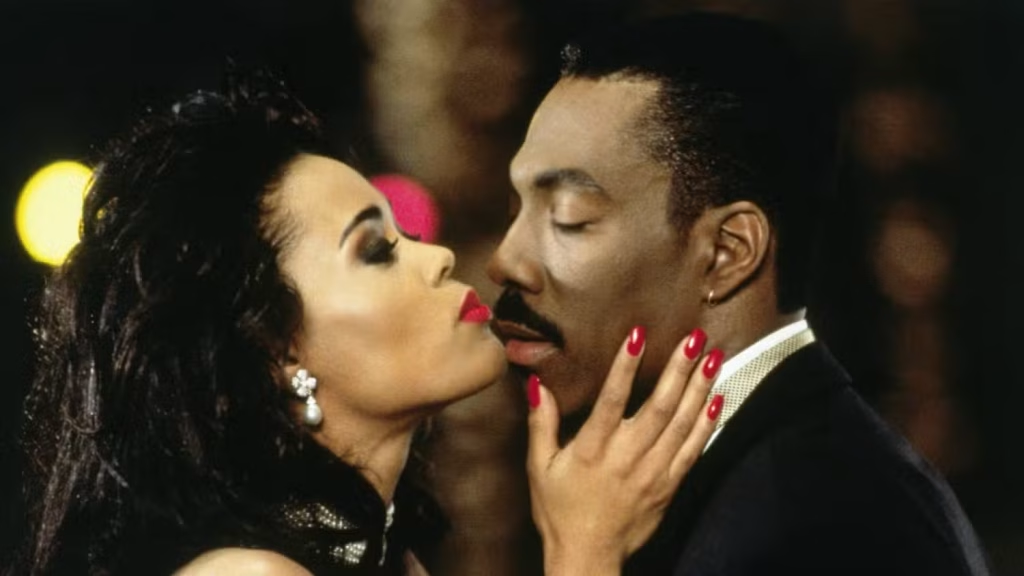


When Boomerang was released in 1992, there were few, if any, romantic comedies released by major Hollywood studios that focused on Black characters. Said studios were also deeply hesitant to portray Black characters in ways that didn’t subscribe to the stereotypical “struggle” films that were seen as safer bets. Boomerang was a bigger deal than its modest storytelling ambitions would lead you to believe; it was a $40 million budgeted film that made over $130 million worldwide and was comfortable showing Black people in successful positions of mainstream power, with no apologizing for doing so. Furthermore, it had the courage to point out the bogus ways in which “alpha” men judge women for shallow reasons (Marcus won’t date a woman with feet he deems “ugly,” for instance), and to explore the soft underbelly that such men are usually socially conditioned into being afraid to show tangible emotions.
You could argue the film’s attempt at progressive politics is somewhat dated, as it’s ultimately a simple flipping of the tables where the guy gets “played” once, and it causes him to completely change his tune about his approach to women. But the film wouldn’t even be able to exist and provide the commentary that it does without Eddie Murphy using his power at the height of his movie stardom to get it made on his terms and speak to something that was sorely lacking in the Hollywood landscape at that time. Luckily, it resulted in one of the best films of his career, and it’s a shame no one saw it that way when it first came out.
Boomerang is currently available to stream on Paramount+ in the U.S.
Make a one-time donation
Make a monthly donation
Make a yearly donation
Choose an amount
Or enter a custom amount
Your contribution is appreciated.
Your contribution is appreciated.
Your contribution is appreciated.
DonateDonate monthlyDonate yearly