

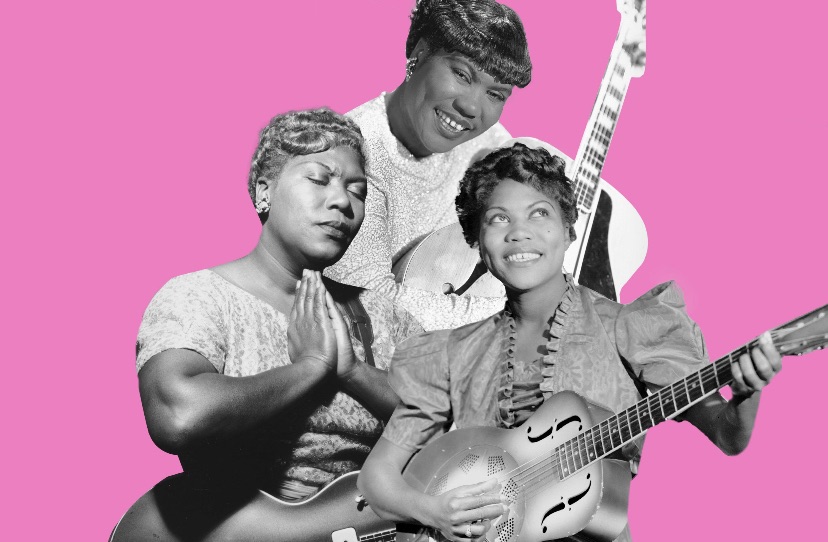
Live Nation Productions has just announced an upcoming biopic about Sister Rosetta Tharpe, the trailblazing Black woman whose electric guitar and gospel-rooted voice helped invent what we now call rock and roll.

Move over, Elvis. Step aside, Chuck Berry. The true Godmother of Rock and Roll is finally getting her due—on the big screen.
Live Nation Productions has just announced an upcoming biopic about Sister Rosetta Tharpe, the trailblazing Black woman whose electric guitar and gospel-rooted voice helped invent what we now call rock and roll. Written by Oscar-nominated actress and screenwriter Aunjanue Ellis-Taylor, and produced by none other than rock legend Mick Jagger, this film is set to bring long-overdue recognition to one of the most important figures in American music history.
If you’re not familiar with Sister Rosetta Tharpe, you’re not alone—but that’s exactly why this movie matters.
Born in Arkansas in 1915, Rosetta Nubin (her birth name) was a musical prodigy. By the time she was six years old, she was touring the country with her mother as part of a traveling evangelical troupe. But it was her move to Chicago and then to New York City that lit the fire that would become a cultural revolution. Combining spiritual lyrics with a bluesy swing and, crucially, a distorted electric guitar, Tharpe was decades ahead of her time. Her 1944 hit “Strange Things Happening Every Day” is considered by many historians to be the first rock and roll record.
And yet, she was nearly erased from the history books.

As a Black woman performing in a male-dominated, racially segregated music industry, Tharpe never received the widespread credit her white male successors did. Elvis Presley, Johnny Cash, Little Richard—all have cited her as an influence, but mainstream narratives seldom included her name.
Thankfully, that’s starting to change.
Tharpe was posthumously inducted into the Rock & Roll Hall of Fame in 2018 as an “Early Influence,” sparking a renewed interest in her life and legacy. With Aunjanue Ellis-Taylor behind the script—whose work in King Richard and The Color Purple proves she’s more than capable of telling powerful Black stories—we’re likely to see a complex, deeply human portrayal of Tharpe. Add Mick Jagger’s production power to the mix, and this film is poised to make serious noise.
But more than just a movie, this project represents something larger: a cultural correction.
Sister Rosetta Tharpe’s story is not just about music; it’s about innovation, resistance, and spiritual defiance. She didn’t just bend genres—she broke them. She didn’t just sing gospel—she made it roar. At a time when Black women were pushed to the margins, she stepped into the spotlight with a guitar slung over her shoulder and dared to change the world.
We don’t know the release date yet, but one thing’s for sure: we’ll be front row on opening night.
Because this isn’t just entertainment—it’s history, finally told right.