Voters in over a dozen states are poised to start early voting before millions of other Americans.
Election Day is less than 19 days away, but early voting has already kicked off.
Virginia, Minnesota and South Dakota were the first states to start early voting on Sept. 20. In Virginia, voters can line up at the polls. In Minnesota and South Dakota, voters can drop off their absentee ballots in person instead of mailing them.
States from California to Nebraska to Vermont – and several in between – begin voting in September and October, before much of the rest of the country. The landscape of the presidential election changed dramatically over the summer, with President Joe Biden’s decision not to seek reelection coming shortly after a disastrous debate between him and former President Donald Trump in June that elevated questions about the president’s age and energy levels.
Vice President Kamala Harris launched her campaign for president in July to a whirlwind of excitement among Democrats, and she accepted the party’s nomination in August at the Democratic National Convention just over a month after her campaign for president began.
Voters have seen Trump and Harris go up against each other just once at a debate in September – and that might be the only opportunity they get, as Trump recently said he will not debate Harris again.
What Is Early Voting and How Does It Work?
Early voting is a process that allows citizens to cast their ballots in person ahead of Election Day. Absentee voting also allows voting before Election Day by mail or drop-off.
While both in-person early voting and absentee voting allow voters to cast their ballot before Election Day, the in-person early voting process more resembles what a person would do at a polling place on Election Day.
Some states require an excuse to qualify for an absentee ballot. More than two dozen states offer “no-excuse” absentee voting, which means that any voter can request and cast an absentee ballot without providing a reason for why it’s necessary, according to the National Conference of State Legislatures.
Roger Goodell confirmed that the two sides will continue working together during the NFL’s owner’s meeting in Atlanta.
Bloomberg reports Jay-Z and the NFL plan on continuing their partnership.
During the NFL’s owner’s meeting in Atlanta on Tuesday (Oct. 15), commissioner Roger Goodell said, “It’s been a mutually positive relationship, I’m not sure either one of us really spend much time talking about contracts. Jay is happy. Desiree Perez is happy. I’m happy, so we’re all good.”
According to ESPN, the previous deal was valued at $25 million over five years which included Roc Nation’s input on the Super Bowl Halftime Show and helping out with the league’s social justice program Inspire Change, which has given out $375 million in grants.
The marriage has had it’s fair share of controversy, though. Since making the announcement in the summer of 2019, Jay was criticized for getting in bed with a league that allegedly blackballed San Francisco 49ers quarterback Colin Kaepernick for choosing to kneel during the national anthem in protest of police brutality. And most recently, the rapper and businessman felt the ire of some in the rap community when it was announced that Kendrick Lamar and not Lil Wayne would be headlining this season’s Super Bowl in New Orleans.
Since Jay and Roc Nation took over the reigns of the coveted Super Bowl Halftime slot, they’ve picked mostly hip-hop centric acts with Shakira, J.Lo, The Weeknd, Dr. Dre and friends, Rihanna, and Usherall hitting the stage. This year’s show will be highly-anticipated as Lamar sets out to put an exclamation point at the end of an already stellar year.
Turnout for first day of early voting surpasses 2016 numbers, Board of Election says
Michelle Obama’s voter engagement and mobilization initiative is ready to party — announcing more than 500 early voting events across the country in the weeks leading up to Election Day.
The aim of When We All Vote’s program, Party at the Polls, is to “turn the voting experience into a community celebration,” organizers said Thursday. The effort from the nonpartisan organization will include a series of free events with the goal of turning voting “into a celebration with music, food, culture and activities for voters of all ages.”
Some of the lineup in battleground states includes a 5K walk Saturday in Window Rock, Ariz., featuring actor Mark Ruffalo and the Native American advocacy group Protect the Sacred, a “Drag Out The Vote” drag show in Phoenix on Oct. 18 with performer Barbra Seville and another in Las Vegas on Oct. 29 with “RuPaul’s Drag Race” alum Plasma, a series of block parties in Philadelphia on Saturday and Oct. 19, and a two-day concert called ONE Musicfest starting Oct. 26 in Atlanta headlined by Cardi B, Jill Scott, Gunna, Victoria Monét and Earth, Wind & Fire.
Other get-out-the-vote events tied to Party at the Polls include “an evening of food, entertainment, and carnival fun” at North Carolina Central University on Oct. 18, a gospel concert in Atlanta on Oct. 26 and a “Dunk the Vote” community block parties in Nevada and Arizona later this month.
It’s not the first time that Obama’s group is making the early voting push — in 2020 amid the COVID-19 pandemic, it held socially distanced events, and it organized more Party at the Polls get-togethers ahead of the 2022 midterm elections.
“At When We All Vote, we believe that voting should be joyful and using our voices at the polls is truly something to celebrate,” said Beth Lynk, When We All Vote’s executive director, in a statement.
“The election doesn’t start on Election Day — it ends on Election Day. Through our Parties at Polls, we encourage and celebrate early voting,” Lynk said.
Obama launched When We All Vote in 2018, saying when she kicked off the initiative, “It’s time. Our nation requires it.”
“Our democracy and the country we love requires our attention, voice, and participation,” the former first lady said at the time.
“I’m thrilled to partner again with CNN Films and OWN to bring this film to audiences“
“Love is a gamble and I’m so glad that I’m winnin,” sings Luther Vandross in his 1981 classic “Never Too Much” song with a sentiment that has some extra significance today.
CNN Films and OWN have picked up Dawn Porter’s Sundance Film Festival-debutingLuther: Never Too Much documentary, it was announced today at the Warner Bros Discovery upfront in NYC. The 101-minute film, which counts Colin Firth among its EPs and had Sony Music Entertainment as its sales agent, is set to debut on CNN, OWN and streamer MAX next year.
“I’m thrilled to partner again with CNN Films and OWN to bring this film to audiences,” said director Porter on Wednesday. “Luther’s music is timeless, his legacy is unsurpassed, and we can’t wait for all of his fans new and old to experience his brilliance.”
“Luther: Never Too Much,” the documentary film from award-winning director Dawn Porter, chronicles the story of a vocal virtuoso. Using a wealth of rarely seen archives, Luther tells his own story with assistance from his closest friends and musical collaborators including Mariah Carey, Dionne Warwick, Valerie Simpson and Roberta Flack. The film relives the many stunning moments of Luther’s musical career, while exploring his personal life, health struggles, and a lifelong battle to earn the respect his music deserved. Opens in theaters in select cities beginning November 1. Nationwide preview screenings October 30. Presented by Giant Pictures and CNN Films.
Mr. Brock received some scam call by a person purporting to be someone from our courts who informed him a family member was incarcerated and that he had a bond of a significant amount of money
An 81-year-old Ohio man who was targeted by a scammer has been arrested and charged after he killed an Uber driver.
The incident happened at William Brock’s home in Madison Township on March 25. He called 911 to report that he shot a robber, and when law enforcement got to the scene, they discovered 61-year-old LoLetha Hall with gunshot injuries, according to WCMH. Brock — who was charged with murder — also had injuries on his head and ear, according to the report. Authorities learned that before the shooting, a scammer called Brock saying that a family member was in jail and pressed him for money.
After threatening him, the scammer set up an Uber delivery order for the driver, Hall, to pick up a package from Brock’s residence. Hall was unaware of the scheme and went to his house to fulfill the request.
“Mr. Brock received some scam call by a person purporting to be someone from our courts who informed him a family member was incarcerated and that he had a bond of a significant amount of money,” Clark County Sheriff’s Office spokesman Kristopher Shultz told NBC News. “The calls turned from ‘I’m an officer in the court’ to ‘We have this subject hostage, this is a ransom demand.’”
NBC 4 obtained dashcam footage, apparently from Hall’s car, showing Brock pointing his firearm at Hall and demanding that she reveal who was behind the scam.
“Give me that phone!” he reportedly said before Hall threatened to call the cops. Although the action moved out of the camera several shots can be heard spaced out, as well as Hall screaming for help and Brock yelling, “‘I’ll shoot the other leg!”
The 81-year-old was convinced he was in imminent danger, telling authorities that Hall attacked him after he shot her and she slammed his head in the door while trying to get in her car to flee. He shot her two more times believing she was trying to get a gun, according to the incident report.
Hall suffered four gunshot wounds; one to the upper left side of her torso, one to the upper front of her left leg, one on the inside of her left knee and one in the center mass of her sternum under her bra, according to the incident report.
It was only after shooting her multiple times, that Brock finally called the police, authorities say.
“Due to there being no active threat presented by Ms. Hall at any time during the encounter, and Mr. Brock’s failure to contact authorities for assistance while brandishing a firearm, during which he fired at and struck Ms. Hall multiple times, he was arrested and charged with murder.”
Brock was charged with murder on April 10, more than two weeks after killing Hall.
“Hall, suffering from medical conditions and unarmed, made no threats or assaults toward Mr. Brock, and made no demands, other than to ask about the package she was sent to retrieve through the Uber App,” Clark County Sheriff’s Office said in a statement.
In a statement to the outlet, Uber called the incident “a horrific tragedy” and sent condolences to Hall’s family.
“Our hearts continue to be with Loletha’s loved ones as they grieve her sudden loss. We have been in contact with law enforcement and remain committed to supporting their investigation,” the spokesperson added.
Per the reports, the sheriff’s office is investigating the initial scam. Brock could potentially face additional charges but pleaded not guilty to the murder allegations last week. He’s currently out on a $200,000 bond. Madison Township is about 40 miles from Dayton.
GREENVILLE, SOUTH CAROLINA – MARCH 10: Head coach Dawn Staley of the South Carolina Gamecocks wears the net after their win over the LSU Lady Tigers following the championship game of the SEC Women’s Basketball Tournament at Bon Secours Wellness Arena on March 10, 2024 in Greenville, South Carolina. (Photo by Eakin Howard/Getty Images)
Black Twitter (or Black X) is furious with Gayle King after she implied during an interview with South Carolina coach Dawn Staley that she was rooting for Iowa and its scoring phenom Caitlin Clark to win in the NCAA women’s basketball championship game on April 7.
During a “CBS Mornings” post-championship interview the day after South Carolina’s 87-75 victory in the title game, King interviewed the Philly native and said, “I’m happy for you guys, Coach Staley. The game was such a good game. It was so close at times and in the end, you guys pulled it out.”
She then asked, “Was there ever a point in the game when you were worried? … ’Cause I got worried. We were all cheering for Iowa, of course, and Caitlin Clark, but for so many people you got their hearts.”
Staley responded, “I was never worried during the game,” before explaining the team’s strategy to come back from being down 10-0.
Days after the interview aired, an X user posted an edited version of the interview with the caption, “Gayle…honey. You were all rooting for who?!? Bye,” before doubling back with: “@GayleKing really?????? Who was all rooting for Iowa and Caitlin?!? We?! We who?!”
I was sleep deprived and missed that…..oh well. Keep your storyline but add a few seconds to tell the people who won the chip. 🙂
Staley caught wind of the post a day later, posting, “I was sleep deprived and missed that…..oh well. Keep your storyline but add a few seconds to tell the people who won the chip. :)”
Others could not help but chime in, explaining that Staley and her team were the people’s champs and that King did not speak for them.
“WE were rooting for the Gamecocks! Idk what Gayle was talking about lol,” one person wrote.
Another wrote, “@GayleKing must speak avid French…. I don’t know if I’ve EVAHHHHHHH seen an interview where a winning coach was addressed this way. I wish a mf would have told Pop or Steve Kerr they were rooting for the other team. But naw…. they’ll do it to Dawn tho.”
One comment was directed at the veteran broadcaster saying, “@GayleKing , see even Dawn Staley didn’t appreciate your comment about wanting Iowa to win while interviewing her for winning the National championship…DO BETTER.”
People seemed to get angrier as the responses poured in, with one tweet reading, “Gayle don’t make me mad.”
The full interview is not posted to CBS News’ YouTube page, and appears to have taken place on the same day as Staley’s interview on “Good Morning America” on April 8.
King has not responded. Outside of her comment on the profile, neither did the former Olympic champion.
Staley is celebrated as the top-paid Black coach in women’s basketball. She led the Gamecocks to a 38-0 record this season en route to capturing the school’s third championship in the past seven years.
The team’s athletics director, Ray Tanner, says she has been an incredible asset to the school.
“Dawn Staley is one of the nation’s top coaches, regardless of the sport,” he said, adding, “She has built our women’s basketball program from the ground up, and her teams have produced champions, both on and off the floor.”
She also made history at South Carolina in 2021 when the institution announced it would extend her contract through the 2027-28 season, accompanied by a significant pay raise of $22.4 million over seven years. This made her not only one of the highest-paid women’s basketball coaches in the nation, but also one of the highest-paid Black head coaches in her sport, and the highest-paid Black women’s coach in any sport.
Police formed “a human barricade to physically separate the running crews of colors from the event,” the complaint alleges. “Similarly-situated white spectators received no such treatment.”
By Zoe Sottile and Justin Gamble
A photo included in the lawsuit over alleged racial discrimination. From TrailblazHers Run Co.
A Black-led running group is suing the organizers of the Boston Marathon as well as the city of Newton, Massachusetts, and the Newton police chief over alleged racial discrimination that took place in a cheer zone at last year’s race.
The lawsuit, filed Thursday by the all-women running group TrailblazHers, just days before the 2024 marathon, alleges the organizers, the city, and police violated the plaintiffs’ Fourteenth Amendment right to equal protection under the law.
On the day of last year’s race, Newton police “singled out spectators from TrailblazHers Run Co. (“TrailblazHers”) and other running crews that serve primarily people of color, racially profiling, targeting, and harassing them,” according to the complaint filed in a Massachusetts court.
TrailblazHers had organized a specific “cheer zone” in Newton at Mile 21 and had invited other running groups led by people of color to join, says the complaint. Over a hundred spectators, “mostly people of color,” were gathered there.
For the past four years, the group has gathered at Mile 21, the complaint states, and the marker is significant for the plaintiffs: “It stands as a key place where runners of color are acknowledged and celebrated,” helping create a “powerful and affirming experience for runners of color.”
The lawsuit details specific acts of alleged discrimination, claiming while White spectators were allowed to interact with and celebrate runners, non-White spectators at Mile 21 were harassed by police and told to stay back. The lawsuit includes photos that appear to show the “human barricade” created by police officers and their bikes.
Police formed “a human barricade to physically separate the running crews of colors from the event,” the complaint alleges. “Similarly-situated white spectators received no such treatment.”
“For individual members, police profiling and scrutiny turns what should be a day of joy and festivity into one of pain, humiliation and trauma,” the complaint states.
In addition to forming a human barricade between the spectators and the runners, police on motorcycles also “stationed themselves on the street behind the Plaintiffs’ cheer zone, effectively surrounding and penning in the people in the cheer zone of color,” the complaint says.
Shortly after the incident last year, Newton police said in a statement: “After being notified by the B.A.A. (Boston Athletic Association) three times about spectators traversing the rope barrier and impeding runners, the Newton Police Department responded respectfully and repeatedly requesting that spectators stay behind the rope and not encroach onto the course,” according to CNN affiliate WFXT. “When spectators continued to cross the rope, NPD with additional officers calmly used bicycles for a short period to demarcate the course and keep both the runners and spectators safe.”
Newton Police Chief John Carmichael addressed the lawsuit in a Friday Facebook post, saying, “I stand by my decisions that day, and more importantly, I stand by our officers who acted appropriately, respectfully and as expected.”
The Boston Athletic Association, which organizes the marathon, told CNN they were aware of the complaint but “have not yet had the opportunity to review it.”
“We are focused on creating a joyous experience for all,” the organization added.
The lawsuit says TrailblazHers participated in 10 meetings with the Boston Athletics Association as well as meetings with city officials to address the incident, but neither police nor the association “enacted any meaningful reforms to prevent racial profiling and harassment from happening again.”
A total of 30,000 people are scheduled to run from Hopkinton, Massachusetts, to Boston in this year’s Boston Marathon. The race, which started in 1897, attracts hundreds of thousands of spectators each year who cheer on athletes through their epic journey.
TrailblazHers is represented by Lawyers for Civil Rights, a Boston-based legal group working to fight discrimination, according to its website.
“Overpolicing and hate crimes help explain why running remains a heavily white sport,” Iván Espinoza Madrigal, executive director of Lawyers for Civil Rights, said in the news release. “Ahmaud Arbery, an avid Black jogger, was killed while running through a residential neighborhood in Georgia. What happened at Mile 21 in Newton is scary, triggering, and traumatic for people who are repeatedly victimized just for running while Black.”
TrailblazHers “was formed to increase diversity in Boston’s largely white and elite running community,” the news release said. “The group’s membership totals more than 2,500 BIPOC runners.”
“We are prepared to seek immediate court intervention if BAA (Boston Athletics Association) or local police engage in the type of discriminatory conduct that spectators of color endured last year in Newton,” Mirian Albert, a senior staff attorney with Lawyers for Civil Rights, said.
TrailblazHers has asked for a jury trial and the lawsuit is seeking “compensatory, punitive, and nominal damages.”
One YouTuber who says he was in TrailblazHers’ cheer zone described his experience in a video posted last April.
User Remy B Reel said in the video he was in the cheer zone at the marathon when “a strong police presence” emerged, preventing spectators from high-fiving runners as they passed. His footage from the day of the marathon shows police officers standing with their bikes between the cheer zone and the marathon route.
“This just left a sour taste in my mouth,” his says in the video.
Tennessee State University has been hit the worst, having been underfunded by $2.1 billion over 30 years. Chicago State University’s funding has declined by 46% over the last quarter-century.
In 1862, the first Morrill Land-Grant College Act awarded every state in the union a tract of federal land — 30,000 acres per member of Congress — to create new public colleges or universities or expand existing institutions.
In 1890, a second Morrill Act was extended to the former Confederate states and required the states either to admit Black students to their land grant institutions or create separate public institutions for them. The law required “a just and equitable division” of funds.
More than 130 years later, state funding for these land grant historically Black colleges and universities, known as HBCUs, is neither just nor equitable.
Tennessee has been the worst offender, underfunding Tennessee State University by $2.1 billion over 30 years. Overall, 16 of the nation’s 19 Black land grant institutions have been underfunded by $13 billion.
“By underfunding public HBCUs and denying the value of Black students on non-HBCU campuses, these extremists are making very clear the kinds of students they do and don’t want to succeed,” political analyst Gevin Reynolds wrote. “They also are the same ones waging war on the teaching of our nation’s full history. But if we studied that history they seek to quash, we would know that the news out of Tennessee is just the latest example of conservatives rejecting the notion that Black people possess the capacity for self-governance.”
Aiming for equity in higher ed funding
Illinois does not have a land grant HBCU, but in recent years, increasing numbers of Chicago students have chosen these institutions, along with private HBCUs founded before 1890 such as Howard and Morehouse. Closer to home, Chicago State University, a predominantly Black institution, has been disproportionately battered by an overall 46% decline in state funding over the last quarter-century, a 30% drop in enrollment, and a state funding distribution formula with “no documented rhyme or reason.”
Tennessee, in contrast, appears to have no plan to rectify historic injustices. After the legislature’s own study found that TSU had been shortchanged by as much as half a billion over decades, it appropriated a one-time infusion of $250 million in 2022. The following year, however, the state underfunded TSU by nearly $5,700 per student, allocating TSU about 55% of the per-student funding for the University of Tennessee-Knoxville. Excluding 2022, per-pupil funding for TSU averaged about 55% percent of the per-pupil funding for University of Tennessee-Knoxville since 2012.
Despite the fact that the Tennessee legislature had previously acknowledged its own failure to comply with the law, Senate Education Chairman Jon Lundberg responded to the report by accusing the education and agriculture departments of “using TSU to stoke political and racial division in our state.”
Lundberg’s response is sickeningly reminiscent of the “outside agitator” response to the racial protests of the Civil Rights era, when opponents of racial justice insisted Black Americans in the South were content to live under the terrorism of Jim Crow.
Lundberg is correct that evidence of persistent racial discrimination is bound to stoke “division,” even outrage. But instead of healing the division by eliminating the discrimination, as Illinois is trying to do, Tennessee is retreating back into its dark history and ignoring it.
More Black Americans are ditching the United States for a better quality of life abroad. Black people are not a monolith, so the reasons vary. One overarching theme for many Black Americans choosing to build a life overseas, however, is that they’re tired of racism and discrimination in their home country.
While Black folks have been doing this for the last few decades –– such as W.E.B. DuBois, James Baldwin, and Josephine Baker, the Blaxit movement was hard to miss in 2016. Taking a play on words from the name Brexit, which was given to the United Kingdom’s decision to depart from the European Union, Blaxit refers to Black people leaving the United States to start life in another country. When leaders in Ghana announced the “Year of the Return” campaign for 2019, inviting African descendants to “come back” home and reconnect with their roots during what marked 400 years since the first enslaved Africans arrived in America, it inspired more Black Americans to reconsider life in places such as Ghana.
The deaths of George Floyd, Ahmaud Arbery, and Breonna Taylor energized Black Americans even more to leave in 2020. Tired of racism and in an attempt to save their life and the lives of their children, more Black Americans moved to places such as Mexico, Costa Rica, Portugal, Ghana, Senegal, and Panama –– to name a few.
Months before Floyd’s and Taylor’s death, a 2019 report by the National Academy of Sciences found Black men were 2.5 times more likely than white men to be killed by police.
Beyond racism, affordability plays a major role in Black Americans’ decision to move abroad. The average cost of a home in the United States is $417,700, according to the most recent Federal Reserve data for January 2024. That’s nearly double the average cost when looking at the data from Q1 just ten years ago when the average home cost Americans $275,200 in 2014.
As prices in the volatile market continue to soar, Black Americans continue to face discrimination from banks for mortgages. A damning analysis from CNN found that Navy Federal –– the largest credit in the U.S. rejected more than half of its Black conventional mortgage applicants despite having better credit scores and more income than their white counterparts.
With more Black Americans considering a move overseas, various social media groups provide resources and advice for singles, couples, and families. The Facebook Group Blaxit Tribe — Black Americans Who Want to Exit the US & Move Abroad has more than 37,000 members. The group focuses on factors people should consider before choosing a home, how to find housing, work opportunities, and more.
Maame Amoaa Boateng-Kagyah is a Ghanaian-based real estate agent who posts videos on her YouTube channel highlighting the various homes people can buy in Ghana within their price range and showing what others who have moved from countries like the U.S. have purchased.
In a recent episode, she took people on a tour of Karen King’s home. She moved from Raleigh, North Carolina, and built a four-story house in Asebu, Ghana, for approximately $70,000.
The mother of four, grandmother, and great-grandmother of nearly two dozen explains that she moved for spiritual reasons after her first visit to Ghana.
“Each day, I just began to feel more and more of the stress of the West leaving me,” King tells Amoaa. “I was feeling more and more grounded.”
After spending two weeks in Ghana, King says she started discussing building a home. She built a four-bedroom house with four and a half bathrooms after receiving land from Ghana as a part of its “Year of Return” campaign. The campaign invited descendants of enslaved Africans to “come home” by reconnecting with the land of their ancestors. Ghana’s government also worked with local chiefs to gift more than 500 acres of land to people who want to return and invest in Ghana.
King did just that, building a home with space for her family and even offering a room on Airbnb.
Her decision resonated with viewers, who are also considering relocating for affordability.
“My husband is from Croatia, and we’re seriously considering moving back there to retire because it’s just become too costly to live in the U.S. I’m glad this idea is working out for other retirees,” one person commented.
“The fact that this amazingly beautiful home is around $70K USD is wild to me! I live in Washington, D.C., and we can’t get a sturdy cardboard box for less than $400K,” said another.
“Great video! Gorgeous and brave, Karen! A house like this in America would be half a million dollars in the Washington, D.C., and Maryland areas where I live,” said another. You’ll be paying for it for over 30 years with your blood, sweat, and tears!”
In another video, Amoaa shows the three-bedroom container home Calvin Daniels built for $33,000 in Ghana on 38 acres of land.
A Thin Line Between Finding A New Home and Colonizing
Moving abroad comes with its challenges. Costs can be a barrier. A couple posted in the subreddit r/antiwork that they’ve spent more than $25,000 on legal fees, rental agent fees, flights, and accommodations. For people who become digital nomads first before filing for permanent residency, many countries require you to prove that you can support yourself for a remote work visa.
Brazil requires you to make at least $1,500 monthly or $17,000 in your bank account. In Belize, single people must make at least $75,000 per year, and couples applying together must make $100,000 each year.
In addition to financial barriers, there’s a possibility of a cultural clash between locals and visitors and the concern that visitors are driving up locals’ living costs.
An NPR podcast episode touches on this topic, exploring how Black Americans moving abroad can hurt locals by driving up costs.
It’s important that Black Americans move abroad with care. Some of the best ways to move abroad are to relocate to less popular places to avoid displacing residents from their homes in larger cities where rent prices tend to be higher.
It’s also best to support local businesses, hire locals, and pay them a living wage as costs continue to increase.
“Good Times” cast members BernNadette Stanis and John Amos say they have mixed feelings about the animated reboot of the classic series and now a petition has been launched to shut down it’s release.
Comedic actors Yvette Nicole Brown, J.B. Smoove, Jay Pharoah, Marsai Martin and Gerald “Slink” Johnson star in the animated version of the show, which is set to premiere on April 12 from executive producers Stephen Curry and Seth MacFarlane, as well as showrunner Ranada Shepard.
Despite some fans’ excitement around it, the show has been criticized for being a “cartoon caricature” of Black families in America on social media.
“Good Times” was created by Mike Evans and Eric Monte, and produced by the late Norman Lear for CBS. Amos and Stanis played father and daughter on the beloved 1970s sitcom about a Black family living in a Chicago housing project.
Amos starred as James Evans on the show, while Stanis played Thelma Evans. The family matriarch Florida was played by the late Esther Rolle; Jimmie Walker played their son J.J. “Dyn-o-mite!” Evans, while Ralph Carter played their youngest child, Michael.
Amos was fired from the show after three seasons for arguing with the show’s producers about the way Black people speak and act. The 84-year-old told The Hollywood Reporter that he was reserving his opinion of the new show until he saw some episodes of the series. However, he also noted that the original “Good Times” cast set the bar “pretty high.”
“I really can’t form an opinion, as I’ve not seen any of the episodes yet,” he said. “Norman — and the entire cast and company — set the bar pretty high. They’ll have a hard time reaching that level of entertainment and education. I wish them the best. I see people aspiring to that, but I don’t see anybody reaching that goal, especially in an animated version.”
Stanis also spoke with the outlet and she expressed she “thought it was going to be different.”
“A lot of times, you use a certain name to open up the door for a new show. That could be what it is,” she said. “But I’m sure a lot of people will be a little confused at first because they have to think that it’s us. They think, ‘Oh, my God! That’s got to be Thelma, J.J. and Michael.’ And then you come in there, and you don’t see anything like that.”
The animated “Good Times” has different characters from the original series. Smoove plays the family patriarch, a cab driver named Reggie Evans, while Brown plays his wife, Beverly. Pharoah plays their son, Junior, while Gerald “Slink” Johnson plays their other son, Dalvin, and Martin plays their daughter, Grey.
“I did a little voice for them, but I did not know it was going to be the way it is,” Stanis continued. “I thought it was going to be different. It’s just a little here and there. But I think that they did that because they knew what their show was going to be like. So, I guess they figured, if you put us in there, it wouldn’t look so bad or whatever.”
I’m late but I hope blk people follow through & dnt watch. This is how the world view African Americans & we shouldn’t perpetuate these stereotypes. I expected more frm Marsai & Yvette. We need more roles so our actresses won’t be forced to accept this. #GoodTimes#Netflixpic.twitter.com/6FlQiz37iO
‘Good Times’ fan Paul Johnson wrote that he was “deeply concerned” about the animated series in his petition and how the public will view it.
“As a Black individual, I find that this show perpetuates harmful stereotypes about my community. The portrayal of Black people in media has long been a contentious issue, with studies showing that negative portrayals can lead to harmful biases and discrimination (source: Pew Research Center),” he wrote. “This show is no exception. It depicts Black people in ways that are not only inaccurate but also damaging to our image.”
“The media plays a significant role in shaping public opinion and perception. When it continually portrays us negatively, it reinforces stereotypes and prejudices that we have fought hard to dispel,” he continued, “It is disheartening to see such representation on a platform as influential as Netflix.”
Johnson encouraged others to sign the petition and urged the streaming platform to “reconsider its decision and halt the release of ‘Good Times’.”
“We cannot stand by while our identity is being misrepresented for entertainment purposes. We urge Netflix to reconsider its decision and halt the release of ‘Good Times’. Please sign this petition if you believe in fair and respectful representation that will show the Black community in a positive light Let us send a clear message to Netflix – we deserve better!”
Other fans of the original “Good Times” took issue with the stereotypes portrayed in the animated series’ trailer, such as a joke about Black people being on disability and one character flunking several grades in school.
“This is disrespectful & distasteful,” added another. “They took a show that was based on a solid hardworking family into a cartoon caricature of Black America. Tried to guise it under the show ‘Good Times’ smmfh.”
Another user called the animated version of “Good Times” an “animated minstrel show.”
“I’m not even shocked. When they first announced they were making a cartoon version of a Good Times reboot, it was a hard no,” they wrote. “This s—t is an animated minstrel show trying to fit in as many stereotypes as they can about Black people.”
“I’m late but I hope blk people follow through & dnt watch,” wrote one X user. “This is how the world view African Americans & we shouldn’t perpetuate these stereotypes. I expected more frm Marsai & Yvette. We need more roles so our actresses won’t be forced to accept this. #GoodTimes #Netflix.”
While the animated version has received a lot of criticism, Yvette Nicole Brown, who plays Beverly, defended the show on X.
“This show is edgier and more irreverent than the Good Times of our childhood but it’s still a show about family, fighting the system and working to make things better despite where you start out in the world,” she wrote. “That 100% lines up with my values.”
The animated version of “Good Times” drops on Netflix on April 12.
One of those MLB hopefuls is Termarr Johnson, who chose baseball over basketball and football — sports he said were more popular growing up in Atlanta.
For much of Lee Allen Jr.’s childhood, baseball seemed quite far from him. Major League Baseball’s Royals played in his hometown Kansas City, Missouri, but Allen — who is Black and lived in the inner city — didn’t come across many baseball opportunities until late in his high school years. In January 2020, a 17-year-old Allen was invited to one of MLB’s development programs, the DREAM Series, where for the first time he was put in front of scouts and coaches to display his skills in a competitive environment.
Four years later, Allen stood on the field at the Jackie Robinson Training Complex in Vero Beach, Florida, wearing a purple, white and gold baseball uniform representing the historically Black college Prairie View A&M University, his eyes set on a pro career.
More than 200 HBCU standouts were there for MLB’s Andre Dawson Classic, a collegiate tournament for players hoping to one day crack the major leagues — and perhaps help usher in a new generation of African American stars.
“Being able to be out here and showcase my talents in front of these scouts and other guys who’s looking at us at the next level,” said Allen, now a junior infielder for the Panthers, “it feels great for me because I know that those are goals that I can reach, and they’re there.”
Pittsburgh Pirates second baseman Termarr Johnson throws to first base during the sixth inning of a spring training baseball game against the Detroit Tigers Saturday in Lakeland, Florida. (Photo: Charlie Neibergall/AP)
That’s MLB’s aim as it faces historically low numbers of Black players in the majors. A study done by The Institute for Diversity and Ethics in Sport at Central Florida found African American players represented just 6.2% of players on MLB opening day rosters in 2023, down from 7.2% in 2022. Both figures were the lowest since the study began in 1991, when 18% of MLB players were Black.
That’s also the lowest percentage of African American participation among four of the five major professional sports — NBA, NFL, MLB, MLS — outside of the National Hockey League, where more than 90% of its players are white. MLB has tried to address that with a series of grassroots diversity initiatives.
“We are really doubling down on what we’ve done,” said Del Matthews, MLB’s vice president of baseball development, “because we are producing kids that are going to college, that are getting internships within the sport. We see more kids playing at the Division I college baseball ranks, and we see more kids being drafted into the minor leagues. And so we’re just flooding that through the various programs that we’ve had.”
There are signs of progress at the pro level. Between 2012 and 2021, 17.4% of first-round picks were African American players. That number spiked to 30% in 2022, when four of the first five selections were Black players for the first time ever — and all four were alumni of at least one MLB diversity initiative. In 2023, Black players made up 10 of the first 50 draft selections, or 20%.
Those gains haven’t bolstered MLB numbers yet, and even in the minors, Black participation has been slow to rise. When MLB recently announced rosters for its Spring Breakout exhibitions showcasing top minor league prospects, 9.5% of the players were Black — including 31 alums of MLB’s diversity programs.
Advertisements
MLB’s pipeline begins with an annual tour of pro-style camps in various cities across the country to identify baseball potential among inner city kids. The tour has grown each year — from 12 stops when it launched in 2018 to 18 cities now — and targets kids around 13-14 years old, just before they enter high school.
The goal is to eventually send those players to more advanced development programs, where they can get significant reps playing competitive baseball — mostly cost-free — and create relationships with pro scouts and former major leaguers that can help them down the line.
“The sport has gotten so expensive that it has eliminated a lot of our kids,” said Jerry Manuel, a former manager for the White Sox and Mets. “So we’ve got to do everything we can to get them back in the pipeline.”
The programs are mostly funded through USA Baseball, the sport’s governing body in the United States, which pays for equipment, meals and potential travel for showcases that Matthews estimated could otherwise cost upward of $700 per event. Anywhere from 1,200 to 1,500 kids are selected each year to participate in MLB’s diversity-focused programming, including the DREAM Series, Breakthrough Series, the Hank Aaron Invitational and girls baseball/softball events. Some players attend several events per year — an opportunity that otherwise wouldn’t be feasible for many kids from lower-income families.
That’s why Sheila Moreno was grateful that her son Jadin’s introduction to baseball was through the Houston Astros’ free youth baseball league, one of more than 180 organizations affiliated with MLB’s Reviving Baseball in Inner Cities (RBI) outreach program that targets kids in underserved communities.
Jadin wants to play professional baseball overseas, Moreno said, but knowing how expensive the sport can be, she worried that expenses would hinder him before he even got his start. When Moreno came across the RBI Houston program, that gave Jadin the connections he needed to earn invites to other development showcases. He’s now a junior infielder at Prairie View.
“He didn’t have to pay anything,” Moreno said at the Andre Dawson Classic last month, “so it was very helpful. All he wanted to do was play ball. He was just looking for someone to help him with the basic skills and to put effort into him.”
The league said nearly 700 alumni of its development programs have gone on to play college baseball, with around 90% of those players being Black.
In Division I, 752 men’s baseball players — about 6% — are Black, according to the NCAA’s demographics database. That’s the highest that number has been in the last 10 years and reflects small but steady growth that MLB Chief Baseball Development Officer Tony Reagins said shows improvement in the pipeline.
Reagins added that the advocacy of former Black major leaguers like Manuel has been especially helpful in showing aspiring pros what is possible.
One of those MLB hopefuls is Termarr Johnson, who chose baseball over basketball and football — sports he said were more popular growing up in Atlanta. He participated in almost every diversity initiative MLB offered and was connected with mentors like Manuel, Ken Griffey Jr., Dave Winfield and Marquis Grissom — some of whom he can call on a whim for advice.
Johnson was the fourth overall pick in the 2022 draft. Standing in the Pittsburgh Pirates’ clubhouse before a recent big league spring training game, Johnson credited those programs for developing him on and off the field.
“The biggest thing that was helpful was them tackling the mental piece of what it takes to be a big leaguer, a great big leaguer,” Johnson said. “Them telling me little things like, ‘Tuck in your shirt when you’re out on the field. Make sure you run off the field.’ A scout sees that, people see that.”
Johnson has impressed so far as the Pirates’ No. 2 overall prospect, and he’s started his own kids camp, hoping it inspires more Black kids to play the game and stick with it, like MLB’s programs were for him.
“I don’t know if I’d be here right now if it wasn’t for that,” Johnson said.
The collective plan is designed to provide meaningful relief to Black borrowers who rely more heavily on student debt than white families and who take longer to pay them off, the Biden-Harris administration says.
WASHINGTON, DC – FEBRUARY 28: Student loan borrowers and advocates gather for the People’s Rally To Cancel Student Debt During The Supreme Court Hearings On Student Debt Relief on February 28, 2023 in Washington, DC. (Photo by Jemal Countess/Getty Images for People’s Rally to Cancel Student Debt )
President Joe Biden announced Monday his highly anticipated Plan B for student loan debt cancellation nearly a year after the U.S. Supreme Court struck down his original program. The White House’s announcement asserts that the new plan will provide “significant relief” for Black and Latino borrowers.
“We know there are big racial disparities in the student loan program, and students of color are more likely to borrow larger amounts and are more likely to struggle to repay [their loans],” U.S. Under Secretary of Education James Kvaal told theGrio. Additionally, he said, the program would have a “positive impact on the racial wealth gap.
“Most Black borrowers owe more 10 years out of school than they originally borrowed because of interest outstripping payments,” Kvaal explained. “We need to bring relief to everyone who’s struggling with their student loans.”
What is Biden’s Plan B?
The announcement includes five methods to “fix” the federal student loan program, including providing debt cancellation for borrowers who owe more today than they did when they entered repayment, who have owed for 20 years or more and who are experiencing financial hardship.
The Biden-Harris administration says the plan is designed to provide meaningful relief to Black borrowers who rely more heavily on student debt than white families and who take longer to pay off loans. Combined with the federal government’s existing programs that have canceled $140 billion in student loan debt for four million borrowers, the administration anticipates that more than 30 million Americans will benefit from some form of relief.
Borrowers who owe more than their original balance when they began repayment due to interest will be eligible for federal student loan forgiveness, which Kvaal says is about 25 million borrowers. This will be especially meaningful for Black borrowers who are more likely to experience an increase in their balances, according to the Brookings Institution.
As for the debt relief program for those experiencing hardships, Kvaal said the Biden-Harris administration would consider health care costs or other “unusual family expenses.”
“We have a number of programs to cut payments or offer loan forgiveness for people who are struggling to afford their loans for any number of reasons,” he said. “But there are still a lot of people who slip in between these programs and are struggling on their loans. The hardship is intended to give us the flexibility to help additional people who really need it.”
Other plans announced Monday include debt relief eligibility for borrowers who attended institutions that “failed accountability measures” or “failed to provide students with sufficient financial value.” Those are educational institutions that the administration determines offered programs that fail to lead to gainful employment. Some institutions have been penalized for being predatory student lenders. Another tenet of Plan B includes making efforts to ensure those who are eligible for existing programs, but have not yet applied, can do so.
When will student debt relief be issued?
Though Plan B has been highly anticipated, particularly among Black borrowers, it will not be rolled out for several months. The next phase of the federal rule-making process will be allowing the public to provide comments on the proposed programs before they become policy.
The legal framework of the new program is under the Higher Education Act, as opposed previous program under the HEROES Act, which was authored as a response to the economic hardships COVID-19 produced and rejected by the Supreme Court in June 2023.
Kvaal told theGrio that the administration’s goal is to “finalize these plans” and “begin delivering relief to students” by the fall, likely just before Election Day on Nov. 5.
Reactions to Biden’s student debt relief program
Though borrowers will have to wait a little bit longer, student loan advocates are praising Biden’s new plan.
U.S. Rep. Ayanna Pressley, D-Mass., said in a statement that Plan B is a “powerful testament to the borrowers across the nation who fought for economic justice and continued to make the case for student debt, despite obstruction from the Supreme Court and Republicans.
“While we will continue to press for continued action that meets the scale of the crisis, this is a historic day and today’s announcement sets us on a path for over 30 million borrowers and their families to receive life-changing student debt relief this year,” the statement continued.
Wisdom Cole, national director of the NAACP youth and college division, told theGrio the president’s new plan is a “step in the right direction.”
Cole, one of the lead negotiators for civil rights organizations during the rule-making process, said the administration “landed at a really great place.”
“The elimination of runaway interest and those who had balances greater than when they originally borrowed is definitely a key win,” said Cole. “The elimination of that will actually provide the opportunity for folks to become homeowners [and] to become business owners.”
The student debt relief advocate said Biden canceled “the most amount of student debt in U.S. history” because advocates and community leaders organized and “made this a priority issue.”
“This is a phenomenal investment opportunity into our community,” he proclaimed.
What didn’t make it into Biden’s student debt relief plan?
Still, Cole acknowledged that the civil rights community pushed for the government to go further. For example, a proposal to create more debt relief pathways for incarcerated Americans is not included in Plan B.
“There’s some areas that we are yet to explore,” he said. “Some folks in that situation, they’re never going to be able to pay off that debt. A lot of the proposals that we discussed and submitted to the Department of Education was giving folks an opportunity to really enter into this economic system.”
Cole said the federal government must continue to “do more” to resolve “the issues within higher education,” particularly how much the cost of higher education has increased over the decades. “If we truly want to solve this problem, we have to start having conversations about free college. We have to start talking about college affordability,” he said. “This is a good continual conversation.”
Concerning the November election, Cole said, “For young people, they want to make sure that their politicians are actually being true to their word because we have the receipts.”
He added, “This is actually an opportunity to see promises that were made kept.”
Those seeking funding for their small business have the debt-free option of applying for startup business grants or small business grants. These grants are typically awarded by government entities, private organizations or corporations and, unlike loans, are not expected to be paid back. There are incentives for these companies and organizations to award these grants, as the new businesses could create economic growth or support a certain cause/research topic (like social or environmental) that one of these entities is interested in.
These grants are highly competitive and have very specific requirements that must be met before they are awarded. Most likely, applicants will need to prepare by verifying the eligibility criteria, funding amount, application deadlines and any restrictions of a grant that their business aligns with. Also, ensuring the applicant’s business is specific enough to the grant’s requirements is very important. Doing so ensures the applicant has a better chance of being awarded the grant, making the most of their time.
The criteria of the requirements businesses are looking for are usually related to the business size, industry, location or target demographic. Other necessary documents such as financial statements, legal documents, business registrations, business plans, applicant information and other materials may be required for the application.
Types Of Grants
Different types of grants include those from federal, state or local entities, as well as grants from the private sector. Some grants from federal governments do not go straight from that government to the small business. These funds may be sent to different entities like local or state governments, non-profit organizations or schools of higher education to be awarded locally.
The following is a list of startup business grants that may be helpful to aspiring entrepreneurs. Remember, grants are free money that do not have to be paid back. Though a small-business loan may seem more expedient in the moment, it comes with interest rate strings attached. This list may be the best starting place to researching startup business grants and getting a solid cash injection to make your paper napkin dream a reality.
Government Startup Business Grants
Various government grants can cover financing needs across startup stages – from early research funding to expansive venture support. Federal options like SBA and USDA initiatives facilitate upwards of $500K towards accelerators, commercialization partnerships, and rural development. Additional local programs also promote urban entrepreneurship through micro-funding or resource development. Understanding available public funding fitting strategic objectives allows startups to tap into non-diluting capital supporting early capability advancement unfundable otherwise.
Grants.gov
Grants.gov is an official United States government website that provides access to and information on various federal, state and local government grants. Those seeking startup business grants can search through specific criteria on the site. Here are some of the participating federal organizations:
AmeriCorps
AmeriCorps grants typically focus on areas such as education, disaster response, environmental conservation, public health and economic opportunity. AmeriCorps stated that it provides more than $800 million in financial and human resources grants every year. These grants are said to provide resources and people power in the form of members and volunteers for organizations that are trying to make a positive impact across the country. Apply to one of these grants today to receive funding from the many organizations AmeriCorps partners with.
MBDA
The Minority Business Development Agency (MBDA) does not provide grants directly, but it serves as a valuable resource hub, connecting entrepreneurs to various opportunities that can aid in business development and success. It does so by offering support and resources to help minority-owned businesses access opportunities for growth, innovation and success in the marketplace. MBDA’s primary goal is to foster the growth and competitiveness of minority-owned businesses by providing resources, guidance, and support. Visit its website to learn more or to apply. Also find similar grants through the US Department of Commerce.
The Office of Special Education and Rehabilitative Services (OSERS) and the Office of Special Education Programs (OSEP) are part of the U.S. Department of Education and oversee programs and grants aimed at improving educational and transitional outcomes for individuals with disabilities. These offices administer grants that support various initiatives related to special education, vocational rehabilitation and services for people with disabilities. The grants provided by OSERS and OSEP support a wide range of programs, services, research and innovations in the field of special education and rehabilitation.
Private Company/Organization Startup Business Grants
These grants are provided by private entities, such as corporations, foundations or non-profit organizations. The funding may come from corporate philanthropy, social responsibility initiatives or specific business goals. While private grants still have accountability measures, they may provide more flexibility in terms of fund utilization. Private entities may also be more interested in the success of the funded project and may offer additional support beyond just financial assistance.
The Amber Grant
The Amber Grant is a small business grant specifically designed to support women entrepreneurs in the United States. It’s not a large-scale grant but rather a smaller, monthly grant given to a woman-owned business to help with various business needs. The Amber Grant was founded by WomensNet, an organization dedicated to helping women achieve their entrepreneurial dreams. Each month, they award a $10,000 grant (sometimes divided among multiple recipients) to a woman-owned business of each offered category. This grant is meant to assist in starting a new business or supporting an existing one. A $25,000 Annual Amber Grant is also available.
The FedEx® Small Business Grant Contest
The FedEx® Small Business Grant Contest is an annual competition hosted by FedEx to support and recognize small businesses in the United States. It’s aimed at helping small businesses grow and succeed by offering grant money, along with visibility and networking opportunities. Each year, FedEx awards grants to several small businesses based on their business plans, achievements, and potential for growth. The grants can vary in amount, and recipients can receive financial support to help expand their business operations, invest in technology, marketing, equipment, or other areas crucial for growth. The contest is over for 2023, but it is still worth checking out with the start of 2024 approaching soon.
NASE Growth Grants Program
The National Association for the Self-Employed (NASE) Growth Grants Program is an initiative aimed at providing financial assistance to help self-employed business owners and entrepreneurs grow their businesses. NASE, a non-profit organization, offers these grants to support small businesses and freelancers in various stages of development. The NASE Growth Grants Program typically provides small grants to assist with specific business needs or projects that contribute to business growth. These grants might cover expenses related to marketing, equipment purchase, hiring additional staff, technology upgrades, professional development, or other business-enhancing activities.
Operation HOPE
Operation HOPE is a non-profit organization focused on financial literacy, economic empowerment, and providing financial tools and resources to underserved communities. The Small Business Empowerment Program offered by Operation HOPE aims to support aspiring entrepreneurs and small business owners, particularly those from disadvantaged backgrounds, by providing education, guidance and access to resources.
The Military Entrepreneur Challenge
The Military Entrepreneur Challenge is an initiative or competition specifically designed to support and empower military veterans who are aspiring entrepreneurs or business owners. These challenges are often organized by various organizations, businesses, or foundations to provide resources, mentorship, funding, and networking opportunities to veterans looking to start or grow their businesses. These challenges are aimed at leveraging the unique skills, discipline, leadership, and determination that veterans acquired during their military service and applying these qualities to entrepreneurship. The challenges seek to ease the transition to civilian life by providing tailored support and resources for veterans pursuing their entrepreneurial goals.
In celebration of Women’s History Month and the 65th anniversary of Barbie, Mattel honors Viola Davis and Black beauty.
Barbie honors Viola Davis with one-of-a-kind doll. (Photos courtesy of Mattel)
Barbie fever is not over just yet — at least, not for actress Viola Davis. This week, Mattel announced the Academy Award-winning actress as its latest addition to the Barbie universe. In honor of both Women’s History Month and the 65th anniversary of Barbie, the brand debuted its annual collection of dolls honoring global storytellers using their platforms for good, with Davis representing the United States alongside fellow international entertainers Helen Mirren, Shania Twain and Kylie Minogue. Designed in these women’s likenesses, each of the collection’s one-of-a-kind dolls was meticulously crafted to embody each role model’s unique essence.
“Honestly, I wanted this Barbie to make little 6-year-old Viola squeal,” Davis said in a statement shared with theGrio. “It is my biggest gift to her…my lifelong mission and legacy to make her feel pretty, seen, and worthy. No words…just joy.”
In addition to contributing to the brand’s efforts to empower and inspire children, Davis is joining a growing list of Black women who’ve been honored with Barbies fashioned after them. Through the years, the doll manufacturer has made an effort to help users explore their limitless potential by exposing them to different roles and narratives mirroring the diversity of today’s world. While highlighting various disabilities and body types, Barbie has also spotlighted notable figures in Black culture, including Bessie Coleman, Tina Turner, Madam C.J. Walker, Ida B. Wells, Laverne Cox, Shonda Rhimes, Pat McGrath, and the instantly sold-out Ava DuVernay Barbie.
“For many years, we realized we had an opportunity not only to position Barbie as a role model but to use the brand to create likeness dolls of real women to give girls exposure to real people breaking through glass ceilings and achieving amazing things,” Lisa McKnight, executive vice president and chief brand officer for Mattel, explained.
Inspired by Davis’ 2018 Golden Globes look, the actress’ doll is styled in a simple, sleek black evening gown with necklaces and a curly afro serving as its main accessories. Like Davis’ doll, the brand’s Black 65th-anniversary Barbie rocks another culturally significant hairstyle – box braids.
Barbie’s 65th Anniversary dolls include one with box braids. (Photo courtesy of Mattel)
“Barbie’s story has never been just about her. It’s about the countless young kids she’s inspired and the millions of stories she helped them imagine along the way,” Krista Berger, senior vice president of Barbie and global head of dolls, said in a press release. “For the past 65 years, Barbie has used her global platform to empower girls to dream big, explore their limitless potential, and direct their own narrative to shape their future. As we celebrate this milestone anniversary, we recognize over six decades of stories Barbie has helped write and the doll that continues to give everyone the opportunity to dream – and dream big.” Though Davis’ doll is not available for purchase, fans of the brand will be able to buy 65th-anniversary Barbies for $60.
Flint Mayor Sheldon Neeley said Mays’ “bold and courageous service” made him beloved among his constituents in the First Ward
FLINT, Mich – The city of Flint is mourning the loss of outspoken Councilman Eric Mays, who died on Saturday.
The city announced Mays’ death Saturday evening. The 65-year-old’s death was attributed to natural causes after an illness.
Flint Mayor Sheldon Neeley said Mays’ “bold and courageous service” made him beloved among his constituents in the First Ward. Neeley said Mays’ “strong presence” will be missed at City Hall.
“This is a tremendous loss for our community and a shock to all friends and family,” Neeley said. “As our community grieves during this difficult time, on behalf of Councilman Mays’ family, we ask that community members respect their privacy and allow them time and space to mourn. We continue to lift the family in prayer.” Neeley ordered flags to fly at half-staff at Flint City Hall in Mays’ honor beginning Monday.
Mays represented the First Ward on the Flint City Council for more than 10 years. He often received the most votes of any of his colleagues on the council, showing his enduring popularity among his constituents.
He served as council president for part of 2021 and chairman of the powerful Finance Committee in 2018. Mays ran unsuccessfully for mayor in 2022 against former Flint Mayor Karen Weaver and Neeley, the current mayor.
“Councilman Mays was not only a dedicated public servant but also a tireless champion for the people of Flint,” said Flint City Council President Ladel Lewis. “His unwavering commitment to the betterment of our community has left an indelible mark, and his absence will be deeply felt by all who had the privilege of knowing him.”
During Mays’ tenure on the council, Flint went through the water crisis and the city emerged from state emergency management to resume self governance. He was among the loudest voices calling for justice for his constituents.
He first was elected in November 2013 to succeed Anita Brown in representing the city’s northwest side. First Ward voters elected Mays to his third term on the council in November 2021.
Mays was serving a three-month suspension from the council at the time of his death. But his legal counsel was mounting a legal challenge to the council’s ability to prevent him from attending meetings.
Funeral arrangements for Mays were not announced Saturday evening.
MADISON, Wis. (AP) — The Green Bay school district on Wednesday released the recording of its first Black superintendent’s appearance on an Atlanta radio show in which he made blunt comments about race relations, criticized the community and derided one of the district’s principals.
Claude Tiller Jr. resigned on Saturday after a closed-door meeting with school board members.
On the recording, he is caught during a break from speaking on air during a WAOK-AM radio interview on Feb. 6 referring to a female principal as a “wicked witch” and using a disparaging slang word to describe her. Tiller was in Atlanta on a teacher recruiting trip.
During one of the breaks, on a hot mic, the show’s host refers to Green Bay as “about as lily white as I have ever seen.”
Tiller responds, “The lily on top of the lily.”
Advertisements
Green Bay, a city of about 100,000 people in northeastern Wisconsin, is about 72% white, according to U.S. Census data released in July 2023. People who identify as Black make up about 4.2% of the population.
The entire interview, including conversations Tiller had with the host during breaks, was livestreamed on Facebook. The host informed Tiller that his appearance would be streamed.
During the interview, Tiller was asked about his conversations with mostly white teachers.
“I’m a bald head man and I wear bow ties,” Tiller said. “So first all, they think that I’m a Muslim. They think I like to fix bean pies. And that’s furthest from the truth. So I have to go debunking some microaggressions before I even go into. They think majority of us we like fried chicken and watermelon. I prefer my chicken baked.” He added that, as “a bald head black man with a bow tie, they get my passion confused with anger.”
Tiller’s comments about bow ties and bean pies were a reference to the Nation of Islam, a Black nationalist movement with roots in Detroit whose male followers often wear distinctive red bowties. Followers also often consume and sell food made from navy beans, including pies, which are promoted as healthy.
Tiller didn’t respond to a phone message left by The Associated Press on Wednesday evening. In a statement he issued following his resignation, he said his remarks during the interview were “specifically directed toward the broader systemic issues within public education that contribute to ongoing challenges.”
He added that he offered his perspective “with candor, anchoring my narrative in both my professional insights and personal experiences as an educational leader of color.”
“Simply put, I spoke my truth.”
The school district board’s president, Laura McCoy, didn’t respond to a phone message on Wednesday evening. Board Vice President James Lyerly declined to comment, saying Tiller’s resignation was “a human resources matter.”
Tiller became superintendent in Green Bay in July. He had previously served as an assistant superintendent over high school transformation with the Detroit Public Schools Community District, according to a biography on the Green Bay school district’s website.
During one break he told the host that “mindset in Green Bay, Black and brown folks, it’s almost like stepping back in time. They don’t even realize it til I came along and I have people coming up to me crying saying ‘don’t leave’ because I’m giving voice to the voiceless.”
At another point during the interview, he said he applied for the job only at his wife’s urging, thinking that “no all white board is going to choose an African American male.”
Hair means something different to each of us, but Black hair has a uniquely meaningful history as a symbol of survival, resistance and celebration. It’s been wielded as a tool of oppression and also one of empowerment—and our society’s perceptions of Black hair still influence how Black people are treated today. Here are six things to know and appreciate about the rich cultural, aesthetic and social history of Black hair.
1. Hair was a sacred cultural and spiritual symbol in ancient African societies.
Ancient African communities fashioned their hair for more than just style. Throughout the continent, a person’s hairstyle could tell you a lot about who they were and where they came from. In the book Hair Story: Untangling the Roots of Black Hair in America, authors Ayana Byrd and Lori L. Tharps explain that braids and other intricate hairstyles were historically worn to signify marital status, age, religion, wealth and rank in society. From kings’ ornate beaded braids to special headdresses worn by new mothers, these styles had deep cultural and historical roots.
It could take hours and even days to create these artful looks, so hair styling was also an important social ritual, a time to bond with family and friends (a tradition that’s been passed on for generations—hi, baby Olympia!).
Hair was also thought to be a source of personal and spiritual power. As the most elevated part of the body, some communities believed it connected them with the divine. In Yoruba culture, for example, people would braid their hair to send messages to the gods.
2. Slave traders shaved the heads of all African people they captured—the first step in a process of systemic culture and identity erasure.
During the transatlantic slave trade, an estimated 12 million African men, women and children were kidnapped and sold into slavery. One of the first things the slave traders did to the people they captured was shave off their hair. Considering the strong spiritual and cultural importance of hair in Africa, it was a particularly dehumanizing act, intended to strip away their connection to their cultures.
When their hair grew back, they no longer had access to the herbal treatments, oils and combs from their homeland. Hair that was once was once a source of pride and expression of identity was often tucked away beneath cloth to cover rough, tangled tresses and shield them from hours spent toiling under the sun. With limited tools and time to care for their hair, people got creative with what they had at their disposal—relying on bacon grease, butter and kerosene as conditioners, cornmeal as dry shampoo and sheep fleece carding tools as combs.
3. Hair texture and styling played an important role in the survival of enslaved Black people.
Texturism, the belief that certain hair patterns are better than others, became widespread during the era of slavery. The texture of an enslaved person’s hair could determine their value and working conditions, which in turn might impact their overall health, comfort and chances for freedom.
Eurocentric beauty standards dictated that coily hair and dark skin were unattractive and inferior; “good hair” was characterized by straighter, more European features. Lighter-skinned, straighter-haired slaves were favored and selected for more desirable positions in the house, so many slaves would go to dangerous lengths to straighten their hair, using hot butter knives or chemicals that burned their skin. This damaging mentality of “good hair” and “bad hair” has been passed down for generations, and it still influences many people’s perception of natural Black hair today.
Braids also transformed into a tool for slaves looking to escape to freedom. Because drawing or writing directions was risky (and often difficult with little to no education), they would cornrow their hair to map escape routes, braiding the plaits into patterns that resembled roads to travel or avoid. Small bits of gold and seeds were hidden in the braids to sustain them after their escape.
4. Laws passed in the 18th century forced Black women to cover their hair in public.
When free Black women in the South started wearing their hair in beautiful, elaborate styles that attracted a lot of attention, many saw it as a threat to the status quo. So, in 1786 the governor of Louisiana passed the Tignon Law, which required Black women to wear a tignon(scarf or wrap) over their hair as a way of signifying that they were members of the slave class, even if they were “free.” They followed the law, but rebelled by wearing beautiful, colorful fabrics adorned with jewels, turning the head wraps into glamorous, empowering fashion statements.
Once the U.S. took ownership of Louisiana through the 1803 Louisiana Purchase, the Tignon Laws were no longer enforced, but they still set the precedent for the policing of Black hair in the U.S. Many Black women continued to wear their head wraps as a symbol of resistance to white colonialism.
5. In the 1960s, the afro became a symbol of self-empowerment and activism.
An extension of the civil rights movement, the Black Power Movement of the 1960s and 1970s aimed to change the Black community’s understanding of itself and its influence on society. The natural afro became a popular statement of power, pride and resistance. Some people felt hair straightening reflected a history of forced assimilation, so embracing their natural textures was a way of reclaiming their roots. Rocked by iconic Black activists, scholars and artists like Angela Davis, Toni Morrison and Nina Simone, the hairstyle symbolized the enduring fight against racism.
Lori L. Tharps of Hair Storyexplains, “Our hair was a physical manifestation of our rebellion. The right to wear our hair the way it grows out of our heads. Saying to the establishment: ‘Accept us and appreciate us for who we are.’ Stop expecting us to assimilate or subjugate ourselves to make you comfortable.”
6. Institutional bias against Black hair still exists today, and will continue to exist if we don’t push for change.
The Perception Institute’s 2016 “Good Hair” Study suggests that “a majority of people, regardless of race and gender, hold some bias toward women of color based on their hair.” (You can explore the results and take the hair bias test they developed here.) A 2020 Duke University study also found that Black women with natural hairstyles were perceived as less professional, less competent and were less likely to be recommended for job interviews than candidates with straight hair (who were viewed as more polished, refined and respectable).
Many schools and workplaces across the country are still legally enforcing prejudiced policies against Black hair, from landmark cases like that of Chastity Jones (whose job offer was withdrawn because she refused to cut off her dreadlocks) to everyday incidents like that of Jenesis Jones (whose high school penalized her for her “inappropriate” afro).
With The CROWN Act—the first legislation in U.S. history to ban discrimination based on hair style and texture—now passed in several states and on its way to becoming national law, we’re on a hopeful path to more inclusivity, acceptance and appreciation of all hair types. There’s still a lot more work to be done, but growing diversity of representation in the media, our government and the beauty industry is helping to squash racist stereotypes and start meaningful conversations—and that is something worth celebrating.
Learn more about The CROWN Act and sign the petition to end race-based hair discrimination here.
The Drop
There is so much to explore about the history of Black hair beyond what we can cover in one post—so we’ll share more with you soon! In the meantime, here are some amazing resources to check out.
Denzel Washington and Spike Lee are reuniting for their fifth film together – the first since 2006’s “Inside Man.” Apple Original Films and A24 are partnering on “High and Low,” which will be released theatrically by A24 before a global launch on AppleTV+.
The thriller, which starts production in March, is the English-language reinterpretation of Akira Kurosawa’s crime thriller of the same name. The 1963 film starring Toshiro Mifune was based on the Ed McBain novel “King’s Ransom,” which chronicles the ruin of a businessman following a ransom payment to kidnappers.
Developed and produced by A24, Escape Artists and Mandalay Pictures, “High and Low” features a script written by Alan Fox and Spike Lee.
As Apple is a co-financier on “High and Low,” this project will not be included in a recent multi-year deal that A24 brokered with competing streaming service Max last year, sources familiar with the movie said. The Max deal covers the “pay one” window for A24 releases, which is a term for the typical period when a film first hits cable or streaming after a theatrical release and paid video-on-demand.
The feature will be produced by Todd Black (“Emancipation,” “The Equalizer” films) for Escape Artists and Jason Michael Berman (“Air,” “Nine Days”) for Mandalay Pictures. In addition to directing, Lee will serve as executive producer through his 40 Acres And A Mule Filmworks. Mandalay’s Peter Guber will serve as executive producer, along with Juniper Productions’ Matthew Lindner, Chris Brigham, and Katia Washington. Mandalay’s Jordan Moldo is co-producing.
Lee and Washington previously collaborated on “Mo’ Better Blues,” “Malcolm X,” “He Got Game” and “Inside Man.” It also marks the latest project for Washington with Todd Black following collaborations on “Fences,” “Ma Rainey’s Black Bottom” and “The Equalizer” franchise.
This is Washington’s second collaboration with Apple Original Films following “The Tragedy of Macbeth,” also from A24, which landed Washington his 10th Oscar nomination for Best Actor.
Washington is represented by WME; Lee is represented by Gersh and Grubman Shire Meiselas & Sacks; Fox is represented by Grandview.
There were jurors back there that obviously felt that Jason Meade was responsible for the unjustifiable killing of Casey Goodson. And that should make a statement
An Ohio jury failed to reach a verdict in the murder case for the ex-deputy accused of killing Casey Goodson Jr. in 2020, resulting in a mistrial this week.
Goodson, a 23-year-old Black man, was fatally shot multiple times in the back by former Franklin County Sheriff’s Office deputy Jason Meade outside of Goodson’s family’s Columbus home that December. He was charged with murder and reckless homicide the following year. It happened amid a wave of high-profile cases of Black people getting killed at the hands of law enforcement.
On Friday, Feb. 16, Franklin County Court of Common Pleas Judge David Young announced a mistrial but backtracked, hailing the jury for their efforts, The Associated Press reported. The jury told him they could not reach a concrete decision, but he urged them to keep deliberating. However, the jury deadlocked hours later, and the judge confirmed the mistrial, per the report.
“There were jurors back there that obviously felt that Jason Meade was responsible for the unjustifiable killing of Casey Goodson. And that should make a statement,” Goodson’s family attorney, Sean Walton, told the outlet.
Four years prior, Meade was assisting the U.S. Marshals in search for a fugitive — who was not Goodson. During this time, he claimed he saw Goodson brandishing a gun inside his car and decided to trail him to his grandmother’s residence.
Meade alleged that Goodson was holding a weapon and plastic bag when he was approaching the home. He reportedly ordered Goodson to put his hands up but opened fire when he didn’t comply.
Goodson’s family has reiterated that he was holding his keys and sandwiches in his hands while also having AirPods in his ears. They said that he had a license to carry and didn’t contest that the weapon may have been on him. It was discovered inside the kitchen with the safety on.
During his trial, Meade argued that he was acting in self-defense after Goodson — with his back still turned — pointed the gun at him in front of his grandmother’s door. There is no body camera footage of the shooting.
The judge is expected to meet with both teams to determine the next steps in this case, according to the reports. “We place jurors in impossible situations because they have to be clinicians, they can’t use empathy and sympathy and that type of stuff,” Meade’s attorney, Mark Collins, said, per WCMH. “But, you know, the reality is they did the best that they could and that’s so justice was served today.”
Say it ain’t so. After 54 years, nine gold albums and a string of hits including “Before I Let Go” — which Beyoncé lovingly covered on her live album Homecoming — Maze frontman Frankie Beverly is announcing his farewell tour. The I Wanna Thank You Farewell Tour kicks off in Atlanta at the State Farm Arena on March 22 and wraps in Los Angeles at the Kia Forum on May 12.
An afterparty following the Atlanta concert is currently being planned with details forthcoming. Once the tour ends, Beverly will travel to Philadelphia for a street renaming ceremony in the city where he and his Maze band — originally called Raw Soul — began forging their musical legacy in 1970.
An afterparty following the Atlanta concert is currently being planned with details forthcoming. Once the tour ends, Beverly will travel to Philadelphia for a street renaming ceremony in the city where he and his Maze band — originally called Raw Soul — began forging their musical legacy in 1970.
Among Beverly and Maze’s early mentors was Marvin Gaye. After relocating to San Francisco and meeting Gaye in 1971, the group began touring as the R&B/pop legend’s opening act. In fact, it was Gaye who suggested that Raw Soul change its name to Maze. Maze went on to record for Capitol and later Warner Bros., releasing a series of hit albums and singles between 1977 and 1993.
Pre-sales for Frankie Beverly & Maze’s I Wanna Thank You Farewell Tour begin Feb. 15 with sales to the general public starting Feb. 16. Get your tickets info here. See the full tour itinerary below:
March 22 — State Farm Arena — Atlanta, Ga.
April 6 – Mobile County Fairgrounds — Mobile, Ala.
As the country awaits a Supreme Court decision on whether the Voting Rights Act will be reinforced or further eroded, six individuals who were part of the fight for voting rights reflect on the times and their struggles, and why it was worth it.
They are part of a small, vanishing group who lived at the epicenter of the struggle for voting rights six decades ago, an era driven by segregation, violence and the yearning for equality that eventually led to laws bringing the U.S. closer to its promise of democracy for all its citizens.
They reflect on the times and their struggles, and why they are certain it all was worth it. On Thursday, a majority of the Supreme Court seemed to reinforce that view by siding with Black voters in a congressional redistricting case from Alabama.
Ten years ago this month, the court halted what many consider the heart of that landmark law — the ability of the Justice Department to enforce it in states and counties with a history of voter suppression.
The stories from those on the front lines of history recount tragedy, racism, oppression and ultimately hope in seeing a president sign into law a measure designed to ensure equal access to the ballot and fair representation in the halls of political power — from city councils to statehouses to Congress.
Stephen Schwerner lost a brother, murdered in Mississippi trying to register Black people to vote. Nearly 60 years after the Voting Rights Act was signed, he remains immensely proud of his brother, Mickey Schwerner, but with a great sense of loss: “I don’t think anybody in our family has ever gotten over it.”
Andrew Young walked with Martin Luther King Jr., on the long road to equality and was with him when he died in Memphis in 1968. Seeing the continued attempts to chip away at voting rights, he knows there are more battles to be fought: “I never thought that the United States or anybody else would be perfect, but I thought we would be constantly getting better.”
Luci Johnson was a teenager when she witnessed “one of the most historic occasions of the 20th century” — her father, former President Lyndon Johnson, signing the law ensuring access to the ballot for people of color. If she could convey a message to Supreme Court justices as they consider another challenge to the Voting Rights Act, it would be for them to remember “what a privilege they all have with access to the voting booth. I would tell them to do all that they can to make liberty and justice a right for all Americans.”
Joel Finkelstein was a young lawyer helping draft the document that became the Voting Rights Act of 1965, overwhelmed to be an accidental witness at the signing and yet unaware of the measure’s magnitude. He remains hopeful, even as voting rights have been eroded over the past decade: “Somehow this country digs out of these messes with people who you never would expect would be there. Go look at 1860. We got Abraham Lincoln, a country lawyer, self-educated out of Illinois, and he became our greatest president, one of the wisest men we would ever have hold public office.”
Norman Hill moved from the protests over civil rights to the organization and political clout of the labor movement, where he helped build a groundswell for voting rights. Now in his ninth decade, Hill said the fight must continue, “not just today, not just tomorrow but as long as we live and breathe.”
Della Simpson Maynor was a teenager who pushed herself to the front of a protest in the small town of Marion, Alabama, and was terrified when police clubbed a pastor who was kneeling to pray. Police later struck her with a club as she tried to get away, and she would hear the gunshot from a state trooper that fatally wounded a young church deacon, Jimmie Lee Jackson. His death prompted a march starting in Selma, which would lead to one of the most violent days of the Civil Rights Movement, Bloody Sunday, when police beat protesters trying to cross the Edmund Pettus Bridge: “Without Bloody Sunday, there would have been no voting rights. But without Jimmie Lee Jackson, there would have been no Bloody Sunday.”
Their voices echo across the past six decades, in searing debates over race, equal treatment and what it means to be an American citizen.
“People wonder why African Americans at large are angry,” he said. “Because we’ve been lied to. We’ve been bamboozled. For centuries — not decades — centuries.”
BY SOPHIE AUSTIN AND JANIE HAR
SACRAMENTO, Calif. (AP) — San Francisco resident Pia Harris hopes for reparations in her lifetime. But the nonprofit program director is not confident that California lawmakers will turn the recommendations of a first-in-the-nation task force into concrete legislation given pushback from opponents who say slavery was a thing of the past.
It frustrates Harris, 45, that reparations opponents won’t acknowledge that life for Black people did not improve with the abolition of chattel slavery in 1865. Black families have been unable to accumulate wealth through property ownership and higher education. Black boys and teenagers are still told to watch out for law enforcement, and Black businesses struggle to get loans, she said.
“I want them to stop acting like it’s so far removed, and it’s not currently happening,” said Harris of the lingering effects of slavery and discrimination. “I want them to understand that we’re still going through things now as a community. It’s not — it hasn’t been over for us.”
Black Californians have watched closely as the state’s reparations task force forged ahead in a two-year study, finally signing off this month on a hefty list of recommendations that will be submitted to lawmakers. It’s uncertain what lawmakers will do with the proposals, which include payments to descendants of enslaved people and a formal apology from the state.
The Associated Press interviewed a handful of Black advocates and residents who followed the task force’s work — as well as those who have long been engaged in the conversation about reparations. The activists who fought for civil rights in the 1960s and young entrepreneurs echoed a common fear: They hope California’s exploration of reparations does not become another example of the government offering false hope.
Reparations proposals for African Americans date back to 1865, when Union General William Tecumseh Sherman ordered that newly freed people be given up to 40 acres (16 hectares) of land. That didn’t happen. In recent decades, Democratic lawmakers in Congress have tried to pass legislation to study federal reparations to no avail.
In 2020, California became the first state to approve the creation of a reparations task force — in order to study the state’s role in perpetuating systemic racism and to find ways to atone. Although California entered the union as a “free” state, it did not enact laws guaranteeing African Americans’ freedom, according to a draft report from the task force.
A crowd listens to speakers at a reparations rally outside of City Hall in San Francisco, Tuesday, March 14, 2023. Supervisors in San Francisco are taking up a draft reparations proposal that includes a $5 million lump-sum payment for every eligible Black person. (AP Photo/Jeff Chiu)
The state faces a projected $31.5 billion budget shortfall, which reduces the possibility of legislative support for some of the task force’s more ambitious recommendations, including direct payments to eligible residents and the creation of a new state agency to help those families research their ancestors and to file claims.
The task force did not recommend specific payment amounts but estimates from economists say that the state is responsible for more than $500 billion due to decades of overpolicing, mass incarceration and redlining that kept Black families from buying homes in appreciating neighborhoods.
Damien Posey, 44, grew up in historically Black neighborhoods in San Francisco, where he heard gunshots at night and was bussed to schools in neighborhoods that weren’t so welcoming to Black children. He spent a decade in prison on a weapons charge and later started a nonprofit called Us 4 Us Bay Area to mentor youth and reduce gun violence.
Meaningful reparations would include an official state apology, public funding for nonprofit organizations that assist Black residents, and cash reparations for every eligible person for the pay denied to their ancestors, who built this country with their labor, he said.
“And our people deserve it, honestly,” he said.
Compensation is an important part of state reparations proposals because Black Americans have “been deprived of a lot of money,” due to discriminatory policies, said Les Robinson, 66, an associate pastor at the Sanctuary Foursquare Church in Santa Clarita, a city about 30 miles (48 kilometers) north of Los Angeles.
But money isn’t everything, Robinson said, and the task force’s other important work shouldn’t be lost in a fixation on dollar figures alone. He pointed to efforts to retell California history through a different lens — one that examines the state’s role in perpetuating systemic racism despite its label as a “free” state.
Robinson was “hit by a tsunami of emotions” when he learned in 2017 he was descended from a man who founded the first Black church in California and played a critical role in the state’s pioneering African American community.
He was disappointed that more people — himself included — were not taught the story of Daniel Blue, his great-great-great-grandfather who created what is now known as the historic Saint Andrews African Methodist Episcopal Church in Sacramento.
Robinson is skeptical that reparations will be approved by lawmakers, if history is an indicator.
“People wonder why African Americans at large are angry,” he said. “Because we’ve been lied to. We’ve been bamboozled. For centuries — not decades — centuries.”
Like Robinson, former Black Panther Party member Joan Tarika Lewis has been researching her lineage and was proud to discover several ancestors came to California in the mid-19th century and helped other Black people escape slavery.
Lewis, who became the party’s first female activist when she joined as a teenager, wants more Black residents to learn about their heritage and for all Californians to know more about the contributions of Black pioneers and civic leaders. Lewis, 73, also wants to raise more awareness about what the community has lost.
Her father operated a boxing gym in West Oakland that served as a community space for young people to learn from their elders. But then government officials took the land, and in its place built a freeway and commuter line. The family was paid a pittance for what would go on to become valuable San Francisco Bay Area property.
Lewis is optimistic that state lawmakers can make reparations happen if they have the political will.
So is Vincent Justin, a 75-year-old Richmond resident and retired bus driver who has fought for racial equity for decades. He marched in the 1960s with Martin Luther King Jr., Huey P. Newton, Stokely Carmichael and other major civil rights figures.
Though the fight has been long, he hopes reparations will one day be approved at the federal level.
“I think that we’re going to come to a fair and equitable ending,” he said.
Father and son’s art depicts Black people in a way that encapsulates the history and beauty
Philadelphia’s NBC10 celebrates the power and evolution of storytelling with a campaign that recognizes the impactful voices of storytellers. In the first segment of their “Discover Black Heritage” series, NBC10’s Leah Uko takes us into the world of art through the eyes of a father and son duo. Kyle and his father Alonzo Adams are both artists with a tremendous eye for detail. Their art depicts Black people in a way that encapsulates the history and beauty of Black people in America.
This was a community effort spearheaded by Woodson that built on tradition, and built on Black institutional life and structures to create a new celebration that was a week long, and it took off like a rocket
By JESSE J. HOLLAND
Black History Month is considered one of the nation’s oldest organized history celebrations, and has been recognized by U.S. presidents for decades through proclamations and celebrations. Here is some information about the history of Black History Month.
How did Black History Month start?
It was Carter G. Woodson, a founder of the Association for the Study of African American History, who first came up with the idea of the celebration that became Black History Month. Woodson, the son of recently freed Virginia slaves, who went on to earn a Ph.D in history from Harvard, originally came up with the idea of Negro History Week to encourage Black Americans to become more interested in their own history and heritage. Woodson worried that Black children were not being taught about their ancestors’ achievements in American schools in the early 1900s.
“If a race has no history, if it has no worthwhile tradition, it becomes a negligible factor in the thought of the world, and it stands in danger of being exterminated,” Woodson said.
Carter G. Woodson in an undated photograph. Woodson is a founder of the Association for the Study of African American History, who first came up with the idea of the celebration that became Black History Month.
Why is Black History Month in February?
Woodson chose February for Negro History Week because it had the birthdays of President Abraham Lincoln and Frederick Douglass. Lincoln was born on Feb. 12, and Douglass, a former slave who did not know his exact birthday, celebrated his on Feb. 14.
Daryl Michael Scott, a Howard University history professor and former ASAAH president, said Woodson chose that week because Black Americans were already celebrating Lincoln’s and Douglass’s birthdays. With the help of Black newspapers, he promoted that week as a time to focus on African-American history as part of the celebrations that were already ongoing. The first Negro History Week was announced in February 1926.
“This was a community effort spearheaded by Woodson that built on tradition, and built on Black institutional life and structures to create a new celebration that was a week long, and it took off like a rocket,” Scott said.
Why the change from a week to a month?
Negro History Week was wildly successful, but Woodson felt it needed more.
Woodson’s original idea for Negro History Week was for it to be a time for student showcases of the African-American history they learned the rest of the year, not as the only week Black history would be discussed, Scott said. Woodson later advocated starting a Negro History Year, saying that during a school year “a subject that receives attention one week out of 36 will not mean much to anyone.”
Individually several places, including West Virginia in the 1940s and Chicago in the 1960s, expanded the celebration into Negro History Month. The civil rights and Black Power movement advocated for an official shift from Black History Week to Black History Month, Scott said, and, in 1976, on the 50th anniversary of the beginning of Negro History Week, the Association for the Study of African American History made the shift to Black History Month.
Presidential recognition
Every president since Gerald R. Ford through Joe Biden has issued a statement honoring the spirit of Black History Month.
Ford first honored Black History Week in 1975, calling the recognition “most appropriate,” as the country developed “a healthy awareness on the part of all of us of achievements that have too long been obscured and unsung.” The next year, in 1976, Ford issued the first Black History Month commemoration, saying with the celebration “we can seize the opportunity to honor the too-often neglected accomplishments of Black Americans in every area of endeavor throughout our history.”
President Jimmy Carter added in 1978 that the celebration “provides for all Americans a chance to rejoice and express pride in a heritage that adds so much to our way of life.” President Ronald Reagan said in 1981 that “understanding the history of Black Americans is a key to understanding the strength of our nation.”
Domingo will play the legendary singer in a movie musical he has co-written.
Colman Domingo is booked and busy, and he has no plans to slow down anytime soon.
The 54-year-old actor revealed that he will portray Nat King Cole in a movie musical that he is also holds co-writer and director credits, according to Variety. The film will be Domingo’s directorial debut.
“I’ve been working on it quietly for a few years,” he said in an episode of Variety’s Awards Circuit Podcast. “It’s something I’m looking forward to putting together with some great partners.”
It is unknown what time period the movie musical will take place, but Domingo previously played Cole in a stage play he co-wrote with Patricia McGregor titled “Lights Out: Nat ‘King’ Cole.” The production speculates what Cole may have thought and felt when he performed his 1957 Christmas special on “The Nat King Cole Show,” the first network program hosted by a Black performer.
Cole is one of the most legendary jazz singers of all time, having released several chart-topping singles including “Unforgettable,” “Smile,” “L-O-V-E,” “When I Fall in Love,” “Let There Be Love,” “Mona Lisa,” “Autumn Leaves,” “Stardust,” “Straighten Up and Fly Right,” “The Very Thought of You,” “For Sentimental Reasons,” “Embraceable You” and “Almost Like Being in Love.” His 1960 debut of “The Christmas Song” broke records in 2022 when it beat The Ronettes’ “Sleigh Ride” to become the longest journey to the top 10 on the Billboard Hot 100, peaking at No. 9, Variety reported.
Domingo is having a major moment of success, having received best actor nominations for Academy, BAFTA, Golden Globe and Screen Actors Guild awards for his performance as civil rights leader Baynard Rustin in the Netflix film “Rustin.” He also starred as Albert “Mister” Johnson in the 2023 movie musical adaptation of “The Color Purple” and is set to play Jackson family patriarch Joe Jackson in the Antoine Fuqua-directed Michael Jackson biopic “Michael.”
“It’s very important for me, especially after a film like ‘Rustin,’ that [Bayard Rustin] is pulled out of the shadows of history, and he’s taken his rightful place in the center of his own story,” Domingo told Deadline about his Oscar nomination. “It took people like Barack and Michelle Obama, and their production company, to say that this story is necessary and vital and potent.”
He continued, “I know I’m existing in spaces that are unique in many ways. At the same time I was representing Rustin, I’m also playing the leading man in ‘The Color Purple,’ who has a very different experience. The way I’ve been able to see myself in this industry is that I can play anything, and it’s not limited by my own personal sexuality. People see me as I see myself, and being able to flex all these muscles and play all these different types of men, with very different experiences, hopefully moves the needle a bit more… I’m a strong representation for that now, and there’s many more folks coming up right behind me.”
League 42, a Little League nonprofit named after Robinson’s number with the Dodgers, paid about $50,000 for the model
WICHITA, Kan. (AP) — A prized statue of Jackie Robinson was stolen from a public park in Kansas, spurring a police search Friday and outrage across the city of Wichita.
The statue honors the first player to break Major League Baseball’s color barrier in 1947. Surveillance video was released of two people hauling the sculpture away in the dark. Wichita police said in a Facebook post that it went missing Thursday morning.
The statue was cut at the ankles to be removed. All that remained of the statue Friday were Robinson’s feet.
“I’m frustrated by the actions of those individuals who had the audacity to take the statue of Jackie Robinson from a park where kids and families in our community gather to learn the history of Jackie Robinson, an American icon, and play the game of baseball,” Wichita police Chief Joe Sullivan said during a news conference Friday. “This should upset all of us.”
He said even more troubling was the statue’s theft shortly before Black History Month.
Robinson played for the Kansas City Monarchs of the Negro Leagues before joining the Brooklyn Dodgers, paving the way for generations of Black American ballplayers. He’s considered not only a sports legend but also a civil rights icon.
Wichita City Council member Brandon Johnson called the theft “horrendous” and “disgusting,” and said that residents are feeling hurt and angry, and demanding justice.
“Many people want to find those folks before law enforcement,” Johnson said. “So again, like the chief and the (district attorney) said, if you’ve got that statue, bring it here today. Now.”
A New York judge has declined to dismiss the case of Daniel Penny, the man charged with manslaughter for killing Jordan Neely in a chokehold on a subway car in May, the New York County District Attorney’s Office said Wednesday.
Penny was charged with manslaughter after putting 30-year-old Neely, a Black man experiencing homelessness, in a chokehold from behind after Neely was acting erratically on the subway, according to witnesses.
A medical examiner ruled Neely’s death a homicide caused by compression of the neck.
In Wednesday’s decision, judge Maxwell Wiley pointed to medical evidence and Neely’s cause of death, and wrote that Penny “placed the deceased, Jordan Neely, in a chokehold which then resulted in Mr. Neely’s death.”
Wiley also said witness evidence from prosecutors used in last summer’s grand jury indictment is sufficient for the case to move forward − something defense lawyers contested last year.
“The Court has reviewed the cases cited by defendant in light of the evidence presented and finds that, here, the evidence was legally sufficient to establish that defendant acted with both recklessness and criminal negligence,” Wiley wrote in his decision.
Defense lawyers for Penny had filed a motion for the case to be dismissed, arguing that Penny did not intend to harm Neely and that several witnesses feared for their lives that day on the subway.
Now that a judge has denied the defense’s motion to dismiss the case, it will move forward and likely go to trial. The next conference meeting in the case is set for March 20, the district attorney’s office said on Wednesday.
Lawyers for Penny said they disagreed with the judge’s decision and argued Penny put Neely in a chokehold to protect other passengers on the subway.
“We are confident that a jury, aware of Danny’s actions in putting aside his own safety to protect the lives of his fellow riders, will deliver a just verdict,” defense lawyers Thomas Kenniff and Steven Raiser said in a statement.
On May 1, Neely started shouting on the train and threw his jacket on the floor, according to more than a dozen witnesses. He was acting erratically, witnesses said, but he did not have a weapon or strike anyone.
In recent months, lawyers on each side have argued that the other side’s evidence cherry-picks witness accounts to exaggerate or downplay the fear Neely caused on the subway car when he began yelling and saying he was ready to fight.
Witness accounts vary, lawyers say, in part because Neely was not in the direct line of vision of all passengers on the crowded car that morning.
After Neely’s outbursts, Penny, who is white, approached him from behind and placed him in a chokehold for several minutes, including after Neely stopped resisting.
Penny was indicted on charges of manslaughter and criminally negligent homicide in June and pleaded not guilty.
Penny’s legal team fought to dismiss the case, arguing a reasonable person in their client’s position in the subway car could have also felt force was necessary to prevent Neely from harming other passengers.
If Penny is tried in criminal court for second-degree manslaughter, a jury would be tasked with finding whether he engaged in reckless conduct that created an unjustifiable risk of death to Neely and then consciously disregarded that risk.
Prosecutors with New York’s district attorney’s office also argued more evidence in the case is needed to be considered, including witness accounts from some subway passengers who said outbursts like Neely’s were not out of ordinary on New York City public transportation.
Judge highlights medical evidence
In his Wednesday decision, Wiley highlighted evidence from medical officials about the nature of Neely’s death, including how Neely’s body movements changed as the chokehold went on.
A medical examiner who watched a video of the struggle between Penny and Neely noted that Neely’s movements changed significantly while he was being held before he died.
The medical examiner “was able to identify when Neely’s movements went from being voluntary to those associated with death, all the while being held by the defendant,” Wiley wrote.
At the time of his death, Neely’s neck also suffered bruises, scrapes, bleeding and some of the muscles in his neck had hemorrhaged, according to the medical examiner, Wiley said.
“The evidence was legally sufficient to establish that defendant’s actions caused the death of Neely,” the judge said.
Who was Jordan Neely?
Neely was experiencing homelessness and poor mental health in the months leading up to his death, lawyers for his family said last year. They said his mental health struggles began at age 14 after his mother was killed.
In adulthood, Neely was a street and subway performer known for his impersonation of Michael Jackson, which he often did in Times Square. He grew up in a family of musicians, according to lawyers for his family. Neely’s mother was a singer and his father performed in a band.
In the years leading up to his death, Neely experienced homelessness off and on, according to his family’s lawyers. Sometimes he lived with his aunt and her partner, and other times he lived at a shelter in Manhattan or on the streets.
In the months and weeks leading up to his death, there were times when Neely received mental health treatment at a facility, according to lawyers for his family.
In an interview with USA TODAY, one of the family’s lawyers shared how Neely’s mother was strangled at age 36 in the apartment where she and her teenage son lived. The woman’s boyfriend strangled her in her bedroom, and when her son tried to tell his mother goodbye before leaving for school that day, her murderer told him his mother was asleep and not to bother her, Lennon Edwards, a lawyer for Neely’s family, told USA TODAY last year.
When 14-year-old Neely returned home that afternoon, he learned the man had stuffed his mother’s body in a suitcase and threw it onto a highway in the Bronx.
“That’s the kind of trauma that can cause anyone to unravel,” Edwards said. “This is a family that’s extremely burdened.”
What did Daniel Penny do?
More than a dozen witnesses have given varying accounts of what happened on the Manhattan-bound F train in the moments leading to Neely’s death.
According to bystanders, Neely had been yelling about how hungry and tired he was, saying: “I don’t have food, I don’t have a drink, I’m fed up, I don’t mind going to jail and getting life in prison. I’m ready to die.” That came moments before Penny held him in a chokehold for six minutes.
Video captured by a freelance journalist who was also riding the subway shows Penny with his arms wrapped around Neely’s neck and his legs wrapped around the man’s waist and thighs from behind.
After a few minutes, Penny releases Neely from his grasp and he lies motionless on the floor of the car, which was stopped at the Broadway-Lafayette MTA station, the video shows.
Police have said they responded the afternoon of May 1 to a 911 call about a “physical fight” inside the station. When they arrived, they found Neely unconscious and unresponsive.
Penny was questioned by police but was released without charges. More than a week later, Penny turned himself in to authorities the morning after prosecutors announced he would be charged with manslaughter.
Prosecutors file motion to take more evidence to trial
District attorneys said in court filings that the large number of passenger witnesses had varying accounts of what happened on the subway car.
“Witnesses differ in what they were able to see and hear at various times during the encounter as well as in their own subjective assessment of the level of danger posed by Mr. Neely that day,” prosecutors wrote.
Prosecutors have argued evidence provided by the defense omitted “accounts that undermine the notion of rampant and universal panic.”
In court filings, prosecutors point to one such account from a witness who told investigators, “For me, it was like another day typically in New York. That’s what I’m used to seeing.”
Prosecutors also argue that not a single witness said Neely came into physical contact with anyone until the defendant put him in a chokehold that would turn lethal.
News that the Rev. Martin Luther King Jr.’s son, Dexter King, had died of prostate cancer at age 62 shook Atlanta Monday.
According to the Centers for Disease Control and Prevention, all men are at risk for prostate cancer, but older men, African American men and those with a family history of prostate cancer have a greater risk.
The most common risk factor is age. The older a man is, the greater the chance of getting prostate cancer. According to the American Cancer Society, about 1 in 8 men will be diagnosed with prostate cancer during their lifetime. But each man’s risk of prostate cancer varies based on age, race or ethnicity, and other factors.
African American men are more likely to get prostate cancer than other races and ethnicities and are more than twice as likely to die from it than other men. In 2020, out of every 100,000 white men, 95 were diagnosed with a new case of prostate cancer, while out of 100,000 Black (non-Hispanic) men, 154 were diagnosed, according to the U.S. Cancer Statistics Working Group.
For Dr. John Stewart, chief of surgery for Morehouse School of Medicine at Grady Health System, raising awareness about prostate cancer is paramount to improving outcomes.
“We’ve got to make sure to get the word out about prostate cancer screenings,” Stewart said. “As Black men, we aren’t exactly fond of interactions with the medical system. We see it in prostate cancer, we see it in colonoscopy screenings. We have to create a better agenda for men’s health in our community.”
It’s not clear what makes Black men more likely to be diagnosed with prostate cancer, but they also account for a high proportion of advanced cases of the disease, regardless of age, Stewart said.
While 62 is relatively young to most, it is not an unusual age for patients to die from the disease, Stewart said. Also, many people are diagnosed in their 50s or 60s, but may live 10 to 15 years after a diagnosis.
Dr. Wayne Harris, an associate professor in Emory School of Medicine’s department of hematology and medical oncology and an oncologist at Winship Cancer Institute, said that prostate cancer tends to be a disease of older men, but this isn’t always true for Black men.
“In the African American community, it [prostate cancer] is known to have an earlier onset and have a more aggressive profile for reasons that are not fully clear,” Harris said. “There’s this broad spectrum of contributing factors, but not one specific thing that says this is why there are disparities.”
For detecting prostate cancer, the prostate-specific antigen (PSA) blood test is used, but the ACS notes it’s not a perfect test for finding prostate cancer early. It misses some cancers, and sometimes it finds cancers that are so slow-growing they would probably never need to be treated.
The American Cancer Society recommends Black men ask about PSA screenings at 45. This recommendation is five years earlier than other groups.
Harris noted contrasting recommendations by different organizations regarding the PSA screening, stating, “The consensus is that there should be an individualized discussion with the patient’s physician,” for every case to ensure age-appropriate health screenings are conducted. Along with PSA screenings, digital rectal exams can detect prostate cancer, rectal cancer and other abnormalities.
While some risk factors for the cancer can’t be controlled, Harris said that avoiding smoking, using alcohol in excess, a high fat diet and other lifestyle factors are beneficial for not only prostate, but many different types of cancer.
Morehouse’s Stewart said the sad news of King’s death marks a moment for the Black community. “This is an opportunity to continue to educate our community and let people know that prostate cancer is not a respecter of social status. It’s not a respecter of position,” Stewart said. “It is a real issue that we have to address head on.”
Risk factors for prostate cancer
According to the American Cancer Society, about 1 in 8 men will be diagnosed with prostate cancer during their lifetime. But each man’s risk of prostate cancer varies based on age, race or ethnicity, and other factors.
Age: About 6 in 10 prostate cancers are diagnosed in men who are 65 or older, and it is rare in men under 40. The average age of men when they are first diagnosed is about 67.
Race: Prostate cancer develops more often in African American men and in Caribbean men of African ancestry than in men of other races. And when it does develop in these men, they tend to be younger.
Heredity: The ACS reports prostate cancer seems to run in some families, which suggests that in some cases there may be an inherited or genetic factor. Having a father or brother with prostate cancer more than doubles a man’s risk of developing this disease. (The risk is higher for men who have a brother with the disease than for those who have a father with it.) The risk is much higher for men with several affected relatives, particularly if their relatives were young when the cancer was found.
The trailer is titled “30 Years in the Making” and highlights his iconic song “Yeah!”
ATLANTA – As we all know, Atlanta’s R&B superstar Usher will be the halftime act at Super Bowl 58 on Feb. 11 at Allegiant Stadium in Las Vegas and the singer, along with Apple Music, released a new video last Friday to tease the performance.
The trailer is titled “30 Years in the Making” and highlights his iconic song “Yeah!” featuring Lil Jon and Ludacris.
It opens with a church choir singing “Peace up, A-town down” and features clips of people skating, young Usher in the studio, children playing in the streets of Atlanta, a marching band, a man playing the flute in the subway station, Usher performing at concerts, and LeBron James singing “Yeah.”
Usher recently finished his second residency in Las Vegas. The first residency began in 2021 at The Colosseum at Caesars Palace. The second residency in the Dolby Live Theater at Park MGM opened in July 2022 and ended in early December 2023. Both residencies were highly successful and were attended y numerous celebrities and famous athletes.
The halftime show will be produced by the NFL, Apple Music and Jay-Z’s Roc Nation.
Although it has not been confirmed, it is highly likely Usher will bring along some of his Atlanta pals such as Jermaine Dupri, Ludacris and Lil Jon to perform with him. When the Super Bowl performance announcement was made in September, Usher said it was an honor of a lifetime and an item on his bucket list. He also promised to bring the world a show unlike anything they have seen before.
Feb. 11 won’t be just a big day for Usher because of the Super Bowl though.
He is also releasing his 9th studio album titled “Coming Home” right before the big game. This will be his first new album since 2016’s “Hard II Love,” which peaked at No. 5 on the Billboard 200.
Usher is expected to embark on a world tour after the show at the big game in February. Billboard magazine reported in September that his team was placing holds on arenas worldwide and dates were expected to be announced soon.
There are still tickets available for the Super Bowl game in Las Vegas on Feb. 11, but it will cost you a pretty penny to go. The cheapest seats right now on Ticketmaster are $11,000 and the cheapest off-strip hotel room is about $225 per night.
After the Federal Bureau of Investigation made a tribute to Dr. Martin Luther King Jr. on Monday, the agency immediately received backlash online.
In a post on X, also known as Twitter, the FBI acknowledged King’s achievements on his annual federal holiday. “This #MLKDay, the #FBI honors one of the most prominent leaders of the Civil Rights movement and reaffirms its commitment to Dr. King’s legacy of fairness and equal justice for all,” the post said.
A community note pinned to the post cited several news outlets that pointed out how the FBI under former Director J. Edgar Hoover closely monitored King in the 1960s: “The FBI engaged in surveillance of King, attempted to discredit him, and used manipulation tactics to influence him to stop organizing. King’s family believed the FBI was responsible for his death.”
The 2020 documentary “MLK/FBI,” directed by Sam Pollard, details that surveillance, which was uncovered decades earlier in the 1970s. The film delves into how officials used their resources, such as wiretaps, to spy on King and his close circle in an attempt to tarnish his reputation.
During an interview with NPR in 2021, Pollard explained the lengths the FBI would go to capture surveillance of the civil rights icon, calling it an “all-out assault.”
“They would go into these hotels before King and his associates got there, and they would be let in by the management to bug those rooms and to have the rooms next door, nearby, where they could listen in to what was going on when King and his associates took those rooms,” Pollard said.
Many people online questioned the FBI’s initial post and championed the community note. One user dubbed it as “one of the TOP 5 worst tweets of all time” and “beyond tone death.”
Another person said, “Honestly, a statement acknowledging and apologizing for the wiretapping and harassment MLK endured would have been a better PR tweet than this.”
The agency responded to the criticism in a statement to the HuffPost amid the wave of responses on the social media platform.
“The FBI has long acknowledged the abuses of power that took place under Director J. Edgar Hoover and the deplorable actions taken against Dr. King and others involved in the civil rights movement,” the statement said. “Today, the FBI honors Dr. King’s life and legacy and uses those lessons from our past to reaffirm our commitment to equal justice, fairness, and diversity.”
Still, their message was a little too late for some users, with one person adding, “That should’ve been in their original tweet.”
According to the AP, King’s audio tapes taken by the FBI are expected to be released in January 2027. The files are sealed at The National Archives and Records Administration.
Michael, the Michael Jackson biopic starring Jaafar Jackson as the King of Pop, is getting a global release. Lionsgate is releasing the movie stateside on April 18, 2025, with Universal is handling overseas distribution.
Today, Lionsgate announced that it was beginning production on director Antoine Fuqua’s Michael on January 22. The John Logan-scripted movie, produced by Bohemian Rhapsody‘s Graham King, follows the complicated man who becomes the King of Pop, from triumphs to tragedies, from his human side and personal struggles to his creative genius. The co-executors of the Michael Jackson estate, John Branca and John McClain, also are producers.
Among those involved in the production are Oscar-winning director of photography Dion Beebe, production designer Barbara Ling, costume designer Marci Rodgers, choreographers Rich + Tone, Oscar-winning makeup artist Bill Corso, Oscar-nominated hair stylist Carla Farmer, Oscar-winning sound and music supervisor John Warhurst and VFX supervisor Louis Morin, joined by a crew of more than 420.
Our Black Union first told you about Michael back in January 2023, which reteamed Logan and King, who worked together on Martin Scorsese’s The Aviator. King secured the rights to make the movie from the Michael Jackson estate with access to all of the multi-Grammy winner’s music. The movie landed at Lionsgate in February 2022.
Last January, Jaafar Jackson, the 27-year old nephew of Michael Jackson, landed the title role. The singer and songwriter is the son of former Jackson 5 member and solo act Jermaine Jackson. Jaafar has been singing and dancing since age 12 and showcased himself singing tunes from Sam Cooke to Marvin Gaye, along with originals.
Fuqua said in an interview with EW: “It’s uncanny how much he’s like Michael … sounds like him, dances like him, sings. It’s really uncanny. Graham King, who is a fantastic producer, found him, and introduced him to me, and I was blown away.”
While the estate’s of musical legends can often hold sway of how their cinematic narrative is told, Fuqua says his Michael Jackson biopic will retell the King of Pop’s tale “as we know it” and tackle some of the controversies the singer was involved in during his lifetime.
“Just to tell the facts as we know it, about the artist, about the man, about the human being. You know, the good, bad and the ugly,” Fuqua said in that interview.
King said in a statement today: “I’m so honored to tell Michael’s story. It’s been a long journey and I’m excited for the film to show audiences around the world a perspective of Michael that they’ve never seen.”
Added Adam Fogelson, Chair of the Lionsgate Motion Picture Group: “Michael Jackson was inarguably one of the greatest entertainers of all time. His impact on music, video, art, fashion, culture – and so much more – was extraordinary and is still profoundly relevant. I can’t wait for audiences to be able to see this film in theaters worldwide next year.”
The spring date previously was reserved for Universal/Blumhouse/Morgan Creek’s The Exorcist – The Deceiver. That sequel to this past fall’s The Exorcist: The Believer ($136.2M) is now unset as a search for a new director is underway; the most recent installment’s David Gordon Green is busy with the Ben Stiller movie, Nutcrackers, as well as the fourth season of the HBO comedy series The Righteous Gemstones.
Regina King Inspires as Presidential Candidate Shirley Chisholm in a New Biopic
Netflix has dropped the first images and a date announcement teaser for its long-gestating Shirley Chisholm biopic starring Regina King.
John Ridley, a frequent King collaborator, directed and wrote the film. The film is set to be released on Netflix on March 22.
SHIRLEY tells the story of the first black Congresswoman and political icon, Shirley Chisholm, and her trailblazing run for president of the U.S. It chronicles her audacious, boundary-breaking 1972 presidential campaign.
The sprawling ensemble opposite King includes Lance Reddick, Lucas Hedges, Brian Stokes Mitchell, Christina Jackson, Michael Cherrie, Dorian Crossmond Missick, Amirah Vann, W. Earl Brown, Brad James, Reina King with André Holland and Terrence Howard.
The film is produced by Regina King and her sister, Reina King, as well as Ridley, Anikah McLaren and Elizabeth Haggard, John Ridley. Jeff Skoll and Ted Gidlow executive produce.
Check out the photos and the date announcement video below:
Shirley tells the story of the first Black congresswoman, political icon Shirley Chisholm, and her trailblazing run for president. It chronicles her audacious, boundary-breaking 1972 presidential campaign.
Who is in the cast of Shirley?
Alongside Regina King as Chisholm, Shirley stars Lance Reddick, Lucas Hedges, Brian Stokes Mitchell, Christina Jackson, Michael Cherrie, Dorian Crossmond Missick, Amirah Vann, W. Earl Brown, Brad James, and Reina King, with André Holland and Terrence Howard.
In a series of interviews, Harvey, Illinois Mayor Christopher Clark acknowledged that people were still inside their units when the apartments started being shuttered.
Rudolph Williams stands for a portrait in his apartment Monday, Jan. 8, 2024, in Harvey, Ill. Williams was home in the Chicago south suburb when he realized that the doors and windows to his courtyard-style apartment had been boarded up with plywood, locking him inside.(AP Photo/Charles Rex Arbogast)
HARVEY, Ill. (AP) — Rudolph Williams says he was home in a Chicago suburb when he realized the doors and windows to his courtyard-style apartment had been boarded up with plywood, locking him inside.
“I didn’t know exactly what was going on,” the 73-year-old said Monday in describing how he tried to open his blocked door. “What the hell?”
His ordeal — chronicled by his nephew on now-viral videos — has generated a firestorm of criticism about rental conditions at the dilapidated low-income apartment complex in Harvey, Illinois. People are also debating who’s to blame; and Mayor Christopher Clark has promised an investigation. City officials, residents and the property management company have conflicting accounts about what happened Friday at the 30-unit complex roughly 30 miles (48.28 kilometers) south of Chicago.
It started that afternoon when crews without any logos on their clothing or vehicles started boarding up units. Residents say they weren’t warned and that the workers ignored residents telling them people were still inside. City officials say police were on site earlier in the day and performed well-being checks, but not when units were set to be boarded up. The property managers claim the units were empty before they started boarding up units at the city’s direction.
No injuries were reported.
Genevieve Tyler, who said she was recently laid off from her meat factory job, was home when she heard noises outside and ran for a second door in her apartment looking to escape because she thought it was a break-in. That’s when she said she came upon crews boarding up her windows.
“I feel sick,” she said, adding that she was too scared to return home for two days. “I’m still sad.”
The complex, which is in clear disrepair, has been on the city’s radar for months.
One of the two buildings has no heat, with residents using stoves and space heaters to keep warm. A set of stairs has collapsed and is blocked to pedestrians. There is garbage everywhere: broken furniture, a large dumbbell and liquor bottles.
There have also been numerous safety issues involving drugs and crime. Police were called to the property more than 300 times last year, according to Harvey Police Chief Cameron Biddings.
City officials say the property owners were warned about the unsafe conditions and urged to make changes. The landlords were then notified that people had to evacuate by Oct. 28 and told to let residents know. However, only some residents say they got the message. Others who were notified say they were skeptical of the documents’ legitimacy. Some got letters on official city letterhead saying they had to leave due to the safety risk, while others received papers from the property managers that said the building would be shut down.
Various apartments at an apartment complex Monday, Jan. 8, 2024, in Harvey, Ill., are boarded up where some are not. (AP Photo/Charles Rex Arbogast)
James Williams, Rudolph’s nephew, who lives with him at the property, said a bunch of notices were strewn around the courtyard.
He and other people on site helped free his uncle from the apartment Friday evening, partly by using a drill, he said.
Phone and text messages left Monday for the California-based building owners were not immediately returned. They hired property management company, Chicago Style Management, in November.
Tim Harstead with Chicago Style Management disputed Williams’ account, saying crews found one unauthorized person who left before they started boarding up units.
“A lot of people in that area are squatters and trying to stay there,” he said.
On Monday, Mayor Clark and other city officials toured the complex, which lies off a busy street in the community of 20,000.
In a series of interviews, Clark reluctantly acknowledged that people were still inside their units when the apartments started being shuttered, but he said he wanted to hear directly from residents rather than via social media videos. The city played no role in boarding up the apartments, he said, pledging that city police would investigate and might turn the matter over to the state’s attorney or Illinois attorney general. Criticism of the city on social media was misdirected, he said.
“It’s horrible,” Clark said. “What’s even more horrible is the fact that they would attribute that to people who are trying to actually help the situation versus the people who actually put them in this situation.”
At least one city official, Alderman Tyrone Rogers, told media outlets over the weekend that residents’ claims were a “total exaggeration.” He did not return messages Monday from The Associated Press.
Some residents, including 34-year-old Loren Johnson, left last month. He said the shutdown notice scared him off as did the broken heating and criminal activity. “They don’t do anything, but they take full rent,” he said of the landlords.
Genevieve Tyler stands for a portrait where she uses the stove’s electric burner to heat the apartment she is living in Monday, Jan. 8, 2024, in Harvey, Ill. Tyler, who was recently laid off from her meat factory job, heard noises outside and ran for a second door in her apartment thinking it was a break-in. She then came upon crews boarding up her windows. “I feel sick,” she said, adding that she was too scared to return home. “I’m still sad.” (AP Photo/Charles Rex Arbogast)
Roughly half a dozen residents remained on Monday, saying they look out for each other.
Mary Brooks, 66, lives in one of the few apartments that wasn’t boarded up.
She described herself as a cancer survivor with mental health issues who has nowhere else to go. She also said she has tried to reach city officials multiple times about the complex over her nearly four years of living there, a complaint she shared with the mayor when he visited her at home Monday.
“Nobody pays attention to the poor,” she said. “Nobody cares until something happens.”
The Color Purple, in its opening day, exceeded the entire opening weekends of every stage-to-screen musical adaptation that’s premiered in the last few years
Sofia (Danielle Brooks) and Celie (Fantasia Barrino) in the 2023 film reincarnation of The Color Purple. Eli Adé/Warner Bros. Pictures
The Color Purple is seeing a lot of green at the box office. The film adaptation of the New York Times bestseller, turned hit movie, turned Broadway musical smash outperformed industry expectations to lead the box office on its opening day by a wide margin. With $18 million in the till in North America on day one, it’s the biggest Christmas Day opening in 14 years (after 2009’s Sherlock Holmes) and the second-biggest Dec. 25 opening ever. That means it also topped the opening of 2012’s Les Misérables, which earned $148 million in North America and more than $442 million worldwide.
Warner Bros. has the top three movies in theaters this holiday season — not just The Color Purple, but also the family film Wonka, and the underperforming superhero sequel Aquaman and the Lost Kingdom.
The studio’s initial trailers barely hinted that Wonka and The Color Purple had songs because even the most lavishly produced film musicals have recently failed at the box office. The producers needn’t have worried.
The Color Purple, in its opening day, exceeded the entire opening weekends of every stage-to-screen musical adaptation that’s premiered in the last few years, including In the Heights ($11 million), West Side Story ($10.5 million), Dear Evan Hansen ($7.5 million), and Cats ($6.6 million).
With that track record, industry wisdom had it that stage-to-screen adaptations, indeed screen musicals in general, had fallen out of favor. That’s pretty evidently not true. Now, the producers probably wish Aquaman could sing.
An Illinois woman is suing a car dealership, and others, after she says she was racially profiled and falsely arrested while trying to buy a vehicle.
On March 10, Sade Crockett headed to Fifth-Third Bank in Chicago with her 82-year-old relative, Enoch Graves, who was buying her a car as a birthday gift, according to a lawsuit filed Oct. 13 in the U.S. District Court for the Northern District of Illinois Eastern Division.
While at the bank, the two explained to the clerks that they wanted to purchase a vehicle. Since Graves had an account at the bank, the check would be issued from his account, the lawsuit said.
“(The clerks) expressed that the bank could accommodate them without issue, and that cashier’s checks were less susceptible to fraud than personal checks and would give the recipient additional assurances that the check would clear,” the lawsuit said.
Crockett, Graves and the clerks called McGrath Kia in Highland Park and put the call on speaker phone. The car dealers said a cashier’s check drawn from Graves’ account would be “an acceptable form of payment” and said the amount should be $30,710.05, according to the lawsuit.
They also said Graves did not need to come with her to purchase the vehicle, the lawsuit said. Crockett dropped Graves off and headed to the car dealership.
Once she arrived, she “noticed a sense of unwelcomeness” from the predominantly white employees, the lawsuit said.
“Sade was wrongfully discriminated against based upon her race while trying to lawfully purchase a vehicle gifted to her by her family member,” Crockett’s attorney Halil Hampton, with Hampton and Hampton, LLP, told McClatchy News in a statement.
Crockett test drove a 2021 Chevy Blazer LT and told the two dealers she wanted to buy the vehicle. She then gave them the cashier’s check she had gotten from the bank, court documents said.
The two dealers went to call the bank and verify the check, however, they did not call the same branch that Crockett visited with Graves, the lawsuit said.
The document says the two also never mentioned the phone call they had earlier with the bank tellers. Fifth-Third then “without adequate investigation or due diligence” told the car dealers that the check was fraudulent.
At that time, the dealers called police and accused Crockett of having a fraudulent check, “with no attempt to contact the branch where the check was drawn,” the lawsuit said.
The lawsuit says Crockett’s race was a factor in the way she was treated.
“McGrath Kia deviated from its own policy and practice to return checks to customers and decline the sale, when the validity of a check may be in question. McGrath Kia deviated from this policy and practice; based solely upon (Crockett’s) race, and instead called the police for (Crockett) to be arrested,” the lawsuit said.
When police arrived, Crockett tried to explain to the officers and the dealers that Graves was purchasing the vehicle for her and that they went to get the check together earlier in the day, but she said they would not listen.
One of the officers called the bank branch that issued the check, but the lawsuit said the officer did not provide the branch with Graves’ name. The bank teller told the officer, if the dealers “told you that the check was fraudulent, then the check was likely fraudulent,” the lawsuit said.
The teller also told the officer that the bank did not have a customer named Sade Crockett and the bank’s systems were down, so they could not check the validity of the check, according to the lawsuit.
At that point, the officer told the teller that “people from those neighborhoods … are probably using (Crockett) as a ‘tool’ to purchase the vehicle with a fraudulent check,” the lawsuit said.
When the officer returned to the car dealership lobby, Crockett was arrested.
“Officers handcuffed, searched, seized, and forcibly removed (Crockett) from McGrath Kia and placed her in the police car in front of a large crowd of people. As a result of these unlawful actions, (Crockett) was brought to tears and began to have a nervous breakdown, as she knew she had done nothing wrong,” the lawsuit said.
Crockett’s case was written about in news articles, the lawsuit said, and she had to appear in court five times before her charges were ultimately dismissed in July.
The court process took a toll on Crockett, causing her to break down crying in an elevator at one point, asking, “Why is this happening to me?” the lawsuit said.
The lawsuit said Crockett suffered “emotional anxiety, mental trauma, humiliation, fear, stress, pain and suffering, and other damages.”
“The discrimination resulted in her unlawful arrest and prosecution as well as the disparagement of her name and likeness,” Hampton said.
When the charges were finally dismissed, the prosecutor told Crockett, “Sorry it took so long,” court documents said.
“My team’s goal in the lawsuit is to send a message to the defendants that such treatment of a person cannot be tolerated at this day and age in our country,” Hamilton said.
Crockett seeks compensatory and punitive damages.
The lawsuit was filed against McGrath Kia, Fifth-Third Bank, the two car dealers, the two responding officers and the city of Highland Park.
McClatchy News reached out to the attorneys for all listed defendants but did not immediately hear back.
WASHINGTON — Rudy Giuliani should pay a pair of Georgia election workers he repeatedly and falsely accused of fraud $148 million in damages, a federal jury said Friday.
The eight-person jury awarded Ruby Freeman and her daughter,Wandrea “Shaye” Moss, the sum after a four-day trial, during which they testified that Giuliani’s lies in support of former President Donald Trump’s bogus stolen-election claims subjected them to a torrent of racist and violent threats and turned their lives upside down.
The amount awarded to Freeman and Moss was for three different kinds of damages — defamation, punitive and emotional distress. The plaintiffs were awarded $20 million each for emotional distress, and $75 million between them in punitive damages. Freeman was separately awarded just over $16 million in defamation damages, while Moss was awarded almost $17 million.
Freeman testified Wednesday that she was terrorized by Trump supporters and forced to move from her home because of Giuliani’s smears. “I was scared to come home at dark, you know,” a visibly emotional Freeman said on the witness stand. “I was just scared, I knew I had to move.”
Their attorney, Michael Gottlieb, said in his closing argument that Giuliani had “no right to offer up defenseless civil servants up to a virtual mob in order to overturn an election.” He urged the jurors to “send a message” with their verdict.
He said the mother and daughter should each get at least $24 million in damages for Giuliani’s defamatory statements, as well as additional money for intentional infliction of emotional distress and punitive damages claims.
Giuliani, who led Trump’s legal team after his 2020 election loss, initially said he would testify in the case, but ultimately decided against it.
In his opening statement, Giuliani attorney Joseph Sibley said a large verdict would be the “civil equivalent of the death penalty” for his client. “It would be the end of Mr. Giuliani,” Sibley said.
He acknowledged in his closing argument that “my client has committed wrongful conduct against” the pair and had “harmed” them, but asked the jury to keep in mind the good Giuliani had done in his lifetime.
He told them the message he believed they should send is, “You should have been better, but you’re not as bad as the plaintiffs are making you out to be.”
The only issue the jury had to determine was money damages.
U.S. District Judge Beryl Howell in August found Giuliani liable for defaming the pair after the defendant repeatedly snubbed court orders to turn over required evidence to Freeman and Moss.
“Just as taking shortcuts to win an election carries risks — even potential criminal liability — bypassing the discovery process carries serious sanctions,” she added.
Giuliani had repeatedly accused the pair of election fraud in the wake of Trump’s loss in Georgia, and circulated a brief, heavily edited clip of security footage that he told a legislative committee in Georgia showed them passing USB drives “like vials of heroin or cocaine” during ballot-counting operations. Moss said the “USB drive” was actually a ginger mint.
Despite findings from the pair’s former bosses and a yearslong investigation that they did nothing wrong, Giuliani has continued to accuse them of being fraudsters. In remarks to reporters after the first day of trial on Monday, Giuliani said, “When I testify, you’ll get the whole story, and it will be definitively clear what I said was true.”
Cue the synthesizers — Eddie Murphy is back as Axel Foley. It’s been nearly 30 years since we last saw the fast-talking Detroit cop, but he’s finally heading out on a new case. Beverly Hills Cop: Axel F sees Axel on patrol back in Beverly Hills, with friends both old and new — and maybe even a family member. As producer Jerry Bruckheimer (Top Gun: Maverick, The Rock) tells Tudum, “Eddie’s such an incredible artist. He can do drama, he can do comedy – he can do anything. And he’s the same Axel Foley. He’s still on the streets. He’s still doing what he does. Obviously with age you get wiser. But he still has the twinkle in his eye.”
In other words: Axel’s only grown more potent in the last few decades. And so has Murphy. Director Mark Molloy tells Tudum: “Some of the funniest moments in Axel Fare when Eddie’s improvising. For me, a big part of my job was to create the right environment, cast the right people around Eddie to allow him to do what he does best.”
We wouldn’t have it any other way. Check out the teaser above, and read on to find out more about the new action comedy. Wait, is that a banana in our tailpipe? One second.
What is Beverly Hills Cop: Axel F about?
Detective Axel Foley (Murphy) is back on the beat in Beverly Hills. After his daughter Jane’s (Taylour Paige) life is threatened, she and Foley team up with a new partner (Joseph Gordon-Levitt) and old pals Billy Rosewood (Judge Reinhold) and Taggart (John Ashton) to turn up the heat and uncover a conspiracy.
Axel’s been back to Beverly Hills a few times since his first jaunt in 1984, but it’s changed just as much as he has. “Detroit is a much different city than Los Angeles and especially Beverly Hills,” Bruckheimer says. “He still has the same kind of wonderment at the things you see walking down Rodeo Drive.”
As Molloy tells is: “As we were scouting going from Detroit to Beverly Hills, the cultural contrast that made Axel a fish out of water in the eighties still is so vivid. They might just be the two most opposite places in America.”
Who’s in the cast of Beverly Hills Cop: Axel F?
The new film has its share of fresh and returning cast members. Returning from the original films are Murphy (Coming to America, Dolemite Is My Name, You People), Judge Reinhold (Fast Times at Ridgemont High, Gremlins) as Billy Rosewood, and John Ashton (Some Kind of Wonderful, Midnight Run), plus Paul Reiser (Aliens, Stranger Things) as Jeffrey Friedman and Bronson Pinchot (Perfect Strangers, Risky Business) as Serge.
As for new partners, Taylour Paige (Zola, Ma Rainey’s Black Bottom) plays Axel’s daughter Jane. “You’re trying to cast Axel Foley’s daughter. That’s a real challenge,” Molloy says. “I saw that same glint in Taylour’s eye, that infectious spark and energy that Axel has, but also someone who could go toe to toe with Axel, which is a hard thing.”
Alongside Joseph Gordon-Levitt (Project Power) as Detective Abbott, Kevin Bacon (Leave the World Behind, Footloose) plays Captain Cade Grant. We’re sure Axel won’t rub any of them the wrong way.
When does Beverly Hills Cop: Axel F come out?
The new Beverly Hills Cop hits Netflix in the summer of 2024, almost a full 40 years after the original hit theaters. “I remember as a kid in Australia, watching it for the first time,” Molloy says. “I had an Axel Foley poster up on my bedroom wall just like everyone else, even in Australia.”
Speaking of which: While you wait for Axel Foley to arrive, why not refresh your memory of the Oscar-nominated classic? It’s streaming now on Netflix. And stay tuned here to find out exactly when the new film heads out on patrol.
The attack happened at the Federal Correctional Institution, Tucson, a medium-security prison
BY MICHAEL R. SISAK
Derek Chauvin, the former Minneapolis police officer convicted of murdering George Floyd, was stabbed by another inmate and seriously injured Friday at a federal prison in Arizona, a person familiar with the matter told The Associated Press.
The attack happened at the Federal Correctional Institution, Tucson, a medium-security prison that has been plagued by security lapses and staffing shortages. The person was not authorized to publicly discuss details of the attack and spoke to the AP on the condition of anonymity.
The Bureau of Prisons confirmed that an incarcerated person was assaulted at FCI Tucson at around 12:30 p.m. local time Friday. In a statement, the agency said responding employees contained the incident and performed “life-saving measures” before the inmate, who it did not name, was taken to a hospital for further treatment and evaluation.
No employees were injured and the FBI was notified, the Bureau of Prisons said. Visiting at the facility, which has about 380 inmates, has been suspended.
Messages seeking comment were left with Chauvin’s lawyers and the FBI.
It is also the second major incident at the Tucson federal prison in a little over a year. In November 2022, an inmate at the facility’s low-security prison camp pulled out a gun and attempted to shoot a visitor in the head. The weapon, which the inmate shouldn’t have had, misfired and no one was hurt.
Chauvin’s lawyer, Eric Nelson, had advocated for keeping him out of general population and away from other inmates, anticipating he’d be a target. In Minnesota, Chauvin was mainly kept in solitary confinement “largely for his own protection,” Nelson wrote in court papers last year.
Floyd, who was Black, died on May 25, 2020, after Chauvin, who is white, pressed a knee on his neck for 9½ minutes on the street outside a convenience store where Floyd was suspected of trying to pass a counterfeit $20 bill.
Bystander video captured Floyd’s fading cries of “I can’t breathe.” His death touched off protests worldwide, some of which turned violent, and forced a national reckoning with police brutality and racism.
Three other former officers who were at the scene received lesser state and federal sentences for their roles in Floyd’s death.
Chauvin’s stabbing comes as the federal Bureau of Prisons has faced increased scrutiny in recent years following wealthy financier Jeffrey Epstein’s jail suicide in 2019. It’s another example of the agency’s inability to keep even its highest profile prisoners safe after Nassar’s stabbing and “Unabomber” Ted Kaczynski’s suicide at a federal medical center in June.
An ongoing AP investigation has uncovered deep, previously unreported flaws within the Bureau of Prisons, the Justice Department’s largest law enforcement agency with more than 30,000 employees, 158,000 inmates and an annual budget of about $8 billion.
Bureau of Prisons Director Colette Peters was brought in last year to reform the crisis-plagued agency. She vowed to change archaic hiring practices and bring new transparency, while emphasizing that the agency’s mission is “to make good neighbors, not good inmates.”
Testifying before the Senate Judiciary Committee in September, Peters touted steps she’d taken to overhaul problematic prisons and beef up internal affairs investigations. This month, she told a House Judiciary subcommittee that hiring had improved and that new hires were outpacing retirements and other departures.
But Peters has also irritated lawmakers who said she reneged on her promise to be candid and open with them. In September, senators scolded her for forcing them to wait more than a year for answers to written questions and for claiming that she couldn’t answer basic questions about agency operations, like how many correctional officers are on staff.
Along with sharing that she owns her masters, Lynn announced that she’s working with lawyers to bring more of her music to streaming platforms.
NEWARK, NJ – MARCH 28: Singer Cheryl Lynn attends the BET’s ‘Black Girls Rock!’ Red Carpet at NJ Performing Arts Center on March 28, 2015 in Newark, New Jersey. (Photo by Gilbert Carrasquillo/FilmMagic)
Releasing a hit song while a music genre is at its peak is the perfect recipe to create something timeless. In 1978, icon Cheryl Lynn released her first single “Got to Be Real.”
Its success would then set the trajectory for her debut self-titled album, which became RIAA-certified Gold, per AllMusic.
Lynn’s debut album went on to be followed up by eight more studio albums including “Preppie” in 1983, which featured “Encore,” written by the legendary Jimmy Jam and Terry Lewis. Although the song was released 40 years ago, it’s been gaining traction on TikTok. Since then, according to Music Data, an account on X, “Encore” spiked by more than 30,000 streams on Spotify in just 24 hours on Nov. 7, 2023, and overall has seen growth of 10% in sales/streams.
.@_IAMCHERYLLYNN’s "Encore" has seen an increase in sales/streams rising up 10%. It has earned over 30K streams within 24 hours on Spotify. pic.twitter.com/1sPnpgiXfE
Following the news, an X user tweeted that it was unfortunate that when trends like this occur, artists aren’t likely to receive a profit. With a post on Nov. 8, Lynn responded and cleared the air on her end.
“I own my masters so the royalties are lovely,” the soul singer tweeted. “Have been for over 35 years.”
And from the looks of how often Lynn’s music is used in the entertainment world, the royalties being “lovely” may not come as a surprise. The initial impact of “Got to Be Real” moved people worldwide to the dance floor in the late 1970s, but the classic has yet to lose its massive appeal.
Over four decades later, the disco record can still be heard in TV commercials and has been featured in numerous films and TV shows such as “Scandal,” “Sex and the City,” “RuPaul’s Drag Race All Stars,” “The Pink Panther,” Carlito’s Way,” and “Paris Is Burning,” according to IMDb. What’s more, “Encore” was featured in “Atlanta” and “The Photograph.” Along with sharing that she owns her masters, Lynn announced that she’s working with lawyers to bring more of her music to streaming platforms.
When it comes to the concept of ownership, musicians owning their masters is at the top of the totem pole. As previously reported, artists reclaiming their masters not only empowers them but also can create generational wealth. Check it out to learn more about other artists like Lynn who have been successful in taking back what’s theirs.
Kevin Hart has been named winner of the 25th Mark Twain Prize for American Humor. Hart will be celebrated/roasted by fellow jokesters at the Kennedy Center in Washington, D.C., in March. Kevin Kwan/The Kennedy Center
Comedian, actor, writer and entrepreneur Kevin Hart is the winner of the 25th Mark Twain Prize for American Humor. Considered the highest honor in funny business, previous recipients have included Tina Fey, Bob Newhart, David Letterman and Jon Stewart.
Hart got his start telling jokes during amateur night at a local comedy club in his native Philadelphia. Today, his standup fills stadiums, cracking up audiences with stories about dating, marital strife, his daughter’s first curse word, trying to play tough while standing just over 5′, his fear of rollercoasters, his drug-addicted dad who was in and out of jail … No interaction or event seems too small for Hart’s often sidesplitting treatment. Those performances have been turned into specials.
The Mark Twain Prize for American Humor honors individuals who’ve made an impact on American society in ways similar to the award’s namesake, the satirist and social commentator who was born Samuel Clemens. The very first recipient was Richard Pryor in 1998.
“I’ve been doing comedy since the inception of this award 25 years ago. To be honored in this commemorative year feels surreal,” says Hart in a statement. “Comedy is my outlet for social commentary and observations on life… I can’t wait to celebrate!”
Hart is a box office draw. His credits include the Jumanji, Ride Along and Secret Life of Pet movies. While not always critical favorites, his 11 films have grossed more than $4.23 billion worldwide, according to the Kennedy Center.
“For over three decades, Kevin Hart has been a source of laughter across America and throughout the world with his iconic characters, inimitable physical comedy, and relatable narratives,” says Kennedy Center President, Deborah F. Rutter.
Hart will receive the Mark Twain Prize at a gala at the Kennedy Center on March 24, 2024. The event will be broadcast at a later date.
The actor is confirmed to reunite with longtime “Training Day” and “The Equalizer” director Antoine Fuqua for an untitled Hannibal film at Netflixbased on the real-life warrior who fought against the Roman Republic during the Second Punic War. The yet-to-be-titled project is based on real-life warrior Hannibal, who is widely regarded as one of the greatest military commanders in history, and will cover his pivotal battles.
“Gladiator” scribe John Logan wrote the script. Washington and Fuqua will both produce the film, along with Erik Olsen and Adam Goldworm. Jeremy Lott and Frank Moll serve as executive producers.
In addition to the Hannibal movie, Washington is also starring in the Roman Empire-set “Gladiator” sequel, directed by Ridley Scott. The upcoming film co-stars Paul Mescal.
The upcoming Hannibal film is part of Fuqua’s production company Hill District Media’s first-look partnership with Netflix, which was announced in December 2021 following the success of Jake Gyllenhaal feature “The Guilty.”
“Working with Netflix on ‘The Guilty’ was such a rewarding experience, both from an artistic and collaborative point of view. I’m beyond excited to continue this relationship and expand our slate of films with a partner that shares our vision at Hill District Media,” Fuqua said at the time.
Fuqua recently told Yahoo! Entertainment that he had to stop Washington from taking over “The Equalizer 3” stunts. “There are very few actors who are on that level. He’s just one of the greats, he’s a GOAT,” Fuqua said of working with the Oscar winner.
Fuqua added in an IndieWire interview that working with Washington on “Training Day” changed his whole career.
“Our rhythm is like music. I guess the only way I could describe it, I would imagine it’s like two musicians that just pick up the instruments and go and they just start riffing and it flows,” Fuqua said. “That’s been our relationship since ‘Training Day.’ And he set that tone [on the set of ‘Training Day’], I remember he was sitting at the table with Ethan [Hawke], and I said, ‘You want to come over and take a look [at the monitor]?’ It was my first scene with him, him and Ethan, I was scared to death. And Denzel was like, ‘You’re flying this plane, buddy. Call me when you need me,’ and got up walked away, and I just thought, ‘I can’t screw this up.’ Denzel Washington and Ethan Hawke. But that told me he trusted me.”
After years of begging for new music from Andre 3000, he has finally granted our wish (but not in the way that you think).
His debut solo album, New Blue Sun, is set to release on Friday, Nov. 17. On Tuesday, Dre revealed that the record will be an 87-minute, instrumental album where he will be playing the flute almost the entire time.
That’s right. No dope world play. No double entendres. No triple entendres. No GOAT claims. Just music, in its purest form. Disappointed about the decision? Andre 3000 doesn’t care.
In an interview with NPR, Three Stacks discussed how difficult it’s been for him to write new music, saying, “So, in these times, it just comes harder for me to do it and I don’t know why. I mean I try it all the time. It’s not like I don’t try or it’s not like I have a lot of these songs just sitting — I have songs but it’s not like rap things that I really feel happy about sharing. And really, that’s the most important part. I have to feel happy about sharing it.
He continued, “That’s why New Blue Sun was something that I realized, whoa, I really want people to hear it. I really want to share it. That’s my only gauge. I have to like it as a person, as an artist myself, because if I don’t like it I can’t expect nobody else to like it. I can’t pretend in that way. That’s always been hard for me.”
An instrumental may not be what we want, but it’s what Andre 3000 needs
Although the excitement for Andre’s debut solo record is real, there are still some who are disappointed in the revelation that there will be no raps, just music. This morning, as I shared my excitement for the news on social media, a friend of mine commented on the post, writing, “He’s not rapping.”
I responded by writing, “Lol so?”
New music from our most celebrated and hallowed artists is not a right, it’s a privilege. Andre 3000 did not have to release new music, but he wanted to, for the health of his own spirit. Besides, if you’re a true lover of music and hip-hop, instrumental albums can be some of the most emotional, spiritual, sentimental, and passionate forms of music out there.
In his interview with NPR, talking about his love of Jazz and instrumental music, Andre said, “But I remember when I was about 20 and I got into producing… I always liked some songs, the pop songs like “Take Five” or Chuck Mangione [”Feels So Good”] — I remember that playing on the radio as a kid and humming the melodies. So I’m getting affected by these instrumental cats. And once I started really getting into it, I’m like, hold up: Jazz was the rap of that time. These dudes, they were smoking. They were doing heroin. They were in clubs. We trade verses; they [were] trading solos. [When] you really get into it and you really understand what they were doing — and how rebellious what they were doing [was] — you’re like, man, this is the ultimate.”
He continued, “Once I discovered and got deep into it—loving Eric Dolphy and Coltrane and Yusef Lateef, you know, Pharoah Sanders—like these are some of my favorites. And as a child, I’m like, Whoa, they can actually say something, or make me feel something, without saying something.”
Some of the most talented and respected artists of our time create instrumental albums in the hip-hop space. Madlib, The Alchemist, Robert Glasper, Terrace Martin, 9th Wonder, and Apollo Brown, just to name a few. They aren’t making pointless music. It’s music that conveys thoughts and feelings.
The jury reached a verdict after deliberating for 16 hours over three days.
Randy Roedema, one of the Aurora, Colorado, police officers who arrested Elijah McClain, an unarmed 23-year-old Black man who died after he was subdued by police and injected with ketamine by paramedics in 2019, was found guilty of criminally negligent homicide and assault by a jury on Thursday.
At the same time, a second officer, Jason Rosenblatt, was acquitted of all charges against him, including reckless manslaughter and assault.
The jury reached a verdict after deliberating for 16 hours over three days.
Rosenblatt hugged both of his attorneys and wiped away tears after his verdict was announced. He also hugged members of Roedema’s family.
Reid Elkus, an attorney for Roedema, comforted the officer’s wife after the verdict, saying, “He may not go to jail.” Roedema’s sentencing has been scheduled for January 5.
“He’s OK. He’s OK. It’s not mandatory,” Elkus told Roedema’s wife.
Sheneen McClain, Elijah McClain’s mother, told CNN affiliate KUSA after the verdict, “This is not justice.” She said Roedema’s guilty verdict is “not enough,” adding the officer was not acting alone in what led to her son’s death.
“This is not a victory for me at all. This is not a victory for the human race. This is not justice,” Sheneen McClain told KUSA. “They have an eternal judgment that they have yet to see. And no matter how they try to clean up their slate, they still have my son’s blood on their hands.”
Colorado Attorney General Phil Weiser said he hopes the verdict can help the community heal.
“Everyone in Colorado, everyone in the United States, no matter who you are, is accountable under the law. Hopefully today’s verdict can be a sign for healing for the Aurora community and for our state,” Weiser said.
One of the ways to honor McClain’s memory is to improve policing practices and build trust between law enforcement and the community, Weiser said.
In closing arguments of the weekslong trial on Tuesday, prosecutors said Roedema and Rosenblatt used excessive force, failed to follow their training and misled paramedics about his health status.
The officers “chose force at every opportunity,” instead of trying to de-escalate the situation as they’re trained, prosecutor Duane Lyons told the court.
Meanwhile, defense attorneys placed blame on the paramedics and on McClain himself.
Roedema and Rosenblatt both pleaded not guilty to charges of reckless manslaughter and assault in connection with McClain’s death. Rosenblatt was fired by the police department in 2020 and Roedema remains suspended.
Rosenblatt’s attorney, Harvey Steinberg, painted his client as a “scapegoat” and said it’s the paramedics’ responsibility to evaluate a patient’s medical condition. Roedema’s attorney, Don Sisson, said his client’s use of force was justified because McClain resisted arrest. He said McClain had been given 34 commands to either “stop” or “stop fighting.”
The case focused on the events of August 24, 2019, when officers responded to a call about a “suspicious person” wearing a ski mask, according to the indictment. The officers confronted McClain, a massage therapist, musician and animal lover who was walking home from a convenience store carrying a plastic bag with iced tea.
In an interaction captured on body camera footage, police wrestled McClain to the ground and placed him in a carotid hold, and paramedics later injected him with the powerful sedative ketamine. He suffered a heart attack on the way to a hospital and was pronounced dead three days later.
Prosecutors initially declined to bring charges, but the case received renewed scrutiny following the nationwide Black Lives Matter protests in spring 2020. Colorado Gov. Jared Polis appointed a special prosecutor to reexamine the case, and in 2021 a grand jury indicted three officers and two paramedics in McClain’s death.
A third officer, Nathan Woodyard, and two paramedics who treated McClain, Jeremy Cooper and Peter Cichuniec, are set to go on trial in the coming weeks. They have also pleaded not guilty.
In a statement following the verdicts Thursday, Aurora Police Department Chief Art Acevedo said on X, formerly known as Twitter, “We respect the verdict handed down by the jury, and thank the members of the jury for their thoughtful deliberation and service. Due to the additional pending trials, the Aurora Police Department is precluded from further comment at this time.”
How McClain died was a key focus in the trial
Jason Rosenblatt, left, and Randy Roedema, right, during an arraignment in court on January 20, 2023. Andy Cross/MediaNews Group/The Denver Post/Getty Images
The trial began last month and featured testimony from Aurora law enforcement officers who responded to the scene as well as from doctors who analyzed how McClain died. The defense did not call any witnesses.
The prosecution played body-camera footage of the arrest and said the footage showed officers used excessive force for no reason. McClain repeatedly said he couldn’t breathe, yet the officers did not tell that to anyone on the scene.
“His name was Elijah McClain, and he was going home. He was somebody. He mattered,” prosecutor Lyons began his argument Tuesday afternoon.
A key focus of the trial was analysis of how McClain died and whether the officers’ actions caused his death.
The jury heard from a pulmonary critical care physician who testified he believed the young man would not have died if the paramedics had recognized his issues and intervened.
Dr. Robert Mitchell Jr., a forensic pathologist who reviewed McClain’s autopsy, testified the cause of death was “complications following acute ketamine administration during violent subdual and restraint by law enforcement, emergency response personnel.” He testified there was a “direct causal link” between the officers’ actions and McClain’s death.
Meanwhile, defense attorneys argued there was no evidence the officers’ actions led to his death, and instead pointed to the ketamine injection.
Though an initial autopsy report said the cause of death was undetermined, an amended report publicly released in 2022 listed “complications of ketamine administration following forcible restraint” as the cause of death. The manner of death was undetermined.
Dr. Stephen Cina, the pathologist who signed the autopsy report, wrote he saw no evidence injuries inflicted by police contributed to McClain’s death, and McClain “would most likely be alive but for the administration of ketamine.”
In the prosecution’s rebuttal, Jason Slothouber told the court while the officers did not inject McClain with the ketamine, their failure to protect McClain’s airway allowed him to become hypoxic then acidotic, and that’s what made the ketamine so dangerous to McClain.
Officers didn’t provide accurate information to the paramedics when they arrived on scene, and in doing so they “failed Elijah McClain,” Slothouber said.
Baltimore Police are encouraging people to avoid the area of Morgan State University, where multiple people suffered non-life-threatening injuries in a shooting Tuesday night, and forthose in the area of the campus to shelter in place.
Baltimore Police and federal agents are on campus after shots were fired around 9:30 p.m., striking multiple people, near a campus residential building and the home of the institution’s fine arts department. It is not yet known how many people have been shot, or what their injuries are.
The shots were reported to have been fired on the 1700 block of Argonne Drive, near the Thurgood Marshall Apartments and the Murphy Fine Arts Center, and close to the Northeast District Police Station.Special agents from the Bureau of Alcohol, Tobacco, Firearms and Explosives are also on scene, the federal agency said.
The shooting came amid the historically Black institution’s homecoming week festivities leading up to a football game Saturday. On Tuesday evening, a few hours before the gunfire broke out, the fine arts center was slated to host the coronation of Mister and Miss Morgan State. “It’s really sad actually, because this is our homecoming week,” Ray Issy, a sophomore from New Jersey, said while walking to her off-campus apartment. She was concerned the shooting would lead to the festivities being canceled. “It’s like, Bro, why can’t we ever have anything nice?”
The Baltimore Fire Department staged behind a campus dorm after multiple people were shot at Morgan State University on Tuesday night. (Jerry Jackson/Baltimore Sun)
Concerned family members are asked to avoid the campus area and instead go to the Safeway parking lot at 4401 Harford Road.
Otis Williams was driving for Uber when his daughter, a freshman clarinet player at Morgan, called in a panic. The school’s marching band was practicing at the football stadium and locked themselves in a bathroom.
Williams, a retired U.S. Army National Guard Specialist from Baltimore City, drove straight to campus. He was unable to reach his daughter amid the lockdown but felt comfortable she was safe. He said he did his “protective dad duties” calming her over the phone.
LAS VEGAS (AP) — A man who prosecutors say orchestrated the 1996 drive-by shooting of rapper Tupac Shakur was arrested and charged with murder Friday in a long-awaited breakthrough in one of hip-hop’s most enduring mysteries.
Duane “Keffe D” Davis, 60, has long been known to investigators as one of four suspects identified early in the investigation. He isn’t the accused gunman but was described as the “shot caller” by authorities Friday at a news conference and in court.
Davis himself admitted in interviews and in his 2019 tell-all memoir, “Compton Street Legend,” that he provided the gun used in the drive-by shooting. Police homicide Lt. Jason Johansson said Davis’ own public comments revived the investigation by providing police with “admissible evidence.”
Davis was arrested early Friday while on a walk near his home on the outskirts of Las Vegas, hours before prosecutors announced in court that a Nevada grand jury had indicted the self-described “gangster” on one count of murder with a deadly weapon.
The grand jury also voted to add a sentencing enhancement to the murder charge for gang activity that if he’s convicted, could add up to 20 additional years.
The first-ever arrest in the case came more than two months after Las Vegas police raided Davis’ home in the nearby city of Henderson for items they described at the time as “concerning the murder of Tupac Shakur.”
It wasn’t immediately clear if Davis has an attorney who can comment on his behalf. Prosecutors said they did not know if he had a lawyer and several local attorneys said they did not know who from Las Vegas would represent him. Phone and text messages to Davis and his wife on Friday and in the months since the July 17 search weren’t returned.
“For 27 years the family of Tupac Shakur has been waiting for justice,” Clark County Sheriff Kevin McMahill said at a news conference Friday. “While I know there’s been many people who did not believe that the murder of Tupac Shakur was important to this police department, I’m here to tell you that is simply not the case.”
Prosecutors said they have been in contact with the rapper’s family and that they “are pleased with this news.”
On the night of Sept. 7, 1996, Shakur was in a BMW driven by Death Row Records founder Marion “Suge” Knight. They were waiting at a red light near the Las Vegas Strip when a white Cadillac pulled up next to them and gunfire erupted.
Shakur was shot multiple times and died a week later at the age of 25.
Davis, in his memoir, said he was in the front passenger seat of the Cadillac and had slipped a gun into the back seat, from where he said the shots were fired.
He implicated his nephew, Orlando “Baby Lane” Anderson, saying he was one of two people in the backseat. Anderson, a known rival of Shakur, had been involved in a casino brawl with the rapper shortly before the shooting.
After the casino brawl, “Mr. Davis formulated a plan to exact revenge upon Mr. Knight and Mr. Shakur” in his nephew’s defense, Clark County Chief Deputy District Attorney Marc DiGiacomo said.
Anderson died two years later. He denied any involvement in Shakur’s death.
Emails seeking comment from two lawyers who have previously represented Knight were not immediately returned. Knight was grazed by a bullet fragment in the shooting but had only minor injuries. He is serving a 28-year prison sentence in California for an unrelated voluntary manslaughter charge.
On the night of July 17, Las Vegas police quietly surrounded the home where Davis and his wife, Paula Clemons, live in the nearby city of Henderson. Police lapel video obtained by AP showed SWAT officers detaining a man and his wife outside the home lit up by a swirl of red and blue lights after announcing their presence on a bullhorn. The couple’s faces are blurred in the videos.
Messages left Friday for Clemons weren’t immediately returned.
Police reported collecting multiple computers, a cellphone and hard drive, a Vibe magazine that featured Shakur, several .40-caliber bullets, two “tubs containing photographs” and a copy of Davis’ memoir.
Greg Kading, a retired Los Angeles police detective who spent years investigating the Shakur killing and wrote a book about it, said he’s not surprised by Davis’ arrest.
“All the other direct conspirators or participants are all dead,” Kading said. “Keffe D is the last man standing among the individuals that conspired to kill Tupac.”
The rapper’s death came as his fourth solo album, “All Eyez on Me,” remained on the charts, with some 5 million copies sold. Nominated six times for a Grammy Award,Shakur is still largely considered one of the most influential and versatile rappers of all time.
Two police officers put McClain in a neck hold during a late-night stop in 2021, and McClain can be heard on body camera footage saying he can’t breathe correctly.
DENVER (AP) — The trial of two Denver-area police officers charged in Elijah McClain’s death resumed Tuesday as prosecutors press their case that excessive force transformed the late-night stop of the Black man in the summer of 2019 into a fatal encounter.
Criminal charges were brought in 2021 after a national racial reckoning over the murder of George Floyd by Minneapolis police galvanized criticism over law enforcement abuses against Black people and revived interest in McClain’s case.
The officers put McClain in a neck hold during the stop, and McClain can be heard on body camera footage saying he can’t breathe correctly. Defense attorneys argue the officers were properly performing their duties before paramedics gave McClain an overdose of a powerful sedative that led to complications causing his death.
A defense attorney suggested Tuesday that McClain’s attempts to resist the officers also could have contributed to his death by making it harder for him to breathe.
Here’s what you need to know about McClain’s death and the monthlong trial underway in state court:
In this June 27, 2020, file photo, demonstrators carry a giant placard during a rally and march over the death of Elijah McClain outside the police department in Aurora, Colo. (AP Photo/David Zalubowski)
Why did police stop Elijah McClain and how did he die?
A 911 caller reported McClain, who was wearing earbuds and listening to music, seemed “sketchy” and was waving his arms as he walked home from a convenience store in the city of Aurora, a suburb of Denver, on the night of Aug. 24, 2019. The 23-year-old massage therapist was often cold and wore a runner’s mask and jacket despite the warm weather, according to the indictment.
Jurors were shown surveillance video from the store of McClain wearing the mask and waiting to pay for three cans of ice tea. No one else in the store appeared concerned that he was in a mask, although the clerk’s back was to the camera.
Three officers approached McClain after he left the store. Within 10 seconds Officer Nathan Woodyard put his hands on McClain, turning him around. As McClain tried to escape his grip, Woodyard said, “Relax, or I’m going to have to change this situation.”
The encounter quickly escalated, with officers taking McClain to the ground and putting him in a neck hold, pressing against his carotid artery. Paramedics arrived and injected McClain with the sedative ketamine. He went into cardiac arrest on the way to the hospital and was taken off life support three days later.
Why were the officers charged?
A Colorado prosecutor initially decided against prosecuting McClain’s death largely because the coroner’s office could not determine exactly how he died.
Following the protests over Floyd’s death in 2020, Democratic Gov. Jared Polis directed Colorado’s attorney general to open a new investigation. Two paramedics and three officers were indicted by a state grand jury in 2021.
A revised coroner’s report that relied in part on grand jury information said McClain died of complications from the ketamine after being forcibly restrained.
Former officer Jason Rosenblatt, left, and Aurora Police Officer Randy Roedema, right, attend an arraignment at the Adams County Justice Center in Brighton, Colo., Jan. 20, 2023. (Andy Cross/The Denver Post via AP)
The officers now on trial — Randy Roedema and Jason Rosenblatt — are charged with manslaughter, criminally negligent reckless homicide and assault, all felonies. They pleaded not guilty.
Roedema, a former Marine who is currently suspended without pay, had been with the department for five years before McClain’s death. Rosenblatt worked for the agency for two years and was fired in 2020 for making light of other officers’ reenactment of the neck hold.
The two officers have not talked publicly about McClain’s death and it’s unknown if they’ll take the stand to testify. Their lawyers told jurors that the officers’ actions followed police policies and weren’t responsible for McClain’s death. They’ve sought to shift any blame to the paramedics who injected the ketamine.
Body cameras worn by the officers captured the confrontation and the footage is being used by both sides to bolster their arguments.
Did the ketamine alone kill him?
That’s what jurors will have to decide.
Rosenblatt initially tried to put McClain in a neck hold but couldn’t because of his position, so Woodyard did, authorities said. The maneuver, called a carotid control hold, restricts the flow of blood to a person’s brain, rendering them temporarily unconscious. Neck restraints have been banned in many states following the nationwide Black Lives Matter protests.
McClain had been kept on the ground for 15 minutes when paramedics gave him 500 milligrams of ketamine. He weighed 140 pounds (64 kilograms) but received a higher dose of ketamine than recommended for someone of his size and overdosed, pathologist Stephen Cina found.
Defense attorneys have brought up the overdose repeatedly since the trial started last week. But Cina also noted that the ketamine was injected after McClain was restrained.
Sheneen McClain, mother of Elijah McClain, looks on outside the courtroom at the Adams County Justice Center for the start of a trial of two of the police officers charged in the death of McClain, Wednesday, Sept. 20, 2023, in Brighton Colo. (AP Photo/Jack Dempsey)
McClain threw up repeatedly and inhaled vomit into his lungs that made it hard to breathe, according to Dr. David Beuther, a pulmonologist who testified for the prosecution. Even before the ketamine was injected, McClain’s health had deteriorated to the extent that he belonged in a hospital intensive care unit, Beuther said.
Beuther acknowledged Tuesday during cross examination by defense attorneys that he could not say whether any specific actions by the police led to McClain’s deteriorating condition before he was given the ketamine.
Roedema’s attorney, Reid Elkus, suggested McClain’s resistance to the officers could have contributed to his own death. Elkus asked Beuther if McClain fighting against the officers could have caused his heavy breathing. “I suppose,” Beuther responded.
“Did you rule out for purposes of causation of death, that maybe Mr. McClain’s own conduct caused him to die?” the attorney later asked. “That seems more like a law enforcement or legal expert is required for that,” Beuther responded.
What role did excited delirium play?
Excited delirium is a controversial condition involving erratic behavior that is associated with chronic drug abuse, mental illness or both. Some doctors question whether it’s real. Paramedics Jeremy Cooper and Peter Cichuniec concluded about two minutes after arriving on the scene that McClain was suffering from excited delirium, according the indictment. They did not talk to McClain or check his vital signs, it said.
Colorado’s health department in 2021 said emergency workers should not use excited delirium as a reason to administer ketamine. A medical panel for the department found that excited delirium is open to interpretation and “associated with racial bias against African American men.”
What about the other officer and paramedics?
Woodyard’s trial is next month and paramedics Cooper and Cichuniec are scheduled to be tried in November. Judge Mark Warner ruled in January that there would be separate trials to ensure fair proceedings.
It wasn’t until reading a newspaper that Shaquille O’Neal realized he struck a pot of gold.
According to TechCrunch, Google was one of O’Neal’s earliest investments.
His investment in the search engine was “by accident,” per a report by Insider. O’Neal was dining at the Four Seasons when he caught the attention of a high-profile investor, who began speaking to him about Google.
That conversation would then elevate to a formal meeting, which convinced O’Neal to invest his dollars in the company.
“I was at Four Seasons, I was eating lunch and there were four distinguished gentlemen sitting there playing with their kids, and the kids recognize me and they’re playing with me,” O’Neal said, according to TechCrunch. “Basically, I’m doing a babysitting job, and one gentleman says ‘I want to talk about this company called Google,’ and just talking about search engines and ‘you’ll be able to type in anything,’ and I was like, ‘That sounds good.’ We had a meeting with them and it looked good, and I put some money in and I forgot about it.”
Although the exact amount O’Neal invested in the company was not disclosed, he made a great return. What’s more, he found out only after reading about it in a newspaper.
“The newspaper told me how much I made and I couldn’t believe how much I made,” he said, per TechCrunch.
O’Neal’s only regret is that he hadn’t invested more in Google. Today, the tech giant is valued at $1.714 trillion, according to Companies Market Cap.
“It was presented to me, I knew it was gonna hit and I said, ‘Wow, I’ll try it.’ My only regret is that I wish I would have bought more,” O’Neal said, per Insider.
Sanders’ children have followed in their father’s athletic and influential footsteps in some capacity, but they are making their own waves and forging their own paths.
Throughout history, the world has been introduced to many people with the “it” factor. While it may not be possible to articulate exactly what “it” is, it’s a beautiful combination of talent, influence, likeability, and authenticity. Some of the people described this way are Beyonce, Michael Jackson, Denzel Washington, and Tina Turner.
And when it comes to sports, one of the names sure to come up as having “it” is Deion Sanders. From his multi-sport professional career to his captivating personality, fans have admired Sanders for years. But this star power wasn’t by happenstance — it came from hard work, dedication, and faith.
Sanders was born in Fort Myers, FL, and began his sports career early in life across several sports, eventually attending Florida State University as a decorated athlete. His collegiate career would land him a spot in the NFL and the MLB. Simultaneously playing in both professional leagues for several years, Sanders completed 270 solo tackles, five forced fumbles, and 53 interceptions as a cornerback for the NFL, mainly with the Atlanta Falcons and the Dallas Cowboys.
For his MLB career, Sanders would play for four teams as a left fielder with a .263 batting average, 39 home runs and 168 RBIs. His athletic prowess would transfer off the field, with him releasing two rap albums, making guest appearances in movies and television shows, starring in his own reality TV series, and working as a sports analyst.
With a diverse and wide-reaching career, all of Sanders’ work would earn him an estimated fortune of $45 million, according to Celebrity Net Worth.
As the 56-year-old’s career evolved, he would go on to work as a football coach. His first position was at the high school level with the school he co-founded, Prime Prep Academy. Sanders then coached at the collegiate level with Mississippi-based HBCU Jackson State University (JSU).
While his exit from JSU was met with mixed emotions and responses, his current role as head coach at the University of Colorado Boulder proves why he is known as “Coach Prime.”
The Colorado Buffalos went from being off everyone’s radar to having sold-out games, weekly celebrity appearances, and an early winning record. Although this success is noteworthy, Sanders takes pride in his ability to coach, bond, and work with his children. Sanders’ children have followed in their father’s athletic and influential footsteps in some capacity, but they are making their own waves and forging their own paths. Here is how Coach Prime’s children are upholding the Sanders legacy.
Deiondra is Deion Sanders’ oldest child and oldest daughter. With career experience as a director of communications and time spent in client relations, her LinkedIn profile states that she has worked in the sports business and entertainment industry. According to her Instagram, she is also filming the show “Growing Forward.” The 31-year-old is an avid supporter of her father and a social media influencer, partnering with brands such as KFC and Meshella Rose.
A former Southern Methodist University football player, Deion Jr. is a social media expert. The 29-year-old is also doing “something that no other college football program is doing,” according to USA Today. He’s “building an audience” for Colorado’s football and his father’s coaching journey with behind-the-scenes access through his brand, Well Off Media.
Shilo is a current defensive player for the Colorado Buffalos. He has played for his father throughout his high school and college career, including Jackson State.
At 23 years old, Shilo is establishing a name for himself as a senior safety but tapping into the business side of the sport with NIL deals with KFC, Oikos, and Actively Black.
The 21-year-old Colorado Buffalos quarterback is the team’s current star, sparking talks about his future NFL career.
The Tom Brady mentee has an impressive NIL roster of deals. According to a previous AFROTECH report, Shedeur has the highest NIL valuation among NCAA football athletes. Since that writing, his valuation has gone up to $5.1 million and includes his signing with Gatorade as its first HBCU player during his tenure with JSU.
Shelomi is the youngest Sanders sibling and is currently enrolled at the University of Colorado, playing for its women’s basketball team after transferring from Jackson State.
The 19-year-old also rides the NIL train, joining Meta’s NIL Empower 3.0 program.
With three outstanding games under his belt, experts predict that Shedeur could earn up to $10 million annually through name, image, and likeness (NIL) money.
Deion Sanders and company appear to be in good hands in Boulder, CO.
According to a report by Outkick, University of Colorado Buffaloes star quarterback Shedeur Sanders could be well on his way to a huge payout due to the stellar performance he has exhibited thus far with the team.
With three outstanding games under his belt, experts predict that Shedeur could earn up to $10 million annually through name, image, and likeness (NIL) money.
It’s why many insiders believe he isn’t necessarily in a rush to follow in his father’s footsteps by joining the National Football League (NFL).
“I think Shedeur might be able to make $10 million,” Fox Sports analyst Joel Klatt predicted during an episode of “The Herd.” “We have no idea what his ceiling is from a NIL perspective.”
PerOn3.com, Shedeur’s NIL valuation currently sits at an estimated $5.2 million, just a few digits shy of another legacy sports kid, basketball standout Bronny James, the eldest son of NBA superstar LeBron James.
In the Sanders household, winning must be in the bloodline, because Shedeur’s father is making yet another huge name for himself, this time within leadership in the college sports industry, after previously leading Mississippi’s Jackson State University to two consecutive SWAC titles. Not to mention, Shedeur’s older brother is making his mark as well.
The Primetime effect for the Sanders household is an understatement.
As the head coach for the Colorado Buffaloes with his son Shedeur as the lead quarterback and older son Shilo Sanders playing safety while sporting his dad’s No. 21, the possibilities for Deion’s crew seem to be endless.
A Family Affair
“We believe in strength, and there’s strength in unity, so family makes us stronger,” Deion told People in a January 2023 interview. “And we don’t just talk it, we live it. We all work together, and we all incorporate into one another’s lives. So it’s all centered on sports, and everything happens around that.”
Shilo and Shedeur make up two of Deion’s five children, whom Deion jokingly ranked via social media, noting that he isn’t the only parent who has their kids listed according to favorites — he’s just the only one who’s honest about it.
"I'm the only one that's honest about ranking my kids. You guys act like you all love them the same and you don't." 🤣@DeionSanders gives the latest update on his kids' Power Rankings ⬇️ pic.twitter.com/WUP8FMg7l7
After recently revealing that his children won’t be leaving his team anytime soon to join the NFL, it seems that in true Primetime fashion, there just may be yet another method to the madness.
The film could potentially be seen as a follow-up to the Han Solo prequel film Solo: A Star Wars Story
The Lando series from Donald Glover is now becoming a new Star Wars film.
According to Variety, Glover and his brother/writing partner Stephen Glover will now develop their proposed Lando Disney+ series into a movie, as confirmed by Lucasfilm. The film could potentially be seen as a follow-up to the Han Solo prequel film Solo: A Star Wars Story, which came to theaters in 2017 and featured Glover as a young Lando Calrissian. Right now, it isn’t entirely clear if Glover will return to star, but for now, we know he will be behind the series with his brother.
Stephen told the audience of the Pablo Torre Finds Out podcast the news, saying, “It’s not even a show…the idea right now is to do a movie. Right now, because of the strike, it’s kind of like telephone, all of the information.” The project still sounds like it’s in the earliest stages, which means fans still have to wait.
But even if the writers’ and actors’ strikes might be limiting further discussions about Lando‘s development, this is just the latest bump in the road for the project, with Justin Simien leaving the first iteration of the television series in 2023, after being signed on to develop the project in 2020. After Simien, the Glovers came on board.
Shadow and Act wrote how Glover talked about his love for the character in April’s edition of GQ.
“I would love to play Lando again. It’s a fun time, being him. It just has to be the right way to do it. Time is precious. The past couple of years, this pandemic shit, it really had people experience time,” he said. “… People realize their time is valuable. You only get so much…I’m not interested in doing anything that’s going to be a waste of my time or just a paycheck. I’d much rather spend time with people that I enjoy. It just has to be the right thing, and I think it could be. Lando is definitely somebody I like to hang out with.”
Brown, a career fighter pilot, was the Air Force’s first Black commander of the Pacific Air Forces and most recently its first Black chief of staff, making him the first African American to lead any of the military branches.
WASHINGTON (AP) — The Senate on Wednesday confirmed Gen. CQ Brown as the next chairman of the Joint Chiefs of Staff, putting him in place to succeed Gen. Mark Milley when he retires at the end of the month. Brown’s confirmation on a 83-11 vote, months after President Joe Biden nominated him for the post, comes as Democrats try to maneuver around holds placed on hundreds of nominations by Alabama Sen. Tommy Tuberville over the Pentagon’s abortion policy. The Senate is also expected to confirm Gen. Randy Georgeto be Army Chief of Staff and Gen. Eric Smith as commandant of the U.S. Marine Corps this week.
Tuberville has been blocking the Senate from the routine process of approving military nominations in groups, frustrating Democrats who had said they would not go through the time-consuming process of bringing up individual nominations for a vote. More than 300 nominees are still stalled amid Tuberville’s blockade, and confirming them one-by-one would take months.
But Senate Majority Leader Chuck Schumer, D-N.Y., reversed course on Wednesday and moved to force votes on Brown, George and Smith.
“Senator Tuberville is forcing us to face his obstruction head on,” Schumer said. “I want to make clear to my Republican colleagues — this cannot continue.”
Tuberville did not object to the confirmation votes, saying he will maintain his holds but is fine with bringing up nominations individually for roll call votes. White House national security spokesman John Kirby said that Brown’s confirmation, along with expected votes on Smith and George, is positive news. But “we should have never been in this position,” he said.
“While good for these three officers, it doesn’t fix the problem or provide a path forward for the 316 other general and flag officers that are held up by this ridiculous hold,” Kirby told reporters.
Brown, a career fighter pilot, was the Air Force’s first Black commander of the Pacific Air Forces and most recently its first Black chief of staff, making him the first African American to lead any of the military branches. His confirmation will also mark the first time the Pentagon’s top two posts were held by African Americans, with Defense Secretary Lloyd Austin as the top civilian leader.
In a statement late Wednesday, Austin said Brown would be a “tremendous leader” as the new chairman.
Brown, 60, replaces Joint Chiefs Chairman Army Gen. Mark Milley, who is retiring after four decades in military service. Milley’s four-year term as chairman ends on Sept. 30.
Tuberville said on Wednesday that he will continue to hold up the other nominations unless the Pentagon ends its policy of paying for travel when a service member has to go out of state to get an abortion or other reproductive care. The Biden administration instituted the policy after the Supreme Court overturned the nationwide right to an abortion and some states have limited or banned the procedure.
“Let’s do one at a time or change the policy back,” Tuberville said after Schumer put the three nominations up for a vote. “Let’s vote on it.”
In an effort to force Tuberville’s hand, Democrats had said they would not bring up the most senior nominees while the others were still stalled. “There’s an old saying in the military, leave no one behind,” Senate Armed Services Chairman Jack Reed said in July.
But in a frustrated speech on the Senate floor, Schumer said Wednesday he was left with no other choice. “Senator Tuberville is using them as pawns,” Schumer said of the nominees.
The votes come as a host of military officers have spoken out about the damage of the delays for service members. While Tuberville’s holds are focused on all general and flag officers, they carry career impacts on the military’s younger rising officers. Until each general or admiral is confirmed, it blocks an opportunity for a more junior officer to rise.
That affects pay, retirement, lifestyle and future assignments — and in some fields where the private sector will pay more, it becomes harder to convince those highly trained young leaders to stay.
“Senator Tuberville’s continued hold on hundreds of our nation’s military leaders endangers our national security and military readiness. It is well past time to confirm the over 300 other military nominees,” Austin said, noting he would “continue to personally engage with members of Congress in both parties until all of these well-qualified, apolitical officers are confirmed.”
Tuberville said he has not talked to Austin since July about the holds. The blockade has frustrated members on both sides of the aisle, and it is still unclear how the larger standoff will be resolved. Schumer did not say if he will put additional nominations on the floor. The monthslong holds have devolved into a convoluted procedural back and forth in recent days. Tuberville claimed victory after Schumer’s move, even though the Pentagon policy remains unchanged. “We called them out, and they blinked,” he told reporters of Schumer.
It’s been 40 years since the bass pioneer, James Jamerson, died at the age of only 47. Virtually unknown at the time of his passing, but a star at the peak of his creativity, he created a legacy that is unparalleled in the bass guitar world. So much so that you voted him number one in our poll to find the 100 greatest bass players of all time.
As part of Motown’s house band, Jamerson was the bass player behind hundreds of hit records from Stevie Wonder, Diana Ross & The Supremes, The Four Tops, and The Temptations – resulting in such masterworks as Bernadette, I Was Made to Love Her, You Can’t Hurry Love, and My Girl.
Now, two years after his gravesite in Detroit was upgraded with a new headstone, a street in his hometown of Edisto Island in South Carolina is being renamed in his honor.
On August 19 at 4.30pm, Steamboat Landing Road was renamed James Lee Jamerson Memorial Highway. A musical tribute to Jamerson will take place at Edisto Beach Civic Center immediately afterwards.
Over the years countless bass guitar stars have paid tribute to the indelible impact the South Carolina-born, Detroit-raised James Jamerson has had on the music world. Here’s a look back at 10 of our top picks.
Paul McCartney
“Jamerson was where I picked up a lot of my bass style. Because bass players normally have to follow: we follow the chords, follow the drummer, follow the vocalist, we have a following role. Suddenly the bass had power! We could dictate the direction of the music and add excitement. James Jamerson became just my hero, really.”
Jack Bruce
“James Jamerson did everything, didn’t he? Marvin Gaye, Stevie Wonder…he’s on all those great tracks. They tried to muddy the waters a bit sometimes and say it was another bass player, but he played on 30 number ones, which is not a bad record. It’s said that he never changed his strings, which is one of two approaches to strings. I like to change mine a lot – if I’m on tour, it’s for every gig – because I like the sound and the feel of brand-new strings. But Jamerson would leave them on forever.”
Wilton Felder
“Jamerson’s style was unique, from the heart, and earthy. He had an innate sense of the bass’s role, but at the same time, he knew how to play freely while keeping the groove going. He could hear a song and instantly know where it was going, where he was able to stretch, and where playing less would mean more. And his basslines always went with the vocalist and melody. Whatever he played, he meant it and you felt it, yet he was able to add the nuances that gave his parts so much expression. He’s the godfather of the electric bass.”
James Jamerson’s 1962 Fender Precision Bass
Chuck Rainey
“Like all great musicians, James heard other things in his head while he played – such as polyrhythms from the drum patterns – and when he added those ideas they came through loud and clear, but they always locked with the groove and supported the song. Coming from his upright background, he plucked mainly with one finger, using all upstrokes. His heavy touch, high P-Bass action, and ‘real man’ attitude resulted in strong, singing notes. I remember showing him my back-and-forth index-finger plucking technique, and he laughed and said, ‘that’s sissy stuff right there.’ On Motown tracks his bass is the most audible element other than the singer.”
Suzi Quatro
“I grew up in Detroit, so I was weaned on James Jamerson and Motown music. It’s in my DNA. He’s still the best. I took my style from him. I’m a cross between his style and boogie. He did his fancy licks, but he didn’t overplay. It’s hard to improve on what he did, because you’re talking perfection. The drums, the bass and the tambourine were what made the Motown sound. That’s hard to beat.”
James Jamerson Jr.
“As for his sense of syncopation, that was his God-given gift. I couldn’t even explain that one. I put it like this: My dad liked to dance, so he just danced on the bass. He was a staunch acoustic bassist, and he made me learn the upright before I was allowed to play electric bass, but he grew to like both instruments. When he first got to the electric he told me he felt a bit more regimented and restricted by the frets, so he purposely didn’t apply the exact same approach he used with the upright, and that probably helped him develop his own electric voice. He would occasionally polish his P-Bass, but he’d never touch the gunk that had built up on the fingerboard. He told me the dirt keeps the funk.”
Ralphe Armstrong
“Jamerson’s high action prevented string buzz and gave him a louder fundamental tone – just as it does on the upright. The foam mute under the bridge cover warmed up his sound, and he’d vary his tone knob between off and full on; sometimes you can hear some bite in his tone. Everything he played was pure and strong. He didn’t believe in tricks; I mean, I saw him slap once kidding around, but everything he played you could write down on paper. He always wanted the instrument to sound like a bass. He used to tease Michael Henderson about playing up high and sounding like a flute.”
Phil Chen
“In Hitsville’s Studio A he recorded direct by plugging into one of five inputs in the wall. Each had a volume control, and he would boost the signal so the VU meter was slightly in the red, giving him a bit of warm overdrive from the tube console. His bass then went through a Fairchild limiter and a Pultec EQ, and he’d hear it through a Bozak monitor in the studio. In later sessions he would occasionally use his miked Ampeg B-15.”
Michael Henderson
“Jamerson had a way of getting notes that weren’t on the bass. Like on the E string, he’d go between the G and F, but he wouldn’t get an F# – it was something else! He’d fret it just enough to get a ghosted note with some pitch to it. Live, he’d use his Ampeg B-15 or blue Kustom 200 with two 15s, and he would turn the amp almost all the way up, so he could control the volume and dynamics from his P-Bass and with his fingers. I think Jamerson had perfect pitch; at a club one night I saw him play a bass that had serious intonation problems, and he bent and pulled the strings so every note was in tune.”
Pino Palladino
“James Jamerson always found a way to be so creative within the framework of a song, constantly reacting to the vocal and offering surprising note choices to support the melody, while locking in with the drums and grooving like no-one else can.”
LOS ANGELES — BET won’t be sold after all: Paramount Global decided against selling the majority stake of the network.
Paramount notified bidders late Wednesday night about its decision to conclude the BET Media Group sale process, said a person familiar with the decision who was not authorized to speak publicly. The person said the company determined maintaining a heavy stake in BET creates more value for Paramount than any of the proposals after consulting with a couple highly-experienced financial advisors.
Some popular suitors included actor-director Tyler Perry, music mogul Sean “Diddy” Combs and businessman Byron Allen. At one point, some considered Perry as a leading contender based on the two successful series, “The Oval” and “Sistas,” airing on the network. He also owns a minority stake of the BET+ streaming service.
Along with BET, the deal would have included the cable channel VH1.
BET was originally started by Robert and then-wife Sheila Johnson in 1980. Robert Johnson created BET from the basement of his Washington home after securing a $500,000 loan from longtime cable executive John Malone and eventually built the brand into the leading TV network for Black Americans.
Johnson expanded BET by creating smaller digital networks geared to fans of jazz, gospel and hip-hop along with being a publishing house and event production firm. The network was initially led by popular shows like “Bobby Jones Gospel,” “Rap City,” “ComicView,” “Lift Every Voice” and “Teen Summit.”
In the early 1990s, the network became the first Black-controlled television company to be listed on the New York Stock Exchange.
BET has seen a decline in subscribers and revenue over the past decade. Subscribers fell to an estimated 66.3 million in 2022 from 89.5 million in 2014, a peak year for cable television, according to S&P Global. S&P said the cable network’s annual profits have fallen from an estimated peak of $319 million in 2013 to $188 million in 2022.
The jewel of the BET Media Group acquisition could have been BET+, which launched in 2019. BET says the streaming service has more than 3 million subscribers.
BET beefed up its content after Johnson and his then-wife, Sheila, sold BET to Viacom in 2000 for $3 billion – which made them the nation’s first Black billionaires. He remained the CEO until 2006.
“106 & Park” became a flagship program for BET creating opportunities for unknown personalities into household names including A.J. Calloway, Marie “Free” Wright, Terrence J and Rocsi Diaz. The weekday show — which started in 2000 and lasted more than a decade — thrived with a video countdown, interviews and performances. A year later, the network started the BET Awards to celebrate the contributions that people of color have made through the entertainment and sports realms.
For years, BET was a platform that highlighted positive images of Black people. But in the mid-2000s, the network’s programming drew heavy criticism from several popular figures — filmmaker Spike Lee to Public Enemy’s Chuck D among them — who accused BET of depicting African Americans in a negative light.
Many took aim at the now-defunct “BET: Uncut,” a late-night mature program that contained highly sexual content.
Big Boi of OutKast was openly taken aback by some of the content on “Uncut” calling it “distasteful” and “soft porn.” Other political figures and activists showed their displeasure along with then-co-founder Sheila Johnson, who said she had become ashamed of the network in a 2010 interview, suggesting that no one watch including her own children.
“Uncut” was canceled in 2006.
As a result of the criticism, BET took a new approach. The company researched what their viewers wanted to see and created a lineup of more family-oriented shows such as “Reed Between the Lines” and “Let’s Stay Together.” It also brought back “The Game,” which set ratings records for the network, after fans petitioned for the show to return to television following its cancellation on CW.
Some of its top-rated shows now are “Sistas,” “All the Queen’s Men,” “First Wives Club” and “Tyler Perry’s The Oval.” Other shows on the network include “American Soul,” “Tales” and “Boomerang.”
A new study finds that while cannabis, hallucinogens, and binge drinking have increased in recent years, racial gaps in drinking and drug use in the U.S. continue.
A recent study by the University of Michigan’s Monitoring the Future (MTF) panel found the use of cannabis, hallucinogens, and binge drinking skyrocketed among adults 35 to 50 years old in 2022 to “historic highs.” However, the data illustrates major gaps when broken down by race.
The MTF study, which has been following different cohorts of 8th, 10th, and 12th-grade students since 1975 to track their lifelong use of substances, illustrates through data collected over time how substance and alcohol use has fluctuated dramatically over the past several decades across genders, age ranges, and race. According to the study, white and Hispanic respondents have historically led in all categories. In the latest set of data for 2022 for binge drinking among midlife adults, Black respondents had the lowest rate (17.1%), compared to white respondents (31.4%), and respondents solely identified as Hispanic (30.6%).
“Among midlife adults ages 35 to 50, there have been significant increases in binge drinking over the past one year, five years, and [ten] years among white midlife adults only,” researchers wrote in the study.
The results are similar among young adults. Hispanic young adults had the highest prevalence of binge drinking at 35.2%, white young adult respondents were the second highest at 32.5%, and Black young adults were much lower at 20%.
Outside of binge drinking, in 2022, white young adult respondents had the highest prevalence of alcohol use in the past 30 days at 70.3%, followed by Hispanic young adults (66.2%) and Black young adults (60.7%).
While the stats for Black young adult respondents remain lower, researchers highlight how there has nevertheless been a “significant” increase in alcohol use in the past 30 days over the last five years among Black young adults. In 2017, 51.7% of Black young adults reported having had a drink within the last 30 days.
“Differences in alcohol use have persisted over time,” the researchers noted.
It would appear the same is true for cannabis use. In 2022, Black, white, and Hispanic young adults reported similarly high prevalences of cannabis use in both the past 12 months and past 30 days categories. According to researchers, “this ranking has shifted over time.”
Researchers added, “From the late 1980s through 2007, white young adults consistently had significantly higher prevalence of marijuana use than Black and Hispanic young adults.” Overall, the research indicates that in that time span, young adults and midlife adults have been turning to alcohol and substances, including cannabis and hallucinogens, at increased rates.
Regarding substances other than cannabis, white and Hispanic respondents consistently have the highest rates across age ranges. According to MTF, Black respondents – who have been included in the survey since 1988 – have had the lowest rates of substance use outside of cannabis across age ranges.
In 2022, 20.7% of Hispanic respondents and 17. 8% of white respondents reported using a substance other than cannabis within the last 12 months, while 8.3% of Black respondents reported the same. Looking at this category among midlife adults, 13.1% of white respondents and 12.0% of Hispanics reported using something other than cannabis within 12 months, while only 5.2% of Black respondents reported the same.
“Understanding these trends is a first step, and it is crucial that research continues to illuminate how substance use and related health impacts may change over time,” the National Institute of Drug Abuse director Nora Volkow said in a release. “We want to ensure that people from the earliest to the latest stages in adulthood are equipped with up-to-date knowledge to help inform decisions related to substance use.”
Marcus Baskerville developed a love for the craft of brewing long before he entered the beer industry.
Now, he is owner and director of brewing at Weathered Souls Brewing Co., where he is pushing the needle forward for Black people interested in the field.
“I think my love for craft started before my actual brewing process,” Baskerville said. “I got into craft beer pretty early on for what it was, for me anyway. I started drinking craft beer around the age of 22.”
Fast-forward to now, Baskerville is all about keeping things diverse in the space, especially having gotten his start as an assistant at a local brewery prior to the ownership and leadership roles he holds today.
Diversifying The Craft
“For me, it was keeping things diverse,” he said of the biggest learning lesson along the way. “One of the main things that I really didn’t care for at the brewery that I was learning at was the lack of diversity of beers, the lack of differences in the processes that they wanted to partake in. You know, they were content. That’s something that I never wanted to bring to the Weathered Souls brand.”
He continued: “We always want to be diverse. We always want to bring the new products; we always want to have different beers on tap and things like that. So, I think the biggest thing that kind of drove me into wanting to do my own thing was the fact that, yeah, I wanted to be able to bring diversity within beer, not just on the scale of being Black, but also on the scale of the type of products that were being produced here.”
What’s more, although his experience as a Black man within the craft beer industry is unlike the path of anyone else’s, Baskerville admits that he will always remain committed to uplifting others who look like him in the space.
His Personal Journey Through The Space
“I always say that I kind of had a different path than a lot of what we hear with stories when it comes to other minorities within beer,” he explained. “I had a very solid foundation from home brewing, especially growing up in Sacramento where it’s a very prevalent craft beer scene, even the home brewing scene. So being that fact that there weren’t many of us, there were a lot of Caucasian individuals that didn’t have issues showing us the ropes.”
Baskerville continued: “For instance, we had a club called Brothers and Beer when we first started out drinking, and this was a way for us to start communicating, bringing other Black people in beer together to kind of have that camaraderie because, again, we didn’t see anybody that looked like us.”
Once he was able to get his foot in the door, the rest was history for Baskerville.
“I built a name for myself within the San Antonio community, built a name for the beers that I was producing in the San Antonio community well before I became a professional brewer,” he recalled.
He added, “I always tell people that I’m not the best example when it comes to the trials and tribulations — the growth that comes with becoming a brewer, which is why I guess I’m so vocal in the fact of wanting to build a better space for people who haven’t had the ability to get like me within the industry.”
As a founding board member of the National Black Brewers Association, Baskerville just celebrated the second year of the Black is Beautiful Beer campaign in July 2023.
Black Is Beautiful
“I think the biggest accomplishment with Black is Beautiful, obviously, is the amount of revenue that it raised. You know, hitting that $6 million point of social justice reform coming from a small brewery in San Antonio is crazy. I would say that’s the biggest highlight.”
Moving forward, the next thing on the radar for Baskerville is ensuring that Weathered Souls is 100% Black-owned.
“Thats something that I’m currently working on,” he shared. “My business partner, he is all for it, and that was one of his original goals when he came on, to kind of build a steppingstone for me and then go about his way when he was ready to.”
In the future, craft beer fans can expect more taprooms from Weathered Souls to pop up across the nation. They also opened the doors to one in Charlotte, NC. Plus, Baskerville says another venue is coming to the queen city in October 2023.
From the wah-wah guitar that opens the title track to the operatic closer “Just to Keep You Satisfied,” Marvin Gaye’s 1973 album “Let’s Get It On” expressed the joy — and complexity — of human sexuality like virtually none in popular music before it. To commemorate the 50th anniversary of its release, Motown/ UMe is holding an event Wednesday featuring fellow R&B luminaries Smokey Robinson and Jimmy Jam, Gaye biographer David Ritz and moderated by UMe A&R vice president Harry Weinger, in advance of a new deluxe edition of the album. The retrospective set, due out digitally Friday (and on red vinyl in October), features 20 alternate, previously unreleased tracks from the legendary recording sessions.
This isn’t the first expanded edition of the classic album, but the team behind it feels like it deserved a fresh look into what the archives held. Weinger, who produced the original “Let’s Get It On: Deluxe Edition” back in 2001, tells Variety that more than just the occasion of its 50th birthday prompted him to revisit the album. “Frankly, I never liked the mixes that I did on the deluxe version back in the day,” he says. “I don’t think I did anything ‘wrong’… but there were quite a few of the tracks from the various sessions that I had picked at that I didn’t use that were completely valid as their own releases.”
As Weinger returned to “Let’s Get It On,” he began to uncover more material from the Motown archives. With advice from experts like Ritz and Dr. Andy Flory, author of the Motown book “I Hear a Symphony,” he discovered that a focus on the first six months of 1973, when Gaye had moved to Los Angeles, supported more specific musical endeavors than he’d previously realized.
“I drew a timeline,” says Weinger. “What did he do? How did he do it? What songs were recorded? What songs were left behind? And before I knew it, we had a, I wouldn’t say very different, but we had a bigger story than I thought.”
After “What’s Going On” became an iconoclastic smash for Motown in 1971, when the label was struggling to reconcile the divide between its crowd-pleasing chart-toppers and the irrepressible sociopolitical realities of the time period, Gaye plunged into the recording of not one but two albums. When the first, the 1972 follow-up “You’re The Man,” was shelved by Motown, Gaye pivoted to the soundtrack to the blaxploitation film “Trouble Man,” one of only two albums in his career to be recorded under his full creative control (the other was his 1981 album “In Our Lifetime”). Yet throughout this time, he was also recording lyrics and developing instrumentals that would pave the way for “Let’s Get It On,” evidencing its supple musicality as well as its bracing carnality.
Credit: Jim Britt/Motown Records Archives
Motown has released an incredible wealth of previously unheard music from Gaye in the almost four decades since he passed away, including “You’re The Man” in 2019 as a cohesive, self-contained album after including tracks from those sessions on various re-releases or compilations. Aiming to chronicle Gaye’s creative process amidst Motown’s factorylike production of instrumentals for its stable of stars, Weinger selected recordings that showcased the singer-songwriter’s direct involvement, even if they likely were never intended for public consumption.
“There’s a track where there’s a partial vocal, ‘Song #4’,” he says. “Throughout, Marvin was probably singing off-tune on purpose, like, ‘Don’t ever use this.’ [But] we used pieces of it to just let people know that Marvin is in the room. There are, for plenty of Motown artists, tracks that are intended for that person, but they were not anywhere near it. In this case, Marvin was there, and that’s why you hear studio chatter and slight vocal asides.”
The result of these efforts is a more holistic portrait of the conception and assembly of “Let’s Get It On” than on the 2001 deluxe edition, as well as a curated collection of alternate versions of its iconic songs for fans to listen to and luxuriate in. “You begin to really fall for the alternates,” Weinger says. On an alternate mix of “Please Stay (Once You Go Away),” for example, Gaye’s soulful pleading begins without musical accompaniment; an alternate of “Come Get to This,” meanwhile, eliminates the tom drum keeping time in the album version.
“You’re going to hear these alternates as a thrilling ride into someone’s creative consciousness, or unconsciousness,” says Weinger. “And then to be able to then connect the dots and still go, ‘I’m hearing A and B, but I don’t know how he got to C.’ It’s unbelievable — the mark of a genius.”
The final 15 tracks on the deluxe edition not only include several never-before-heard instrumentals (featuring performances by Herbie Hancock and Richard Bennett alongside legendary session musicians Paul Humphrey and James Jamerson), but 1973 arrangements of songs from Gaye’s album “Vulnerable,” a collection of ballads that was officially released in 1997. Listeners who know that particular posthumous release can for the first time hear the songs in the appropriate context in which they were recorded — simultaneously stretching the boundaries of soul music with his yearning, sensuous work for “Let’s Get It On” while at the same time exercising a longtime ambition to be “the Black Frank Sinatra.”
Fifty years later, the overall story of the slow-jam masterpiece has become Motown boilerplate and the stuff of larger pop music history. But as undeniably as Marvin Gaye took listeners to a then-unprecedented, downright sexy destination, Weinger hopes that this new edition will shed new light on the journey, and the work, that it took to get there. “The original album is brilliant, it’s a masterpiece, the biggest record of the year for Motown, and the biggest Marvin Gaye record up to that point,” says Weinger. “It’s sex, it’s love, it’s God, it’s whatever you want to call it. But within it, how did he get there?“It was just an exploration to say, ‘can we do better by Marvin and the family?’” Weinger says. “I didn’t want to have a deluxe edition where you listen a couple of times and you go, ‘That’s nice.’ I wanted people to be able to go, ‘Holy shit’.”
Steppenwolf Theatre Company has announced its spring 2024 programming. The ensemble theatre company will present the world premiere of Branden Jacobs-Jenkins’ Purpose and the Chicago bow of Larissa FastHorse‘s The Thanksgiving Play, which was recently seen on Broadway.
Two-time Tony winner Phylicia Rashad will direct the world premiere of Purpose, Jacobs-Jenkins’ play about family, faith, and Black American politics. The production, which will run March 14–April 24, will feature Alana Arenas, Glenn Davis and Jon Michael Hill.
FastHorse’s satire will open almost exactly a year after its opening night on Broadway, running April 25–June 2. Jess McLeod will direct the comedy about four white people trying to devise a traditional Thanksgiving pageant for children that honors Native Americans. Audrey Francis and Tim Hopper have signed on, with further casting information to be revealed at a later date.
Artistic Directors Glenn Davis and Audrey Francis said in a statement, “A successful production requires an exceptional director, and we’re thrilled to have hired two incredible leaders to helm these projects next year. First, we are ecstatic to welcome the legendary Phylicia Rashad back to Steppenwolf, where she last directed 2018’s The Roommate. Phylicia is an honored friend of the theatre, and we’re looking forward to her partnership with the brilliant Branden Jacobs-Jenkins on his new play. And for our production of The Thanksgiving Play, who better than Jess McLeod, a highly skilled and thoughtful director who brings a passion for social justice and a healthy sense of humor to Larissa Fasthorse’s shrewd and biting comedy.”
Frank Cavalluzzi, 57, who faces up to 25 years in prison for each of the nine attempted murder counts on which he was convicted, learns his fate in October.
A man who threatened a group of nonviolent Black protestors with a bladed glove before driving his car into them has been found guilty of attempted murder.
Frank Cavalluzzi, 57, was found guilty following a two-week jury trial and now faces up to 25 years in prison on each of the nine attempted murder counts, Queens District Attorney Melinda Katz shared in a statement. According to The New York Times, Cavalluzzi will learn his fate in October.
“A dangerous man is going to jail,” Katz said. “It’s a good day for New York and the First Amendment.”
Protests against systemic racism and police brutality erupted in New York and other American cities in late May 2020 after the Minneapolis police killing of George Floyd, a Black man.
Court records state that Cavalluzzi saw demonstrators holding placards supporting the Black Lives Matter movement at an intersection on June 2, 2020, one week after Floyd’s murder, as he drove his SUV through the Whitestone area of Queens.
Cavalluzzi reportedly parked his car across the street and started yelling profanities and racial slurs at the protesters. His remarks included, “You are in the wrong neighborhood,” according to court records.
Prosecutors said he made a U-turn and exited his SUV while wearing on his right arm a leather glove with four serrated blades, calling it a device that looked like it belonged in a horror film. They accused Cavalluzzi of swinging the bladed glove as he pursued some of the protesters.
“I will kill you,” he shouted, before returning to his car. At that time, Cavalluzzi steered onto the sidewalk and headed straight toward the protesters, who fled to escape getting struck.
It was an “extremely scary” incident, recalled Lorraine McShea, 22, one of the individuals Cavalluzzi attacked. She and her brother, Donald, 19, said they were satisfied with the verdict.
McShea, who attended the protests with both her brother and sister, acknowledged that some locals in Queens opposed the demonstrators. Still, she expressed surprise that the altercation with Cavalluzzi had turned so violent.
She recalled the worst part was not knowing if her siblings were “dead or alive” in the split second before she sprinted from Cavalluzzi’s approaching vehicle. It was Donald McShea’s first protest, and he described being “shocked” by how it played out.
The generally peaceful protests continued for weeks, and as they did, the number of motorists plowing into demonstrators increased.
Cavalluzzi’s attorney, Michael D. Horn, ascribed Cavalluzzi’s actions to mental illness and his client’s unease with the state of New York City.
“The world will see this case” as “about politics,” Horn said, The Times reported. “But I see it as a single man, with mental health challenges, struggling to understand the evolving city where he lives.”
From once opening her own juice shop to investing in companies such as Web3 startup Lockerverse, natural deodorant company NEZ, and LeBron James’ Lobos Tequila, the mother of three has been involved in several business moves.
In a 2023 interview with The Cut, Savanah hinted her entrepreneurial ventures were not yet complete.
“Definitely have some passion projects I’m working on, one of which is with a partner, one of which is on my own. And I’m super-excited about them. I think they’re going to be amazing. They’re going to be well received,” she told The Cut.
It appears Savanah will soon be launching her very own skincare line.
A proud husband, LeBron took to Instagram to preview what’s to come. In the clip, products displayed from the brand “SJ Skincare” include an all-day serum and day and night moisturizers.
“UH-OH!!!!!! @mrs_savannahrj skin care line is in the works. Testing out the ingredients, products and all. Don’t hate if y’all see my face start shining and looking apart! It ain’t my fault, don’t blame me,” he said in support of his wife.
He continued, “She has no idea I’m posting this cause she would actually kill me but I’m excited for what’s to come for when she’s ready for y’all to join her journey!”
In response, Savanah did, however, comment under the post with an emoji.
At the moment, it’s unclear when the line will be launched.
Comedian Katt Williams was also present to commemorate Moore’s achievements.
Award-winning performer Melba Moore was recently honored with her very own star on the Hollywood Walk of Fame.
Last week, the 77-year-old singer was the 2,760th person to receive the homage. There to celebrate Moore were fellow performers Jimmy Jam, Sheryl Lee Ralph, Freda Payne and Lunell.
Comedian Katt Williams was also present to commemorate Moore’s achievements. However, afterward, Williams would be recognized for his kindness. Moore told the crowd that Williams paid the entire $75,000 fee for her to receive her well-earned star.
On Sunday, she posted a message addressed to the Next Friday actor on her Instagram.
“A public thank you to KW. He is the sole sponsor of my Star 🌟………I am still in shock 😱 #2,760 August 10, 2023.”
She ended the post by telling Williams, “Katt in me you have a Friend.”
Prior to the ceremony, Moore announced she would be a recipient via her Instagram on August 1, 2023. Along with a clip of her giving a stirring performance of her single, “Lean On Jesus,” she expressed her pride over the star.
“As I look back over my life Harlem / Newark NJ , I am proud. Receiving a Hollywood Star made me reflect on the goodness of God,” she wrote.
During her acceptance speech, Moore recalled significant moments of her life and how she got her start in New York with a career leading her to Broadway. She also called Williams an “angel” whose “kindness” and “generosity” is “unmeasured and unmatched.”
As expected, the comedian began his remarks with a joke, saying that ChatGPT gave him the “same speech as Jimmy Jam, so he’d have to “go somewhat off the cuff.”
He then switched gears to properly honor Moore, whom he considers a “true legend.”
“In this day and age, we call somebody a legend if they’ve been doing something for 20, 30 years, but to be at the top of your craft in stage, television, music, and film, there really has never been anything like it.”
He continued, “I looked up who paved the way for Melba Moore. Who was the person that excelled in all of those things and I found out that that person did not exist. Melba Moore is one-of-one in our industry and that’s what we’re celebrating.”
The First Sunday actor gave Moore her flowers for creating music “that never ages,” listing her singles, “You Stepped In My Life” and “Love’s Comin’ At Ya.”
“As a young man with a mustache growing up in Dayton, Ohio, I thought that Melba Moore exemplified the elegance, grace, dignity, and strength of the Black woman,” he said. “This strength and her ability to turn adversity into fuel for her art is a testament to her unwavering determination… True greatness extends beyond the boundaries of talent alone.”
Her newly placed star is not the only monument that Moore will celebrate this year. It was recently announced the city of Newark, New Jersey, will be naming a street in honor of the Grammy-nominated singer.
In September, the intersection across from her alma mater, Arts High School, will be renamed Melba Moore Plaza.
In their lawsuit, voting rights groups in Florida claimed that the redrawn congressional map violated state and federal voting rights protections for Black voters.
TALLAHASSEE, Fla. (AP) — Voting rights groups that sued state officials over a Florida redistricting plan championed by Gov. Ron DeSantis have agreed to narrow the scope of the lawsuit to a single congressional seat that was redrawn and diminished Black voting power in north Florida.
The agreement reached late last week opens the possibility that the seat will be restored to a district dominated by Black voters, depending on how a state judge rules and whether the judge’s decision survives rounds of appeals all the way to the Florida Supreme Court, according to court filings in Tallahassee.
DeSantis, a candidate for the 2024 GOP presidential nomination, was criticized for essentially drawing Democratic U.S. Rep. Al Lawson, who is Black, out of office by carving up his district and dividing a large number of Black voters into conservative districts represented by white Republicans.
The lawsuit will now focus on that one seat and will drop similar concerns for redrawn congressional districts in central Florida and the Tampa Bay area. It also will abandon two other claims.
In their lawsuit, the voting rights groups had claimed the redrawn congressional map violated state and federal voting rights protections for Black voters.
Florida’s population of 22.2 million is 17% Black. Under the new maps, an area stretching about 360 miles (579 kilometers) from the Alabama border to the Atlantic Ocean and south from the Georgia border to Orlando in central Florida is only represented by white members of Congress.
In an unprecedented move, DeSantis interjected himself into the redistricting process last year by vetoing the Republican-dominated Legislature’s map that preserved Lawson’s district, calling a special session and submitting his own map and demanding lawmakers accept it.
A federal judge originally ruled last year that the DeSantis-championed congressional map was unconstitutional, but an appellate court reinstated it before last year’s primary and general elections and sent the case back to the lower court.
A separate lawsuit over Florida’s congressional maps is pending in federal court.
Funding provided to eligible schools will support various initiatives, such as curriculum design, materials development, and student recruitment and retention.
The U.S. Department of Agriculture plans to invest over $33 million to assist capacity-building initiatives at 19 historically Black institutions and universities.
The funding from the USDA’s National Institute of Food and Agriculture will support 82 research, extension, and educational initiatives at the HBCUs established as 1890 land-grant institutions, according to The Times and Democrat.
“The nation’s 1890 land-grant universities are uniquely positioned to advance fundamental sciences as well as translational research and development in support of agriculture,” said NIFA Director Dr. Manjit K. Misra, “and this funding will increase their capacity to continue their invaluable work.”
Universities that will receive funding through the program include Alabama A&M University, South Carolina State, Alcorn State University, Central State University, Delaware State University, Florida A&M University, Fort Valley State University, and Kentucky State University.
Funding provided to eligible schools will support various initiatives, such as curriculum design, materials development, faculty development, student recruitment and retention, and support for developing extension programs.
Langston University, Lincoln University of Missouri, North Carolina A&T State University, Prairie View A&M University, Southern University and A&M College, Tennessee State University, Tuskegee University, University of Arkansas at Pine Bluff, University of Maryland Eastern Shore, Virginia State University, and West Virginia State University will also receive funds.
Agriculture Deputy Secretary Xochitl Torres Small said the work the colleges will undertake due to the investment will have an impact beyond the confines of their laboratories and classrooms. She noted that by making this commitment, the Biden-Harris administration is assisting in delivering practical, workable solutions to strengthen our food system while inspiring the next generation of scholars and scientists who will aid in addressing future agricultural difficulties.
“USDA looks forward to the impact these visionary projects will have in improving the supply of affordable, safe, nutritious and accessible food and agricultural products,” added Misra, “while fostering economic development and rural prosperity in America.”
The significant investment comes as Black farmers accuse the USDA and the Biden-Harris administration of failing to support them despite their promises.
The network will premiere the documentary at 9 p.m. ET/PT.
Cortés said in a statement, “I made this film because the story of Little Richard is the story of rock ‘n’ roll — and rock ‘n roll is the American idiom.”
PREVIOUSLY, January 20: Magnolia Pictures has taken global rights to CNN Films and director Lisa Cortés’ Little Richard: I Am Everything following its world premiere as the opening night selection of Sundance in the US Documentary Competition section.
Produced by Bungalow Media + Entertainment for CNN Films and HBO Max, in association with Rolling Stone Films, and executive produced by Dee Rees, the film tells the story of the Black queer origins of rock ‘n’ roll, exploding the whitewashed canon of American pop music to reveal the innovator – the originator – Richard Penniman. Magnolia plans to release the film in April. HBO Max is an EP and has domestic and international SVOD streaming rights.
The docu through archive and performance materials follows Little Richard’s switchbacks and contradictions. In interviews with family, musicians, and cutting-edge Black and queer scholars, the film reveals how Richard created an art form for ultimate self-expression, yet what he gave to the world he was never able to give to himself. Throughout his life, Richard careened like a shiny cracked pinball between God, sex and rock ‘n’ roll.
“Little Richard is the true king of rock ‘n’ roll, the alpha and omega of wild, rhythm-based music,” said Magnolia Pictures President Eamonn Bowles. “Lisa Cortés does the legend proud, getting the true story that celebrates this icon who shook the culture in so many ways.”
“Rock ‘n’ roll, race, and queerness are core to our culture — and our culture wars,” observed director Lisa Cortés. “Little Richard changed America’s notions of all three. I’m thrilled that Magnolia Pictures is bringing this raucous, revolutionary icon to the world at this moment, when his journey could not be more relevant.”
“We are delighted to partner with Magnolia Pictures to bring Lisa Cortés’ cinematic rhapsody to theaters, giving audiences around the world a front row seat to celebrate the wildly talented Little Richard and his enduring legacy,” said Amy Entelis, EVP Talent and Content Development at CNN Worldwide.
“While people around the world grew up on Little Richard’s music, few are aware of his story in general and his influence in particular on pop culture,” said producer Robert Friedman. “This film is both an inspiring and entertaining journey through the many decades of his career, finally giving him the recognition he deserves as the “king” of rock ‘n’ roll.”
The deal was negotiated by Magnolia EVP, Dori Begley, and SVP of acquisitions, John Von Thaden, with Stacey Wolf, SVP of business affairs, and Kelly MacLanahan, assistant general counsel, both of CNN Worldwide on behalf of CNN Films and the filmmakers. Magnolia head of international sales, Lorna Lee Torres, and international sales manager, Austin Kennedy, will introduce the film to buyers at EFM.
Lisa Cortés is repped by Lowell Shapiro and Mike Dill at Blackbox Management.
Since Vista was founded over two decades ago, we’ve expanded to 650+ team members operating around the world, built a comprehensive library of enterprise software best practices and much more
Back in December 2021, Vista Equity Partners had around $93 billion in assets under management, according to a press release. Now, less than two years later, the firm has hit over $100 billion.
On Aug. 8, Smith shared the announcement on LinkedIn to not only celebrate the milestone but also give thanks to those who have been a part of the nearly 23-year journey. Since launching, the company has built an extensive portfolio and invested in the likes of STATS, Ping Identity, Jio, and more.
“Since Vista was founded over two decades ago, we’ve expanded to 650+ team members operating around the world, built a comprehensive library of enterprise software best practices and much more,” Smith wrote in the LinkedIn post. “We’ve also been committed to supporting the communities in which we live and work, creating opportunities for individuals who have traditionally been underrepresented.”
He continued, “As we look to the future, the values Vista has honed over the years will remain its North Star: a commitment to continuous improvement, a culture of inclusion and an unwavering belief that every role is critical for our collective success. Cheers to many more years and to all who made this possible.”
The celebration follows one of Vista Equity Partners’ lucrative moves.
As previously reported by Our Black Union, the firm sold Apptio, a Seattle, WA-based software company, to IBM for $4.6 billion. The sale doubled Vista Equity Partners’ revenue after acquiring Apptio back in 2019 — marking a return of 142% on the $1.9 billion investment. Additionally, it was reported that IBM shared “it will use cash on hand to fund the deal, which it expects to complete in the second half of 2023.”
Patti LaBelle has always been assured that she knows how to cook.
Since age 10, the legendary singer has worked her way around the kitchen, according to her interview with Forbes.
In the past, Labelle has cooked for the likes of Elton John, The Rolling Stones, and Richard Pryor. When providing the stars with meals, her only request was for her name to be written across them for people to know she was the chef behind the plates.
She became even more known for her food when she launched her popular sweet potato pie under Patti’s Good Life in 2015. The line has been a hit in Walmart stores as one of its best-selling products. What’s more, her macaroni and cheese is also a best seller.
The legend shared with the outlet that before releasing the pies to the public, she taste-tested them around ten times, while the macaroni and cheese took 12 attempts to get perfect. For LaBelle and her brand, being hands on and ensuring affordability are two important factors.
“People can afford to eat my food and know that they’re getting quality food,” LaBelle told the outlet. “And you didn’t spend your last dollar for it. So that’s important to me so I could help someone have a decent meal because times are hard.”
She continued, “Friends always loved my food and they said, ‘Why don’t you put out a line?’ I said, ‘Okay, when I put this line out it’s going to be affordable because some of my friends didn’t have much. And so when the line came out, I mean they just were loving the fact that they could afford a great meal.”
Following the success of the sweet potato pie, LaBelle launched a frozen food breakfast line.
She expanded her company by selling frozen mini pancakes and mini pancake sandwiches.
And for LaBelle, things are just getting started. She revealed that wine and more frozen meals are on their way.
Voter opposition to the proposal was widespread, even spreading into traditionally Republican territory.
A sign asking Ohioans to vote in support of Issue 1 sits above another sign advocating against abortion rights at an event hosted by Created Equal on July 20, 2023, in Cincinnati, Ohio. (AP Photo/Patrick Orsagos, File)
COLUMBUS, Ohio (AP) — Ohio voters on Tuesday resoundingly rejected a Republican-backed measure that would have made it more difficult to change the state’s constitution, setting up a fall campaign that will become the nation’s latest referendum on abortion rights since the U.S. Supreme Court overturned nationwide protections last year.
The defeat of Issue 1 keeps in place a simple majority threshold for passing future constitutional amendments, rather than the 60% supermajority that was proposed. Its supporters said the higher bar would protect the state’s foundational document from outside interest groups.
Deidra Reese, statewide program manager for the Ohio Unity Coalition, celebrates the defeat of Issue 1 during a watch party Tuesday, Aug. 8, 2023, in Columbus, Ohio. (AP Photo/Jay LaPrete)
Voter opposition to the proposal was widespread, even spreading into traditionally Republican territory. In fact, in early returns, support for the measure fell far short of former President Donald Trump’s performance during the 2020 election in nearly every county.
Dennis Willard, a spokesperson for the opposition campaign One Person One Vote, called Issue 1 a “deceptive power grab” that was intended to diminish the influence of the state’s voters.
“Tonight is a major victory for democracy in Ohio,” Willard told a jubilant crowd at the opposition campaign’s watch party. “The majority still rules in Ohio.”
President Joe Biden hailed Tuesday’s result, releasing a statement saying: “This measure was a blatant attempt to weaken voters’ voices and further erode the freedom of women to make their own health care decisions. Ohioans spoke loud and clear, and tonight democracy won.”
A major national group that opposes abortion rights, Susan B. Anthony Pro-Life America, called the result “a sad day for Ohio” while criticizing the outside money that helped the opposition — even though both sides relied on national groups and individuals in their campaigns.
Republican lawmakers who had pushed the measure — and put it before voters during the height of summer vacation season — explained away the defeat as a result of too little time to adequately explain its virtues to voters. A main backer, Republican Senate President Matt Huffman, predicted lawmakers would try again, though probably not as soon as next year.
“Obviously, there are a lot of folks that did not want this to happen — not just because of the November issues, but for all of the other ones that are coming,” he said, expressing disappointment that Republicans didn’t stick together. In a statement, Republican House Speaker Jason Stephens advised supporters to move past Tuesday’s results to focus on trying to defeat the abortion rights measure: “The people of Ohio have spoken.”
While abortion was not directly on the special election ballot, the result marks the latest setback for Republicans in a conservative-leaning state who favor imposing tough restrictions on the procedure. Ohio Republicans placed the question on the summer ballot in hopes of undercutting the citizen initiative that voters will decide in November that seeks to enshrine abortion rights in the state.
Other states where voters have considered abortion rights since last year’s Supreme Court ruling have protected them, including in red states such as Kansas and Kentucky.
Dr. Marcela Azevedo, one of the leaders of a coalition advancing the fall abortion question, said Tuesday that Issue 1’s defeat should allow the measure to pass in November.
Interest in Tuesday’s special election was intense, even after Republicans ignored their own law that took effect earlier this year to place the question before voters in August. Voters cast nearly 700,000 early in-person and mail ballots ahead of Tuesday’s final day of voting, more than double the number of advance votes in a typical primary election. Early turnout was especially heavy in the Democratic-leaning counties surrounding Cleveland, Columbus and Cincinnati.
One Person One Vote represented a broad, bipartisan coalition of voting rights, labor, faith and community groups. The group also had as allies four living ex-governors of the state and five former state attorneys general of both parties, who called the proposed change bad public policy.
In place since 1912, the simple majority standard is a much more surmountable hurdle for Ohioans for Reproductive Rights, the group advancing November’s abortion rights amendment. It would establish “a fundamental right to reproductive freedom” with “reasonable limits.”
An American flag waves in the breeze next to a sign directing Ohioans to vote inside Tharp Sixth Grade School, Tuesday, Aug. 8, 2023 in Hilliard, Ohio. It’s the final day that Ohio citizens can vote in a GOP-rushed special election on whether to make the state constitution harder to amend, likely having direct impact on abortion rights in the state. (AP Photo/Samantha Hendrickson)
Voters in several states have approved ballot questions protecting access to abortion since the Supreme Court overturned Roe v. Wade, but typically have done so with less than 60% of the vote. AP VoteCast polling last year found that 59% of Ohio voters say abortion should generally be legal.
Eric Chon, a Columbus resident who voted against the measure, said there was a clear anti-abortion agenda to the election. Noting that the GOP voted just last year to get rid of August elections entirely due to low turnout for hyperlocal issues, Chon said, “Every time something doesn’t go their way, they change the rules.”
The election result came in the very type of August special election that Republican Secretary of State Frank LaRose, a candidate for U.S. Senate, had previously testified against as undemocratic because of historically low turnout. Republican lawmakers just last year had voted to mostly eliminate such elections, a law they ignored for this year’s election.
Al Daum, of Hilliard, just west of Columbus, said he didn’t feel the rules were being changed to undermine the power of his vote and said he was in favor of the special election measure. Along with increasing the threshold to 60%, it would mandate that any signatures for a constitutional amendment be gathered from all of Ohio’s 88 counties, not just 44.
It’s a change that Daum said would give more Ohio residents a chance to make their voices heard.
Voters’ rejection of the proposal marked a rare rebuke for Ohio Republicans, who have held power across every branch of state government for 12 years. GOP lawmakers had cited possible future amendments related to gun control, minimum wage increases and more as reasons a higher threshold should be required.
Protect Ohio Women, the campaign working to defeat the fall abortion rights amendment, vowed to continue fighting into the fall.
“Our pro-life, pro-parent coalition is more motivated than ever,” the group said in a statement.
We wanted to highlight Jay-Z in part because our book collection has the largest amount of Brooklyn history in the world, and you can’t tell the story of Brooklyn without telling the story of Jay-Z
BROOKLYN– It’s safe to say Jay-Z’s new exhibit runs the town.
Jay-Z recently made headlines after the Brooklyn Public Library made him the centerpiece of a new exhibit, called “The Book of HOV.”
Celebrating the life and times of the 24-time Grammy Award-winning artist and media mogul, the new exhibit has drawn huge success for the library’s network.
According to the Brooklyn Public Library, attendance at its Central Library was almost five times the average in the first week of the opening.
If that wasn’t enough, nearly 4,000 people signed up library cards at both the Central and Marcy locations, where limited-edition Jay-Z cards are currently being offered.
They also say the number of items checked out for the week rose up 10%.
In what may come as no surprise, the exhibit’s opening week witnessed a surge in visitors at the Central Library, with more than 39,000 people attending between the opening day of Friday, July 14 and Thursday, July 20.
“The Book of HOV” features a career-spanning retrospective that is presented in chapters, similar to a book, covering each era of the Brooklyn native’s life with visuals, audio stories, and physical artifacts.
“This is a really comprehensive exhibit that covers all aspects of JAY Z’s life, from growing up here in Brooklyn in the Marcy Houses to his unparalleled success as a musician and businessperson,” said Fritzi Bodenheimer, spokesperson for the Brooklyn Public Library.
“We wanted to highlight Jay-Z in part because our book collection has the largest amount of Brooklyn history in the world, and you can’t tell the story of Brooklyn without telling the story of Jay-Z,” said Bodenheimer.
The honor comes just as hip-hop celebrates its 50-year anniversary.
HOLLYWOOD, CALIFORNIA – JULY 20: Marla Gibbs attends her Hollywood Walk of Fame Star Ceremony on July 20, 2021 in Hollywood, California. (Photo by Amy Sussman/Getty Images)
Marla Gibbs is 92 years young and finally ready to share her life story in an upcoming memoir, titled It’s Never Too Late.
The Emmy-nominated actress has inked a deal with Amistad, an extension of HarperCollins Publishers dedicated to telling Black stories. Her memoir is slated for a fall 2024 released, the Associated Press reports.
Gibbs, known for roles in hit sitcoms The Jeffersons and 227, will reflect on her life dating back to her upbringing in the South Side of Chicago to becoming a Hollywood star.
“My hope is that my memoir will serve as an inspiration to those that continue to show me love and support,” she said in a statement.
“I BELIEVE NO MATTER THE CHALLENGES ONE FACES, IT IS NEVER TOO LATE TO TURN YOUR LIFE AROUND OR MAKE A DIFFERENCE.”
“I am grateful, and I am ready to reveal the challenges I overcame as a way of service to those who wish to transform their tests into testimonies,” she continued.
With over 100 acting credits under her belt dating back to the late 1960s, Gibbs most certainly has a story to tell. She got her start in Hollywood after relocating to Los Angeles by way of a receptionist job with United Airlines, according to History Makers.
While in L.A., Gibbs took acting classes at the Mafundi Institute and the Watts Writers’ Workshop before landing theatrical roles at the Zodiac Theater and small roles in made-for-TV movies. In 1973, Gibbs scored a major supporting role in the 1973 movie, Sweet Jesus, Preacher Man.
Her other notable credits include films The Visit and Meteor Man and a recurring role on the daytime soap opera Days of Our Lives. Gibbs most recently appeared in recurring roles on shows Grey’s Anatomy and History of the World: Part II, where she starred alongside Wanda Sykes in a sketch about Shirley Chisholm.
“We believe the leverage created by increasing competitive pressure on the AMPTP and denying them what they want most will force them back to the table and help bring this strike to an end,”
Viola Davis is stepping back from working on her upcoming film G20 in a move to stay in solidarity with the SAG-AFTRA strike. This move is despite the fact that SAG-AFTRA has given G20 a waiver to MRC, the production company behind the film. The film, however, is being distributed by Amazon, which is among the studios actors are striking against.
Davis said in a statement to Deadline, “I love this movie, but I do not feel that it would be appropriate for this production to move forward during the strike. I appreciate that the producers on the project agree with this decision. JuVee Productions and I stand in solidarity with actors, SAG/AFTRA and the WGA.”
Deadline reports that despite G20 getting approval from SGA-AFTRA, sources have said that it isn’t clear if the film would actually continue filming during the strike because of actors’ concerns about what it would look like to others.
SAG-AFTRA has since put out a statement regarding waivers after other actors, including Sarah Silverman, also expressed concern and confusion about working on waived projects amid the strike.
The guild has called interim agreements a “vital part of our strategic approach to these negotiations and to the strike,” adding that the agreements create more pressure on the studios and its organizing body, AMPTP.
“We believe the leverage created by increasing competitive pressure on the AMPTP and denying them what they want most will force them back to the table and help bring this strike to an end,” said SAG-AFTRA according to Deadline. “We understand the concern that our Interim Agreement may produce content for struck companies to distribute. We are confident that the terms of this agreement, particularly the streaming revenue share, will make distribution of these projects through AMPTP platforms unfeasible, until such time as an industrywide agreement has been reached.”
These days, everything is about ease of use — and spending your money has never been easier. Every store takes your debit card, there are ATM kiosks everywhere, and now you can even tap your phone in a store to pay with stored financial information. However, this convenience also makes it easy for scammers to get your financial information and take your money from you.
A debit card is a direct link to your bank account and full access to your funds. Information or identity theft can take place at anytime or any place. Knowing this, there may be instances when it may be better to leave your debit card at home.
1) Online. We all shop online because it is super convenient and quick, but it is also an opportunity for hackers to steal your information and go on a shopping spree. While most debit cards are protected against theft after the first $50, imagine the headache of trying to get that money put back into your account and potentially not having money until the account is restored (which can take up to 30 days). It is much better to use a credit card when making online purchases.
2) Restaurants. Consider this: your server often takes your card away to process your payment. While 90% of the time there is no problem, there is that 10% where the card is copied for their future use. So just be careful and use your common sense here.
3) Gas stations. This happens more than you think — you use your debit card at the pump and leave it in the card reader! Should a scammer use the pump after you, they can take your card and immediately start using it. (Trust me on this; it happened to me, and it took 30 days to restore my funds.). So be careful here; sometimes we are moving so fast we can forget things, but the thief will be right there to profit from our mistake.
4) ATMs or checkouts that look off. Identity thieves are getting more skilled with card skimmers, making them look more and more realistic. Remember, banks typically don’t check these machines until they run low on cash, so a couple of weeks can go by before anything is discovered. Before using an ATM, really look at the machine, touch it and make sure that it is legit.
5) The airport. This is a big one because you use a card for almost everything here — checking bags, paying for parking, getting food, etc. Everything is rushed, and you are being pushed to get it done in a hurry to catch a flight or get out of the airport. Identity thieves are counting on this, so it’s best to use a credit card while in transit so your bank account is not at risk.
Some additional quick tips:
Block the view of others when entering your PIN.
Don’t let anyone else enter your PIN ever, for any reason.
Before leaving an establishment, make sure your transaction is complete and review the receipt.
Be aware of your surroundings before using a public ATM.
Concertgoers flood Cincinnati for three nights of The Cincinnati Music Festival
CINCINNATI — Tens of thousands of people were in town for Cincinnati Music Festival last weekend. It’s a tradition that spans 55 years here in The Queen City. Soul legend Al Green headlined Friday’s concert, while Snoop Dogg headlined Saturday’s lineup.
Organizers said this is one of Cincinnati’s biggest tourism weekends with 90,000 people expected to fill up restaurants, hotels and Paycor Stadium. The event brings in visitors from all over the country.
Dawnette Chess made the trip from Chicago. She said it was her first Cincinnati Music Festival experience.
“I hear about it all the time,” Chess said. “People from Chicago come here, everybody comes.”
Chess went to Thursday night’s concert and explored the “Vibe Marketplace” at Fountain Square on Friday. “It’s been great. The hospitality’s been great. I’ve enjoyed it,” she said.
Over at Fountain Square, visitors can also check out “Cincy Soul: The Black Taste” featuring food and drinks from local minority-owned eateries.
“This is what makes Cincinnati so special — when we’re on the greatest stage, when we’re hosting folks from around the country and hosting as a cultural center,” said Mayor Aftab Pureval.
People may come for the music, but visitors said they’re excited to explore what the Queen City has to offer.
“We plan on doing some sightseeing and of course eating, trying some local foods,” said India Queen, who is visiting from D.C.
“I see that there’s the Underground Railroad Museum and then I just want to see some of the historical things in Ohio,” said Shavonne Shanks from Houston.
The Cincinnati Black Music Walk of Fame also has its grand opening on Saturday. It will feature the 2023 induction ceremony, guided tours and a free concert by the Ohio players.
According to event organizers, the music festival is expected to generate $107 million for the local economy.
A Chicago, IL, soul food restaurant saw a boost in customers after receiving a visit from Jay-Z.
Mario Coleman and Angie Price are the owners of Bronzeville Soul.
The store — located on the corner of 47th & King Drive and opened in August 2022 — aims to serve the community “authentic soul food and a great vibe,” according to the company’s website.
CBS News reports Jay-Z caught wind of menu items such as beef short rib and homemade pound cake and wanted to support.
The gesture shocked the owners of the restaurant.
“I couldn’t believe it was him. Actually, when I first saw him, I didn’t think it was him. I thought it was someone else acting like Jay-Z,” Coleman told CBS News.
Coleman also revealed Jay-Z was more inclined to endorse Bronzeville Soul after learning it was Black-owned.
“His actual words to me was once he looked us up and saw it was a Black business, he did tell me he wanted to support Black businesses, and he said, that’s why I’m here. He said they said the food is good,” Coleman explained, per CBS News.
As a result, the exposure from the Hip-Hop billionaire has led to nonstop calls for Bronzeville Soul, Block Chicago Club reports.
“The impact was immediate, of course. Coleman’s phone hasn’t stopped ringing since, and he’s been fielding interview requests, he said,” according to the outlet.
This is timely as the last 11 months have been “up and down” for the restaurant, Block Chicago Club also reports.
“We went through a lot of changes, but it all turned out good for everybody. We’re happy. We want it to be better, of course, but we are happy it’s not killing us to the point where we thinking like, ‘We ain’t gonna make it,” Coleman said, according to Block Chicago Club.
Coleman, who is also head chef, remains very hopeful for the future of the restaurant.
“This upcoming year we’ll probably be in a much better year just based on understanding what’s to be expected and how to maneuver during this particular time and that particular time,” Coleman told Block Chicago Club.
Want to live longer and healthier? A recent study found that eight simple lifestyle changes can add up to 24 years to your lifespan.
We all know and love the adage, “Black don’t crack.” But while this saying may be true for some, it doesn’t negate our responsibility to live a healthy lifestyle.
According to a recent study, instilling eight simple lifestyle changes can add up to 24 years to your life expectancy. Whether you’re adopting these practices at age 60 or 40, the study claims to see “an 87% relative reduction in all-cause mortality for those who adopted all eight lifestyle factors compared to those who adopted none,” as reported by CNN.
“The earlier, the better, but even if you only make a small change in your 40s, 50s, or 60s, it still is beneficial,” said Xuan-Mai Nguyen, the study’s lead author and a health science specialist for the Million Veteran Program at the VA Boston Healthcare System. “This is not out of reach — this is actually something attainable for the general population.”
Women talking in yoga class
Considering a diverse range of factors like race, gender, body mass, ethnicity, socio-economic status, health history and more, the study found that just one of the suggested lifestyle changes can add 4 1/2 years to a man’s life and 3 1/2 to a woman’s life. Though the study, conducted on a diverse group of veterans, does not guarantee a one-to-one application of results, here are eight practices to consider adding to your daily routine:
Exercise Regularly
Whether you’re engaging in intense or moderate workouts, this study, like many others, found exercise can positively impact your health. As long as you’re active and not a couch potato, Nguyen says the activity can contribute to longer lifespans.
Say No to Drugs — or at Least Opioids
As the United States continues to battle an ongoing opioid crisis, the study noted the impact opioid addiction can have on one’s life expectancy. According to Nguyen’s analysis, not becoming addicted to opioids can reduce the risk of early death by 38%.
Avoid Tobacco
If you’ve never picked up a cigarette or hookah stick, don’t start now. The study found never using tobacco can lower mortality risk by 29%. For smokers or former smokers, this data does not apply, but the Centers for Disease Control and Prevention (CDC) notes that quitting smoking can improve a person’s health and “add as much as ten years to life expectancy.”
Master the Art of Stress Management
Life can be demanding, and unfortunately, stress is often unavoidable. However, stress can have a detrimental impact on overall health and, accordingly, life expectancy. Whether through therapy, meditation, or exercise, finding an outlet to release some of life’s daily stressors can help you manage stress, reducing the likelihood of death by 22%, according to the report.
Incorporate Plant-Based Options into Your Diet
Meat is a staple in Black culinary culture, but studies have found there are multiple benefits to reducing your meat intake. Similarly, Nguyen’s study found that following a healthy plant-based diet can increase your life expectancy by 21%. And the best part is, you don’t have to go completely vegetarian or vegan.
Balance Your Drinking
Guess what? Nowadays, college students aren’t the only ones binge drinking. With more than 10% of adults doing so, excessive drinking is more common than most people think. According to the study, having more than four alcoholic drinks a day can have detrimental effects on your health. Drinking in moderation can reduce early death risks by 19%.
Catch Some Z’s
Sometimes all you need is a good night’s rest. The study found that getting at least seven to nine hours of sleep can reduce the risks of early death by 18%.
Cultivate Community
Being surrounded by a positive social village makes life more enjoyable and longer. The study found that having strong social bonds can enhance life expectancy by 5%.
In 1919, Black farmland ownership was between 16 to 19 million acres, according to Feeding America, making up 14% of total agricultural land in America. In 2022, the number has gone down to only 1% due to systemic racism, biased government policy and inequitable social and business practices. The Black farmers remaining are demanding the pay that they are rightfully owed from an administration who made a promise.
Earlier this month, the U.S. Department of Agriculture announced it was accepting applications for its Discrimination Financial Assistance Program, a $2.2 billion initiative being funded by the Inflation Reduction Act. It provides financial help for Black farmers, ranchers and forest landowners who experienced discrimination by USDA in the agency’s farm lending prior to 2021.
But John Boyd Jr., founder and president of the National Black Farmers Association, speaking to theGrio’s Eboni K. Williams, had a lot to say about what he called the Biden-Harris administration’s lack of support for Black farmers, despite its vows.
Virginia farmer John Boyd Jr., founder and president of the National Black Farmers Association, shown in May 2021, had a lot to say recently about what he called the Biden-Harris administration’s lack of support for Black farmers. (Photo by Steve Helber/AP)
The following is a transcript of their conversation.
Eboni K. Williams: We’re back with more of the exploitation of Black farmers in America. Now, several of them have sued and recently received back pay after it was discovered by the U.S. Labor Department that immigrant workers, white immigrant workers, were being given more money than the Black farmers, and the Black farmers were doing the exact same job. It’s a disturbing reality for many Black American farmers, whose numbers are dwindling by the day. Still with us is John Boyd Jr. He’s the founder and president of the National Black Farmers Association.
Now, John, when you were here, we wanted to address some of the concerns. We’ve had this conversation, but we want to go deeper. Recently, we saw that a federal judge dismissed your lawsuit about the $4 billion debt relief program for Black farmers. Essentially, that was President Biden, including a specific element of that package that was supposed to provide relief to Black farmers. He reneged on that promise. You and Attorney [Ben] Crump and others filed suit, and now, it’s been dismissed. Where do you go next in this case?
John Boyd Jr.: Well, we have filed an appeal to appeal that decision in federal court. And I’m hopeful that the courts will take a deeper look at, I’m going to use your words, a deeper look into what really happened to Black farmers. You know, every time that we are promised something in this country as Black people, and in this case Black farmers, they find a way not to get us to the resources that are promised to us.
We were promised a 120% debt relief, but that’s for every Black farmer who is eligible and other farmers of color. That means 100% relief, 20% to pay the taxes, and Congress repealed it under the leadership of President Biden. And recently, we just, we lost a big decision in affirmative action. People, Black people, are going backward. We need to wake up here. We lost a big decision on affirmative action, and the president says he’s going to dig deeper to come up with something from the stroke of a pen, from his desk, to help get around a possible on the actual debt relief measure for college tuition and all of these things.
We need him to use the stroke of the pen to help get around the issues that facing America’s Black farmers. And, you know, why wasn’t it the same outrage when this administration went back on his word to do that? We’re always overlooked and the fix problem in this country. And we were the nation’s first Black occupation here in the country for Black people. So I turn my fight to the federal courts, hoping that we can get some resolve there. If not, I’m going to take my fight to the upcoming presidential election and to let Americans know that we’ve been left out.
And for people on the Hill telling me, “Boyd, you’ve got to take this one on the chin, and you don’t have a way out on this,’ I’m going to take my fight right out here to the American people and let the American people make the decision on how we were treated as voters in this country, because we voted probably 99% for President Biden. It hasn’t been a sit-down meeting with the president and there hasn’t been a sit-down meeting with his AG secretary. I mean, come on, people. That’s a given for a body of people who voted in a block to support this administration.
Williams: Well, and also John Boyd, an administration and a president that said during his inauguration speech that he did owe Black America, to your point of his debt, that he owes the Black electorate as to the result of him even being the 46th president of the United States.
Something else I want to bring up is something you said in our previous conversation before the break here. You said that Black America needs to realize that we’ve got more work to do. Talk about how important it is that Black America kind of connects the dots, what’s happening and the mistreatment of Black farmers, what’s happening with the gutting of affirmative action, what’s happening with Black people disproportionately carrying more student loan debt that they will not get relief from.
In your lived experience, because you are a man of significant lived American experience, do you believe that what’s happening right now, John Boyd, is a backlash of what some Americans, some white Americans, some federal government leaders feel has been too much “progress” of Black folk in this country?
Boyd Jr.: I believe it’s a continuation, a slow drag now or takedown, might I describe it as. What’s happened to us as Black farmers didn’t just start with President Biden, where I openly supported him and got on early on, and took a chance with this president early on when there were many candidates in the race, I supported this president. From administration to administration, from Congress to Congress, we failed to fix the problem at the United States Department of Agriculture and its farm lending programs around the country and AG lending and the top 10 agriculture companies.
These are all issues that we are facing every day. We are those big names that are having doubt. You know, my number to talk about this, get educated on it, and to see how they can lend their voice. Sometimes, people, it’s not your checkbook, sometimes it’s your voice saying that I support the Black Farmers movement. We support their lawsuit. We support these Black farmers getting justice.
Williams: Well, listen, John Boyd, Jr., what we know is you are not going to take anything on the chin. You’re not going to take anything lying down, nor should you. And here at theGrio, we look forward to helping you amplify this fight. Thank you, brother.
Larry Morrow is a hometown favorite in New Orleans, LA.
The entrepreneur’s rise in popularity started to kick off when he began producing entertainment industry events under his marketing and promotions company, Larry Morrow Events.
In an interview with “Earn Your Leisure,” Morrow shared that at age 20, he made $11,000 from his first event. In a short period of time, he went from building his company from the ground up to being connected with the likes of Mary J. Blige, Drake, Floyd Mayweather, and more.
When it comes to thriving in hospitality, he didn’t just stop at events. By age 22, Morrow opened Larry’s Poboys & Wings. However, he ended up shutting down the restaurant shortly after. Morrow took the experience as a learning lesson for his next venture in 2018.
“Learning from when I was 22, it helped prepare for when I opened up Morrow’s,” Morrow said on the podcast. “I knew I needed more reserves, and I was just mentally in a better place. I was much more mature than 22 years old.”
He continued, “I opened up Morrow’s, it was like a line out the door and I’m like, ‘Oh sh-t, we on to something.”
As of this writing, Morrow has conceptualized five different restaurants — and a club. What’s more, his portfolio includes property. His journey into real estate began after selling his Rolex and purchasing his first property with $39,000 in cash.
For Morrow’s upcoming moves, he shared that he plans to expand to various cities. Additionally, he has the potential goal of selling his growing franchise for $100 million. However, he also mentioned that he doesn’t like to look too far ahead when it comes to his plans.
“Honestly, I’m not a person that plans out too far,” he said, “10 years is a long time…My game plan changes every day.”
A few names will come up in conversations about musical GOATS. From Michael Jackson to Aretha Franklin to Beyoncé, music fans have decades of musical options to tap into. But one could argue that no list is complete without the musical variety of Prince.
Prince Rogers Nelson, commonly known as Prince, displayed musical talents at an early age that defined his long career of creativity.
Throughout his tenure, he recorded classic hits such as “When Doves Cry,” “1999,” and his biggest chart-topping single and album — “Purple Rain.”
It is well documented that the artist was adamant about owning the music he produced. And when he was entrenched in a legal battle relating to ownership, he went to what some might consider extreme measures to get his point across and fight for the creative freedom he desired.
A Billboard report shows the timeline and actions of Prince in his battle with his former label, Warner Bros. His 1992 contract with the label included a $10 million advance per album, 25% of royalties, and six albums. The deal also created a joint venture between Prince’s Paisley Park Records and Warner Bros.
And although this deal was touted as monumental at the time, Prince was reportedly unsatisfied. It’s said that he wanted more freedom and money and advocated the same for the entire industry.
“He drew attention to the issue of artists controlling their own destiny, and he furthered the message as much or more than anyone,” Gary Stiffelman, Prince’s attorney from 1988 to 1994, said per the outlet.
In the documentary-style podcast, “Who Was Prince?” — host and music journalist Touré does a deep dive into the details of the singer’s life and describes the lengths Prince took to have greater autonomy in his career.
During the podcast, he recalls a previous conversation he had with Prince, when the artist explained how the battle with the record label motivated him to write the word “slave” on his face.
“The dispute led him to write the word ‘slave’ on his face to say that he was a slave to his record label,” Touré described. “A lot of people thought he was silly or crazy or disrespectful for that stunt, but it meant the world to him.”
He shared in the podcast episode that Prince thought it was ridiculous to create albums and consistently be on tour and only receive $7 million of an estimated $140 million grossed from the tour.
But comparing the history of enslavement to Prince’s commercial success, Touré questioned how the Minnesota native could consider himself an “enslaved” person. For Prince, the answer was clear.
“Imagine yourself sitting in a room with the biggest of the big in the recording industry, and you have ‘slave’ written on your face. That changes the entire conversation,” Prince had explained, according to Touré. “You know what they think of us? They say, ‘It makes it real hard to talk to you with that on your face.’ Why? And it got real quiet. They don’t want to get into all that. Adding that language into the conversation worked perfectly. It changed the dynamic of the conversation.”
From then on, the singer referred to himself as a symbol combined with the male and female anatomical signs or, as the media noted, “The Artist” or “The Artist Formerly Known As Prince.”
Referring to himself as an enslaved person and changing his name to the unpronounceable symbol was Prince’s way of distancing his entire likeness from the label to obtain his desired autonomy, according to Touré.
“He was trying to renounce his old self, giving himself a new name, and thus declaring he no longer owed the label anything because he claimed he was no longer Prince,” Touré noted.
“Referring to himself as a ‘slave’ was partly about saying…‘Does the label own my music or my body? Do I have the right to leave it if I want? Or am I stuck here?’” Touré continued. “He was light-years away from being a slave… but he was reaching for a shocking public gesture that would embarrass the label into a corner and force them to give him the freedom he wanted. I asked, is there a difference between Prince and the Artist? He said, ‘Only that Prince owns nothing.’”
Billboard further reports that Prince and Warner Bros. eventually parted ways in 1996. He released albums on several other labels after the Warner Bros. era, owning his masters from all recordings with the other labels.
In 2014, Warner Bros. gave Prince his masters for the work he recorded with them in a deal requiring two new albums.
Until his untimely passing, Prince worked relentlessly, fighting for artist ownership across the music industry. Even in 2015, he pulled his music from all streaming platforms — except Tidal — for more revenue share, considering the company released his final two albums.
In a previous report, Ciara noted Prince as one of the influences on her obtaining her masters. Therefore, it seems that his radical movement was not in vain.
“He opened the door for artists to be more free thinking about how they want their music to come out,” Stiffelman told Billboard.
Washington owners Dan and Tanya Snyder announced their intention to sell the team in November. Forbes listed the value of the franchise at $5.6 billion.
Washington owners Dan and Tanya Snyder announced their intention to sell the team in November. Forbes listed the value of the franchise at $5.6 billion.
With the NFL owners meeting in Phoenix starting Monday, there has been increased speculation over when a deal could be announced. Even if it’s announced before next week’s meetings, sources familiar with the process said the sale likely would not be approved until late May when the owners meet again.
Harris’ group was also strengthened earlier this month when he was joined by Mitchell Rales, a billionaire who lives in Washington, D.C. He has a net worth of $5.5 billion, according to Forbes.
Sportico first reported Johnson’s involvement. It’s uncertain how much Johnson would be investing.
A spokesperson for Harris declined comment.
Sources told ESPN that Harris’ group is one of four who toured Washington’s facilities in advance of the sale. Tilman Fertitta, who owns the NBA’s Houston Rockets, was another. The other two groups have remained anonymous. The last group, one team source said, toured the facility two weeks ago.
Johnson also has invested in other sports teams, including the WNBA’s Los Angeles Sparks and MLS’ Los Angeles FC.
God is so good…I still can’t believe it! I am currently living in an answered prayer. Since beginning my journey as an athlete and now businessman and team owner, it's all been a dream that has come full circle. I grew up playing football as a kid, I’m a huge NFL fan, and I…
— Earvin Magic Johnson (@MagicJohnson) July 20, 2023
All Up In The Biz will feature never before seen footage, musical interludes, animation, puppetry, and interviews with Biz Markie and other prominent figures in hip hop, such as Fat Joe to Nick Cannon, on Biz Markie’s legacy.
Showtime has announced the upcoming premiere of a new documentary feature on the late groundbreaking rapper, Biz Markie.
Titled All Up In The Biz, the documentary will be written, directed and executive produced by Sacha Jenkins and will chronicle how Biz Markie made a name for himself in the world of hip-hop, while also carving a lane for fellow rappers such as Rakim, Big Daddy Kane, De La Soul and E.P.M.D. to become legends in their own right.
“Crowned ‘The Clown Prince of Hip Hop,’ Markie was a beatbox wiz who was known for his comical rhymes and generally whimsical ways. A native of Long Island, Markie’s gift swiftly propelled him through hip hop history; he would inspire rap icons like Rakim and Big Daddy Kane in the process,” the synopsis reads. “The ride had a few bumps (like the groundbreaking sampling lawsuit he was wrapped up in) but in the end, Biz Markie was recognized as the actual personification of hip hop. ALL UP IN THE BIZ chronicles Markie’s extraordinary tale, from humble beginnings, often living with a foster family after the death of his mother, to pop culture ubiquity, and ultimately speaks to how an individual can chart their own destiny and shape the future of a culture.”
All Up In The Biz will feature never before seen footage, musical interludes, animation, puppetry, and interviews with Biz Markie and other prominent figures in hip hop, such as Fat Joe to Nick Cannon, on Biz Markie’s legacy.
“Biz Markie is the pure essence of hip hop. He believed in, he lived it, he harnessed its powers,” said Jenkins. “Most people don’t know that he used those powers to power up some of the culture’s greatest poets and then some. I was fortunate to meet with Biz when he was alive so to have the opportunity to bring him back to life now that he isn’t here…it’s a special film.”
Jenkins executive produces All Up In The Biz alongside Tara Hall, Vinnie Malhotra, Doug Banker, Kerry Gordy, Ashley Garrett, and Peter Bittenbender for Mass Appeal. The film was also produced by Andre Wilkins and Djali Brown-Cepeda
All Up In The Biz will premiere Friday, August 11, streaming on Paramount+ with Showtime before making its on-air debut that same day at 9 p.m. ET/PT on Showtime.
She is being sued by Bailey Point Investment Group under claims that she is blocking progress on a 147-unit complex, which will sit next to her property.
Dallas Mavericks star Kyrie Irving has donated $40,000 to a 93-year-old South Carolina woman in her legal battle to protect her family home from an encroaching developer.
Josephine Wright, a long-time resident of South Carolina’s picturesque Hilton Head Island, is being sued by Bailey Point Investment Group for allegedly blocking the developer’s progress on a 147-unit complex next to her property — a 1.8-acre plot that was first settled by escaped slaves and has remained in her family since the Civil War. Wright inherited the land in 2012 from her late husband.
The developers have reportedly made offers of up to $39,000 to buy Wright’s plot, but when she refused, they began a campaign of harassments that included slashing her tires, throwing trash onto her property and even hanging a snake from her window, she alleges.
‘I guess they figured I would become so unnerved with the harassment that I would say take it,’ Wright said at a recent press conference. ‘But they don’t know me. I am here to fight for what I have.’
A gofundme page was started in Wright’s name, which is how Irving came to donate $40,000 to her legal efforts. That campaign had raised $248,263 of its $350,000 goal as of Wednesday morning.
While Irving has been labeled a “controversial figure” in NBA circles over his vaccine stance and allegations of anti-Semitism, he’s also developed a reputation for generosity.
In 2017, he paid school tuition for a 12-year-old battling a debilitating migraine condition known as pseudotumor cerebri, as well as funeral costs for a 14-year-old at Irving’s old high school in New Jersey.
More recently, Irving paid funeral costs and other expenses for the family of Shanquella Robinson, a woman who was murdered while on vacation in Mexico last year.
In fact, Irving has donated more than $500,000 to various gofundme campaigns, according to NetsDaily.com, a Brooklyn team blog.
Irving recently re-signed with the Mavericks, agreeing to a three-year deal worth $126 million. He was acquired in a trade with Brooklyn last season, but failed to propel Dallas to a playoff berth.
As for its lawsuit, Bailey Point argues that they own part of the land Wright’s property sits upon, including her porch.
Wright and her supportive neighbors have argued that her property is 22 feet away from the Bailey Point border.
‘I don’t want to say anything that can be used against me, but I think they are unscrupulous and greedy and they want all the property they can get their hands on,’ said Wright.
‘I want to just keep my property and them to leave me alone.’
Wright has now instructed an attorney, Bluffton-based lawyer Roberts Vaux, to fight the case.
She has also received support from Former state legislator Bakari Sellers and the NAACP.
Sellers initially tried to open a dialogue with the development company regarding the situation but received no response.
‘Perhaps more disrespectful than a no is a non-answer,’ Sellers told reporters.
Wright’s situation is not unique, and many other Black landowners on the island have been pressured into selling their property over the years, according to the Island Packet.
Gullah landowners in particular have seen their share of island land diminished down to a fraction of private owners, despite being among the first to permanently settle there after the Civil War.
Sellers told reporters that ‘there is a concerted effort to take property from Black folk in our community, who have lived a great life.
‘This is about generational wealth, it’s very difficult to obtain. This is about land ownership, this is about heirs’ property, which we know we deal with a lot down here’ he explained.
Charise Graves, Wright’s granddaughter, told reporters of the disruption her elderly grandmother has had to endure in the last year: ‘Unbeknownst to us, they just started tearing trees down.
‘Our house was shaking like it was an earthquake. They didn’t even have the decency to let us know that this was happening.’
The lawsuit is still in the discovery phase and Wright’s family have commissioned an independent survey to see if the alleged encroachment crosses the parcel boundary.
Wright maintains that her porch has around 22 feet of space between its end and the property line.
In the immediate aftermath of the Civil War, the United States found itself in uncharted territory. With the Confederacy’s defeat, some 4 million enslaved Black men, women and children had been granted their freedom, an emancipation that would be formalized with passage of the 13th Amendment to the Constitution.
For Black Americans, gaining the full rights of citizenship—and especially the right to vote—was central to securing true freedom and self-determination. “Slavery is not abolished until the Black man has the ballot,” Frederick Douglass famously said in May 1865, a month after the Union victory at Appomattox.
Presidential Reconstruction & Black Codes
A 1867 POLITICAL CARTOON DEPICTING AN AFRICAN AMERICAN MAN CASTING HIS BALLOT DURING THE GEORGETOWN ELECTIONS AS ANDREW JOHNSON AND OTHERS LOOK ON ANGRILY. 
After Abraham Lincoln was assassinated in April 1865, the task of reconstructing the Union fell to his successor, Andrew Johnson. A North Carolina-born Unionist, Johnson believed strongly in state’s rights, and showed great leniency toward white Southerners in his Reconstruction policy. He required the former Confederate states to ratify the 13th Amendment and pledge loyalty to the Union, but otherwise granted them free rein in reestablishing their post-war governments.
As a result, in 1865-66, most Southern state legislatures enacted restrictive laws known as Black codes, which strictly governed Black citizens’ behaviors and denied them suffrage and other rights.
The 14th & 15th Amendments
With passage of a new Reconstruction Act (again over Johnson’s veto) in March 1867, the era of Radical, or Congressional, Reconstruction, began. Over the next decade, Black Americans voted in huge numbers across the South, electing a total of 22 Black men to serve in the U.S. Congress (two in the Senate) and helping to elect Johnson’s Republican successor, Ulysses S. Grant, in 1868.
The 14th Amendment, approved by Congress in 1866 and ratified in 1868, granted citizenship to all persons “born or naturalized in the United States,” including former slaves, and guaranteed “equal protection of the laws” to all citizens. In 1870, Congress passed the last of the three so-called Reconstruction Amendments, the 15th Amendment, which stated that voting rights could not be “denied or abridged by the United States or by any state on account of race, color, or previous condition of servitude.”
Reconstruction saw biracial democracy exist in the South for the first time, though much of the power in state governments remained in white hands. Like Black voters, Black officials faced the constant threat of intimidation and violence, often at the hands of the Ku Klux Klan or other white supremacist groups.
Reconstruction to the Civil Rights Era
While the 15th Amendment barred voting rights discrimination on the basis of race, it left the door open for states to determine the specific qualifications for suffrage. Southern state legislatures used such qualifications—including literacy tests, poll taxes and other discriminatory practices—to disenfranchise a majority of Black voters in the decades following Reconstruction.
As a result, white-dominated state legislatures consolidated control and effectively reestablished the Black codes in the form of so-called Jim Crow laws, a system of segregation that would remain in place for nearly a century.
In the 1950s and ‘60s, securing voting rights for African Americans in the South became a central focus of the civil rights movement. While the sweeping Civil Rights Act of 1964 finally banned segregation in schools and other public places, it did little to remedy the problem of discrimination in voting rights.
The brutal attacks by state and local law enforcement on hundreds of peaceful marchers led by Martin Luther King, Jr. and other civil rights activists in Selma, Alabama in March 1965 drew unprecedented attention to the movement for voting rights. Later that year, President Lyndon Johnson signed into law the Voting Rights Act, which banned literacy tests and other methods used to disenfranchise Black voters. In 1966, the U.S. Supreme Court ruled in Harper v. Virginia Board of Elections that poll taxes (which the 24th Amendment had eliminated for federal elections in 1964) were unconstitutional for state and local elections as well.
Continued Challenges to Black Voting Rights
PRESIDENT LYNDON B. JOHNSON CELEBRATES WITH MARTIN LUTHER KING, JR., RALPH ABERNATHY, AND CLARENCE MITCHELL AFTER SIGNING THE VOTING RIGHTS BILL INTO LAW ON AUGUST 6, 1965.
Before passage of the Voting Rights Act, an estimated 23 percent of eligible Black voters were registered nationwide; by 1969 that number rose to 61 percent. By 1980, the percentage of the adult Black population on Southern voter rolls surpassed that in the rest of the country, the historian James C. Cobb wrote in 2015, adding that by the mid-1980s there were more Black people in public office in the South than in the rest of the nation combined.
In 2012, turnout of Black voters exceeded that of white voters for the first time in history, as 66.6 percent of eligible Black voters turned out to help reelect Barack Obama, the nation’s first African American president.
In 2013, the Supreme Court struck down a key provision of the Voting Rights Act, ruling 5-4 in Shelby v. Holder that it was unconstitutional to require states with a history of voter discrimination to seek federal approval before changing their election laws. In the wake of the Court’s decision, a number of states passed new restrictions on voting, including limiting early voting and requiring voters to show photo ID. Supporters argue such measures are designed to prevent voter fraud, while critics say they—like poll taxes and literacy tests before them—disproportionately affect poor, elderly, Black and Latino voters.
MLB said Tuesday it is staging the game around the Juneteenth holiday, which commemorates the emancipation of enslaved African Americans in Texas in 1865.
NEW YORK (AP) — Major League Baseball will stage a Negro Leagues tribute game at Rickwood Field in Birmingham, Alabama, on June 20, 2024, between the San Francisco Giants and the St. Louis Cardinals. The 10,800-seat stadium, opened in 1910, is the oldest professional ballpark in the U.S. and a National Historic Site. The stadium was home to the Birmingham Black Barons from 1924-60.
“It’s an honor. Any time I get to represent my culture like that, especially on the MLB level, it’s always a joy,” said Cardinals rookie Jordan Walker, who is Black. “All I got to do is stay healthy and ready and I want to play in that game, for sure.”
The game will honor Hall of Famer Willie Mays, an Alabama native who began his professional career with the team in 1948.
“Willie played there, oldest ballpark in the nation,” Giants manager Gabe Kapler said. “Really incredible opportunity for our organization. Really excited about it.”
MLB said Tuesday it is staging the game around the Juneteenth holiday, which commemorates the emancipation of enslaved African Americans in Texas in 1865. There also will be a Double-A game at the ballpark between the Birmingham Barons and Montgomery Biscuits of the Southern League on June 18.
St. Louis will be the home team for the June 20 game, scheduled to start shortly after 7 p.m. EDT and to be televised nationally on Fox. Period uniforms will be used relating to the Negro Leagues history of San Francisco and St. Louis.
“The legacy of the Negro Leagues and its greatest living player, Willie Mays, is one of excellence and perseverance,” baseball Commissioner Rob Manfred said in a statement. “We look forward to sharing the stories of the Negro Leagues throughout this event next year.”
Mays, 92, is generally considered baseball’s greatest living player. After playing with Birmingham, he signed with the New York Giants and was voted the 1951 National League Rookie of the Year as the Giants won the NL pennant.
A World Series champion with the Giants in 1954, Mays was a 24-time All-Star, tied with Stan Musial for second-most behind Hank Aaron’s 25. Mays won the 1954 major league batting title and was voted NL MVP in 1954 and 1965.
“I can’t believe it. I never thought I’d see in my lifetime a Major League Baseball game being played on the very field where I played baseball as a teenager,” Mays said in a statement. “It has been 75 years since I played for the Birmingham Black Barons at Rickwood Field, and to learn that my Giants and the Cardinals will play a game there and honor the legacy of the Negro Leagues and all those who came before them is really emotional for me. We can’t forget what got us here and that was the Negro Leagues for so many of us.”
MLB will work with the City of Birmingham and Friends of Rickwood to renovate the ballpark, the home of the minor league Barons from 1910-1961, 1964-65, 1981-87. The Barons have played since 2013 at Regions Field, about 3 miles away, and shift one game annually to Rickwood in a tribute to the team’s history.
Walker said it was important for baseball to honor the history of the Negro Leagues.
“It really was an introduction to Black people in baseball. I know Jackie Robinson broke the color barrier. Before that, that was all we had,” he said. “So everybody coming out, representing our culture and the game of baseball, it’s truly special. That’s really the main reason I am here today is all that support.”
“So, part of what we’re doing with that building is making sure that women who are formerly incarcerated have a certain amount of those units that will be allocated to them.”
During a presentation at the recently concluded 2023 Elite 100 Wealth and Legacy Summit, award-winning media personality and entrepreneur, Angela Yee, discussed “Building A Wealth Legacy” and how she is assisting women who have served time in prison to achieve success through the development of a 30-unit building in Midtown Detroit, Michigan.
“It’s hard to get housing when you get out of prison. If you look at the numbers, of how difficult it is, they used to ask you if you’ve ever been convicted of a felony, and people would not get housing,” Yee noted.
Forbes shared the story of Topeka K. Sam, who was all too familiar with this tale. She was initially facing a 130-month sentence, which was later reduced to 65 months. After being freed, she concentrated all of her efforts on founding The Ladies of Hope Ministries, which offers safe housing and reentry support for women.
Today, Sam is also a member of the all-female team that Yee assembled to support the building’s real estate. Her involvement in the project highlighted the difficulties that people who are incarcerated frequently encounter and further demonstrated the value of supporting women who have faced comparable difficulties.
Yee shared, “She [Sam] got a presidential pardon from Trump. When we included her in this deal, the bank actually wouldn’t get us a loan unless we took her off. It was very emotional because it was yet another obstacle for somebody who has great credit and all of those things. But I was like, let’s get this done right so that we can, later on, discuss what type of policies need to be implemented in the future so this doesn’t happen to somebody else.”
She continued, “So, part of what we’re doing with that building is making sure that women who are formerly incarcerated have a certain amount of those units that will be allocated to them.”
Black and Native Americans had the lowest earnings after being released from federal prison, according to Prison Policy. In addition, white people “appeared more disadvantaged and less employable ‘on paper,’ because of their longer sentences or higher rates of substance abuse.
However, compared to people from the Black and Hispanic communities who received prison sentences, those individuals continue to be employed at higher rates.
Robert Chelsea in August 2013 suffered third-degree burns that covered almost half his body after a drunk driver slammed into his car and sent it into flames. Prior to the collision, the 68-year-old Los Angeles man had pulled over after his car developed a fault while he was returning home from church, KTLA reported.
Chelsea, unfortunately, lost a significant portion of his face as a result of the accident. In 2019, he became the oldest person and the first African American to receive a face transplant after a 16-hour procedure at the Brigham and Women’s Hospital.
A GoFundMe that was set up for Chelsea stated that he got the face transplant after “enduring more than 30 surgeries, three years of tests, physical and psychological evaluations, and a longer than usual wait for a donor.”
Chelsea’s recovery after the historic July 2019 transplant has been described as steady four years down the line. The swelling on his face has since gone down while he has also developed facial muscles as well as grown a beard.
“The face feels fine,” he said. “When I look in the mirror, I see another person, no doubt about that.” Though Chelsea said he knows it’s him, he reiterated that he’s “looking at another person.”
Chelsea said he counts himself as a lucky recipient as organ donations within the Black populace are very low, per KTLA. “Because I’m Black, I happened to need a Black face so I’m very fortunate,” Chelsea said. “If someone needs a kidney or a liver or a lung, it wouldn’t matter.”
Chelsea has since become an advocate for organ donations as well as the disabled. He also pays monthly visits to schools to “encourage the children not to tease their fellow peers because they don’t walk the same, look the same, talk the same. So, appreciate your friends for who they are and not for how they appear to be.”
Despite saying he has since become oblivious to what “normal” looks like, Chelsea said he’s still grateful to be alive. He also expressed his gratitude for the support he has received from his family and friends. Chelsea’s monthly medical bills after insurance is around $5,500. The GoFundMe was set up to help raise funds for his medical expenses.
For 10-year-old actor Keivonn Woodard, life is nothing but net. Literally. As the Emmy nominations were read on Wednesday morning, Woodard was at a basketball summer camp program while his mother, April Jackson-Woodard, was at home watching her son make television history.
In garnering an Emmy nomination for Guest Actor in a Drama Series, for his role as Sam in HBO’s hit drama The Last of Us, Woodard becomes the youngest actor ever to be recognized in the category and the first Black Deaf actor in the Television Academy’s history to secure a nomination.
Still clad in his basketball clothing, alongside his mother, Woodard told Deadline that he was “shocked” when he first found out about the news and that he was mindful about the “importance and huge impact” as a young Deaf Black boy to be honored by the nomination. Regarding setting an example for other actors from similar communities like himself, Woodard had some encouraging words: “I think that everybody should just do their best when they’re trying to act and just go for the auditions. Don’t worry about it, and just go ahead and try to act your best. Yes, it was hard with the facial expressions and learning how to [interpret the script for American Sign Language], but I think it’s really important to also learn to listen to your production team and to collaborate with them. I got in, and so can you.”
For Jackson-Woodard, the importance and the weight of her son’s nomination didn’t really hit her until the flood of text messages rolled in, first by fellow first-time Emmy nominated actress Bella Ramsey, who plays Ellie in the series, and then by showrunner and writer Craig Mazin who simply said, “Keivonn’s got to have a tux.”
“People kept sending messages, and I cried immediately because I never thought or dreamed it would happen to my son. You know, I never even considered it.” Jackson-Woodard said. “After Keivonn got the role, I asked myself, ‘How do I even prepare my life?’ It wasn’t easy, especially as a Black Deaf mother and also being a widow. I was trying to take care of everything on my own, but he would say, ‘Mom, I got this.’ And he did. He’s the first young Black Deaf actor to be nominated in Emmys history, on top of this being his first TV show [and major audition process]. We are completely humbled and honored.”
In taking on the role of Sam in the TV series, a slightly reimagined and more inclusive take on the series’ video game counterpart who was not Deaf, Woodard reminisced about his early days on set working with his fellow Emmy-nominated costars and how the beauty of their communication went beyond the auditory. “Bella really became like a big sister, she knew [a bit of] British Sign Language, so she also picked up some American Sign Language as well, without the interpreter. Pedro, he was able to [receptively] understand and give hugs and [friendly] gestures,” Woodard explained. “But Lamar [Johnson, who plays his older brother in the show], we were almost like brothers. We would play video games and chat using technology. A lot of [the cast] learned sign language, even though we didn’t ask anybody to do anything. It was an amazing experience. A good representation of what the world should be, everybody, interacting and communicating regardless of anything.”
As for where we can see Woodard next? The actor will star in Anslem Richardson’s short film Fractal, which is told through the eyes of an orphaned Deaf little boy who uses his unique Black Sign Language to communicate with mysterious creatures and find solace from police violence.
Woodard is repped by Elle Potruch at Whalar Talent Managment.
Michael Irvin’s attorneys are arguing that the defendants in the Cowboys icon’s sexual misconduct lawsuit took actions that :were intentional, aggravated, and committed with an evil mind.”
FRISCO – Michael Irvin is still biding his time, fighting his way out of a “dark place” and hoping he will be “re-employed” by NFL Network and ESPN once he wins his $100 lawsuit filed against Marriott and his accusers.
Meanwhile, as the case has moved to Arizona, there have been some developments, CowboysSI.com has learned. Among those: A summons was issued to each of the key people who had some involvement in that fateful Super Bowl Week in Arizona during which a hotel employee accused Irvin of sexual misconduct while the two chatted in the lobby.
Also important: “Jane Doe” asked that her identity remain confidential, and plaintiff Irvin and attorney Levi McCathern agreed to grant that to the defendant. … while also asking the court for a jury trial.
Inside the Star (via smart work by author Jazz Monet) cites its acquisition of court documents that add some detail to Irvin’s position. His complaint states, “Defendants improperly took direct measures to scar Mr. Irvin’s reputation, which had a direct and detrimental effect on his livelihood, business relationships and prospective engagements and caused him humiliation and emotional distress. Defendants accomplished this result through unfair and wrongful means.”
Irvin’s side also argues: “Defendants’ actions were intentional, aggravated, and committed with an evil mind and intent to cause injury or in reckless and/or deliberate disregard of an unjustifiably substantial risk of significant harm to Mr. Irvin. … Mr. Irvin is entitled to an award of punitive damages in an amount sufficient to punish Defendants and deter them and others similarly situated from engaging in like conduct in the future.”
CowboysSI.com was present at Irvin’s most recent media session during which the Hall of Famer vehemently and passionately defended himself, his attorneys showing to us the hotel video that the defendants were long unwilling to show – despite orders from the court. Said Irvin: “I know I didn’t do anything wrong … It’s just sickening.”
Award-winning filmmaker Dawn Porter is directing, and production is underway. Vandross, who died in 2005, won eight Grammys and sold 40 million albums worldwide.
Sony Music Entertainment’s (SME) Premium Content Division, Sony Music Publishing, Foxx’s Foxxhole Productions and Firth’s Raindog Films have joined forces to produce the first-ever doc on the eight-time Grammy winner, who died in 2005 at age 54. Award-winning filmmaker Dawn Porter is directing, and production is underway.
Vandross began his career as a backup singer for Roberta Flack, Chaka Khan, Bette Midler, Diana Ross and David Bowie. He released his successful, double platinum debut album, Never Too Much, in 1981 and has sold 40 million albums worldwide. Most of his albums achieved platinum or double platinum status, and he scored five Top 10 hits on the Billboard Hot 100 chart, including “Here and Now,” “Endless Love” and “Power of Love/Love Power.” He earned 27 Top 10 hits on the R&B chart, including seven No.1s, and earned 33 Grammy nominations.
Vandross suffered a stroke in 2003 and famously missed the 2004 Grammy Awards, where he won four honors including song of the year for the touching ballad, “Dance With My Father.”
“Luther is one of our GOATs,” Foxx said in a statement. “He’s one of the greatest singers in the history of music. It is truly an honor to be a part of the team to help bring this incredible story to the masses.”
Jamie Foxx, Colin Firth, Dawn Porter JOE MAHER/GETTY IMAGES; THEO WARGO/GETTY IMAGES; DIMITRIOS KAMBOURIS/GETTY IMAGES
The documentary “will follow the iconic artist as he charted his own course becoming one of the most decorated and influential pop artists of all time” and “capture the intensely private Grammy-winning artist’s passion for music, global rise and personal struggles.” The film will include “access to his never-before-seen personal archive” and is being supported by his closest friends and family. Producers have partnered with Trilogy Films, the Estate of Luther Vandross and estate partner Primary Wave Music to create the doc.
“Like so many, I have always loved Luther’s music, but I had no idea of the breadth and scope of his artistry. I think people will be surprised at how much he accomplished in his tragically short life. It is a joy to be able to share his true story,” said Porter, whose credits include The Ladybird Diaries, John Lewis: Good Trouble, The Way I See It, Bobby Kennedy for President and Trapped.
The documentary announcement comes a month after award-winning filmmaker Patrik-Ian Polk told The Hollywood Reporterthat he’s working on a Vandross biopic, based on Craig Seymour’s book, Luther: The Life and Longing of Luther Vandross.
Sony Music Entertainment’s Premium Content group is distributing the upcoming documentary. The idea for the project was originated by Trish D Chetty and Ged Doherty, and alongside Firth, they serve as producers for Raindog Films. Foxx and Datari Turner serve as producers for Foxxhole Productions. Leah Smith serves as producer for Trilogy Films. Eli Holzman and Aaron Saidman are executive producers for Sony Non-Fiction Television. Tom Mackay and Richard Story join as executive producers for Sony Music Entertainment. Jon Platt and Brian Monaco serve as executive producers for Sony Music Publishing. Phil Thornton serves as an executive producer. Larry Mestel and Natalia Nastaskin serve as executive producers on behalf of estate partner Primary Wave Music.
Krista Wegener of Sony Music Entertainment’s Premium Content team will lead global sales for the film.
Bob Marley is finally getting the biopic treatment recently given to Elvis, Freddie Mercury and Elton John.
The movie, “Bob Marley: One Love,” is scheduled to arrive in theaters February 14, 2024.
Directed by Reinaldo Marcus Green (“King Richard”), the film was filmed in England and Jamaica, including sites in Kingston such as Trench Town, where the Wailers formed. The biopic covers Bob Marley’s life including a December 1976 attack on the life of him, Rita Marley and the Wailers at Bob’s home and studio.
Here’s what we know about the Bob Marley biopic.
Who is playing Bob Marley?
The movie stars Kingsley Ben-Adir, who plays the Skrull baddie in the current Disney+ series “Marvel’s Secret Invasion,” as the reggae legend.
Ben-Adir has played iconic figures before including Malcolm X in “One Night in Miami” and former President Barack Obama in the Showtime miniseries “The Comey Rule.”
‘Bob Marley: One Love’ movie cast
Lashana Lynch (“The Woman King,” “No Time to Die”) co-stars as wife Rita.
“The cast and crew, which includes numerous Jamaican actors, deliver a unique cinematic experience that captures the essence of the legend’s spirit,” said Ziggy Marley, son of Bob and Rita Marley, and also a co-producer of the film, in statements in a press release.
Among them: Aston Barrett Jr., son of the Wailers’ bass player Aston “Familyman” Barrett, who quit performing in 2018. The younger Barrett will play his father in the film and also continues his father’s legacy, leading and playing drums for the Wailers, currently on tour.
“Nothing happens before it’s time and now is the time for the story of our father Bob Marley to be represented in a biopic theatrical release coming in 2024,” Ziggy Marley said in a note posted to Instagram. “You’ve heard the music and you think you know the man but do you really understand what he went through and what moments shaped him into the person he became. … This film will bring you to witness for the first time what it was like to be around the legend, to see his pain his sorrows his joys and his redemption.”
Also co-producing: Rita Marley and daughter Cedella Marley, as well as Brad Pitt, Robert Teitel (“Notorious,” “Barbershop”), Jeremy Kleiner (“Moonlight”), Dede Gardner (“If Beale Street Could Talk). Orly Marley, wife of Ziggy, is an executive producer as is Richard Hewitt (“Bohemian Rhapsody”) and Matt Solodky, general manager of Tuff Gong Worldwide, which handles Ziggy Marley’s record label.
‘Bob Marley: One Love’ trailer
Can’t wait until February 2024 for a movie about Bob Marley? Try this
The documentary, “Marley,” released in 2012 (for rent on Amazon Prime Video, Apple TV and Google Play; free with ads on YouTube), covers the life of the music legend and offers insights that even surprised his children during the film’s making. In addition to archival video interviews with Marley and new interviews with those who knew him, you also see some rare performance footage.
Those who “just think of Bob as the ganja-smoking guy can be more in-depth by watching this, said Ziggy Marley, at the time, about the film which he executive produced along with Island Records founder Chris Blackwell. ” This is the definitive thing I that I want my kids to know about their grandfather.”
Ziggy Marley shares why this was the right time to make a movie about his father. See Bob Marley: One Love – Only in theatres February 14.
Cellphone footage of a deputy throwing a woman to the ground by her neck during an incident in Lancaster last month has prompted an investigation by the Los Angeles County Sheriff’s Department.
On June 24, Lancaster sheriff’s station deputies responded to a reported “in-progress robbery” at a WinCo Foods grocery store when they encountered a man and woman who matched the description of the suspects given by store security guards on the 911 call.
Deputies detained the man in the parking lot when the woman began filming the incident with her cellphone.
“You can’t touch me,” the woman can be heard telling the deputy off-camera.
Footage from the witness’ cellphone showed the deputy forcefully throwing the woman to the ground before cuffing her soon after.
Authorities learned of the video after the arrests.
The department called the footage “disturbing” in a press release announcing the probe late Monday night.
“Sheriff [Robert] Luna has made it clear that he expects Department personnel to treat all members of the public with dignity and respect, and that personnel who do not uphold our training standards will be held accountable,” the department said.
Both deputies who responded to the robbery call have been taken off field duty pending review, according to the department.
Citing transparency concerns, the department released body-worn camera footage from the first two deputies on the scene but cautioned that additional facts may come to light that were not captured on video.
One video depicted a deputy approaching the woman who was suspected of robbery and reaching for her phone as she was filming a few feet away from where the man was being handcuffed.
After she was forced to the ground, the deputy pepper sprayed and handcuffed her.
“All you had to do was listen,” he later told the woman.
“I didn’t do anything,” she replied.
The woman claimed the deputy was angry at her because she filmed the encounter and claimed to have already streamed the footage on YouTube live.
The man and woman were cited and released, but a department spokesperson did not disclose to The Times what they were cited for.
The investigation will determine if the use of force in the incident was reasonable and appropriate.
In the meantime, a protest is being organized at the grocery store Wednesday at 5 p.m. by several groups, including the Community Action League.
Chief among the demands is the termination of the deputy who forced the woman to the ground.
Lawyers representing the festival issued a cease-and-desist letter Thursday to Baldwin & Co., a Black-owned coffee and bookstore business, and the author event organizers
NEW ORLEANS (AP) — A New Orleans bookstore’s event to promote Black authors was abruptly shut down after the Essence Festival of Culture alleged it violated a new city law against competition in some of the city’s tourist-heavy areas.
Lawyers representing the festival issued a cease-and-desist letter Thursday to Baldwin & Co., a Black-owned coffee and bookstore business, and the author event organizers, Lit Diaries LLC, saying it used its trademark to mislead customers.
Store owner Dernell “DJ” Johnson called the temporary restraining order demanding the scheduled Friday event closure ironic and troubling.
“Such actions are not only unjust but also tarnish the reputation of Essence and raise questions about its commitment to supporting the Black community as a whole,” Johnson said.
Friday morning a Baldwin & Co. post on Instagram announced “All Lit-House Events happening on June 30th” at the bookstore were canceled. The festival said they used the Essence name illegally and violated New Orleans’ “clean zone” law. Civil District Judge Richard Perque signed the restraining order, The Times-Picayune/The New Orleans Advocatereported.
Clean Zones are areas around Essence festival events where other events and vendors are banned unless permitted through the city. The clean zone measure says from June 26 at 6 a.m. until Monday at midnight, no one except those approved by City Hall and Essence may advertise or sell merchandise associated with the festival in an area that includes the Caesars Superdome, the Central Business District, Warehouse District, French Quarter and parts of Faubourg Marigny, the 7th Ward and Treme. The law also forbids other outdoor events and festivals in the area during that time period.
Johnson, whose store falls within the protected zone, called such designations unconstitutional.
“Essence and the city of New Orleans should not be engaged in shutting down local businesses and protected constitutional expression in our community and should cease targeting Baldwin & Co., a local business that contributes to the true essence of Black excellence,” he said.
City Council President JP Morrell, in a statement Friday, said his office was looking into “how this occurred and how to prevent it from ever happening again.”
“It is completely inappropriate for any large-scale event visiting the city of New Orleans to negatively impact our local businesses with something akin to a non-compete clause. It’s especially concerning that the canceled event was organized by a Black-owned business and would have showcased Black female authors on a weekend that is supposed to be dedicated to Black culture,” Morrell said.
He said it was never the intent of the council for any ordinance, much less the clean zone ordinance, to impact private businesses hosting private events that happened to coincide with the timing of the Essence festival.
However, the festival stands by its actions, calling the store event and ones like it “unfair competition and infringement.”
“Essence has suffered and will continue to suffer irreparable harm as a result of continued publications unlawfully utilizing its name and trademarks,” its lawsuit reads.
James Williams, an attorney representing Essence, told WWL-TV that while clean zones play a role in the cease-and-desist order his client’s concerns are bigger than that.
“This event by this particular promoter at this bookstore falsely advertised to the public that they were an official Essence festival event,” Williams said. “They falsely advertised that they were partnering with Essence to put this event on.”
According to Williams, Essence was made aware of the event when they tried to book authors for Essence programming who thought they were already participating.
“What’s much much worse is that the promoter in this case, Lit Diaries, … were charging authors to be a part of this event. Essence festival doesn’t stand for that,” he said.
Essence filed a similar lawsuit a week ago against the music streaming service Spotify and New Orleans real estate developer Sean Cummings for allegedly violating the 2022 clean zone law during last year’s festival. That suit says the defendants improperly used the Essence name in what Williams called “yet another example of the historic, intentional exploitation of Black culture, Black (intellectual property) Black creators, Black businesses and Black equity.”
A lawyer representing Baldwin & Co. told the television station they plan to file pleadings in the case next week.
Harvard sued over ‘legacy admissions’ after Supreme Court targets affirmative action
Cambridge, MA–5/29/2022 – Graduates and their families fill Harvard Yard during Harvard’s Commencement ceremony for the Classes of 2020 and 2021. (Jessica Rinaldi/Globe Staff)
Harvard is facing a civil rights complaint over the school’s legacy admissions after the Supreme Court ruled against race-conscious admissions practices.
“Each year, Harvard College grants special preference in its admissions process to hundreds of mostly white students — not because of anything they have accomplished, but rather solely because of who their relatives are,” according to the complaint filed by Lawyers for Civil Rights (LCR) on behalf of Black and Latino groups based in New England.
The groups argue that legacy admissions, a process that gives priority in the college applications process to children of alumni or applicants related to wealthy donors, boosts white students over students of color.
“The students who receive this preferential treatment — based solely on familial ties — are overwhelmingly white. Nearly 70% of donor-related applicants are white, and nearly 70% of legacy applicants are also white,” the complaint reads.
The new complaint comes after the Supreme Court last week decided to effectively end affirmative action, ruling 6-3 against race-conscious admissions policies at Harvard and the University of North Carolina at Chapel Hill and restricting the use of race as a factor in college admissions.
In remarks after the court’s decision, President Biden said he was directingthe Department of Education “to analyze what practices help build a more inclusive and diverse student bodies and what practices hold that back, practices like legacy admissions and other systems that expand privilege instead of opportunity.”
The civil rights complaint against Harvard further argues that preferential treatment to donor and legacy relatives is “conferred without regard to the applicant’s credentials or merits” and is therefore “not justified by any educational necessity.”
Harvard senior and Philadelphia native Richard Jenkins poses for a portrait, ahead of his anticipated May graduation, at Harvard University’s Harvard Yard in Cambridge, MA on Saturday April 2, 2022.
The complaint, dated Monday, was filed by LCR — on behalf of the Chica Project, the African Community Economic Development of New England, and the Greater Boston Latino Network — before the Department of Education’s Office for Civil Rights, alleging violations of Title VI of the Civil Rights Act.
The executive Director of LCR, Iván Espinoza-Madrigal, said in a release that “there’s no birthright to Harvard” and noted the Supreme Court’s recent opinion that “eliminating racial discrimination means eliminating all of it.”
“There should be no way to identify who your parents are in the college application process. Why are we rewarding children for privileges and advantages accrued by prior generations? Your family’s last name and the size of your bank account are not a measure of merit, and should have no bearing on the college admissions process,” Espinoza-Madrigal said.
Yusef Salaam, exonerated as part of the Central Park 5 in 2002, appeared to be heading toward a City Council victory as voters embraced more moderate candidates.
Walking down 125th Street the day after taking a commanding lead in the race for a City Council seat in Central Harlem, Yusef Salaam couldn’t make it half a block without someone congratulating him on his likely victory.
Voter after voter who greeted Mr. Salaam on Wednesday said they recognized him as one of the five Black and Latino men exonerated in 2002 in the rape and assault of a female jogger in Central Park in 1989. They were eager to touch him, shake his hand, take pictures and imagine what his journey — from convicted rapist to exonerated young man to advocate for criminal justice reform to elected official — could also mean for the future of Harlem.
“I think this election is largely about change,” Mr. Salaam, 49, said.
Mr. Salaam won twice the number of votes as his nearest competitor, Inez Dickens, 73, a sitting assemblywoman who formerly held the Council seat for 12 years and was endorsed by the United Federation of Teachers and Mayor Eric Adams. The other candidate in the race was Al Taylor, 65, also an assemblyman serving his sixth year in the State Legislature.
Mr. Salaam’s probable victory and the likely defeat in Brooklyn of Charles Barron, 72, a self-described Black radical socialist who, with his wife Inez Barron, has held city or state elected office in East New York for much of the past two decades, appeared to signal a shift in Black generational political leadership. In both Harlem and East New York, voters went from supporting self-described socialists to backing moderate Democrats.
“This was an opportunity for voters to say, look, we’ve got to move forward,” said Basil Smikle, director of the Public Policy Program at Hunter College. “We can’t keep playing musical chairs.”
With 99 percent of the vote counted, the Harlem race is still too close to call, though Ms. Dickens has conceded. Under the city’s ranked-choice voting system, because there were more than two candidates in the contest, there will be a tabulation process on July 5 before official winners are declared, according to the Board of Elections.
In Brooklyn, Christopher Banks, 39, the founder of an anti-poverty nonprofit, was leading Mr. Barron by just over 400 votes. Mr. Barron has also conceded, but the winner will not be declared until after the ranked-choice tabulation.
East New York faces many of the same problems as Harlem, Mr. Banks said in an interview. The saturation of social services providers, access to affordable housing and balance between protecting public safety while preserving people’s civil rights were issues in both Council races.
Kristin Richardson Jordan, the incumbent in the Harlem seat who decided not to seek re-election, considered herself, like Mr. Barron, a radical socialist. She wanted to abolish the police and redistribute wealth. The three candidates running to replace her were all Black moderates who distanced themselves from her politics.
In Brooklyn, Mr. Banks described Mr. Barron as out of touch with the district. “The sentiment we got from voters was that they wanted change,” he said. “They were frustrated with the state of the district.”
Christopher Banks appeared likely to defeat Charles Barron for a seat on the City Council.Credit…Andrew Seng for The New York Times
On Wednesday, relishing the good wishes from voters, Mr. Salaam said the residents of Harlem see his story as their story. Standing on 125th Street and Lenox Avenue,T’Pring Scott yelled her support for him, saying she backed him because she wanted someone with a new perspective.
“Inez has been here long enough. Just because her name was familiar, I wasn’t voting for her,” said Ms. Scott, a government worker. “I knew his story because I was in high school when that happened to him, and I felt that if anybody deserves a chance, he did.”
She asked Mr. Salaam not to support an affordable housing development on West 145th Street that became an issue in the election. Ms. Scott said she thought the building would be too tall. If it had to be built, she wanted its height capped. Mr. Salaam, who said he supports development of housing on the site, promised that she and other members of the community would have a voice in the process.
“I hate whenever I come to a meeting and they’ve already decided what’s going on,” Mr. Salaam said.
At Marcus Garvey Park a few blocks away, Mr. Salaam ran into a group of men who were upset about the park bathrooms being closed. Stephen McKoy, 35, a mover, said it was unhygienic and that he had already seen adults and children who were forced to relieve themselves in the shrubbery.
“We need that fixed. There’s people peeing on trees,” Mr. McKoy said. “You go to Westchester and you never see anything like this.”
Mr. Salaam agreed: “Only in our community do we see that,” he said.
Michael A. Walrond Jr., the senior pastor at First Corinthian Baptist Church in Harlem, said Mr. Salaam’s apparent victory was a sign that the community was open to new leadership.
“Inez was endorsed by the institutions, the names, and it didn’t help,” Mr. Walrond said. “It is definitely a signal that in Harlem, at least right now, the politics is a little bit more open than it may have been 10 or 15 years ago.”
Mr. Salaam was recruited as a candidate by the Manhattan Democratic leader, Keith L.T. Wright. But he ran without the support of most of the city’s political establishment, including Mayor Adams. He did draw endorsements from national progressives such as the professor and presidential candidate Cornel West and Minnesota’s attorney general, Keith Ellison.
Mr. Salaam made at least seven appearance on national television, unusual in a local race. The filmmaker Ken Burns, who directed a documentary called “The Central Park Five,” sent a statement Wednesday with his co-directors congratulating Mr. Salaam, who was headed to Houston to promote the young adult novel he co-wrote about a 16-year-old who is wrongly convicted of a crime.
“He’s the only one that no one had ever voted for before,” said Mr. Wright. “His authenticity came through.”
In Brooklyn, Mr. Banks had strong support from Representative Hakeem Jeffries, the leader of House Democrats. He appeared on a flier with Mr. Banks and said in a church appearance that Mr. Banks had a “head for the job and a heart for the people.”
Mr. Jeffries, who has clashed with Mr. Barron over the years, said the message from Mr. Barron’s loss was clear: “Chris Banks is a hardworking and committed community leader who represents meaningful generational change in Brooklyn.”
During an interview with Terrell Grice, Palmer shed light into a “tough” period in her life that followed her time on Nickelodeon’s “True Jackson, VP.”
Keke Palmer has maintained main character energy for quite some time now.
In addition to being a prominent actress, she’s built an empire across television and film, music, and more that has amounted to a staggering net worth, which she revealed is over $7.5 million.
However, with most success stories, there are also jarring eye-openers.
During an interview with Terrell Grice, Palmer shed light into a “tough” period in her life that followed her time on Nickelodeon’s “True Jackson, VP.”
Obstacles As Child Star
As a child star making her transition into more mature roles, it created a standstill. So, Palmer leaned further into her love for music.
“I was off of ‘True Jackson, VP.’ Acting had kind of gotten to that murky age,” Palmer on “The Terrell Show.” “Now when you go from being a child star to trying to transition over as an adult, it can be really difficult because you’re like too young seeming, but then also too old for maybe some younger roles. So, it was just hard for me to really kind of figure out how to rebrand myself, so to speak. So, I was focused on my music.”
Interscope Records Owed Her Money
In the aftermath of receiving money owed by Interscope Records, Palmer reflects on the last few coins she poured into musical projects including “Dance Alone” and “You Got Me.”
“‘Dance Alone’ was an era where I had just got off of Interscope Records. They owed me a bunch of money and I said, ‘Gimme that money and lemme do my own project,’” Palmer recalled to Grice.
She continued, “Honey, I put it all into that project. We did ‘Dance Alone.’ We did ‘You Got Me’…and then I was like, ‘I’m broke child.’ That ate my damn cash up. ‘I need to go back to do some lines. Who got a part for me?’ That was some tough years.”
Palmer soon discovered that her investments in her musical career were causing her considerable financial problems, which eventually led to her applying for bank loans.
“It’s pretty hard to make money doing music unless you’re like going on tour,” she explained to Grice. “I didn’t have any of that set up. So, it was kinda like I had did all this investment, and then I was kind of like, ‘What do I do now? The bills kept needing to be paid, and I didn’t have a gig coming, so I went into debt.”
She added, “I was just on the prowl and had to ask the bank for a couple of loans.”
In hindsight, Palmer says she understands the journey toward success is not linear. From the wise words of her mother, “You don’t lose until you stop.”
Today, Palmer is at the top of her game. As AfroTech previously shared, she’s launched her own digital network to empower creators of color.
She’s also still releasing new music, which you can tune into on her platform.
Business just keeps on booming for Shaquille O’Neal.
One of the NBA legend’s numerous ventures is being the co-owner of Big Chicken. In April 2022, it was announced that the restaurant franchise was set to bring 50 new locations to Texas in cities including Houston, Dallas, San Antonio, and Austin, as previously reported by AfroTech.
“Big Chicken wouldn’t be growing like it is without the team behind it,” O’Neal shared in a press statement in April 2023, according to San Antonio, TX-based KSAT-12, an affiliate of ABC. “My team has done a fantastic job making sure we’re growing in the right way, with the right people. Now, we’re going even BIGGER in Texas and I’m excited to be teammates with Fazil [Malik], Frank [Malik] and Noordin [Jhaver].”
On June 24, O’Neal held the grand opening of the first Big Chicken restaurant in Houston. According to Houston Press, the opening was such a hit that customers overflowed from the restaurant and had a line wrapped around the outside of the building. The massive group of people caused the fire marshal to take action with crowd control. Despite the chaos, the outlet details that O’Neal embraced the customers by signing autographs and taking pictures with them.
“I’ve been living here for 30 years,” O’Neal shared, according to the outlet. “I just want to thank the people of Houston for coming out. I love the turnout but if it was ten people or one hundred people, I’m going to be thankful.”
On top of showing love to his supporters, O’Neal paid for everyone’s meal and asked for people to provide their honest feedback to ensure Big Chicken is “one of the best restaurants out here.”
“This is my creation—Excuse me, this is my mama’s creation. Coming where we come from, me and this little guy had to eat chicken a lot,” O’Neal said referring to his brother who was present for the grand-opening. “Chicken sandwiches, chicken tacos, chicken everything. When the opportunity came to create this franchise, we had a meeting and sold over 250. This is the first to open in Houston.”
The U.S. Supreme Court struckdown affirmative action Thursday, overturning more than 40 years of legal precedent that race can play a limited role in college admissions.
The court rules that Harvard and the University of North Carolina admissions programs violate the equal protection clause of the 14th Amendment.
The decision stemmed from two lawsuits challenging the consideration of race in college admissions: Students For Fair Admissions v. the University of North Carolina and SFFA v. Harvard.
The plaintiffs in both cases argued that the 14th Amendment prohibited institutions from using any racial preferences in their admissions processes and that Section VI of the 1964 Civil Rights Act reaffirmed that for any school receiving federal funds.
How affirmative action works
In 2003, the U.S. Supreme Court decided a different affirmative action case called Grutter v. Bollinger, ruling that race could play a limited role in college admissions.
Quota systems, where specific numbers of seats are allocated to people with certain racial backgrounds, were banned. And colleges couldn’t use “point systems” that awarded minority applicants precise advantages.
However, higher institutions could, according to that ruling, take a “holistic” approach that considered “all pertinent elements of diversity.” That meant race could function as a tiebreaker between two similarly qualified students.
UNC, for example, told the court it reviews more than 40 criteria when evaluating student applications, including athletic abilities and whether they served in the military. Sometimes minority candidates were chosen to enhance the diversity of an incoming class, but sometimes priority was given to veterans or students from rural parts of the state.
How a ban could change college admissions in Ohio
Nine states, including California and Michigan, already have prohibitions on race-conscious college admissions, but Ohio does not.
Still, the majority of Ohio’s public universities don’t consider an applicant’s race or ethnicity, according to the Common Data Set. Only three of Ohio’s 14 public universities reported considering the race of potential students.
When asked by reporters, most university leaders refrained from speculating how the Supreme Court’s affirmative action decision could affect their campuses, saying they’ve found other, more “holistic” ways to expand opportunities for diverse students.
An argument at a popular Chicago hot dog eatery resulted in a man being fatally shot in his back by a minor. However, the 14-year-old who pulled the trigger will not be charged for his alleged murder.
The teen, who police initially alleged was told by his mother to shoot and kill Jeremy Brown, 32, after she was assaulted by Brown, was facing charges for his death.
Brown was shot inside Maxwell Street Express in Chicago’s West Pullman neighborhood on Sunday, June 18 around 11 p.m. But after a week of investigation, the shooter has been cleared, according to reports.
The Cook County State’s Attorney’s Office stated “emerging evidence” influenced their decision not to pursue a charge against the boy.
“In light of emerging evidence, today the Cook County state’s attorney’s office has moved to dismiss the charges against Carlishia Hood and her 14-year-old son,” read a statement from the office. “Based upon the facts, evidence, and the law we are unable to meet our burden of proof in the prosecution of these cases.”
The teen’s 35-year-old mother, whose first name is given as Carlishia in multiple reports about the case, also faced murder charges, according to court records. Her charges were also dropped.
“Tears of joy. When your family is GOD DRIVEN. Nothing the impossible! I just got a call saying all charges was dropped my cousins will be home,” wrote Yatta Hood, who claims she is related to Hood and her son. “That’s all God right there.“
Yatta Hood also thanked the public on behalf of her family, writing, “Without social media and y’all helping us make our voice louder this wouldn’t be. Thank you all for helping share the truth with my post and that video.”
A 20-second video showing Brown beating on Hood while they patronized the same restaurant went viral on social media. Reports show the boy was sitting in the parking lot when his mother and the stranger began arguing while in line to order meals.
Brown punched the woman at least three times in the head before the boy opened fire. The teen is seen in surveillance footage in the doorway of the restaurant with his hands in his hoodie pocket before springing into action.
The son, whose name is being withheld because he is a minor, pulled out a firearm and shot the man in the back. Reportedly, he then followed Brown as he ran from the restaurant and fired other shots before Brown succumbed to his injuries. Reports show Brown suffered two to three gunshot wounds to the back.
The teen faced a minimum sentence of 20 years had the murder charge stuck, according to Restore Justice.
Relatives claim a witness told police the teen fired the deadly shot under the instruction of his mother, killing him outside of the eatery, and told her son to shoot another person for laughing in the restaurant.
However, family members say that the account portraying the mother and son as aggressors was distorted.
On her Facebook page, Darnitrea Wiley, who identifies herself as Hood’s sister posted a picture of a white woman she alleges fed the misinformation to authorities.
She wrote, “This is the lady that decided to push this whole narrative about instructed, ordered, or text, this is the lady that painted my sister as an aggressive black woman who didn’t care about her son, this is the lady who made my nephew look like a thug.”
Wiley asserts that her nephew saw from the car that his mother was being assaulted and came in to help and the shooting was to stop the assault.
“The media wanted her to be a bad mother, the media wanted him to be a thug,” she wrote.
Days after the incident, on Wednesday, June 21, the mother and son turned themselves in to the police. Cook County Circuit Court Judge Barbara Dawkins ordered Hood held on a $3 million bond, according to the Chicago Sun-Times.
On Monday, June 26, all charges were dropped because authorities were unable to meet the burden of proof to prosecute either case.
Before the incident, Hood and her son had no reported criminal background. The woman also had a valid Firearm Owners Identification card and a permit to carry a concealed weapon.
The mother was facing a felony count of murder and another count of contributing to the delinquency of a minor. The teen was facing a felony count of murder.
Oprah can’t wait for the new adaptation of The Color Purple. “To reinvent the movie at this time is to reinvent a phenomenon,” she explained. Her major film debut was as Sofia in the 1985 adaptation of Alice Walker’s 1982 Pulitzer Prize winning novel.
“It has been a vehicle for magic and purpose in my life,” Winfrey told Vanity Fair. “I don’t know anybody who’s ever been associated with it whose life didn’t get enhanced. Everything comes from the original words of Alice Walker, which were grounded in love, really. Love of this community. Love of these people. Love of those characters. And that just gets passed on and passed on and passed on. I can’t wait to see this next evolvement, which is not attached to having done it the way we’ve always done it.”
Here’s everything we know about The Color Purple musical film.
Oprah Announced the Cast in Early 2022.
In February 2022, Winfrey shared news of the actors and actresses who will star in the musical film. The cast features Fantasia Taylor as Celie, Colman Domingo as Mister, Taraji P. Henson as Shug Avery, Danielle Brooks as Sofia, Halle Bailey as Nettie, Corey Hawkins as Harpo, and H.E.R. as Speak.
The Color Purple musical first premiered on Broadway in 2005, and was revived in 2016. Winfrey was a producer on both productions. The show garnered 11 Tony nominations in 2006, with one win for LaChanze as Best Actress in a Musical, and scored four Tonys nods in 2016 and two wins, including one for Best Revival of a Musical and one for Cynthia Erivo as Best Actress in a Musical.
Fantasia Taylor played the role on Broadway in 2007, and Winfrey said they decided to cast her as Celie in the film because of her “rawness and vulnerability.” Also returning from a Broadway cast is Danielle Brooks, who played Sofia in the 2016 revival. Watch Winfrey surprise Brooks with the news of her casting below:
A month after the news of the initial cast came out, Entertainment Weekly announced that singer Ciara has joined the cast—as the adult version of Halle Baile’s Nettie. Ciara, a pop star, has only appeared in three major movie roles in her career. She wrote on her Instagram Stories, “Truly an honor to work with you in this beautiful masterpiece Blitz! Thanks for having me!”
Blitz Bazawule will direct The Color Purple.
The film adaptation of the musical, based on Walker’s novel, will be directed by Blitz Bazawule, a Ghanian filmmaker who directed Beyoncé’s Black Is King, and the screenplay will be adapted by Marcus Gardley. Oprah will produce the film alongside Steven Spielberg, who directed her in the 1985 film, Quincy Jones, also a producer on the first film, and Scott Sanders, who produced both Broadway productions alongside Winfrey.
“Incorporating magical realism in this version of the story gives the audience a chance to go inside of Celie’s imagination,” Sanders told Vanity Fair. “In the early stages of Celie’s story, she is meek and small and in many ways passive. So we don’t really understand what’s going on inside that head of hers. We know there’s a lot going on, but we don’t know necessarily what it is.”
The Production Wrapped Filming in July 2022.
“I have no doubt we have created something special and can’t wait to share with the world,” Bazawule wrote on Instagram. Oprah commented, “It’s Gonna be SPECTACULAR – for sure!”
Other cast members also took to Instagram to share memories from the shoot. “i’m so very grateful to have had this experience,” Halle Bailey, who plays Nettie, wrote.
“Thank You Lady for what you have shown me and what you’ll show so many Black Girls who needs to hear and see your story,” Fantasia Taylor wrote to her character, Celie.
In April 2023, Bazawule shared that post production has ended on The Color Purple. “I can’t wait for the world to experience this magnificent film. 🙏🏿💜,” he shared.
The Color Purple Will Hit Theaters on December 25, 2023.
“Across her decades-long career, Angela Bassett has continued to deliver transcendent performances that set new standards in acting,” said Academy President Janet Yang.
Angela Bassett, Mel Brooks and Carol Littleton will receive honorary Oscars at this year’s Governors Awards, announced by the Academy of Motion Picture Arts and Sciences.
The Honorary Award is “to honor extraordinary distinction in lifetime achievement, exceptional contributions to the state of motion picture arts and sciences, or outstanding service to the Academy.”
The Sundance Institute’s Michelle Satter will receive the Jean Hersholt Humanitarian Awards. The four statuettes will be presented at the 14th annual ceremony on Nov. 18 in Los Angeles.
“Across her decades-long career, Angela Bassett has continued to deliver transcendent performances that set new standards in acting,” said Academy President Janet Yang. “Mel Brooks lights up our hearts with his humor, and his legacy has made a lasting impact on every facet of entertainment. Carol Littleton’s career in film editing serves as a model for those who come after her. A pillar of the independent film community, Michelle Satter has played a vital role in the careers of countless filmmakers around the world.”
Veteran actor Bassett has been a beloved figure in Hollywood for over 40 years in film and television. She received her first Oscar nomination for best actress for her stunning portrayal of Tina Turner in “What’s Love Got to Do With It?” (1993). She recently spoke with Variety reflecting on the movie that celebrated its 30-year anniversary.
Most recently, for her ferocious turn as Queen Ramonda in “Black Panther: Wakanda Forever” (2022), she picked up her second nomination for supporting actress, making history as the first actor from a Marvel Studios film and the first woman from a superhero movie, to receive acting recognition. However, some followers online shared their dismay when she did not win the award.
Many of her notable film credits have been tied to ones that have been historical within the Academy’s history, such as “Boyz N the Hood” (1991), for which John Singleton became the first Black filmmaker, and youngest person ever, nominated for best director, and “Black Panther,” the first superhero movie nominated for best picture. Additional career highlights include “Malcolm X” (1992), “How Stella Got Her Groove Back” (1998), “Mission: Impossible — Fallout” (2018) and “Soul” (2020).
“These charges have caused great harm to Ms. Hood, her family and her family’s reputation”
A woman and her 14-year-old son who were initially charged with murder in the fatal shooting of a man at a Chicago fast food restaurant earlier this month plan to file a lawsuit after attorneys say she was wrongfully charged.
“On June 21, 2023, Carlishia Hood was arrested by the Chicago Police Department under wrongful charges of First-Degree Murder, charges for which Carlishia Hood is innocent and that have since been dismissed,” a press release from Hood’s lawyers says. The release adds that Hood at 9 a.m. Tuesday will speak out for the first time since the incident.
“These charges have caused great harm to Ms. Hood, her family and her family’s reputation,” the release continues. “Ms. Hood is and has always been a victim.”
Monday, The Cook County State’s Attorney’s office said it reviewed the case against Carlishia Hood and her 14-year-old son and, “in light of emerging evidence,” moved to dismiss charges against both.
“Based upon the facts, evidence, and the law we are unable to meet our burden of proof in the prosecution of these cases,” a statement from the office read.
The statement comes three days after community activist and former Chicago mayoral candidate Ja’mal Green posted a now-viral video to social media showing previously unseen cell phone video that captured what led up to the deadly shooting.
🚨TRIGGER WARNING: A few days ago in Chicago, a mother and her 14 year old son were arrested for murder. The 14 year old got her gun out of the car and shot this man after he was brutally assaulting his mother. This has sparked a major conversation on who was wrong. Thoughts? pic.twitter.com/kmFizrPJRI
During a press conference Monday, Green said people chimed in from all over the country, “because it was framed differently at first.”
“We have got to stop allowing this violent behavior in our neighborhoods, period,” Green said. “There should never be any case where anyone is putting their hands on someone and acting violently in an establishment in any neighborhood and we should step up and say ‘enough is enough.”
“It had to be a 14-year-old boy to save his mother,” Green continued. “Where are we as a community if situations like this can happen and a woman can be severely attacked and no one does anything? But, in this case, this young boy did what we felt was right and I believe that the decision by the state’s attorney today was correct.”
What Police Say Happened
Hood, 35, and her teen son were facing murder charges following the incident, which took place at a Maxwell Street Express on the city’s Southwest Side earlier this month.
Police had said Hood was in an argument with 32-year-old Jeremy Brown while waiting in line for food at the restaurant, located at 11656 S. Halsted St. Hood then reportedly texted her son and had him come to the restaurant as the argument turned physical.
Officials alleged Brown punched Hood in the head and Hood’s son took out a gun, shooting Brown in the back, the Chicago Sun-Times reported.
The teen continued shooting as Brown ran from the store, with both the teen and his mother following Brown into the parking lot.
Prosecutors reportedly said Hood told her son to keep shooting Brown and kill him.
After the teen stopped shooting at Brown, his mother allegedly told him to shoot Brown’s girlfriend, who authorities said encouraged Brown during the earlier altercation. Prosecutors also reportedly said Hood tried to grab the gun herself before her son shoved her off and the two fled the scene.
Brown ultimately died from his injuries, police said.
The scene was captured on surveillance video, which was released by police and showed Hood ordering food and her son opening fire both in the restaurant and the parking lot before the pair left the scene. Additional footage from inside the restaurant circulating on social media however shows Brown repeatedly striking Hood prior to the shooting
“If you say one more thing, I’m going to knock you out,” Brown says in the video before striking Hood.
The footage ended with what sounded like a gunshot as Brown continued punching Hood.
Hood and her son surrendered to police on Wednesday and were arrested by authorities, Chicago police said.
Carlishia Hood, 35, and her son had been charged with first-degree murder in the slaying of 32-year-old Jeremy Brown on June 18
CHICAGO Cook County prosecutors have dropped murder charges against a woman and her 14-year-old son in the shooting death of a man during a fight in a West Pullman restaurant, after video came to light showing that man punching the woman before her son shot him.
Carlishia Hood, 35, and her son had been charged with first-degree murder in the slaying of 32-year-old Jeremy Brown on June 18 at the Maxwell Street Express located in the 11600 block of South Halsted Street. Hood, who was a valid FOID card and concealed carry license holder at the time of the incident, was also charged with contributing to the delinquency of a minor.
Surveillance video before charges were dropped:
All charges against both Hood and her son were dropped on Monday. In a statement, Cook County State’s Attorney Kim Foxx’s office said the decision was “based upon our continued review and in light of emerging evidence.”
“Based upon the facts, evidence, and the law we are unable to meet our burden of proof in the prosecution of these cases,” Foxx’s office added.
Hood walked free from the Cook County Jail and embraced her family hours after the charges were dropped Monday morning. She declined to comment as she was released, but her attorney and family said they were relieved that she is back at home, saying justice finally has been served.
Prosecutors earlier had acknowledged the shooting was caught on video. According to prosecutors, Hood was in line getting food while her son waited inside their car. Shortly after, Brown entered the restaurant.
Video posted to social media shows Hood arguing with Brown inside the restaurant.
🚨TRIGGER WARNING: A few days ago in Chicago, a mother and her 14 year old son were arrested for murder. The 14 year old got her gun out of the car and shot this man after he was brutally assaulting his mother. This has sparked a major conversation on who was wrong. Thoughts? pic.twitter.com/kmFizrPJRI
During the argument, Hood began texting her 14-year-old son, who was waiting outside in the car.
Surveillance video outside the restaurant shows the teen enter the restaurant, and cell phone video from inside shows Brown punching Hood at least three times in the head and face.
Prosecutors said that’s when the teen pulled out a gun from his hoodie and shot Brown in the back. Brown fled the restaurant, but the teen followed him outside. He fired more shots after Hood told him to shoot and kill him, prosecutors said.
He was shot twice in the back and later died from his injuries. It’s unclear why prosecutors decided to charge Hood and her son with murder in the shooting when their account of the shooting noted Brown had punched Hood before her son shot Brown. Prosecutors also acknowledged the shooting was caught on video.
“You have the right to use deadly force to stop that force against another person, and that’s exactly what happened in this case, and that’s exactly why the state’s attorney’s office dropped this case today,” CBS 2 Legal Analyst Irv Miller said.
Hood had been ordered held on a $3 million bond after she was charged last week. Her son was charged as a juvenile and was being held without bail before the charges were dropped. Both are now free.
Neither Hood nor her son had a previous criminal record.
Attorneys Break Down Jonathan Majors’ Public Legal Strategy
By Shanelle Genai
Just one day after Marvel star Jonathan Majors appeared in court to get the August 3 trial date for his assault case, new evidence appears to suggest a different version of events than previously believed.
Majors’ lawyer Priya Chaudhry has reportedly submitted “eyewitness interviews, phone records, credit-card statements, and hours of surveillance and police body-camera video” that all prove her clients innocence, as told to Insider. Her hope is that the misdemeanor assault charges get dropped now that they have this evidence, but if not, she and the Ant-Man star are prepared for trial.
Evidence Breakdown: Eyewitness Testimonies
According to Chaudhry’s evidence, there are multiple witnesses who can attest that Majors never assaulted his now ex-girlfriend, Grace Jabbari, including:
The driver of the car that took Majors and Jabbari from a Brooklyn bar the night of the alleged assault. He’s ready to testify that he never saw or heard Majors “raise a hand or voice” at Jabbari and that as Majors tried to get away from her—she pulled on and ripped his coat.
A small group of women who recognized the Creed III star during the altercation, hugged him, and took a selfie with him in the midst of it.
The bartender at Loosie’s Night Nightclub at the Moxy Hotel in Manhattan who “remembered Jabbari’s British accent and would testify that Jabbari was ‘having a great time’ and that he recalled no bleeding ear or bruised finger.” As previously reported by The Root, Jabbari and who we now know to be a three of the people who witnessed the altercation between she and Majors that night all went to Loosie’s later that evening. In different security camera footage, she can be seen using her allegedly injured right hand to “shuffle through her wallet for the credit card, handle her cell phone, hold a menu, clink Champagne glasses with her friends, write and hand a note to the DJ, give what appears to be a fist-pump into the air on the dance floor, and, finally, sign a check.”
The building handyman of their shared triplex penthouse, who accompanied Majors when he arrived hours later, to help unlock a walk-in closet door where Jabbari was allegedly found “half-naked and passed out on the floor.”
An unidentified witness who was on the phone with Majors as he came back to his penthouse after spending the night at a hotel and found Jabbari in his closet.
Credit Card Statements
Per Chaudhry’s evidence, Jabbari charged rounds of shots and an $800 bottle of champagne to Majors’ card while at Loosies. After seeing a breakup text from the Magazine Dreams star, she also allegedly charged a taxi ride back to their shared triplex penthouse, where she arrived at 3:23 a.m. according to surveillance footage. (Insider also notes that after Majors sent the text, he allegedly turned his phone off. In response to it, Jabbari allegedly called Majors 32 times and sent several texts accusing him of infidelity.)
Surveillance Footage
According to Chaudhry, footage from the street corner where Majors allegedly got out of the car during the altercation, footage from Loosie’s Nightclub, footage from their shared penthouse, penthouse elevator footage all show that Jabbari was allegedly the aggressor who didn’t show any signs of a injury to her hand or ear before heading back to their penthouse. She argued that Jabbari instead “took a fall while alone in Majors’ penthouse apartment after drinking and taking sleeping pills.”
Police Bodycam Footage
Insider has more about the NYPD footage:
NYPD body-worn camera video turned over to Chaudhry by prosecutors shows a disoriented-seeming Jabbari telling cops and paramedics that she had drank to the point of throwing up in the bed and had taken several sleeping “tablets,” the defense lawyer said in the letter. Jabbari had no idea why her finger was bruised and her ear was bloody, Chaudhry said in the letter, instead telling first responders “I don’t know” 19 times.
“She also asks, ‘What happened to my finger?’ to one of the cops when she was alone with him,” Chaudhry told Insider, saying that the police body-camera footage showed Jabbari looking down at her hand as if discovering the injury for the first time. Chaudhry said in the letter that Jabbari also told the officers “that she started a fight in the car because she saw a text from another girl, wanted to see his phone, and tried to grab his phone.”
“But then the cops keep asking her if he hit her, punched her,” Chaudhry told Insider. At one point in the body-camera footage, the cop who would end up swearing out the original assault complaint can be seen on the video touching his own throat several times while questioning what Majors “did,” as if coaching her, Chaudhry alleges in the letter. But the police videos do not show any visible injury to Jabbari’s neck, the lawyer said.
As alleged in an April 8 letter to Manhattan Criminal Court Judge Rachel S. Pauley, Chaudhry maintained that Jabbari had no injuries to her right hand or ear as she previously claimed and pointed out numerous occasions throughout the night after the alleged assault where Jabarri frequently used her hand with no problem. Chadhry also said that she suspected that medical records showed no injury to Jabbari’s neck, hence why the allegation that Majors “put his hand on her neck, causing bruising and substantial pain” had removed in the complaint and the strangulation charge had been dropped.
As noted by Insider, Chaudhry also maintained her earlier claim of racism on the part of the officers, citing bodycam footage of their “impressed faces” and commentary of the triplex penthouse, the alleged “coaching” that one officer was allegedly seen on camera doing to Jabbari to get her to say he strangled her, and their alleged unwillingness to look into Majors’ claims that he was the one who was actually assaulted.
As previously reported by The Root, in the aftermath of these allegations, Majors was dropped by both his management and PR team; ad campaigns with the U.S. Army and MLB’s Texas Rangers; as well as several upcoming movies, including an Otis Redding biopic and the adaptation of Walter Mosley’s novel, The Man In My Basement. Perhaps most notably, he has not been dropped by Marvel Studios and there has been no word yet on whether or not he’ll be replaced as its newest supervillain, Kang the Conqueror. Of Majors’ uncertain career status, Chaudhry said: “He’s heartbroken. He’s watching his career dangle in the wind. He wants this to go to trial yesterday.”
“Tina was a trailblazer and someone I have a tremendous amount of respect for because of all that she overcame and all that she accomplished,” LaBelle tells Rolling Stone
“Tina was a trailblazer and someone I have a tremendous amount of respect for because of all that she overcame and all that she accomplished,” LaBelle tells Rolling Stone in a statement. “She was and is everything! And I am honored that I am able to pay tribute to her in this way.”
No details were made available about what exactly LaBelle will perform in Turner’s honor but a BET Awards statement said it will be “nothing short of extraordinary” and will “capture the essence of Turner’s unparalleled legacy.”
Turner died on May 24 in her home in Küsnacht, Switzerland after facing a “long illness” at age 83, her family said in a statement at the time. Though her exact cause of death was not made available, Turner had a stroke and faced both kidney failure and intestinal cancer in recent years.
Following news of her death, LaBelle shared a tribute for the legend on her Instagram. “Tina, the world will forever be grateful for your voice, your fearlessness, and your grace!” she wrote. “You truly are the Queen of Rock & Roll and your spirit will reign forever! Rest in eternal peace and love!”
This Sunday’s BET Awards is set to be filled with performances from the likes of Doechii, GloRilla, Coco Jones, and Lil Uzi Vert. The event will also feature a tribute to the 50 years of hip-hop with performances from the likes of 69 Boyz, E-40, Remy Ma, Chief Keef, Soulja Boy, Tyga, Trina, and the Ying Yang Twins. Busta Rhymes will be honored with the Lifetime Achievement Award.
“From music to dance and fashion, we are digging through every crate as we celebrate 50 years of Hip Hop and its diversity, evolution, and global impact,” said Connie Orlando, a BET executive. “This wall-to-wall party will reverberate with the amazing energy and passion these artists bring to the stage and the culture.”
This show is set to air live on June 25 at 8 p.m. ET from the Microsoft Theater in Los Angeles. It’ll be simulcast on BET, Comedy Central, Logo, MTV, and VH1.
Photographs and Interviews by Ruddy Roye | Introduction by Eddie S. Glaude Jr.
My son Langston came into the house visibly angry. His jaw was clenched, and his eyes were red and narrowed. “What’s wrong?” I quickly asked. “I was just trying to park and get to work,” he said.
Last summer, Langston was an intern for a progressive organization in New Jersey. They had been lobbying at the capitol in Trenton that day. He left home hoping they could make a difference. But as he attempted to park at the statehouse, a police officer stopped him and roughly told him to park elsewhere. As Langston searched for a different spot, another officer stopped him, drilled him with questions and told him to find somewhere else to park. He stood still in the kitchen, not really looking at me as he spoke. And then, “I got stopped again, Dad. Again! And the cop asked me, ‘Who is your P.O.?’ And I said, ‘What’s a P.O.?’ and the cop yelled, ‘Parole officer!’ I was in a suit, Dad! A suit!” A single tear fell down his face.
This was the latest in a string of incidents. As father and son, we’d had “the talk.” Not the one about sex that all parents have. The one about being black in America. He had told me of his encounters with the police before. I longed to protect him. But here he was in front of me again, 21 years of age, full of rage. I felt helpless as a father. I shouted, “F-ck!” and poured us a stiff drink. I didn’t know what else to do.
I am sure I am not alone. Black fathers throughout this country struggle to raise their sons in a world where they seemingly have bull’s-eyes on their backs. We work hard at striking the delicate balance between unconditional love and providing the discipline our sons and daughters will need to survive in America. We watch them as they take their first steps. Teach them how to ride their bicycles without training wheels. We attend their basketball games. Tend to their scratches and bruises. Argue and fight with them when they become teenagers. Worry about their choices and their futures.
We do so while much of the country–well, much of white America–believes we are absent from our children’s lives. The stereotype of the absent black father has masqueraded as common sense, even if the data suggest otherwise. Josh Levs’ 2015 book, All In, showed that the majority of black men do live with their children. A 2013 Centers for Disease Control and Prevention report found that black fathers are more likely than their white and Hispanic counterparts to bathe, read to, talk with and review homework with their children on a daily basis. Of course, there are black men who have turned their backs on their children. But they are no different than other men who have done the same.
Dame Drummer, 40 Damon, 10
Oakland, Calif.
I know that I have a special boy. But my reality as a father is, one day, this 10-year-old could not come home—at the hands of foolishness or hatred or misunderstanding. And if I can give him anything, I would just say, “Take your life one day at a time, man. Don’t let this world suck you into it with the illusions of happiness and the illusions of self-worth. Be your own man. Make your own mind. Have your own decisions. And above all, don’t be afraid of anything.”
The persistence of the stereotype, however, sheds light on the context within which we must raise our children–especially our sons. They will grow up, and we must raise them in a world that has a host of assumptions about who they are and what they are capable of. I remember my own father, a hard man who weathered brutal Mississippi summers to deliver mail, telling me, “I am not here to be your friend. I have to prepare you for the world out there, and it ain’t a friendly place.” As if raising children isn’t hard enough, we have to do so with the added burden of preparing them for a racist world. That fact alone often interrupts intimacies. It can make private, black spaces hard and sometimes appear unloving.
We comfort our sons when their hearts are broken. Encourage them after a crushing defeat. Criticize their lack of effort. Prod them to do better in school. We urge them to dream big–but with the refrain that, if they are going to achieve their dreams, they will have to be twice as good and work twice as hard as everyone else. And there it is: even in the most intimate moments, black fathers have to remind their children that this world is not organized in their favor.
Ruddy Roye’s photographs offer a glimpse into those interrupted intimacies. With these images, “we see the disparate range of the relationships between fathers and sons,” Roye told me. Throughout, we see fathers pulling their sons close: their arms draped around them, the boys snuggled tight, trying to approximate a space of safety.
But these images are haunted by the reality of what lies beyond the reach of our arms. My son came home angry and in tears. Thank God he came home. Think about the blank stare of Trayvon Martin’s dad or the rage in the eyes of Michael Brown Sr., or listen to the unimaginable grief of Alton Sterling’s son as he wept for his late father. Black fathers are here. Roye’s photographs bear witness to that fact. We are trying desperately to raise our children, to shower them with love, to allow them to dream big–and to keep them alive. — Eddie S. Glaude Jr.
Fredrico Don Broom, 41 Vincent, 7, in lap Diego, 12
Catonsville, Md.
I teach my sons that when life gets hard, never give up. There was a time when I was going to lose it all. It was on Father’s Day. I work as an engineer, in my father’s footsteps. I got a call from my job: to come in, stabilize the boiler room. Before I could leave, one of the stabilizer tanks exploded. I got cracked across the head. I was out for 2½ years. I sold everything I had just to keep a roof over our heads. To keep things afloat, I started my own business. It’s always good to show a physical example of strength, determination and the willingness to never give up.
Remi Bereola, 38 Kaden, 4
Oakland, Calif.
Every day, we talk about how our day was and about being a leader and a good listener and a good helper. His school is African-centered and teaches the greatness of precolonial kings and kingdoms, rather than him learning about slavery as if that were our first entry point into history. My father is Nigerian, so we make sure that’s a part of his understanding of who he is-that when he enters in the room, he has that greatness that he carries within him.
Shaykh Abdur Rashied, 70 Malcolm Matthews, 20
Chicago
I realized at an early age that he was a very spiritual guy. But he had his own mind. He would have to learn just from observing me. We used to bowl, and people said, “I didn’t know Muslims had fun?” He was taking all this in—how people responded to us, respected us. Also, my wife was a [gang] violence interrupter, so he and his siblings knew what was happening in the community and were aware of certain things not to be involved in. He saw the distinction between right and wrong.
Kamau Preston, 39 Dayne, 12
New York City
I cannot protect my son. I cannot protect my daughter. When a black teen does something, [it’s] “We’re gonna teach him a lesson.” And when a white teen does something, it’s “Oh, he’s a kid. It’s a phase.” The first time I spoke to him about this, he was about 10. And his response to me was, “Dad, I’m half-white.” And I was like, “I get that. But in everybody else’s world, you’re not. They think you’re black.” He’s having a hard time having to compute that.
Victor P. Mason, 62 Christopher Mason, 35
Jackson, Miss.
I’m sheriff of Hinds County. When I became an officer in law enforcement in the early ’80s, I knew how the environment was here, so I didn’t want my son to be a victim. I wanted him to be a vessel. I was very protective of [my sons], but I let them get their knees skinned. I would take him to the funeral home. I would let him see bodies in the back that were shot up because guys were trying to commit crimes, and let him know this was just one-way; there are consequences.
Jesse Starr III, 50 Jesse Starr IV, 28
Jackson, Miss.
To raise a black man in this society, I was fortunate enough to be able to be raised around a father that was in the workforce, and he was a teacher. So I saw a work ethic early. And then I have a bloodline of just hustlers and entrepreneurs, so that just gave me the work ethic to know that you’ve got to have your own business. So my son picked that up. You’d make two dollars, you turn it into four. All black men in America and beyond need to have their own business.
James Gaither, 48 Elijah, 5, in lap Jasir, 8
Gwynn Oak, Md.
Unfortunately, about a year, year-and-a-half ago, I had a talk with my then-, what, six-year-old about police. And that police are supposed to be good people. Unfortunately, as human beings, all of them aren’t good people. So when you deal with them, you have to be somewhat more docile. Because I want you to come home safe. Because I don’t want you to be the next news clip of a young kid shot playing with something that looked like something that they thought was a gun. Because the cop was scared, racist, confused or whatever. Because he said you were combative, you didn’t listen or whatever reason that came up. And that’s a fear that I felt like I never should have had to have. And that’s always been around.
Vincent Wade Jenkins, 58 Vincent Wade Knight, 26
Jackson, Miss.
I won’t say nothing to him that ain’t going to be beneficial for him. I don’t just say any kind of sh-t to him. I say some sh-t that I know he needs, you know what I’m saying? And whether he listens or not, fine. But I come to find out, he listens to everything I say.
Anthony Hamblin, 48 Amear, 5
Louisville, Ky.
He’s very observant about things. He will see something and say, “Hey Daddy, can I do that?” I explained to him, “Just because you see an adult do it, doesn’t make it right.” I just hope that I can prepare him, because it’s a mean world. He wants to know my phone number, so we go over my phone number every day, just in case he might need to call me. That’s something that we’re working on. And his name. We gotta get his name right, and his letters. We really haven’t had a rough talk about his identity. We haven’t got on that yet.
Ruddy Roye is a documentary photographer based in New York City and a member of VII. Follow him on Instagram @ruddyroye.
Eddie S. Glaude Jr., a TIME columnist, is the chair of the department of African-American studies at Princeton University and author of Democracy in Black. Follow him on Twitter @esglaude.
Andrew Katz, who produced this project, is the Deputy Director of Multimedia at TIME. Follow him on Instagram @katzandrew.
Nate Hopper, who edited this project, is the Ideas Editor at TIME. Follow him on Twitter @ndhopper.
Morant has been suspended indefinitely by the Grizzlies since last month following an incident where he was seen holding a gun on an Instagram Live video.
The NBA is suspending Grizzlies point guard Ja Morant 25 games, the league announced on Friday.
Morant has been suspended indefinitely by the Grizzlies last month following an incident where he was seen holding a gun on an Instagram Live video. It was the second incident this year involving Morant and a firearm, the first of which resulted in an eight game suspension after he brought a gun into a Denver nightclub.
“Ja Morant’s decision to once again wield a firearm on social media is alarming and disconcerting given his similar conduct in March for which he was already suspended eight games,” Silver said in a statement. “The potential for other young people to emulate Ja’s conduct is particularly concerning. Under these circumstances, we believe a suspension of 25 games is appropriate and makes clear that engaging in reckless and irresponsible behavior with guns will not be tolerated.”
In order for Morant to be reinstated, Silver said the point guard must “formulate and fulfill a program with the league” that addresses his behavior.
Following the latest incident, Morant again met with NBA commissioner Adam Silver as part of the latest investigation. In a press conference before the NBA Finals, Silver said the NBA found “additional information” through the investigation, but added he wanted to wait until after the NBA Finals to announce Morant’s punishment.
Last year, Morant played in 61 games for the Grizzlies, averaging 26.2 points and 8.1 assists per game.
A man appeared to get the shock of his life when he found that a woman had walked straight into his house just to complain. The video has now gone viral after another user found out who the woman is.
A TikTok video has gone viral for capturing an alleged trespassing incident and sparked widespread curiosity about the person involved. The video shows a woman entering a neighbor’s home without their consent to make a supposed noise complaint. While the original user who posted the video does not seem to know who she is, TikTok users helped him. They identified the trespassing woman as Vibiana Molina, a former Fox 21 executive.
Exploring the Vibiana Molina trespassing video
The video was posted on TikTok by DeVante Deschwanden, who goes by the username ‘deschwanden.’ It shows a woman entering his house without his consent as he narrates his disbelief over what’s happening.
According to the caption, Deschwanden and friends were having a small rooftop concert. They had apparently notified their neighbors that it would be over by 10. Yet, the woman trespassed into his house and came all the way to their roof.
The woman appears to be casual as she claims she knew she was walking into his house. She makes a noise complaint and threatens to report Deschwanden to the owners. The situation gets worse as the woman wanders through the entire house.
In an attempt to find out who she is, Deschwanden follows her outside while filming the TikTok video and records the license plate of her BMW. However, TikTok users quickly identified the trespassing woman as Vibiana Molina, who worked at Fox 21 for a long time.
Who is Fox 21’s Vibiana Molina?
Vibiana Molina is currently the Executive Vice President of Business Affairs at Chernin Entertainment. Before this, she held a similar role as the EVP of Business and Legal Affairs for Fox’s cable and streaming production company, Fox 21 Television Studios.
Molina seems to be an expert in the entertainment industry’s business and legal affairs thanks to her career history, which includes managing the operations and strategies for various series and projects.
Vibiana Molina joined the parent company in 2005 and played a vital role in the studio’s business affairs department. She worked on projects such as Ryan Murphy’s Glee, Lee Daniels’ Star, and the critically acclaimed Empire, among others.
Social media reactions to the incident
The viral TikTok video featuring former Fox 21 executive Vibiana Molina has sparked significant backlash on social media. People are calling for Chernin Entertainment to address the situation and take appropriate action against her.
Despite the public outcry, neither Molina nor the studio has released an official statement regarding the incident. The incident has ignited a debate on boundaries and domestic privacy.
The original TikTok video’s comments section is filled with people asking DeVante Deschwanden to press charges against Vibiana Molina. Since Deschwanden is Black, Molina’s trespassing could also be racially motivated.
Some suggest that the incident is a reminder of how someone’s academic and professional success does not directly translate to their social behavior. Notably, the media executive is a UCLA and Columbia Law alumnus.
The family of Mykaella Sharlman spoke out after two Antioch officers had their charges dismissed in the arson of the woman’s remains.
The two police officers accused of burning a woman’s body in Antioch last year will not stand trial after the Contra Costa County District Attorney’s determined the case was tainted too much by officers involved in the Antioch Police Department’s racist texting scandal. Ashton Montalvo, 32, and Deangelo Laraye Boone, 39, had both been facing arson and mutilation charges in connection with the death of 25-year-old Mykaella Sharlman. Sharlman’s body was found badly burned on Oct. 17 on the Mokelumne Trail near Gentrytown Drive. Antioch police released photos of the jewelry she was wearing to help identify her.
No one was ever charged with her murder.
“After thoroughly reviewing the officers’ role in this case, applying relevant legal principles, and considering ethical responsibilities, the Contra Costa District Attorney’s Office no longer has confidence in the integrity of this prosecution,” said the Contra Costa County District Attorney’s Office in a statement. “Our office extends our deepest sympathies to the family of Mykaella Sharlman and we aspire to renew this prosecution if presented with the opportunity to do so.”
Assistant District Attorney Annie Esposito said more than half of the officers that worked on the case are under investigation themselves in the texting scandal.
“As much as we want to at this time, we can’t proceed because we don’t have confidence in the prosecution of the case,” said Esposito. “We feel the integrity has been compromised.”
However, Sharlman’s family says there’s plenty of video evidence from surveillance cameras that show Boone and Montalvo bringing her body in a trash can to the location where she was set on fire.
“Justice is not being served,” said her mother Sandra Sharlman. “They have way too much evidence. This happened before all [the texting scandal] came out and they come out all of a sudden like that. It’s a cop-out. The system is failing us. It’s failing us.”
Sharlman’s family hopes that by speaking out, it will bring more attention to her case. Her mother acknowledged Sharlman was battling drug addiction, but said the two men shouldn’t be able to walk away without paying for their crimes.
“Mykaella was so wonderful. Even though she had a bad thing when she got in those drugs, she was a good person,” said Sandra Sharlman. “Loving and kind and trusting too much all the time.”
The DA’s Office said dismissing the case now gives it leeway to refile criminal charges against Montalvo and Boone if any new evidence is uncovered.
The dismissal of this case is the latest in the growing fallout from Antioch PD’s scandal. Last month California Attorney General Rob Bonta announced his office is conducting a civil rights investigation into the department.
The department is already the target of local and federal investigations and lawsuits stemming from alleged rampant racism among its officers and the excessive use of force. In May, the Contra Costa Board of Supervisors approved more than $2 million in extra funding to help both the Public Defender’s and DA’s Offices handle cases related to the scandal.
Some 45 officers, nearly half of the department, are involved in the racist texting scandal, according to the Contra Costa County Public Defender’s Office.
“It angers me. I’ll be honest with you. It angers me. I think most people who know me I’m pretty low-key,” Antioch Police Chief Steven Ford told CBS News Bay Area’s Katie Nielsen during an exclusive sitdown interview in April. “Normally it takes a lot to kind of get me going. But I would be lying if I said I weren’t, you know, very angry and frustrated with what I’ve read and seen over the past few weeks.”
In the past year, Chief Ford worked with some of those officers in the small, tight-knit department.
“You think, wow, I mean, I’ve worked with this person and I’ve trusted this person, you know, we’ve been out here, you know, as they say, you know, on the street doing police work,” said Ford. “And so it’s very disappointing, very shocking, you know?”
Travis Rudolph, 27, was found not guilty of one count of first-degree murder and three counts of attempted murder.
WEST PALM BEACH, Fla. — A South Florida jury agreed Wednesday that a former Florida State football player acted in self-defense when he fatally shot one man and injured another several hours after he scuffled with his girlfriend.
Travis Rudolph, 27, was found not guilty of one count of first-degree murder and three counts of attempted murder by a Palm Beach County jury, the Palm Beach Post reported. The 12-member panel also chose not to convict Rudolph on lesser offenses, including second-degree murder and manslaughter.
Rudolph was first arrested in April 2021 after four men went to his home several hours after he fought with his girlfriend, investigators said. At some point, Rudolph armed himself with a semi-automatic rifle and opened fire on them as they drove away, killing Sebastien Jean-Jacques and wounding Tyler Robinson.
Rudolph testified that the men were armed and shooting back at him. Investigators said they never found evidence of the fleeing men returning fire.
Rudolph was Florida State’s leading receiver in 2015 and 2016. He left the team early to enter the NFL draft in 2017. He eventually signed with the New York Giants and then the Miami Dolphins. He also spent time with the Winnipeg Blue Bombers of the Canadian Football League. The team released him after his arrest.
He gained national attention in 2016 when a video of him eating lunch with an autistic student during a team visit at a Tallahassee middle school went viral. Rudolph’s father died a year later after a gun accidentally discharged at a West Palm Beach strip club.
NBC’s flagship politics show Meet the Press will soon have some Philly flavor.
Kristen Welker, NBC’s chief White House correspondent and a one-time NBC10 news anchor, will replace Chuck Todd as the famed Sunday roundtable’s moderator in September.
“I’ve watched too many friends and family let work consume them before it was too late,” Todd told viewers at the end of Sunday’s Meet the Press. “I promised my family I wouldn’t do that.”
It’s another step up the NBC News ladder for Welker, 46, who began covering the White House for NBC in 2011. She has reported on three administrators, cohosted NBC’s weekend edition of the Today show, and drew rave reviews for performance during a 2020 presidential debate between Joe Biden and Donald Trump.
“I’ve had the privilege of working with her from essentially her first day and let me just say she’s the right person in the right moment,” Todd said of Welker. “This is exactly how I always hoped this would end, that I’d be passing the baton to her.”
Here’s everything you need to know about Kristen Welker, the new moderator of Meet the Press:
Kristen Welker is a ‘tough, scrappy Philadelphian’
A Philadelphia native who was raised in Fairmount, Welker knew in sixth grade she wanted to be a reporter, telling The Inquirer in 2016 she was “in awe of Barbara Walters interviewing Patrick Swayze and dancing with him.”
“Some reporters asked her about being married to my father — they have an interracial relationship — as if that was somehow a negative thing,” Welker said. “I think my parents handled it with grace I would get very upset about this line of questioning. It made me realize how important it is that political reporters are being fair. Tough, but fair.”
Andrea Mitchell, the chief foreign affairs correspondent at NBC News and MSNBC anchor, quickly became friends with Welker during the 2016 presidential campaign.
“She’s got all the virtues of a tough, scrappy Philadelphian,” Mitchell, a Penn grad, told The Inquirer in 2020. “She’s very down to Earth, very connected to home and family, and I think she combines all of the great talents you’d want in a superb journalist.”
Welker spent five years at NBC10
Moderator Kristen Welker of NBC News takes notes during the second and final presidential debate Thursday, Oct. 22, 2020, at Belmont University in Nashville, Tenn. (AP Photo/Julio Cortez)
Welker graduated from Germantown Friends School and Harvard University, and spent several years working for ABC affiliates before landing with NBC in 2005 as a reporter for NBC10. She also served as a weekend anchor.
She remained in Philadelphia for five years before a temporary reporting assignment at NBC’s Los Angeles bureau. That turned into a role as a network correspondent for NBC News based in Burbank, Calif., and from there she’s never looked back.
NBC10 has been a jumping-off platform for a number of national media figures. Former CNN anchor Don Lemon was once a reporter for the station, and it was the launching pad for CBS News executive editor and former NBC News president Steve Capus. Former NBC Nightly News anchor and MSNBC host Brian Williams once covered South Jersey for WCAU when it was still owned by CBS.
Welker will become the 16th moderator on Meet the Press, the longest-running television show in history, airing consecutively for more than 76 years.
Welker will become the show’s first Black moderator and just its second female anchor. When Meet the Press launched in 1947, it was hosted by broadcasting pioneer and cofounder Martha Rountree, who remained in the role until 1953.
Probably the most well-known Meet the Press moderator is the late Tim Russert, who anchored the show for more than 16 years until his death in 2008. The Buffalo native and Bills fans placed an emphasis on probing interviews with high-profile Washington guests, and Time magazine named him one of the 100 most influential people in the world in 2008.
Here are the previous moderators on Meet the Press:
Martha Rountree:1947 to 1953
Ned Brooks:1953 to 1965
Lawrence Spivak: 1966 to 1975
Bill Monroe:1975 to 1984
Roger Mudd and Marvin Kalb: 1984 to 1985
Marvin Kalb:1985 to 1987
Chris Wallace:1987 to 1988
Garrick Utley: 1989 to 1991
Tim Russert:1991 to 2008
Tom Brokaw: 2008
David Gregory: 2008 to 2014
Chuck Todd: 2014 to 2023
Is Chuck Todd leaving NBC?
After he hands over the baton, Todd will transition into a role as chief political analyst leading into the 2024 presidential election.
As part of that role, Todd, 51, plans to focus on long-form journalism, according to a memo from NBC News president of editorial Rebecca Blumenstein and NBC News senior vice president of politics Carrie Budoff Brown. Todd will continue to host the Chuck Toddcast and Meet the Press Reports on NBC News Now, the online streaming network.
“During one of the longest runs as moderator in the show’s storied history, [Todd] transformed the brand into a vital modern-day franchise, expanding its footprint to an array of new mediums, and kept Meet the Press at the forefront of political discourse,” Blumenstein and Brown wrote. “Chuck has established himself as a trusted authority on all things politics — from consequential presidential and national elections to local and congressional races across the country.”
Todd as served as the political director of NBC News since joining the network in 2007. In addition to moderating Meet the Press, he launched MTP Daily, which aired on MSNBC until 2022.
“There should be a sell-by date on all journalists in Washington,” Todd told Poynter last year, “I’m a believer that you shouldn’t have one person in a beat forever.”
The young investor has a knack for investing and building in slum areas, where no one else would think to venture.
Today, Haruna is the owner of several shopping malls, apartment complexes, and office buildings across Kampala. Left photo via Watchdog Uganda, right photo via The Uganda Times
When his father gave him $84 at age 16 to start a business that would engage him during the holidays, Haruna Sentogo took to selling women’s bags in a stall – which was the foundation of the now-successful businesses of the serial entrepreneur.
When he turned 18 in 2005, Haruna stepped into selling houses with the savings from his women’s bags business. He also sold office furniture at Ben Kiwanuka Street in Kampala, according to Real Muloodi, importing furniture from China to distribute them to homes, offices, and hotels in Uganda.
He expanded his venture once again and began importing clothes from China, Thailand, and Malaysia, stretching his distribution range beyond Uganda to Rwanda, Kenya, South Sudan, and Congo. He continued to save his profits till he could afford a major plot of land along Bombo Road in Wandegeya, and started the first phase of construction.
The young entrepreneur launched a limited liability company Haruna Enterprises in 2011. Through the company, he obtained loan facilities to finish his first property and also build other shopping malls, starting phase one of the well-renowned Haruna Towers, The Uganda Times reports.
In 2016, Haruna began producing water and soft beverages after realizing the high demand for affordable drinking water among the workers on his construction site. He established Nsangi Beverage Company, which manufactures View Water (a popular bottled mineral water) and Salaam Juice.
Haruna also established a skincare company called Cash and Roxy beauty-healthcare products, as well as some household items like candles, soap, detergents, and confectionaries.
Today, Haruna is the owner of several shopping malls, apartment complexes, and office buildings across Kampala. His leaseholders include Uganda’s biggest banks and many top-notch companies.
The young investor has a knack for investing and building in slum areas, where no one else would think to venture. This earned him the moniker, “The Slum Lord Millionaire.”
Haruna explained his decision to invest in Kisenyi Slum, a place well known for violent crimes and drug abuse, which he turned into a thriving commercial center.
According to him, there was very cheap land back in the day, which everyone refused to invest in because of the reputation of the area; however, Haruna only viewed it in comparison to another low-income area, Kubiri, where he built Haruna Towers.
The pacesetter envisioned transforming the location into a city-standard environment and purchased big plots of land to establish Segawa Market Complex. Today, what was once a place of crime and slums has over 320 shops where everything; from motorcycles, to spare parts and also food products are sold.
Due to his foresight, the complex has become the commercial hub of Kisenyi. It has attracted more businesses and investors, increasing Haruna’s profits.
Encouraging other young black people who may be aspiring to be entrepreneurs, Haruna said, “Start with anything anywhere, take risks. Do not use your age as an excuse, do not waste money. Start an affordable business…Know when to walk out of the business. Learn financial discipline. Get loans, but use them well, and lastly, put all your faith in God.”
Attorneys for both sides presented opening statements, one casting Rudolph as the aggressor and the other insisting he was a victim. Rudolph, a former NFL player, is charged with murder and three counts of attempted murder in connection with a fatal shooting outside of his Lake Park home two years ago.
Four men appeared on Rudolph’s doorstep shortly after midnight onApril 7, 2021 to confront him about a dispute he had with his girlfriend hours earlier. The dispute turned violent, Rudolph said, and he armed himself with an AR-15.
Prosecutors said the men had already begun to drive away in a black Cadillac by the time Rudolph fired 39 rounds in their direction, killing Sebastien Jean-Jacques in the passenger seat.
Rudolph asked Circuit Judge Jeffrey Gillen to dismiss the case last year on the basis of Florida’s “Stand Your Ground” law, which permits the use of deadly force to protect against death or great bodily harm. Gillen denied his request, leaving jurors to decide whether Rudolph ended Jean-Jacques’ life to save his own.
Second witness: Woman calls instruction to shoot Rudolph ‘horrible choice of words’
Dominique Jones, the woman Rudolph’s defense attorney blamed for instigating the fatal confrontation, said she and Rudolph played the card game UNO on the evening of April 7, 2021.
The loser ended each round by taking a shot of liquor. Jones said she was winning.
Rudolph left the bedroom momentarily, at which point Jones unlocked her boyfriend’s cellphone with the passcode he shared with her months earlier. She said she saw evidence of cheating — photos and texts between Rudolph and other women — that prompted her to begin gathering her belongings, intent on leaving.
Jones said Rudolph returned to the room and blocked the exit when he realized what she’d found. He moved out of her way only after she picked up a trophy and threatened to hit him with it, she said.
He followed her out of the home and taunted her, comparing her to other women and skewering her self-esteem. It made her furious, Jones said. She texted her brother: “Please go shoot his s*** up.”
When asked by Assistant State Attorney Francine Edwards whether she meant it, Jones’ answer was irrevocably “no.” Jones called the text a “horrible, horrible, horrible choice of words” that took on a much graver meaning the moment Rudolph killed Jean-Jacques.
She deleted the message. Investigators recovered it later when searching her phone.
First witness: Texts threatening Rudolph weren’t serious
Prosecutors’ first witness, 23-year-old Keishaun Jones, said he and three others arrived at Rudolph’s Lake Park home to demand answers and an apology from Rudolph — not to assault him.
Jones’ sister had accused Rudolph of throwing her to the ground after she discovered texts from another woman on his phone. Rudolph’s behavior angered his sister, Jones said, but she wasn’t serious when she texted him to “go shoot his s*** up.”
Jones told Assistant State Attorney Adrienne Ellis that he didn’t interpret the text literally. If he had, there would have been no knocking, no talking and no subsequent fist fighting in the yard, Jones said. There would have been only gunfire.
Instead, he knocked on the door and demanded that Rudolph open it. Jones, who is four years younger than Rudolph, said he brought three close friends with him to back him up, unsure if the former NFL player would try to hurt him, too.
Jones is a gun owner, but he said he left his weapon at home that night because he didn’t expect the confrontation to escalate. Defense attorney Heidi Perlet lobbed a series of rapid fire questions at him, each one more accusatory than the last.
“You weren’t there to talk,” she countered. “You were there to shoot him. Right?”
Jones shook his head. He wanted answers, he said. Not bloodshed.
Attorneys disagree over whether Rudolph was only person aiming gun
Perlet maintained that the opposite was true.
She said the only reason Rudolph was able to catch two men in his line of fire was because they were pointing their own guns back at him — not ducking in fear like prosecutors said, she told jurors.
It was their lives or Rudolph’s, Perlet said. Assistant State Attorney Richard Clausi Jr. said only one of the four men who confronted Rudolph was armed, but he never took the gun out of his pocket. Keishaun Jones agreed with prosecutors that he never saw Jean-Jacques or any one else in their car point a firearm; just Rudolph.
Investigators traced spent bullet casings to the former football player’s firearm only, Clausi said. Surveillance-camera footage captured muzzle flashes from Rudolph’s rifle alone, “killing Sebastien and almost killing three others.”
“He was not under attack,” the prosecutor said. “He was on the attack.”
For each time Clausi called Rudolph the aggressor, Perlet pointed the finger elsewhere. She suggested Rudolph’s girlfriend was to blame for Jean-Jacques’ death during her opening statement to jurors.
She called Dominique Jones “a woman scorned” and said her jealousy set the night’s events into motion. Rudolph and Jones spent the evening sharing tequila and playing a card game in Rudolph’s bedroom before his girlfriend discovered texts on his phone from another woman.
“She became infuriated, enraged,” Perlet told the jury. “She lost her mind. She became unhinged.”
Jones used Rudolph’s phone to FaceTime a woman named Kayla, who Rudolph insisted was just a friend. Then she smashed his phone on the ground and hit him over the head with a football trophy, Perlet said, screaming all the while that she would send her brother to kill Rudolph.
A Ring doorbell camera recorded Jones as she stormed out of the house, beating Rudolph with her hands. He bent down to her ear and goaded her.
“Kayla has a better body than you,” Perlet said Rudolph told Jones. “She’s better looking than you.”
Jones left the home and told her brother, Keishaun Jones, that her boyfriend picked her up and slammed her against the ground twice — an accusation Rudolph denies. She texted her brother and another man who appeared on Rudolph’s doorstep later that night: “Please go shoot his s*** up.”
For each time Clausi called Rudolph the aggressor, Perlet pointed the finger elsewhere. She suggested Rudolph’s girlfriend was to blame for Jean-Jacques’ death during her opening statement to jurors.
She called Dominique Jones “a woman scorned” and said her jealousy set the night’s events into motion. Rudolph and Jones spent the evening sharing tequila and playing a card game in Rudolph’s bedroom before his girlfriend discovered texts on his phone from another woman.
“She became infuriated, enraged,” Perlet told the jury. “She lost her mind. She became unhinged.”
Jones used Rudolph’s phone to FaceTime a woman named Kayla, who Rudolph insisted was just a friend. Then she smashed his phone on the ground and hit him over the head with a football trophy, Perlet said, screaming all the while that she would send her brother to kill Rudolph.
A Ring doorbell camera recorded Jones as she stormed out of the house, beating Rudolph with her hands. He bent down to her ear and goaded her.
“Kayla has a better body than you,” Perlet said Rudolph told Jones. “She’s better looking than you.”
Jones left the home and told her brother, Keishaun Jones, that her boyfriend picked her up and slammed her against the ground twice — an accusation Rudolph denies. She texted her brother and another man who appeared on Rudolph’s doorstep later that night: “Please go shoot his s*** up.”
Prosecutor: Travis Rudolph began shooting after fight ended
Clausi didn’t go into detail about the domestic dispute that prompted the fight but focused on the events that followed. He promised jurors they would see Ring doorbell footage of the men knocking on Rudolph’s door and demanding that he come outside. There were no weapons in any of their hands, Clausi said.
He said that what began as a verbal altercation devolved into a physical one in the front yard — explosive and over quickly. The men fought with one another until “the proverbial bell” rang, Clausi said, and they began urging one another back to their car. He said any threat of death or great bodily harm was over by the time Rudolph retrieved his gun from inside his home and started shooting.
Clausi braced the jury for evidence Rudolph’s defense team will use to depict Rudolph as the victim — including a threatening text from one of the young men who called Rudolph a “dead man walking” before arriving at his home.
The only person who fired a weapon was Rudolph, Clausi said. He ended his opening statement with the same German poet’s quote that he began it with.
Murder begins when self-defense ends.
Rudolph won acclaim for football career, viral photo with student
Rudolph signed with Florida State in 2014 as a five-star recruit from Cardinal Newman High School in West Palm Beach. He compiled more than 2,300 career receiving yards and scored 18 touchdowns in three seasons with the Seminoles before playing briefly in the NFL for the New York Giants in 2017.
He signed with the Winnipeg Blue Bombers of the Canadian Football League in December 2019 but did not appear in any games. The CFL canceled the 2020 season because of the COVID-19 pandemic. The Winnipeg team announced that it released Rudolph from its roster following the news of his arrest in 2021.
Rudolph gained national attention during his time at FSU for a viral interaction he shared with an autistic middle-school student. Five FSU football players were visiting a middle school in Tallahassee in August 2016 when Rudolph saw student Bo Paske sitting by himself in the school’s lunch room. Rudolph sat at Bo’s table and the two ate together.
Someone took a photo of the moment and shared it with the student’s mother, who posted the image on Facebook. The post went viral. Travis later appeared with Bo and Bo’s mother on a segment for the “Fox and Friends” morning news TV show.
Rudolph’s father killed in accidental shooting in West Palm Beach four years before arrest
Rudolph’s father, Darryl Rudolph, was killed in an accidental shooting in April 2017 at a suburban West Palm Beach nightclub. Authorities said Paul Senat fired an AK-47-style rifle through a wall at Sugar Daddy’s Adult Cabaret, striking and killing Darryl Rudolph.
Senat told investigators he removed the weapon from a shelf and did not realize it had gone off until he saw the elder Rudolph, who worked as a handyman at the club, bleeding from the neck in the next room.
Senat, 40, was arrested on a charge of manslaughter. He later pleaded guilty to a lesser charge of culpable negligence and was credited with two days of jail time, records show.
Juggling the demands of parenthood with those of a professional sports career is just one of myriad challenges female athletes face.
Los Angeles Sparks forward Dearica Hamby (5) drives to the basket while being guarded by Phoenix Mercury forward Michaela Onyenwere (12) during a WNBA basketball game May 19, 2023, in Los Angeles. (AP Photo/Jeff Lewis, File)
LOS ANGELES (AP) — Pro soccer player Jess McDonald was traded across six teams in her first five years as a single parent, making it difficult to find, let alone afford, child care in new cities. She and her then-8-month-old son were often forced to share a hotel room with a teammate — and sometimes she had no choice but to bring him with her to practice.
“If I’d have a bad game, you know, my kid would be blamed for it at times, and it was just like, ‘Oh, was your kid up late at night?’” the U.S. Women’s National Team player said in a recent interview.
Arizona State basketball coach Charli Turner Thorne had three children without taking maternity leave. And New York Liberty head coach and former WNBA player Sandy Brondello — acknowledging the difficulties that she would face if she got pregnant — waited to have kids until she retired as a player at age 38.
Juggling the demands of parenthood with those of a professional sports career is just one of myriad challenges female athletes face in an industry that also has been rife with pay disparities,harassment and bullying in the 27 years since the WNBA, the first women’s professional sports league, was formed.
The issue once again drew national attention right before the season began, when WNBA player Dearica Hamby said she had been harassed by her coach for getting pregnant during the season.
Las Vegas Aces Coach Becky Hammon, one of the league’s marquee figures and a six-time WNBA All-Star, denied bullying Hamby; she said the player wasn’t traded to the Los Angeles Sparks because she was pregnant. The trade, she said, had “everything to do with freeing up money to sign free agents.”
Still, Hammon said she may have made a “misstep” by asking Hamby at one point about her pregnancy, and she indicated that the rules in the WNBA “regarding pregnant players and how that looks within an organization” have to be better defined, shining a light on the balancing act of having a family and maintaining a professional sports career.
Women have never been formally banned from the WNBA for getting pregnant; in fact, the first player to sign with the league in 1997, Sheryl Swoopes, was expecting when she did so. But pregnant athletes have encountered attitudes ranging from ambivalent to outright hostile from leagues, coaches, fellow players and sponsors throughout the years.
As recently as 2019, Olympic runners Allyson Felix and Kara Goucher spoke out against Nike for slashing their pay and then dropping them for becoming pregnant. And it’s taken years for professional women’s leagues to provide their athletes with the support systems they need to balance their family and career obligations.
“I’ve been walking on eggshells as a mom in this league since Day 1,” said McDonald, who last week announced her second pregnancy.
FILE – United States’ Jessica McDonald celebrates the team’s win in the Women’s World Cup semifinal soccer match against England, at Stade de Lyon outside Lyon, France, July 2, 2019. (AP Photo/Francisco Seco, File)
McDonald said that back in 2012, she trained up until two weeks before giving birth; it wasn’t until last year that players in the league were guaranteed paid maternity leave. Arizona State’s Thorne told the AP she once returned to work just two days after giving birth.
“We’re light years ahead of where we were, you know, 20-some years ago in terms of people understanding that they have to support women’s rights,” Thorne said. Still, “there is pressure on you as the athlete, as the coach, as that person, that woman either starting their family or having kids, to get back to their job” soon after giving birth.
Under the WNBA’s most recent collective bargaining agreement, which was ratified in 2020, league members receive their full salary while on maternity leave, though each player has to individually negotiate the length of her leave. During the season, players with children under 13 can receive up to $5,000 a year for child care, and a paid-for two-bedroom apartment.
A small number of elite, veteran athletes who have played eight or more seasons can be reimbursed up to $20,000 per year for costs directly related to adoption, surrogacy, egg freezing or other fertility treatments. Per player, the amount is capped at a total of $60,000. Compared to other industries, this is a progressive offering that is inclusive of LGBTQ+ athletes.
“We’ve made strides and everything,” Thorne said, but she added that the leagues still have a long way to go to support athletes who become mothers.
“There’s always this little asterisk, that it has to be after your eighth year of service to get” fertility benefits, said four-time WNBA All-Star Breanna Stewart, who plays for the New York Liberty and has a 2-year-old daughter with her wife. Stewart’s wife is pregnant with their second child now.
Stewart said child care stipends aren’t dispensed freely without requiring something in return: She said she and other players have to submit itemized receipts for such necessities as diapers and babysitters. “If you don’t go to them, they don’t give it to you,” Stewart said. “You have to go and send invoices and it’s a little bit more complicated than it seems.”
Allyson Felix, of the United States, gives her daughter Camryn her bronze medal after the 4×400-meter mixed relay final at the World Athletics Championships on July 15, 2022, in Eugene, Ore. (AP Photo/Charlie Riedel, File)
Facing these challenges, many women in sports, like Brondello, decide to have kids after they retire — or to forgo parenthood altogether.
“Female athletes shouldn’t have to give up motherhood because they want to be an athlete,” said Dr. Kathryn Ackerman, a sports medicine physician based in Boston and the co-chair of the U.S. Olympic and Paralympic Committee’s women’s health task force.
Ackerman said there’s a fear that when female athletes become parents, they may not value being an athlete as much. She said that is a fallacy.
The record books are replete with examples of female athletes who became parents and continued to perform at the highest level.
Former tennis star Serena Williams famously won a grand slam when she was about eight weeks pregnant. Professional swimmers, runners and basketball players have all competed while pregnant: Beach volleyball player Kerri Walsh Jennings even won Olympic medals.
Mothers “often are better athletes because they learn how to manage their time better, they understand their bodies better,” Ackerman said. “And they may be peaking even later in life.”
Louisiana’s Republican-led statehouse passed a bill creating online portals to view minor’s criminal records. The catch? It’s only in largely Black communities.
There isn’t a lot we can agree on in this country. But generally, the idea that the mistakes you make as a child shouldn’t necessarily haunt you for the rest of your life is one of them. Unless, of course, you’re a Republican lawmaker in Louisiana, and that child happens to live in a Black community. In that case, all bets are off.
Now if, like me, you don’t have a firm grasp on your Louisiana parishes, here’s what these places all have in common: they’re all parishes with large Black communities.
Supporters of this bill have argued that this is the only way to protect victims and keep the streets safe. But opponents of the bill—even those who don’t necessarily disagree with the concept—have pointed out that it specifically singles out youth in Black communities as a threat. “And I find it very, very racist because that’s where the majority of African American youth are having problems in their community,” Ronald Coleman, the president of the New Orleans Branch of the NAACP, toldWDSU.
The bill’s sponsors have argued that it’s race-neutral. “From my perspective, this bill doesn’t target race; it doesn’t target district attorneys; it doesn’t target judges. This bill is about public safety. The public has a right to know. And for too long, the victims have been drowned out in the media by social justice theories that lower the bar on offender accountability,” State Representative Debbie Villio told the local news outlet.
Although lawmakers have focused on violent crime, minors whose records will now be visible on this database include crimes that aren’t necessarily violent, including purse snatching, second-degree robbery, and aggravated burglary.
What’s more, the records aren’t just visible once the minor has been convicted. They include arrest information, custody, and bail decisions, and what happens at trial. Meaning a 14-year-old arrested on suspicion of stealing someone’s purse could have their identity splashed on the internet for voyeurs to follow every minute of their case.
The law isn’t final just yet. It will still have to go before the Republican-controlled Senate and Louisiana Democratic Governor John Bel Edwards. However, it’s worth noting that Republicans have a veto-proof majority in the state legislature, which means the law could go forward with or without Edwards’s approval.
Daniel Penny, a US Marine veteran who held homeless street artist Jordan Neely in a fatal chokehold on a New York subway train earlier this month, has surrendered to police to face a second-degree manslaughter charge.
Penny left the police precinct in handcuffs and is expected to be arraigned later Friday.
“We believe that the conviction should be for murder because that was intentional,” said Neely family attorney Lennon Edwards on Friday morning.
“At some point, when people are screaming, ‘Let him go, you’re going to kill him’… He could’ve chosen to let him go, but he didn’t. And what did he think would happen if he didn’t? He had to know he would die. He had to,” said another Neely family attorney, Donte Mills, as Neely’s father and aunt stood by.
Penny has “his head held up high” and is dealing with the situation “with the sort of integrity and honor that is characteristic of who he is” and “of his honorable service,” said his attorney Thomas Kenniff.
On Thursday, a spokesperson for the Manhattan District Attorney’s Office said, “We cannot provide any additional information until he has been arraigned in Manhattan Criminal Court, which we expect to take place (Friday).”
Penny’s attorneys said they are confident he will be “fully absolved of any wrongdoing.”
“He risked his own life and safety, for the good of his fellow passengers. The unfortunate result was the unintended and unforeseen death of Mr. Neely,” Penny’s attorneys said in a statement Thursday.
Penny restrained Neely, 30, on a Manhattan subway after Neely began shouting he was hungry, thirsty and had little to live for. Neely was pronounced dead at a hospital.
Former U.S. Marine Daniel Penny arrives at a New York City Police precinct to surrender for the death of Jordan Neely, a man whose death has been ruled a homicide by the city’s medical examiner after being placed in a chokehold on a subway train, in New York City on Friday. (REUTERS/Brendan McDermid)
(CNN) His death was ruled a homicide, though the designation doesn’t mean there was intent or culpability, a spokesperson for the New York City Office of the Chief Medical Examiner said earlier this week, noting at the time it was a matter for the criminal justice system to determine.
Neely had been “acting erratically” before the incident but had not attacked anyone on the train before being put in the chokehold, a witness who recorded the encounter told CNN earlier this month.
Neely’s death has ignited protests while refocusing attention on struggles with homelessness and mental illness across America.
The charging decision came Thursday afternoon after the DA’s office spent the weekend and much of this week going over the accounts of witnesses who were on the train, as well as video of the incident, according to the sources familiar with the case.
Neely’s family has criticized Penny’s “indifference.” “He knew nothing about Jordan’s history when he intentionally wrapped his arms around Jordan’s neck, and squeezed and kept squeezing,” the family’s attorneys have said.
Neely, who became known for his Michael Jackson impersonations, had experienced mental health issues since 2007, when he was 14 and his mother was murdered, Mills said. He had been traumatized after his mother’s brutal killing was followed by the discovery of her body in a suitcase, his friend Moses Harper told CNN.
“I want you to know that his family supported him,” Mills said. “But he had demons. He went through tragedy at a very young age.”
Before his death, Neely had been on a NYC Department of Homeless Services list of the city’s homeless with acute needs – sometimes referred to internally as the “Top 50” list – because individuals on the list tend to disappear, a source told CNN.
The list is generally not made public but is compiled in hopes that outreach organizations will be on the lookout for those individuals and alert the city’s homeless services department to intervene, the source said. The agency places additional focus on trying to find those on the list and give them the help they need, the source explained.
Penny is a veteran who served in the US Marines, according to law enforcement and military records. He was a sergeant and served from 2017 to 2021, and his last duty assignment was at Camp Lejeune in North Carolina, military records show.
Penny’s attorneys said in a statement last week that Neely had been “aggressively threatening” passengers and Penny and others had “acted to protect themselves.”
Fans react to the last-minute announcement at the Prudential Center
Problems reported in Newark, New Jersey last night on THE SONGSTRESS TOUR. According to reports, the show was supposed to have started at 7PM with Babyface opening, Anita Baker closing the show at 8:30PM and doors set to open at 6PM. Sources close to the tour said Babyface and his band were waiting around for hours to get a sound check and then were told they would go on at 8:55PM. Once the show began promoters announced that Babyface would not be performing at all which angered fans who paid to see the grammy winning icon.
Fans were quick to react on social media accusing Ms. Baker of being “difficult” and a “Diva” while some industry professionals posted these “scheduling issues” happen in the business of concert promotions and should smooth out as the tour moves on. This is the first known wrinkle on Anita Baker’s headlining tour, heading to UBS Arena in Belmont Park, NJ Friday night, we hope the music fans continue to enjoy both legendary acts and their music for the remainder of the tour.
2023 TOUR DATES:
Fri May 12 – Belmont Park, NY – UBS Arena
Sun May 14 – Baltimore, MD – CFG Bank Arena
Fri Jun 30 – Chicago, IL – United Center
Sun Jul 02 – Detroit, MI – Pine Knob Music Theatre
Sat Nov 18 – Greensboro, NC – Greensboro Coliseum Complex
Wed Nov 22 – Memphis, TN – FedExForum
Fri Nov 24 – Atlantic City, NJ – Hard Rock Live at Etess Arena
Fri Dec 15 – Houston, TX – Toyota Center
Sun Dec 17 – Dallas, TX – American Airlines Center
The nine-member committee, which first convened nearly two years ago, gave final approval at a meeting in Oakland to a hefty list of proposals that now go to state lawmakers to consider for reparations legislation.
California’s reparations task force has completed the central piece of its work, voting during the weekend to approve a plan to compensate some Black residents for the state’s role in enabling slavery and other forms of white supremacy.
Yet even after the final vote, confusion remained over who exactly would qualify for potential cash payments.
Not all Black residents of the state would be eligible for cash compensation or other forms of direct reparations. Rather, the task force recommended that reparations be limited to people who can trace their lineage to chattel slavery in the U.S. and descendants of a free Black person living in the country before 1900.
The nine-member panel actually voted to limit eligibility more than a year ago, long before its final public meeting Saturday. The 5-4 decision so bitterly divided the task force that the question has loomed over the rest of its work.
Nevertheless, a misconception that reparations would be paid to all Black residents spread quickly during the weekend as the task force made history with its recommendation of cash payments. For example, a headline on Fox News’ website declared, “California reparations panel approves payments of up to $1.2 million to every Black resident.”
Task force Chair Kamilah Moore, an attorney and scholar on reparations, said the panel has tried to combat misinformation about the eligibility question. She was among the majority that voted to use a lineage-based test, as opposed to a race-based test.
“Any headlines that state all Black Californians will be eligible for uniform cash payments are false,” Moore said.
She stressed as well that the size of cash payments would vary based on how long a person has lived in California.
The final report the task force approved includes a rough estimate of potential damages caused by slavery and its vestiges: up to $1.2 million per person over a lifetime. The number is not a formal proposal for cash payments, but a proposed methodology for what it would cost the state to compensate a lifelong resident.
Now, the Legislature must determine whether, and how, to translate the damage estimates into proposed reparations amounts.
Lawmakers and Gov. Gavin Newsom have the final say, and would need to determine how to pay for the plan, which economists have estimated could cost more than $800 billion. The task force has until July 1 to deliver its final report to the Legislature.
Both the damage assessment and the eligibility rules would affect the potential cost of the program. But at Saturday’s meeting in Oakland, the task force spent much of its time debating the latter issue, even as Moore repeatedly urged the panel not to relitigate that point.
Amos Brown, the task force’s vice chair and a longtime pastor at San Francisco’s Third Baptist Church, at one point implored his colleagues to stick with their decision: “How do you deal with a big elephant?” he asked. “Take one bite at a time. We got to take this bite here or else we as Black folks will never get any kind of healing at all.”
Task force members who’ve supported the lineage-based approach have cited legal experts who advised that an ancestry standard, based on specific historic harms, would be easier to defend from challenges.
But another faction of task force members suggested that reparations should also be open to all of California’s roughly 2.6 million Black residents, regardless of whether their families came here after the end of the Civil War in 1865. Their argument was twofold: that many people cannot easily trace their ancestry to the time of slavery, and that all Black people have suffered racial inequities.
Cheryl Grills, a task force member and psychologist who studies mental health disparities, told the task force last year that “lineage-based approaches are in fact divisive of a Black community that we need to be united.”
Ultimately, the task force decided to stand by its decision to limit reparations to California residents whose ancestors were slaves or Black people who lived in the U.S. before 1900. The task force also recommended that California create an American Freedmen Affairs Agency, a state entity that could process reparations claims and help people research their ancestry.
It’s unclear when and if the Legislature will take up reparations. Lawmakers face many difficult questions ahead, including how to address what degree of ancestry would be necessary to receive payment.
If legislators decide to follow the task force’s recommendations, restitution would be due in at least three areas. A rough estimate of the damages due in those areas, according to the final report:
• Mass incarceration and overpolicing in Black communities: $115,260 per person in 2020 dollars, or $2,352 for each year of residency in California from 1971 (the first year of the war on drugs) to 2020.
• Discrimination in housing, such as redlining that denied home loans to Black families late into the 20th century: $148,099 per person, or $3,366 for each year between 1933 and 1977, when redlining occurred.
• Health harm, including unequal access to health care, greater exposure to environmental pollution and discrimination from medical workers: $13,619 per person for each year spent in California, or $966,921 per person, with an average life expectancy of 71 years for Black people in the state.
Shooting Stars is directed by Chris Robinson, and will begin streaming on Peacock on June 2.
LeBron James’s basketball career has unfolded like the stuff of legend. Now, it’s getting the Hollywood treatment.
James’s high school playing days are now the subject of an upcoming feature film—titled Shooting Stars—that will stream on Peacock. A teaser trailer was released Tuesday, showing a sneak peek at the story of how James developed a strong bond with his teammates at St. Vincent-St. Mary High School in Akron while he was in the early stages of becoming a worldwide phenomenon.
In the film, James is played by current high school senior Mookie Cook, who’s signed a letter of intent with Oregon. Cook is a McDonald’s All-American selection this year along with Bronny James, and he’s publicly recruited the younger James to join him in Eugene.
Carmelo Anthony, who was in the same NBA draft class as James, will appear as a character in the movie as well. He’ll be portrayed by current Michigan guard Jett Howard.
Also starring in the film is Wood Harris of The Wire fame, Dermot Mulroney and Caleb McLaughlin from Stranger Things. Shooting Stars is directed by Chris Robinson, and will begin streaming on Peacock on June 2.
Rumors of Frankie Beverly’s possible retirement and health surround the future of the iconic band
Several longtime band members of MAZE featuring Frankie Beverly, including co-founder Roame, have formed their own group, “The Formerly Of Maze Featuring Frankie Beverly,” and will go on tour this summer with Anthony Hamilton Official. According to a news release obtained exclusively by Roland S Martin and Black Star Network, TMF – which stands for “The Music Forever” – will be joined by Chris Walker as lead singer. The members are Roame on percussion and background vocals; John “Jubu” Smith as lead guitar and background vocals; Bear Williams, bass guitar and background vocals; Vance Taylor, keyboards; Calvin Napper on drums; and Daniel Witherspoon on keyboards and organ. They will begin their “An All White Affair” Tour in Atlanta on June 18 at Chastain Park. The last time these artists performed with Frankie Beverly was in February in Los Angeles. On Sunday, Maze Featuring Frankie Beverly performed at the New Orleans Jazz Fest without his longtime bandmates, and several folks tweeted that Frankie, who owns the name of the group, announced that he was retiring. When contacted Frankie Beverly, who owns the name Maze Featuring Frankie Beverly, confirmed via his team he did not say that and has no plans to retire. The Formerly Of Maze Featuring Frankie Beverly website site is TMFConcerts.com. Stay tuned to Our Black Union as more information becomes available.
“I was so surprised!!!” Monique Payton told the Associated Press via text message. “I had no idea he was going to complete his degree! I had forgotten all about it! Thank God he didn’t forget or break his promise!”
(Photo by Bart Young/NBAE via Getty Images)
Gary Payton II, the son of legendary NBA point guard Gary Payton, has added yet another achievement under his belt. The Golden State Warrior player shocked his mother, Monique James, when he presented his degree from Oregon State to her in person before the Warriors played the Sacramento Kings in Game 6 of their first-round playoffs series.
“I was so surprised!!!” Monique Payton told the Associated Press via text message. “I had no idea he was going to complete his degree! I had forgotten all about it! Thank God he didn’t forget or break his promise!”
Monique received a text message with a picture of his human development and family science degree.
The 30-year-old who helped the Warriors win an NBA championship last year wanted to get the degree for a special reason.
“It’s really for Mom,” Payton said. “I made her a promise to get it done and finished when I left school, so just keeping my word and got that to her. Hope you enjoy it, love it, and it was for you.”
Payton’s superstar teammate Stephen Curry completed his college degree years after leaving college to join the NBA. Even head coach Steve Kerr was just as excited to see him complete that promise for his mother.
“We have a lot of guys who are really committed to the game but committed to themselves and trying to better themselves and do things in the community and try to impact the Bay Area,” Kerr said.
“For Gary to get his diploma, Steph to do that last year, it’s all part of sort of that process of continuing to grow and evolve as people. So I’m very proud of him.”
This free, family-friendly event is a Celebration of all Cities and Boroughs in Allegheny County and will feature African American Culture Education, speakers, live music and local vendors!
“NYPD let his killer go. Imagine a Black ex marine choking a homeless white man to death and police letting him walk away.”
Questions have been raised about the New York Police Department’s treatment of the former Marine who killed 30-year-old Jordan Neely.
Neely, a Black man, died on Monday after the 24-year-old Marine veteran, who is white, put him in a chokehold on an F train in Manhattan, according to witness accounts and a video of the encounter.
As The Intercept noted on Wednesday, details about Neely’s medical and criminal history have since been released to the public, but police have yet to provide any information about the Marine veteran.
Beth Haroules, director of disability justice litigation at the New York Civil Liberties Union, told the publication: “They’re acting as if this Marine was a member of the force.”
The 24-year-old Marine veteran was taken into custody for questioning on Monday and later released without charge.
Lt. Thomas Antonetti of the New York Police Department told Newsweek that the decision to release the man without charge was made by the Manhattan district attorney’s office, prior to the city’s medical examiner ruling Neely’s death a homicide. The medical examiner on Wednesday said Neely died from compression of the neck.
“At the time when this had taken place on Monday, it’s not yet deemed or ruled a homicide,” Antonetti said. “The decision ultimately from the district attorney’s office was that the individual would not be charged so that individual, that 24-year-old male, he was then subsequently released from custody.”
The Manhattan district attorney’s office said the investigation is ongoing.
“As part of our rigorous ongoing investigation, we will review the Medical Examiner’s report, assess all available video and photo footage, identify and interview as many witnesses as possible, and obtain additional medical records,” a spokesperson said in a statement.
The identity of the Marine veteran would be made public if he is charged, Antonetti said. “This is a very fluid incident and subject at this point in time, because that determination is to be made,” he said.
A video posted online by a freelance journalist showed the Marine veteran lying beneath Neely and holding him in a headlock position for several minutes as Neely tried in vain to break free. Another passenger pinned his arms, while a third held down his shoulder.
Juan Alberto Vazquez, the journalist who recorded the incident, told the New York Post that Neely had been screaming “in an aggressive manner” and complaining of hunger and thirst. He said Neely did not attack anyone, but took his jacket off and threw it on the ground.
As outrage over the killing grows, others have questioned the police department’s response.
In a tweet, Bishop Talbert Swan, a pastor and activist, suggested race was a factor.
“This is Jordan Neely, a homeless Black man with a history of mental illness, being choked to death by an ex marine for allegedly yelling at passengers,” he tweeted alongside a clip of the encounter.
“NYPD let his killer go. Imagine a Black ex marine choking a homeless white man to death and police letting him walk away.”
Advocates working to help those affected by homelessness and other issues have blamed Neely’s killing on fear-mongering rhetoric from Democratic leaders in New York, including Gov. Kathy Hochul and New York City Mayor Eric Adams.
“We are living in a state where a Mayor and Governor successfully campaigned to keep poor people in jails, flooded our subways with cops, and a white man can kill a Black man and be released without charge,” said Jawanza Williams, director of organizing at VOCAL-NY, a grassroots organization that advocates for low-income people affected by homelessness and other issues.
“The murder of Jordan Neely is a direct result of the sustained political, systemic abandonment and dehumanization of people experiencing homelessness and mental health complexities, fueled by press coverage that clearly influences policies and emboldens vigilantes.
“People have been deputized by Mayor Adams’ and Governor Hochul’s hyper-conservative, fear-mongering rhetoric and now a man has been lynched.”
Sara Newman, director of organizing at the Open Hearts Initiative, a group to build community support for homeless New Yorkers, also linked Neely’s killing to “efforts to dehumanize and demonize New Yorkers who are experiencing homelessness, living with mental illness, or just existing in the world as Black and poor.”
Newman added: “It underscores a truth that folks who have lived on the streets know especially well: people experiencing homelessness or mental illness are at far higher risk of being harmed than of harming others. This killing is a horrifying reminder of how people’s perception of safety—feeling uncomfortable or unsettled by another person’s behavior—is used to justify very real harm.”
A GoFundMe page has been set up to cover Neely’s funeral expenses.
We hear the words legendary, iconic, and impactful a lot, but in our opinion those words have become over applied and misused. The true testament of something being legendary, iconic, and impactful is having a game-changing impact on the culture, and being able to withstand the test of time is the icing on the cake. He Got Game has proven to meet the criteria in every shape and form. Legendary director. Check. Legendary actor? Check. A future NBA hall of famer to play the part of a basketball player as opposed to hiring an actor and trying to teach them how to play? Check. Cool fashion that was in line with the trends at that time, and a banger of a soundtrack are also things that we can cross off our list when it comes to He Got Game as well.
Today marks 25 years since the film premiered, and we’re trying to figure out how to celebrate. Which component do we focus on? The movie itself, the figures that were a part of it, or the fashion/music. It’s too hard to choose, so we’re going with all the above for $200 Alex. Let’s take it back to 1998. In 1998, Ray Allen was still a youngin in the NBA with only two years of his experience under his belt. The recognition of being recognized as one of the NBA’s all time great shooters would come later, the championships were about ten years away, and that three-point game-tying shot against the San Antonio Spurs in Game 6 of the NBA Finals was roughly fifteen years away. Allen beat out many other NBA players for the role of Jesus Shuttlesworth including Stephon Marbury who many believe the film was inspired by.
The Cast
The roles of Jake and Jesus Shuttlesworth were portrayed by Denzel Washington and Ray Allen. Now let’s take a look at where both were in the year 1998. Washington was already an acclaimed actor with titles such as 1992’s Malcolm X, and Philadelphia (1993), however, despite critically acclaimed performances and an Oscar nomination for Malcom X, he had yet to win the coveted award (that would come in 2002 for Training Day).
The Director
Spike Lee. By the time 1998 rolled around, Spike Lee was already recognized as one of the most prolific directors of the decade with credits like Do the Right Thing (1988), Jungle Fever (1991), and Malcolm X (1992), which he also worked with Denzel on.
The Fashion
Ray Allen was a Jordan Brand athlete which meant he was seen in Jordans/Nikes (Air Jordan 13s to be exact) through the film. Then of course you had the standard 90s athletic/street styles with the tracksuits, the basketball shorts, the oversized basketball t-shirts, and tank tops. Denzel also sported a retro 70s afro through the film as well. Oh, and lots of chains and watches.
He Got Game is a movie that your children’s children are going to watch, and clearly the legacy of the film is going strong if we’re still talking about it 25 years later. Happy 25th birthday to a classic.
Bailey Station Association leader Thomas and other members of the group. Photo credit: commercial appeal
For nearly two centuries, a group of over 30 African American families owned and lived on a 48-acre land in Collierville, Tennessee. They purchased the land to cultivate crops and provide for their families, following the abolishment of slavery.
They banded together for 23 years to stave off a ruling of eminent domain and acquire a fair market value sale. Today, they are celebrating, having sold the land in a historic multi-million dollar deal. The family repeatedly shared how happy they are with the terms of the deal at a press conference and celebratory event attended by the town’s mayor and other local leaders.
Thomas Brown told Fox 13 Memphis that they were offered prices way below the market price or what they wanted. According to him, several companies offered them next to nothing in order to purchase the property.
This led to the formation of the Bailey Station Association aimed at ensuring that the land was valued fairly so that everyone involved would be content with the outcome, according to Action News.
Today, he says the patience of the farmers has paid off after the land was officially sold to Orgill Inc., a hardware distributor. The firm will use the land to construct a $77.2 million Customer Concept Center, which will be just a few miles away from headquarters, according to Black News.
A press statement published by EIN News paid a glorious tribute to the struggle that culminated in the historic sale of the land. The group was led by John “Bubba” Brown, a retired MLGW lineman. His brother, Thomas Brown, became the head of the group following his demise.
The two leaders are credited with leading the group with the assistance of a young estate attorney called Vanecia Belser Kimbrow. She learned about the plight of the group while watching a Saturday morning episode of WKNO’s “Small Business Review” and decided to reach out to Thomas Brown. She has represented the group for the past 23 years pro-bono.
“As their legal counsel, Attorney Kimbrow guided the group through the rough waters of a threatened public taking by the Town of Collierville during a time when public takings are all too common, and Cordova farmers had recently lost their land to make way for the Wolfchase Mall,” the statement said.
“She was able to halt the public takeover in 2000 by having the individual farmers invest their land into a cooperative association. Throughout the years, various entities tried to purchase the land with offers that didn’t reflect its value, but the group and Attorney Kimbrow stood firm in their refusal to accept them. In April of 2023, Attorney Kimbrow finalized negotiations for a multi-million-dollar sale of the group’s 48 acres to Orgill, Inc.”
His story is a testament to the power of determination, resourcefulness, and shrewdness in the pursuit of wealth and success.
Mansa Musa, the emperor of the Mali Empire, was widely considered the richest person in history. His wealth was so immense that it was impossible to accurately quantify. However, his story of how he acquired his fortune is not just a tale of opulence, but also of determination, resourcefulness, and shrewdness.
Born in 1280 in the small village of Niani, Mansa Musa was the grandson of Sundiata Keita, the founder of the Mali Empire. Upon his grandfather’s death, Mansa Musa ascended to the throne at the age of 25. He was determined to expand his kingdom’s power and influence, and he set his sights on the lucrative trans-Saharan trade routes.
Mansa Musa was able to secure control of several important trade cities, including Timbuktu and Gao. He imposed high taxes on all trade passing through these cities, and he also controlled the production of gold and salt, two of the most valuable commodities of the time. By monopolizing the trade of these commodities, Mansa Musa became incredibly wealthy.
But it wasn’t just his control of trade that made him so rich. Mansa Musa was also an astute investor. He used his wealth to build numerous mosques, universities, and libraries throughout his kingdom. He also sponsored the education of his citizens and sent them to study in North Africa and the Middle East. This investment in education and infrastructure not only improved the lives of his people but also created a favorable environment for trade and commerce.
In 1324, Mansa Musa made a famous pilgrimage to Mecca, where he stunned the world with his wealth. According to accounts from the time, he traveled with a caravan of 60,000 men, including 12,000 slaves, each carrying four pounds of gold. Mansa Musa spent so much gold during his journey that he caused inflation in the cities he visited. His wealth was so immense that it was said to have disrupted the economy of Cairo for years.
Mansa Musa’s wealth was not just a product of his control of trade or his investment in education and infrastructure. He was also a skilled diplomat, forging alliances with neighboring kingdoms and trading partners. He was a devout Muslim, and he used his faith to create connections with other Muslim leaders throughout the world.
Mansa Musa’s wealth and influence extended far beyond the borders of his kingdom. He was a symbol of African power and prosperity, and his legacy is still felt today. His story is a testament to the power of determination, resourcefulness, and shrewdness in the pursuit of wealth and success.
Outrage grew over the deadly encounter after disturbing footage emerged showing the vigilante holding Neely in a headlock as another rider helped pin the man down on the train floor.
The Manhattan District Attorney’s Office confirmed Wednesday it was investigating the death of a disturbed homeless man placed in a chokehold by a straphanger on a train this week.
Prosecutors’ probe includes whether to pursue charges against the passenger, who stepped in when Jordan Neely, 30, went on an aggressive rant on an F train in lower Manhattan Monday afternoon, according to authorities and witnesses.
“We have an ongoing investigation,” a spokesman for DA Alvin Bragg said.
Prosecutors can opt to present the case to a grand jury and let them decide if charges should be filed against the wannabe vigilante.
The straphanger, who sources said is a 24-year-old Marine, was taken into custody after the deadly encounter and then released without criminal charges. He declined to comment when reached by The Post on Tuesday.
Police previously said he had been threatening other riders and throwing garbage at them.
The straphanger then approached the homeless man from behind and took him to the ground with a chokehold for around 15 minutes, Vazquez and police said.
Neely at first continued to move his legs and arms while being restrained, Vasquez said.
“None of us who were there thought he was in danger of dying,” Vasquez told The Post Tuesday. “We thought he just passed out or ran out of air.”
Cops said Neely had been living on the streets and had a recorded history of mental illness.
He also had a tragic past — his mother was strangled to death in Bayonne, New Jersey, in 2007 when he was just 14, according to a 2012 report by the Newark Star-Ledger.
Christine Neely, who was then 36, was killed and stuffed in a suitcase, which was dumped on the Henry Hudson Parkway on April 7, 2007, the outlet reported.
Shawn Southerland went on the run but was later caught and found guilty of murder. He was sentenced to 30 years in prison in March 2012.
It is unknown where Jordan Neely lived after his mother’s death.
In recent years Neely was an occasional street performer known for his impersonation of former pop icon Michael Jackson — with his fans including Manhattan Borough President Mark Levine.
“I saw Jordan Neely perform his Michael Jackson routine many times on the A train,” Levine said on Twitter Wednesday. “He always made people smile.
“Our broken mental health system failed him,” Levine wrote. “He deserved help, not to die in a chokehold on the floor of the subway.”
Police sources said authorities are waiting for the results of his autopsy to rule out another cause of death, such as a heart attack, before potentially moving forward with charges. The coroner was conducting additional testing on neck tissue following the initial autopsy, a law enforcement source said Wednesday.
“We must not become a city where a mentally ill human being can be choked to death by a vigilante without consequence. Or where the killer is justified & cheered.”
Dave Giffen, the executive director of Coalition for the Homeless, pointed the finger at Gov. Kathy Hochul and Mayor Eric Adams, calling the incident an “absolute travesty”
“This horrific incident is yet another reminder of Governor Hochuls’ and Mayor Adams’ complete failure to provide the critical mental health services desperately needed by so many people in our city,” Giffen said.
“What’s more, the fact that someone who took the life of a distressed, mentally-ill human being on a subway could be set free without facing any consequences is shocking, and evidences the City’s callous indifference to the lives of those who are homeless and psychiatrically unwell.”
Meanwhile, the Rev. Al Sharpton jumped into the fray on Wednesday, likening the on-video incident to notorious Big Apple vigilante Bernie Goetz and calling for action through his National Action Network.
“The National Action Network demands the district attorney and police investigate this horrific incident as a potential case of manslaughter — if not murder,” Sharpton said in a statement.
“Thirty years ago I fought that Bernard Goetz case and we cannot end up back to a place where vigilantism is tolerable,” he said. “It wasn’t acceptable then and it cannot be acceptable now.”
Lil’ Kim and Janet Jackson. (Photo Credit: @lilkimthequeenbee/Instagram; Courtesy of Janet Jackson)
Lil’ Kim is set to join as a special guest on Janet Jackson’s headlining Together Again Tour. The rap icon will support the North American trek at PPL Center on May 18 in Allentown, Pennsylvania.
According to the venue’s official website, Lil’ Kim is filling in for Ludacris, the main support for Jackson’s tour. The show is scheduled to start at 7:45 p.m.
Lil’ Kim and Jackson have supported each other through the years. The two were supposed to join Missy Elliott on a new version of “Pussycat” from Elliott’s 2002 album, Under Construction. However, the collaboration was never released.
Two years earlier, Lil’ Kim referenced Janet (and Michael Jackson) in her song “I’m Human” from 2000’s Notorious K.I.M. (“You f**king clones, leave us alone! / Me and Puff is like Janet and Mike / You make us wanna scream, know what I mean?”)
She also compared herself to Janet on her 2005 hit single “Lighters Up” from The Naked Truth album. (“I’m the hottest bitch on the planet / Biggest sex symbol, since Janet.”)
In 2017, Jackson mashed up Lil’ Kim’s classic “Crush on You” during her State of the World Tour, and they spent time together when Jackson was inducted into the Rock & Roll Hall of Fame in 2019 and on her Las Vegas Metamorphosis residency that same year.
Circling back to this PPL Center tour stop, it’s one of five new dates Jackson added to her Together Again Tour itinerary. She will now perform back-to-back shows, May 9 and May 10, at Madison Square Garden in New York.
Jackson’s other new concert date includes June 14 at Yaamava’s Theater in Highland, California.
She first announced her Together Again Tour in late 2022. The Live Nation-backed tour, titled after Jackson’s No. 1 hit “Together Again,” started on April 14 in Hollywood, Florida.
“Together Again” is lifted from Jackson’s sixth album, The Velvet Rope, released in October 1997.
She celebrated its 25th anniversary last fall with a special deluxe edition that included ten bonus tracks, some alternate remixes and club mixes of select tracks.
Jackson’s last album, Unbreakable, was released in 2015. She has since teased its follow-up, Black Diamond. She explained the concept behind the term ‘black diamond’ in an Instagram post in 2020.
“Black Diamonds are the toughest of all the diamonds, the hardest to cut. I see that as the hardest to hurt or destroy,” Jackson wrote.
“There’s is a lot that I have endured. I see myself as a Black Diamond in its purest form. I’m a rock, I have ruff edges but I keep moving forward. I want to show you my strength as well as give you strength.”
In a recent Rated R&B interview with producer Harmony Samuels, he confirmed his back in the studio with Jackson working on new music.
“Working with Janet Jackson right now. It’s one of the most amazing things I’ve experienced just ’cause she’s so elegant and such a sweetheart,” Samuels exclusively told Rated R&B. “[Sometimes] when you meet people on and off stage, they’re two different people. She’s just as sweet offstage as she is onstage. A beautiful-hearted person.”
Samuels previously worked with Jackson on her last single, “Made For Now,” featuring Daddy Yankee, in 2018. There was a mini project to follow, but it has yet to materialize.
“I worked on most of the E.P. Each song has a different feel. Each song has a different style. She bodies it! She does her thing,” Samuels told Rated R&B of a mysterious project in a 2018 interview.
In other-related Jackson news, she is returning to Lifetime and A&E Networks for Janet Jackson: Family First, a sequel to her self-titled 2022 documentary.
The film will follow Jackson preparing for and on the road during her Together Again Tour.
Jackson aside, Lil’ Kim was mentioned in Rated R&B’s 10th-anniversary revisit of Fantasia’s Side Effects of You. The Queen Bee was on Fantasia’s wish list of collaborators for the album, but unfortunately, it did not work out.
Samuels said, “We thought about Kim on a bunch of records. We even thought about Kim on [‘Without Me’] with Missy. Politics, schedules, finances, everything plays a part in where that went. We didn’t find the song that worked out for her. I would’ve loved to hear Kim on the Big K.R.I.T. record [‘Supernatural Love’] ’cause that’s so New York. But that’s one thing [Fantasia] wanted to achieve, and I think she got close to it.”
Janet Jackson’s Together Again Tour 2023 Dates
May 2 – Kansas City, MO @ T-Mobile Center May 4 – Nashville, TN @ Bridgestone Arena May 6 – Bristow, VA @ Jiffy Lube Live May 9 – New York, NY @ Madison Square Garden May 10 – New York, NY @ Madison Square Garden ** May 12 – Charlotte, NC @ PNC Music Pavilion May 13 – Baltimore, MD @ CFG Bank Arena May 14 – Virginia Beach, VA @ Veterans United Home Loans Amphitheater May 18 – Allentown, PA @ PPL Center ** May 19 – Mansfield, MA @ Xfinity Center May 20 – Atlantic City, NJ @ Hard Rock Live at Etess Arena May 23 – Toronto, ON @ Budweiser Stage May 24 – Detroit, MI @ Little Caesars Arena May 26 – Noblesville, IN @ Ruoff Music Center May 27 – Tinley Park, IL @ Hollywood Casino Amphitheatre Chicago May 28 – Milwaukee, WI @ American Family Insurance Amphitheater May 30 – St. Paul, MN @ Xcel Energy Center Jun 2 – Dallas, TX @ Dos Equis Pavilion Jun 3 – Houston, TX @ Cynthia Woods Mitchell Pavilion Jun 4 – Austin, TX @ Moody Center Jun 7 – Phoenix, AZ @ Ak-Chin Pavilion Jun 9 – Irvine, CA @ FivePoint Amphitheatre Jun 10 – Los Angeles, CA @ Hollywood Bowl* Jun 11 – San Diego, CA @ North Island Credit Union Amphitheatre Jun 14 – Highland, CA @ Yaamava’ Theater ** Jun 16 – Mountain View, CA @ Shoreline Amphitheatre Jun 20 – Portland, OR @ Moda Center Jun 21 – Seattle, WA @ Climate Pledge Arena
In a clear sign of broadcast’s evolving business realities, Fox has opted not to renew its highest rated scripted series, 9-1-1, produced by 20th Television. The upcoming Season 6 finale on May 15 will be its last episode on Fox. But it will not be a series finale for the first responder drama, from creators Ryan Murphy, Brad Falchuk and Tim Minear, which has been picked up by 20th TV sibling ABC and will join the Disney network’s lineup next season, making for one of the highest-profile series moves ever.
This is not a sudden development and was not done in a vacuum. Deadline reported in March that, while spinoff 9-1-1: Lone Star was a lock for a Season 5 pickup, 9-1-1 may not get renewed by Fox and that ABC could pick the show up if that happened. (9-1-1: Lone Star was just officially renewed for a fifth season by Fox.)
“It has been an honor to be the founding network of 9-1-1 and we are grateful to Ryan Murphy, Brad Falchuk and Tim Minear, together with Angela Bassett, Peter Krause, Jennifer Love Hewitt, Oliver Stark, Aisha Hinds, Kenneth Choi, Ryan Guzman and the rest of the cast and crew, and 20th Television for delivering such an impactful series to Fox,” Fox said in a statement. “We wish them well after 9-1-1’s final Fox season concludes.”
9-1-1 should have a relatively smooth transition to ABC, which has been focusing on drama procedurals lately and already has a series on the air that previously had had a long run on Fox before getting canceled because of financial reasons, American Idol. Now it is adding Monday’s No. 1 entertainment series, which ties as the season’s No. 1 broadcast drama in Adults 18-49 and as the No. 2 entertainment series in the demo. 9-1-1 also is a top performing drama series on Disney-controlled Hulu.
“Thanks to the creative drive of Ryan Murphy, Brad Falchuk and Tim Minear, as well as the talented cast, 9-1-1 has been one of the most defining and original dramas on network television over the last six seasons and we are honored to bring it to the esteemed group of series on ABC,” said Craig Erwich, president, Disney Television Group. “It’s a privilege to keep 9-1-1 in the family with 20th Television producing, and we look forward to telling more heart-racing and uplifting stories about these beloved characters on our air.”
For Fox, the cancellation was a financial decision. Six seasons in, 9-1-1 remains the network’s top-rated scripted series in adults 18-49 and its most watched series overall, but it is also its most expensive at about $9 million-$10 million an episode, I hear. It is a six-year-old high-end drama with big-name cast, led by Oscar nominee Bassett and Krause, and storylines featuring major disasters that involve elaborate visual effects and stunts.
9-1-1 was developed and picked up to series under a different economic model when the Fox network and then-20th Century Fox TV were part of the same company, before Disney acquired key Fox assets, including the TV studio. (Lone Star was ordered after 20th TV had gone to Disney.)
It is harder for non-vertically integrated broadcast networks like Fox to make numbers work on series from outside studios. Fox has no ownership in 9-1-1 and, while itremains Fox’s flagship scripted shows, its ratings — along with those for most other shows on linear television — have slipped.
Fox recently also canceled another six-year 20th TV drama, which had launched alongside 9-1-1, The Resident. Last year, both 9-1-1 and The Resident went down to the wire, only closing renewals an hour or so before Fox’s upfront presentation.
Instead, the network has been investing in scripted series it owns or co-owns, like the just picked up new lifeguard drama for next season, HI-Surf, from producer John Wells, which is co-produced by Warner Bros. TV and Fox Entertainment and envisioned by the network as a potential franchise in the vein of 9-1-1.
HI-Surf was ordered in part to fill the void that will be left by 9-1-1. It’s one of two new hourlong scripted series already picked up for next season, along with medical drama Doc.
Meanwhile, Fox remains in business with 20th TV. In addition to Lone Star, the network also recently gave two-season renewals to animated stalwarts The Simpsons, Family Guy and Bob’s Burgers, which have been cornerstones of Fox’s Sunday lineup for decades and by now an indelible part of the network’s brand. Fox Entertainment also recently signed a new streaming deal with Hulu.
Besides 9-1-1‘s strong performance across linear and streaming, also likely helping the show’s case for a seventh season on ABC was the fact that the lead cast have at least one more year on their contracts, I hear, eliminating the need for separate talent negotiations. The drama stars Angela Bassett, Peter Krause, Jennifer Love Hewitt, Oliver Stark, Kenneth Choi, Aisha Hinds, Ryan Guzman, Corinne Massiah, Marcanthonee Jon Reis and Gavin McHugh as Christopher Diaz.
In Season 7 on ABC, 9-1-1 will continue to explore the high-pressure experiences of first responders – including police officers, firefighters and dispatchers – who are thrust into the most frightening, shocking and heart-stopping situations. The series was created by Ryan Murphy, Brad Falchuk and Tim Minear. Alexis Martin Woodall, Angela Bassett, Peter Krause, John J. Gray, Kristen Reidel and Juan Carlos Coto also serve as executive producers.
This would mark the latest scripted series to be rescued by its production studio’s sister network after cancellation because producing more episodes is beneficial for the studio and its parent company, joining such shows as Medium, which moved from NBC to CBS, Scrubs (NBC-ABC), Brooklyn Nine-Nine (Fox-NBC) and most recently Magnum P.I. last year (CBS-NBC).
In addition to Lone Star, Fox’s roster of returning scripted series includes renewed The Cleaning Lady, Accused, Alert: Missing Persons Unit — all co-productions. New series for next season also include animated comedies Krapopolis, Grimsburg, and Universal Basic Guys/Hoagie Bros., which are fully owned or co-productions.
In spite of his uneasy relationship with Michael Jordan, Charles Barkley is not shy about giving him credit when it’s due.
In this instance, Barkley’s bringing attention to his contract with Nike that the Chicago Bulls legend advised him on.
Barkley had cemented a deal with the athletic apparel company around the same time as Jordan. This meant, he was sporting new shoes every week, a complete contrast to the one pair of sneakers a year he got in high school.
“We had to pool our money. So I got one pair of shoes [a season],” Barkley recalled during an interview with CBS’ 60 Minutes, according to Basketball Network. “My mom brought them to the game, and right after the game, she knocked on the door and took them home. I could only wear them during the season because they had to last me.”
At the time of his Nike deal, Barkley says he was making around $3 million per year. Yet, as impressive as this may seem, Jordan understood the bigger picture. He suggested Barley negotiate a new contract, and the word of wisdom resulted in Barkley earning much more than he was already making.
“We both go to Nike. They sign Michael and they sign me. So, I’m there when all this sh-t is happening and clearly… and I’m still with Nike ’til this day,” Barkley explained during “The Steam Room” podcast.
He continued: “Michael gave me some great advice one time and I think I was making $3 million a year from Nike if I remember correctly… He says, ‘Hey man, why you need all that money?’ I said, ‘Dude, what you talking about?’ He says, ‘I was looking at your contract, you making about $3 million. Tell Nike you want a million and you want the rest in stock options,’” Barkley recalled to podcast hosts Chuck and Ernie Johnson.
Barkley told Jordan that he’d run it by his team, and he did.
“I actually made probably 10-times the amount of money because it split… If I remember correctly, I got those options at $35 and they split over a 100, probably 10 times since 1984-85.”
Barkley’s recollection was in light of the release of “Air.”
As AfroTech previously told you, the movie, directed by Ben Affleck, details the story behind Michael Jordan’s monumental deal with Nike that wouldn’t have been possible without his mother, Deloris Jordan.
Back in 2021, Tyla-Simone Crayton appeared on the show and closed an investment. However, the 19-year-old claims she has yet to receive it.
At the age of 14, Crayton launched Sienna Sauce, a New York-inspired sauce company. After pitching to the Sharks, jewelry designer Kendra Scott said she would invest $100,000 for a 20% stake of the company. In February, nearly two years later, Crayton revealed that the investment still hasn’t been finalized.
“We didn’t receive the $100,000 because we’re still in due diligence,” Crayton told Inside Edition. “We’d love to have her. We’d still be interested but it just hasn’t come into fruition.”
Taking matters into her own hands, Crayton and Sienna Sauce are raising capital and have gathered over $102,234 (as of this writing.)
Following the young CEO’s disclosure of the deal’s status, Scott and her team came forward with a statement.
“Sienna Sauce and Kendra Scott are doing their due diligence on the deal made on ‘Shark Tank,’ and have not yet come to an agreement as it relates to financial investment,” a representative for Scott stated.
“Shark Tank” didn’t respond to Inside Edition’s request for a comment.
Despite not receiving Scott’s investment yet, business has been flourishing for Sienna Sauce. According to the outlet, the company sold $300,000 worth of products in 24 hours after Crayton’s appearance on “Shark Tank.” What’s more, in over three years Sienna Sauce raked in $1 million in revenue and is in over 500 retailers.
While running her business, Crayton is currently a sophomore at the University of California at Berkeley and plans to apply to its business school.
However, her journey to success was not a straight line. At one point, she and her mother, Monique Crayton, faced a time where they were homeless after being kicked out of their home. Through perseverance, Monique has been right beside her daughter in the Sienna Sauce venture.
“I am grateful and humbled and I’m inspired by my daughter everyday,” Monique Crayton said. “It’s just fulfilling to watch her grow this brand and do it now while being a full-time student as well. That’s even more impressive for me as her mom.”
The two are now working to get Sienna Sauce in restaurants and school cafeterias.
The movie will hit theaters on September 1st, just in time for Labor Day.
After a brief hiatus from Robert McCall, Denzel Washington is back in action as the former government hitman in the upcoming crime thriller The Equalizer 3, though things look a bit different than the last time we checked in on him back in The Equalizer 2 in 2018. Now he’s “retired.” Allegedly!
The threequel will bring back Washington as he grapples with his past crimes and comes to terms with the fact that you can’t really ever leave your life of crime behind. This is proven time and time again. Not even the picturesque Italian countryside can help this live peacefully! Here is everything we know about the upcoming thriller.
Plot
Equalizer 3 will bring Denzel & Co. to the Almafi coast, where he’s been residing after giving up his life as an assassin. Though things clearly don’t ever go as planned. According to the official synopsis:
Since giving up his life as a government assassin, Robert McCall (Denzel Washington) has struggled to reconcile the horrific things he’s done in the past and finds a strange solace in serving justice on behalf of the oppressed. Finding himself surprisingly at home in Southern Italy, he discovers his new friends are under the control of local crime bosses. As events turn deadly, McCall knows what he has to do: become his friends’ protector by taking on the mafia.
Cast
The movie will reunite Man On Fire co-stars Denzel Washington and Dakota Fanning almost 20 years after the two first worked together. Fanning will star as a young CIA agent who assists Washington when there is a crime spike in the area.
Of the reunion, director Antoine Fuqua told Empire, “It was so beautiful to watch them together on the set, just talking, laughing. And they’re both so talented, they just get into it, they didn’t skip a beat. What was weird for me looking through the lens and seeing Dakota as a grown-up!” The movie also stars David Denman, Sonia Ammar, and Eugenio Mastrandrea.
Release Date
The movie will hit theaters on September 1st, just in time for Labor Day.
The killers targeted the woman because her longtime boyfriend had broken off an affair a year ago, authorities said.
A jilted woman, upset that a relationship had ended, hired a hit man to stalk and kill a romantic rival, sending a gunman to shoot her as she sat in a Dunkin’ drive-thru with her 11-year-old son in the backseat, prosecutors said Wednesday.
Julie Jean, 35, was charged with first- and third-degree murder and conspiracy in the death of Rachel King, 35, a teacher at Grover Cleveland Mastery Charter School who was killed April 11 in a shopping center in Cheltenham. Jean plotted with Zakkee Steven Alhakim, 33, prosecutors said, and bought him a Mercury sedan that he used to follow King as she drove her son, Jalen, to violin practice. As King, of Elkins Park, was stopped at the coffee shop, they said, he shot her at point-blank range in an early-morning ambush.
Alhakim remains in custody in Philadelphia, and will be charged with first-degree murder, conspiracy and related crimes, according to Montgomery County District Attorney Kevin Steele, who announced the arrests at a news conference.
“I’ve seen a lot of horrible, even horrific, evil homicides in my career as a prosecutor,” Steele said. “Suffice it to say, I’m struggling with this one.”
King had been in a relationship for years with William Hayes, who started a relationship with Jean last year, according to the affidavit of probable cause for Jean’s arrest. When King discovered the infidelity, Hayes cut ties with Jean, a decision that infuriated her, prosecutors said. The affair strained King’s relationship with Hayes, but they reconciled.
Meanwhile, Jean stalked and harassed Hayes, calling and texting him incessantly and appearing unannounced at his apartment, the affidavit said. She also reached out to King, calling her at work and asking about her relationship with Hayes.
Hayes applied for and received a protection-from-abuse order against Jean in December, according to Steele.
Two months later, Jean reached out to Alhakim, who is related to the father of her children, the affidavit said. The two began exchanging text messages, including a Google Maps screenshot of King’s apartment, the document said.
Evidence pulled from Jean’s cellphone showed that the two met multiple times in Philadelphia, and at one meeting, she provided Alhakim with pictures of King, according to the affidavit.
In March, Jean purchased a Mercury Sable from a dealer in Cheltenham. The vehicle matched the description of the one used by the gunman who targeted King in the drive-thru, prosecutors said. Surveillance footage from King’s apartment complex also recorded the vehicle several times in the days leading up to King’s murder.
Hours after the shooting, Philadelphia Police officers spotted the car in Logan and attempted to pull it over. The driver, who sped away and led the officers on a chase until crashing into a fence, was later identified as Alhakim.
In an interview with detectives, Alhakim denied being in Cheltenham on the day of King’s shooting, saying he was selling drugs in Kensington at the time, the affidavit said. He also denied knowing Jean.
But Philadelphia Police Homicide detectives were able to link the Mercury to a murder in the city on April 7, in which a 9mm handgun was used. Using a national ballistics database, detectives positively matched those shell casings with ones taken from the crime scene in Cheltenham and determined that they came from the same gun, authorities said.
Alhakim was charged with first-degree murder in the Philadelphia shooting, and taken into custody. A photo found on his cellphone depicted a “ghost gun” — an untraceable firearm assembled from a kit — that detectives believe was likely used in both murders.
Jean was later interviewed by Montgomery County detectives and denied any knowledge of King’s slaying. The detectives obtained a warrant for Jean’s cellphone, and found she had deleted 787 text messages just minutes before their meeting, including all of her communication with Alhakim.
At Wednesday’s news conference, King’s parents spoke briefly and thanked law enforcement officials for their dedication to solving the case.
“We can’t articulate how grateful we are for the work that has been done and the work they continue to do,” King’s father, Rev. Allen King Jr., said. “We want justice to be done, we want it done swiftly, and we want it done fairly.”
Cosgrove – the detective whose bullet ultimately killed Taylor according to the Kentucky Attorney General – began working for the Carroll County Sheriff’s Office on April 20
Myles Cosgrove, one of the Louisville Metro Police officers involved in the 2020 shooting of Breonna Taylor, has been recently hired by the Carroll County Sheriff’s Office, Cosgrove’s attorney told CNN.
The move prompted the family of Breonna Taylor to release a statement expressing “disgust” and “disappointment” the officer who fired the fatal bullet in the botched raid was hired by a sheriff’s office only 50 miles away from Louisville.
Cosgrove – the detective whose bullet ultimately killed Taylor according to the Kentucky Attorney General – began working for the Carroll County Sheriff’s Office on April 20, Sheriff Ryan Gosser told CNN affiliate WAVE.
The sheriff told WAVE his office did a normal background check prior to hiring Cosgrove, and pointed out Cosgrove was never indicted.
Gosser said Cosgrove brings experience which will be useful in the county, WAVE reported.
Cosgrove’s attorney Scott Miller said his client was a scapegoat for the shooting death of Taylor.
“He has been cleared by a state grand jury, a federal grand jury,” he said adding, “His actions that night, were what police officers are trained to react to when they’re fired upon,” Miller said. “We provided expert testimony that said he acquired sufficient target identification and target isolation. The city didn’t provide any expert testimony. They have nothing in their policy related to that.”
Kentucky Attorney General Daniel Cameron said Cosgrove was justified because Taylor’s boyfriend fired at officers first.
The Louisville Metro Police Department initially terminated Detective Cosgrove in January 2021 for use of deadly force for firing 16 rounds into Taylor’s home and failing to activate his body camera, according to a copy of his termination letter.
In December 2021, the Louisville Metro Police Merit Board backed the decision to fire Cosgrove by a 5-2 vote, in a decision made after several days of hearings. Last November, the Kentucky Law Enforcement Council voted not to revoke Cosgrove’s state peace officer certification according to Louisville television station WHAS.
The decision meant he could apply for other law enforcement jobs in the state.
“The Kentucky law enforcement Council, consisting of citizens, mayors, Judge executives, police officers across the state as well as educators, also voted he should not lose his police officer certification [and] should be allowed to be a police officer in Kentucky,” Miller said.
Sam Aguiar, who represents Taylor’s family, said he was “disgusted” when he heard about the hiring.
“I was disappointed and disgusted to hear that an agency hired him. We had one of the best ballistics experts in the country review Cosgrove’s actions at length. He concluded without a doubt that Cosgrove shot Breonna continuously while she was unarmed, going to the ground, and on the ground,” Aguiar said.
“Even if Carroll County was desperate for a body to fill a position, due diligence should’ve prevented this hire from happening. But we unfortunately know from Breonna’s case and so many others that in the world of policing, lots of undeserved favors are performed for officers simply because of the badge.”
When reached, the Louisville Metro Police Department told CNN it had no comment.
A protest was called in response to Cosgrove’s appointment outside the sheriff’s office in Carrollton, on Monday, the Carrollton Police Department confirmed to CNN. By midmorning, CNN affiliate WAVE reported, a small turnout of mostly Louisville residents.
“We have activated our plans in regard to civil protests. Our agency has coordinated a response with other agencies that serve our city,” Carrollton Police Chief Michael Willhoite said in a statement to CNN.
Carrollton Mayor Robb W. Adams addressed the controversial hiring on the city’s Facebook page.
“As many of you may know, there has been some unrest in recent days related to a recent hiring at the Carroll County Sheriff’s Office. We do understand that there are groups who plan to come and exercise their right to assemble and peacefully protest this decision,” Adams said. “The City of Carrollton has been closely monitoring the situation and have plans in place to ensure everyone’s safety, although we do not expect any issues.”
Meanwhile, Cosgrove, who has already started working for the Carroll County Sheriff’s Office, needs to work two more years to collect on his full retirement benefits, according to his lawyer.
“He has a right to pursue a profession. And he’s pursued one for 20 years and done it honorably, up until this point when he was terminated by Louisville as a scapegoat for this entire situation,” Miller said.
McCurtain Co. officials under fire for alleged remarks about African Americans, deceased fire victim & reporters
Oklahoma Gov. Kevin Stitt has called for the resignation of several local officials following the release of a recording that allegedly captured comments he called “hateful rhetoric” that were made at a McCurtain County commissioners’ meeting.
“I am both appalled and disheartened to hear of the horrid comments made by officials in McCurtain County,” Stitt said in a statement. “There is simply no place for such hateful rhetoric in the state of Oklahoma, especially by those that serve to represent the community through their respective office. I will not stand idly by while this takes place.”
According to the recording captured by McCurtain Gazette reporter Bruce Willingham, county officials discussed plans to beat, kill and hide the bodies of local newspaper reporters, including his son Chris Willingham.
Chris Willingham is currently involved in a lawsuit against county investigator Alicia Manning, the McCurtain County Sheriff’s Department and the Board of County Commissioners in which he claims Manning defamed him and violated his civil rights, according to the McCurtain Gazette.
In Oklahoma, all meetings of public bodies must be open to its residents. However, according to the Gazette, after the public dispersed following a March 6 public meeting, officials continued to discuss county business not listed on the agenda.
According to Oklahoma law, consent to record is not required to record conversations in public where there is no reasonable expectation of privacy. The newspaper said the recording is “legally obtained.”
“I know where two big deep holes are here if you ever need them,” said one official. Another official responds: “I’ve got an excavator.”
“I’ve known two or three hit men, they’re very quiet guys,” said one official. “… And would cut no f—ing mercy.”
“If a hair on his wife’s head, Bruce Willingham’s head, or any of those people that really were behind all that, if any hair on their head got touched by anybody, who would be the bad guy?” said another official.
One official can allegedly be heard also making racist comments in the recording, saying that “if it was back in the day” when officers “would take a damn Black guy and whoop their a– and throw him in the cell? I’d run for f—ing sheriff.”
The official added, “Take them down to Mud Creek and hang them up with a damn rope. But you can’t do that anymore. They got more rights than we got.”
The governor said he will be calling on the Oklahoma State Bureau of Investigations to look into “whether any illegal conduct has occurred.” The OSBI, however, told ABC News it has not yet received a request.
The state Office of the Attorney General is investigating, a spokesperson told ABC News.
Stitt called for the resignation of Manning, District 2 Commissioner Mark Jennings, McCurtain County Sheriff Kevin Clardy, who are allegedly heard in the recorded conversations, as well as Jail Administrator Larry Hendrix, who is said to have been present.
Residents have begun protesting outside of local government buildings to push for accountability regarding the comments.
Chris Willingham, at the center of the alleged threats, told News9, he was “was completely appalled and frightened, quite frankly” upon hearing the recording.
ABC News has reached out to the Board of County Commissioners for comment.
President Joe Biden invited 16-year-old Ralph Yarl to the White House while speaking to the teen and his family on Monday evening. The family’s attorney Lee Merritt told theGrio, “He looks forward to meeting the family.”
Yarl made national headlines after being shot last week in the head by a white homeowner in Kansas City, Missouri when the teen rang the doorbell of the wrong home to pick up his younger siblings.
Yarl is on the mend after being released over the weekend. Merritt said it is “a miracle” that the teen is alive as “he was shot at point-blank range, and it was lodged in his brain.” The attorney said the teen underwent a delicate operation as “doctors did scrape bullet fragments off of his frontal lobe”
Merritt, who is representing Yarl and his family, recalled the conversation President Biden had with Yarl, his mother, and his aunt – both of whom are healthcare workers; a nurse and a physical therapist. According to the civil rights attorney, Biden said, “He and the rest of the nation are looking for a speedy recovery.”
A White House official shared with theGrio that during his call with Yarl and his family, President Biden acknowledged how fortunate the teen was to have a family in the healthcare industry as they help him on his road to recovery.
Biden also attempted to connect with the high school student who plays in a marching band. The president shared that his father once played an instrument and that his wife, first lady Dr. Jill Biden, has healthcare workers in her family.
The president also discussed Yarl’s academic success in the classroom and his desire to attend Texas A&M University. Biden jokingly told the teen that the University of Delaware — in the president’s home state — would be a better option.
On a more serious note, the president expressed his commitment to tackling the issue of gun violence in the United States.
This booking photo provided by the Kansas City Police Department shows Andrew Lester on Thursday, April 13, 2023. Lester, who shot a Black teen that approached the wrong house in Kansas City, Mo., last week while trying to pick up his younger brothers, has been charged with first-degree assault, the Clay County prosecutor said Monday, April 17. (Kansas City Police Department via AP)
President Biden’s call with the Yarl family happened the same day that 84-year-old suspect Andrew Lester was charged with assault in the first degree and armed criminal action. Both are felony charges.
If Lester is convicted, he could face life in prison. The octogenarian reportedly shot the teen through a glass door with a .32 -caliber handgun. Lester told authorities he fired the shots because “he was scared.”
Merritt said he thinks Lester “has already been given preferential treatment” for not being arrested the night Yarl was shot. The family will meet with prosecutors on Tuesday about the near-fatal assault case.
The attorney told theGrio the family is prepared to question prosecutors about why Lester was not charged with attempted murder.
MGM’s extensive film & TV catalogue, built over the past century, was the main driver behind Amazon’s $8.5B acquisition of the storied Hollywood studio.
MGM’s extensive film & TV catalogue, built over the past century, was the main driver behind Amazon’s $8.5B acquisition of the storied Hollywood studio. For the past year, since the deal closed in March 2022, Amazon Studios has been sifting through MGM’s library, identifying about a dozen initial titles for film and/or TV development, including Robocop,Stargate, Legally Blonde, Fame, Barbershop, The Magnificent Seven, Pink Panther and The Thomas Crown Affair.
We hear A-list creative auspices have reached out to inquire about adapting MGM IP which they are fans of. Additionally, Amazon Studios also has been leaning on its own roster of talent for some projects.
Each title is being approached differently — some are being steered toward film, some toward TV and some big ones are getting both movie and TV treatment.
For instance, Amazon Studios is in active early conversation on Legally Blonde, both for a movie and a potential TV series, sources said. There already had been on and off efforts to get a third Legally Blonde film off the ground for the past five years.
Amazon has similar plans for Stargate. We hear both film and TV installments are considered, with a movie likely going first.
Robocop also is being talked about for both film and TV, with a TV show possibly first, Deadline hears.
Additionally, Amazon Studios is actively developing TV series based on Fame, Barbershop and The Magnificent Seven, sources said.
There are also discussions about a Thomas Crown Affair movie as well as a Pink Panther movie, which could be animated, sources said. A Poltergeist project also is a possibility down the road, we hear.
Deadline already revealed plans for a Creed universe spanning film and TV, which Amazon Studios has been discussing with franchise star and filmmaker Michael B. Jordan. The studio also just made a first-look deal with Sylvester Stallone and his Balboa Productions for film and TV projects. we hear expanding the Rocky brand into television may be part of it.
There are currently no plans for other James Bond series beyond the unscripted competition series announced shortly after Amazon’s acquisition of MGM closed as the franchise producers are focused on figuring out the next film installment.
Identifying and developing MGM IP has been slow going so far. Some of that has been by design, as the new owners want to be thoughtful about the process given the great legacy of the titles involved.
Some of it has been by necessity given the complexity of some of the underlying rights (Rocky is just one example) that have been taking months to untangle.
The nearly 100-year-old studio has had multiple owners as well as financing partners for many of its best-known movies. This is also a studio that reportedly kept much of its archive hundreds of feet underground in an actual salt mine in Kansas that housed deleted scenes of movies such as 2001: A Space Odyssey and unmade scripts from the likes of Woody Allen, Samuel Beckett and even Stanley Kubrick’s infamous Napoleon script.
The job of sorting through the complexity of rights – who owns what and who else was originally involved – falls to Cynthia Waldman, who has spent more than 20 years combined at the company and is now Head of Library Rights in her fourth stint at MGM. One source told Deadline that it is Waldman’s job to act as an entertainment archeologist, helping producers figure out the intricacies of rights to projects that they are interested in adapting.
The Robocop sci-fi action franchise centers around the futuristic adventures of Alex Murphy, a Detroit, Michigan police officer, who is fatally wounded in the line of duty and transformed into a powerful cyborg, brand-named RoboCop. The first film, starring Peter Weller, premiered in 1987. It was followed by two sequels, Robocop 2 in 1990, Robocop 3 in 1993 and 2014’s Robocop, aremake of the 1987 film.
The Legally Blonde movie franchise is based on the novel Legally Blonde by Amanda Brown. The first film debuted in 2001, starring Reese Witherspoon as Harvard Law student Elle Woods. It was followed by sequel Legally Blonde 2: Red, White & Blonde in 2003 and 2009 direct-to-video spinoff Legally Blondes, which originated as a pilot for a potential series. Legally Blonde 3, co-written by Mindy Kaling and Dan Goor, has been in the works for several years.
The Stargate military sci-fi franchise, spanning film and TV, launched in 1994 with a movie directed by Roland Emmerich. It was followed by two more films, Stargate: The Ark of Truth in 2008 and Stargate: Continuum, also in 2008. In TV, Stargate SG-1 was one of the longest-running science-fiction series in U.S. television history. It was followed by Stargate Atlantis in 2004 and Stargate Universe in 2009, animated series Stargate Infinity in 2002 and web series Stargate Origins in 2018.
The Ice Cube-starring Barbershop franchise started with the 2002 movie, directed by Tim Story. It was followed by Barbershop 2: Back in Business in 2004 and Barbershop: The Next Cut in 2016. A spinoff, Beauty Shop, starring Queen Latifah, was released in 2005, along with a Barbershop TV series.
Fame, the 1980 musical film directed by Alan Parker, has spawned multiple TV series — scripted and unscripted — as well as a 2009 movie remake and a stage musical.
The 1960 United Artists Western The Magnificent Seven, a remake of Akira Kurosawa’s Seven Samurai, has led to three sequels, a remake and a TV series.
The 1963 feature comedy The Pink Panther, which introduced inspector Jacques Clouseau, has been rebooted; the 1982 supernatural horror film Poltergeist has gotten sequels and remakes; and the 1968 The Thomas Crown Affair has had a remake.
The lawmakers can reportedly be heard expressing frustration with Barrett for voting against expelling Democratic state Rep. Gloria Johnson even though she protested with Pearson and Jones.
Two young Black Tennessee state legislator Justin Pearson and Justin Jones — now widely known simply as “the Justins” — were expelled by the overwhelmingly white, Republican-controlled state Legislature and then reinstated by local officials days later.
After Tennessee state Reps. Justin Jones and Justin Pearson were expelled after they protested gun violence on the Statehouse floor earlier this month, national outrage ultimately led to them being reinstated days later. However, the story hasn’t ended there.
A new leaked audio recording, published by The Tennessee Holler, revealed several GOP lawmakers complaining about the public indignation after they tried to get rid of the Black state Reps. Those featured on the tape reportedly include Tennessee state Reps. Jason Zachary, Scott Cepicky, Johnny Garrett, Jody Barrett, and William Lamberth.
The audio allegedly came from a closed caucus meeting held last week, although its authenticity has not been verified. However, the Tennessee House GOP did release a statement in relation to the recording by saying it had “no comment about private conversations.”
The lawmakers can reportedly be heard expressing frustration with Barrett for voting against expelling Democratic state Rep. Gloria Johnson even though she protested with Pearson and Jones. Johnson is white and avoided being ousted by a single vote. “Man, you hung us out to dry,” Zachary allegedly said to Barrett. In addition, Zachary reportedly added:
“This would’ve been bad anyway, but good God, we were called—it brought the racism into it.” Cepicky also allegedly lamented: “I’ve been called a racist, a misogynist, a white supremacist … more in the last two months of my life than I have my entire life. … I’m going to have to swallow this seeing Mr. Jones back up here, walking these hallowed halls that the greats of Tennessee stood in, and watch them disrespect this state that I chose to move to.”
Cepicky also reportedly remarked that Republicans were “at war for our Republic,” and that, “You gotta do what’s right, even if you think it’s wrong.” If Black people are being punished for the same thing a white person—and that white person doesn’t face any consequences—that is an example of racism. The lawmakers are actually just being held accountable for their behavior—the national outcry ensured that.
Hundreds of community members marched Sunday in Kansas City calling for accountability and demanding prosecutors charge the homeowner
A Black teenager was shot by a homeowner after mistakenly going to the wrong house to pick up his younger twin brothers from a family friend’s house.
The Kansas City Star reported the 16-year-old boy, who family members have identified online as Ralph Yarl, rang the doorbell and was immediately shot by the homeowner who answered it.
Yarl was meant to pick up his brothers from a friend’s house on 115th Terrace. He ended up ringing the doorbell at a home on 115th Street, Faith Spoonmore, the teen’s aunt, wrote online.
A man opened the door, saw Yarl and shot him in the head. When Yarl fell to the ground, the man shot him again. Yarl got up and ran from the property, but he had to ask at three different homes before someone helped him, Spoonmore said.
Officials would not confirm the number of times the homeowner shot the victim or where his injuries were.
Police initially said Yarl was in stable condition but had a life-threatening injury. His current condition has not been released, other than he is stable.
“Even though he is doing well physically, he has a long road ahead mentally and emotionally,” Spoonmore wrote in a GoFundMe she started to raise money for Yarl’s medical bills and other expenses.
Police have not identified the shooter or his race. Information that officials have now does not point to the crime being racially motivated, but Police Chief Stacey Graves said that aspect remains under investigation.
Graves said Sunday that the homeowner who allegedly shot the teen was taken into custody Thursday and placed on a 24-hour hold. While searching the scene for evidence, detectives found the firearm allegedly used. Law enforcement released the suspect pending further investigation after consulting with the Clay County Prosecutor’s Office.
Hundreds of community members marched Sunday in Kansas City calling for accountability and demanding prosecutors charge the homeowner, according to NBC affiliate KSHB.
Kansas City police said they working to quickly prepare evidence for the Clay County prosecutor in the shooting.
“I want everyone to know that I am listening,” Graves said Sunday at a news conference at Kansas City police headquarters downtown, “and I understand the concern we are receiving from the community.”
Investigators also will consider whether or not the suspect was protected within the Stand Your Ground laws, Graves said.
Missouri law allows a person to be held up to 24 hours for a felony investigation. At that point, the person must be released or arrested and formally charged. In order to arrest someone, law enforcement needs a formal victim statement, forensic evidence and other information for a case file to be completed, Graves said.
Because of the teen’s injuries, Graves said police haven’t been able to get a victim statement.
Mayor Quinton Lucas, who attended the news conference, said the police department understands the community’s concern that the shooting could be racially motivated. He said some members of the police department attended Sunday’s protest in the neighborhood where the shooting took place to listen to community members’ concerns.
“This is not something that has been dismissed, marginalized or diminished in any way. This is something that is getting the full attention of the Kansas City Police Department,” Lucas said.
Civil rights attorney Ben Crump told The Star on Sunday that his Florida-based law firm has been retained by the teen’s family.
“You can’t just shoot people without having justification when somebody comes knocking on your door and knocking on your door is not justification. This guy should be charged,” Crump said.
Crump has represented the families in several high-profile cases including Trayvon Martin and Michael Brown, as well as Ahmaud Arbery, Breonna Taylor and George Floyd.
He said the homeowner initially shot the teen in the head and then a second time after the boy fell to the ground. The family also has retained Lee Merritt, a Texas-based civil rights attorney who has previously represented the family of Cameron Lamb, who was fatally shot by KCPD detective Eric DeValkenaere in 2019.
Crump said based on what he was told by the teen’s family, the shooter is white.
“It is inescapable not to acknowledge the racial dynamics at play,” he said.
John Pope Jr. will receive $7.5 million and Zoya Code will receive $1.375 million.
The city of Minneapolis agreed Thursday to pay nearly $9 million to settle lawsuits filed by two people who said former police officer Derek Chauvin pressed his knee into their necks years before he used the same move to kill George Floyd.
John Pope Jr. will receive $7.5 million and Zoya Code will receive $1.375 million. The settlements were announced during a meeting of the Minneapolis City Council.
At a news conference Thursday, Mayor Jacob Frey apologized to all victims of Chauvin and said that if police supervisors “had done the right thing, George Floyd would not have been murdered.”
“He should have been fired in 2017. He should have been held accountable in 2017,” Frey told reporters.
Both lawsuits named Chauvin and several other officers. The lawsuits alleged police misconduct, excessive force, and racism — Pope and Code are Black; Chauvin is white. They also said the city knew that Chauvin had a record of misconduct but didn’t stop him.
Bob Bennett, an attorney for Pope and Code, noted that other officers failed to intervene or report Chauvin, and police leaders allowed Chauvin to keep working even though they had video evidence from body cameras of his wrongdoing.
In edited body camera footage released Thursday by Bennett’s law firm, Pope is heard crying while lying on his stomach, his hands cuffed behind his back and Chauvin’s knee on his neck.
“My neck really hurts,” he says more than once. At one point, the videos show the other officers in the room walked out after Pope began crying.
“The easy thing is to blame Chauvin for everything,” Bennett said in a written statement. “The important thing that the video shows is that none of those nine to a dozen officers at the scene ever reported it, ever tried to stop it. They violated their own policy and really any sense of humanity.”
Police Chief Brian O’Hara said the department is “forced to reckon once again with the deplorable acts of someone who has proven to be a national embarrassment.” But he also cited “systemic failure” within the Minneapolis Police Department.
“I am appalled at the repetitive behavior of this coward and disgusted by the inaction and acceptance of that behavior by members of this department. Such conduct is a disgrace to the badge and an embarrassment to what is truly a very noble profession,” O’Hara said in a statement.
Code, who has a history of homelessness and mental health problems, was arrested in June 2017 after she allegedly tried to strangle her mother with an extension cord. Pope was 14 in September 2017 when, according to his lawsuit, Chauvin subjected him to excessive force while responding to a domestic assault report.
The lawsuits said body camera recordings showed Chauvin used many of the same tactics on Pope and Code that he used on Floyd. Chauvin was sentenced to 22 1/2 years in prison on a state murder charge for killing Floyd by pressing his knee to Floyd’s neck for 9 1/2 minutes as he pleaded that he couldn’t breathe. The city also paid $27 million to Floyd’s family.
Code’s lawsuit said she was in handcuffs when Chauvin slammed her head to the ground and pinned his knee on the back of her neck for 4 minutes and 41 seconds. A second officer didn’t intervene and a responding police sergeant approved the force, the lawsuit stated.
Pope’s lawsuit said his mother was drunk when she called police because she was upset that he and his 16-year-old sister left their cellphone chargers plugged in, leading to a physical confrontation. It alleged Chauvin struck Pope in the head with a large metal flashlight at least four times. It says he then put Pope in a chokehold before pinning him to the floor and putting his knee on Pope’s neck.
“Chauvin would proceed to hold John in this prone position for more than fifteen minutes, all while John was completely subdued and not resisting,” the complaint alleged. “Over those minutes, John repeatedly cried out that he could not breathe.”
The complaint alleged that at least eight other officers did nothing to intervene. It said Chauvin did not mention in his report that he had hit Pope with his flashlight, nor did he mention pinning Pope for so long. Chauvin’s sergeant reviewed and approved his report and use of force “despite having firsthand knowledge that the report was false and misleading,” the lawsuit alleged.
Chauvin admitted to many of Pope’s allegations when he pleaded guilty in December 2021 to federal charges for violating the civil rights of both Floyd and Pope. He was sentenced in July to 21 years on those charges.
The actor was shooting a film in Atlanta when he was taken ill; his daughter Corinne posted: ‘He is on already on his way to recovery.’
The family of Jamie Foxx revealed on Wednesday evening that the actor has been hospitalised in Atlanta following a “medical complication”.
“We wanted to share that my father Jamie Foxx experienced a medical complication yesterday,” Foxx’s daughter, Corinne Foxx, posted in a statement on Instagram. “Luckily due to quick action and great care he is already on his way to recovery. We know how beloved he is and appreciate your prayers. The family asks for privacy during this time.”
No more details were given; some sites including TMZ suggested Foxx was first taken to hospital on Tuesday.
Foxx was in Atlanta shooting Back in Action, a Netflix comedy which marks Cameron Diaz’s return to a film role for the first time in almost a decade. The film also stars Andrew Scott and Jamie Demetriou and is directed by Seth Gordon, with whom Foxx worked on Horrible Bosses.
Foxx, 55, won the best actor Oscar in 2005 for his portrayal of the pianist and singer Ray Charles in the biopic, Ray and was nominated for best supporting actor the same year for his role in Tom Cruise drama Collateral.
Other key films include Django Unchained, Annie, Jarhead and the Spider-Man franchise.
He has also made five albums, the last four of which have made the US Top 10, and won a Grammy award in 2010 for single Blame It.
Shanquella Robinson, a Black woman, was found dead in San Jose Del Cabo, Mexico, in October where she and her acquaintances traveled for vacation.
Federal prosecutors announced Wednesday they will not bring charges related to the death of Shanquella Robinson, a Charlotte, North Carolina, resident who died in October while vacationing in Mexico.
U.S. Attorneys Sandra J. Hairston and Dena J. King — who represent the Middle and Western Districts of North Carolina — wrote in a statement that in every case considered for federal prosecution, the government must prove “beyond a reasonable doubt, that a federal crime was committed.”
“Based on the results of the autopsy and after a careful deliberation and review of the investigative materials by both U.S. Attorneys’ Offices, federal prosecutors informed Ms. Robinson’s family today that the available evidence does not support a federal prosecution,” they wrote.
Shanquella Robinson, a Black woman, was found dead in San Jose Del Cabo, Mexico, in October where she and her acquaintances traveled for vacation.
A viral video that emerged shortly after Robinson’s death depicts another woman severely beating her in a hotel, while two spectators in the room recorded the incident.
Robinson’s acquaintances originally blamed Robinson’s death on alcohol poisoning, but an autopsy by Mexican authorities later concluded that she had suffered trauma to her neck and spine.
However, her family’s attorneys Ben Crump and Sue-Ann Robinson — no relation to Shanquella Robinson — noted a discrepancy between that autopsy and the one conducted by U.S. officials, which was cited as a basis for why no charges could be brought. Federal prosecutors shared their results with the Robinson family when they met earlier the same day.
“These discrepancies can be credited to the delay in investigation by U.S. officials, who conducted a second autopsy once Shanquella’s body was embalmed,” they wrote. “When an investigation is delayed, the hard evidence to support prosecution diminishes, but in this case, that is due to the U.S. not considering this case to be a high priority.”
U.S. attorneys Hairston and King wrote in their statement that the government is prepared to review and examine any new information or evidence that is later presented.
The family’s attorneys said Mexican authorities have already issued arrest warrants and requested the suspect in Shanquella Robinson’s death be extradited to face charges there; but legal experts say it’s unusual for the U.S. to extradite its own citizens.
The Robinson family is not ruling out a civil lawsuit, but their priority is continuing to call on the White House and the State Department for a “high-level diplomatic intervention.”
“It’s going to take more than the local FBI field office in Charlotte, with all due respect to all the work that they do,” Sue-Ann Robinson said at the press conference. “Heads of state have to talk to heads of state.”
“The message cannot be that U.S. citizens can go overseas and commit crimes against other U.S citizens and come back and say that they’re on base, that they’re safe, that they’re not going to be arrested,” she added.
Should diplomatic intervention not occur, Sue-Ann Robinson reiterated the family’s plans to rally and march to the State Department on May 19, which will mark the 200th day since Shanquella Robinson’s death.
But right now, Sue-Ann Robinson said while the family is “disappointed,” they are “not deterred” by the lack of charges.
“It’s not something that’s necessarily unexpected in the sense that Black and brown people always have to carve their own path of justice,” she said.
NASHVILLE, Tennessee (Reuters) -Tennessee state Representative Justin Jones returned to the state House on Monday, pumping his fist and declaring “power to the people” as a Nashville-area council restored him to office following his expulsion over a gun protest.
Republican lawmakers ousted Jones and another young, Black legislator last week over their gun control protest on the House floor, capturing national attention with Democrats seeking to advance gun violence prevention and racial equality while Republicans wielded their supermajority power.
County legislatures are empowered to fill local vacancies to the Tennessee statehouse until a special election can be held to fill out the remainder of the two-year term.
The Metropolitan Council of Nashville and Davidson County voted 36-0 on Monday to make Jones, 27, the interim representative. He had been elected to Tennessee’s House of Representatives last year.
Republicans on Thursday voted to kick out Jones and fellow Democrat Justin Pearson, but spared a white representative who joined them in their rule-breaking demonstration in the well of the House floor on March 30.
Unlike the other two, Gloria Johnson, the white representative, did not use a megaphone. The vote to expel her came up one vote short of the two-thirds majority needed, prompting criticisms that race was a factor.
Pearson could get a similar vote for reinstatement on Wednesday when the Shelby County Board of Commissioners will consider reappointing him to his Memphis district.
The three were protesting the legislature’s stance on guns in the wake of the March 27 shooting at a Nashville school that killed three 9-year-old students and three staff members.
The Covenant School shooting was one of 146 mass shootings in the United States this year, the highest number to date of any year since 2016, according to the Gun Violence Archive, which defines a mass shooting as four or more people shot or killed, excluding the shooter.
In yet another shooting on Monday, four people were killed by one of their coworkers at a bank in Louisville, Kentucky.
The Metro Council vote set off a celebration among some 600 protesters gathered outside, as people greeted Jones with cheers of “Welcome home!”
Jones then marched with Johnson back to the statehouse, carrying his nameplate, and was sworn in on the steps, surrounded by supporters. He took his place while the House was in session, holding up a fist while supporters cheered from the gallery.
“I want to welcome the people back to the people’s house,” Jones said upon being reseated.
Addressing supporters before the vote, Jones accused the Republicans of operating “plantation politics” and abuse of power.
“Thank you, because it’s galvanized a nationwide movement,” Jones said. “The world is watching Tennessee.”
Council Member Delishia Porterfield, who lost to Jones in the 2022 primary for the statehouse seat, nominated him for reinstatement, saying their vote would “send a strong message to our state government and across the country.”
A spokesperson for House Speaker Cameron Sexton did not immediately respond to Reuters requests for comment.
Before the vote, the spokesperson said the House would seat whomever the county legislatures appoint “as the constitution requires.”
Jones and Pearson, 28, have both said they would run again in special elections.
Although Republicans control the state legislature, Memphis and Nashville are heavily Democratic. Voters in Davidson and Shelby counties voted overwhelmingly for Democrat Joe Biden over Republican Donald Trump in the 2020 presidential race.
The expulsions have become a rallying cry for Democrats nationally over the issues of gun violence and racial inequality, and an opportunity to push back against Republican dominance at the state level.
While Democrats are competitive nationally, winning the popular vote in seven of the past eight presidential elections, Republicans hold large majorities in many of the state houses where issues such as abortion and gun control are often decided.
Actress Regina King has broken her silence and made her return back to social media to pay tribute to her son Ian in honor of his birthday.
As previously reported by The Root, on January 21, 2022 the world was shocked and saddened to find out that King’s only son, Ian, passed away at the age of 26 by an apparent suicide. In a video posted to Instagram early Friday morning, which showed footage of a glowing orange lantern flying in the sky, the One Night in Miami director captioned:
“January 19th is Ian’s Worthday. As we still process his physical absence, we celebrate his presence. We are all in different places on the planet…so is Ian. His spirit is the thread that connects us. Of course orange is your favorite color…Its the fire and the calm. I see you in everything I breath. My absolute favorite thing about myself is being ….Regina the mother of Ian the GodKing. Continue to shine bright,my guiding light. 🧡🧡🧡”
Words of love and support flooded King’s comments on the post. Academy Award-nominated director Ava DuVernay shared a quote by Roisin Kelly that read: “I’ll choose for myself next time who I’ll reach out and take as mine, in the way I might stand at a fruit stall having decided to ignore the apples, the mangoes and the kiwis. But hold my hands above a pile of oranges as if to warm my skin before a fire.”
Recent Critics Choice Award-winnwe Niecy Nash-Betts also wrote words of comfort penning, “My friend. I think of you often. I always pray for your strength & peace in the midst of loss and grief. I love you.”
Our Black Union continues to send our support, thoughts, and prayers to Regina and all those who knew and loved Ian.
The mastermind behind The Roller Wave, a traveling roller disco pop-up, is trying to revive an activity that was once a cornerstone of leisure and kinship in Black communities across the U.S.
Harry Martin, its 33-year-old founder, describes roller disco as “a party on wheels.” His latest project, The Roller Wave House BK, is a long-term installation set up in Brooklyn, New York, that pays homage to “old-school” roller-skating rinks with modern amenities, like a live podcast space and art installations.
But before Black Americans could explore their love of roller-skating, their mere presence in roller rinks was barred in those segregated spaces, even after the Civil Rights Act of 1964 was passed. In the 1960s, only one night a week was set aside for Black skaters in the rink, and it was typically dubbed “Soul Night” or “Martin Luther King Jr. Night,” Martin said.
“This is Black culture, Latino, Latina culture going to these skating rinks,” Martin said. “We’re the ones that brought the vibe to roller-skating. Back in the 1940s it was just, like, ballroom, ice-skating-looking dancing. But once you had that African American touch to it, we added that disco dance, that feeling to it.”
Without access to rinks, Black skaters took to the streets, where they met fewer restrictions. Places such as Central Park in New York City and Venice Beach in Los Angeles became hot spots for Black skaters. They were sanctuaries, places where people could simply express themselves and have fun. Starting around the early 1970s, with the help of legal integration, roller-skating became synonymous with disco, especially among young Black people coming of age in the wake of the core Civil Rights Movement.
As skating became more popular across the country, different cities adopted distinctive styles of skating. At some skating sessions, the DJ announces a “roll call” in which those styles can be put on display.
New York and New Jersey are known for partner skating, as well as trains and trios. JB style, named after musician James Brown, originated in Chicago. Fast backward is a style used by Philadelphia skaters. In the Washington, D.C., Maryland and Virginia area, “snapping” is a popular style. Other cities, such as Detroit, St. Louis and Los Angeles, also have distinct styles.
Starting at age 6, Martin grew up skating at the infamous Empire Roller Rink in Brooklyn. The rink opened in 1941 and later became known as the birthplace of roller disco. Empire brought joy to generations of skaters, but, as the scene flourished, it also became a breeding place for violence. Rinks like Empire and Skate Key in the Bronx dealt with fatal shootings.
“Growing up in the late ’90s, early 2000s, Brooklyn was notorious for violence. So going to the roller-skating rink, like even just going there, you had to protect yourself in the streets,” Martin said.
The violence was one reason several rinks closed their doors for good in New York City. Not long before Empire closed in 2007, Skate Key shut down in 2006 amid allegations that it was responsible for the increase in violence. Another popular destination in New York City’s West Village, The Roxy, closed the following year, leaving Martin and many other skaters with limited indoor options.
“Closing these spaces is not giving us an outlet to let go and release,” he said.
Martin wanted to change that. He’s helping to revive the roller-skating scene in New York City, and he said thousands of people have visited Roller Wave House BK, bringing together past and present generations of skaters.
The pop-up is scheduled to end in June. Lynna “Moving Star” Davis is a frequent visitor of Roller Wave House BK and sometimes comes to skate several times a week.
“I really want this to be a permanent rink, you know? We need a place that we can come to, that feels like home, that feels safe,” she said.
For now, Roller Wave House BK will continue to shine a light on a cultural pastime that has made its way back into the mainstream.
A news King and Sir Charles are getting ready to mix it up in an unorthodox way.
Gayle King and Charles Barkley are finalizing a deal that would have them jointly lead a primetime hour each week on CNN, according to people familiar with the matter. The pact is not complete and there is always the risk it may not come to fruition, one of these people says. CNN declined to make executives available for comment.
CBS News declined to offer immediate comment on expectations it had for King, who is also the center of its “CBS Mornings” on weekdays — a critical generator of ad dolls for the Paramount Global news-and-stations division. A spokesperson for Warner Bros. Discovery Sports, which has relied on Barkley for years as a host of its popular “Inside the NBA,” could not be reached for immediate comment. Warner Bros. Discovery also owns CNN.
The move, if completed, would come as CNN grapples with a severe downturn in viewership as well as a massive overhaul that has in recent months included layoffs and a significant recalibration of its programming. Under CEO Chris Licht, CNN has devoted its 9 p.m. hour to a rotating array of topics and anchors, sometimes presented in the form of town halls, and on other days, in one-on-one interviews with celebrities.
Enlisting King and Barkley could give CNN something approximating one of its best-known success stories: “Larry King Live.” That program, which ran on CNN at 9 p.m. from 1985 to 2010, featured the titular host holding forth in an interview every night with a newsmaker or celebrity, often in less rigorous fashion than a hard-charging traditional journalist. At its height, the show could generate viewership of around one million.
The new CNN program with King and Barkley appears to be coming together just weeks before the TV industry’s annual “upfront” sales session, when U.S. media companies try to sell billions of dollars in advertising ahead of their next cycle of new programming. A King and Barkley duo would certainly give CNN and its corporate parent something to talk about with Madison Avenue.
LEGENDARY BLACK WOMEN EMCEES WILL TAKE THE MAIN STAGE IN NEW ORLEANS AND VIRTUALLY THIS YEAR FROM JUNE 29 – JULY 3
The 2023 ESSENCE Festival of Culture, presented by Coca-Cola™, is bringing the ultimate hip-hop celebration to New Orleans June 29 – July 3!
This year, the festival celebrates 50 years of Hip-Hop with in-person and virtual experiences showcasing how the genre has impacted every aspect of the culture – from fashion to food, and of course, music. To bring in Hip-Hop’s milestone anniversary properly, some of the most legendary women emcees to grace a mic over the last 50 years will hit the stage for unforgettable live performances.
Headliner Ms. Lauryn Hill will give a special, can’t-miss performance of the 5x Grammy-winning album that placed her in the essential fabric of Hip-Hop forever, The Miseducation of Lauryn Hill in recognition of its 25th anniversary. Other headliners include multi-Grammy award-winning artist and head hot girl in charge herself, Megan Thee Stallion.
The four-day event will be a multi-generational experience entrenched in culture, equity, and celebration that extends ESSENCE’s long-standing commitment to creating opportunities that will economically benefit and contribute to local Black-owned businesses.
“As we gear up to celebrate the ‘50th Anniversary of Hip-Hop’, we couldn’t think of a better way to honor the contributions that genre has made on global culture and the impressions that these artists and their deep musical catalogs, which we all know so well, have been ingrained into the fibers of our day to day lives,” said Hakeem Holmes, newly appointed Vice President of ESSENCE Festival of Culture. “This year, we are excited to have everyone join us in celebrating 50 years of musical excellence, experiencing our diverse daytime and nighttime offerings, and in highlighting the importance of Black economic inclusion.”
Through a suite of experiences like partner activations, meaningful conversations, powerful performances, and thought-provoking art installations, attendees will embark on a celebration of hip-hop’s rich history that proudly shows how hip-hop has been the nucleus for every corner of culture. Fans can also look forward to laughs every night with evening hosts Deon Cole, Affion Crockett, and Spice Adams.
Bronny James is still a high schooler, yet he has a valuation that rivals what a number of professional athletes are earning.
On3 estimates James could earn $7.2 million from his name, image and likeness. Pete Nakos of On3 noted that was far and away the biggest NIL valuation among the players who competed in this year’s McDonald’s All-American Game, an annual showcase of the best prep talent in the country.
Jared McCain, who signed with Duke in November, was second on the list and the only other player with a seven-figure NIL valuation ($1.2 million).
Being the son of Los Angeles Lakers star LeBron James certainly gives Bronny a leg up in terms of potential endorsements. He was only 15 when he joined the esports organization FaZe Clan.
The 6’3″ combo guard has developed his skills on the court to match his profile off it. He’s the No. 33 overall player in 247Sports’ composite rankings for the 2023 recruiting class.
James has yet to commit to a school. The Los Angeles Times‘ Luca Evans reported in January that Ohio State, Oregon and USC have emerged as his favorites, with a final decision coming after the season ends.
The film will be co-directed by award-winning filmmaker and Noah Media Group’s co-founder, Gabriel Clarke and Chris Hay.
Carl Lewis at the Save The World Awards show 2009
A feature documentary on the former track and field champion Carl Lewis is in the works.
LeBron James and Maverick Carter will executive produce the documentary alongside Jamal Henderson and Philip Byron under Uninterrupted.
The as-of-yet untitled documentary will explore Lewis’ life beyond the Olympic arena, giving viewers exclusive access to his family and close friends.
“We are absolutely delighted to be partnering with Carl to tell his timely and important story,” Gabriel Clarke said. “The aim has always been to capture the true scale of his sporting and cultural impact, making LeBron, Maverick and the brilliant Uninterrupted team the ideal production team-mates.
The film will be co-directed by award-winning filmmaker and Noah Media Group’s co-founder, Gabriel Clarke and Chris Hay.
The Carl Lewis feature documentary is just the first of many to be financed, developed and produced under Noah Media Group. The production, distribution and technology company are also developing a documentary on British boxing champion Ricky Hatton and Villeneuve Pironi, which details chronicles the friendship and tragic rivalry between Formula One legend, Gilles Villeneuve and Didier Piron.
Leslie Furcron was hit in the face with a beanbag round on May 30, 2022.
The city of La Mesa settled a civil lawsuit with a 61-year-old woman left partially blind by an officer shooting beanbag rounds during a 2020 protest of the killing of George Floyd.
Despite receiving an eight-figure award, the woman says her life has been severely altered, and no amount of money can replace what she’s lost.
The city of La Mesa settled a complaint filed on behalf of Leslie Furcron by Dante Pride in the San Diego Superior Court (and later forwarded to federal court) for $10 million, according to the San Diego Union-Tribune.
The lawyer said in a statement, “Ms. Leslie Furcron suffered horrific, life-changing injuries at the hands of the LMPD, under circumstances that were criminal at worst and grossly negligent at best.”
The lawsuit alleged Furcron’s First Amendment right to protest was violated by La Mesa police detective Eric Knudson.
The officer shot Furcron during a protest on May 30, 2020, outside La Mesa Police Department headquarters with bean bag ammunition. He open fire on Furcron because he believed she was throwing rocks at other police.
According to the lawsuit, the officer not only impeded her right to protest but violated standard law enforcement practices. An investigation into the incident proved that the woman did not throw rocks but an empty can of Red Bull.
The settlement was actually reached in December 2022; however, it is scheduled to be approved by the La Mesa City Council in April.
The woman’s lawyer says this is one of the largest known settlements for an officer’s non-death excessive use of force case in the history of San Diego County. City officials said they were “glad” to come to a “resolution to this very unfortunate incident.”
Even though the city settled with Furcron, the San Diego County District Attorney’s Office and the La Mesa Police Department absolved Knudson of wrongdoing in 2021 when criminal charges were not filed.
District Attorney Summer Stephan wrote in a letter to law enforcement the officer’s actions were a reasonable use of self-defense.
“Detective Knudson believed Ms. Furcron had thrown a rock. He was incorrect. Ms. Furcron threw a can, but his belief was not unreasonable given the totality of circumstances the officers were dealing with over several hours of protesting and rioting where they were subject to rocks being thrown at them continuously,” Stephan wrote, before adding, there was “no evidence Detective Knudson intended to aim at Ms. Furcron’s head.”
The La Mesa Police Department also added their officer did not violate department policy.
“From an administrative standpoint, it is determined that Detective Knudson reacted reasonably within California law and Department policy when he discharged the less lethal shotgun in order to prevent injury to other law enforcement officers,” a report from the department officials said.
Ironically, reports show Knudson was never properly trained to shoot the firearm that injured Furcron. The gun in question actually belonged to the San Diego Sheriff’s Department and not LMPD. Furthermore, the beanbag gun also went missing during the investigation into the case. Years after the inquiry into criminal charges, the weapon has not been found.
Facing no discipline from the force, Knudson was eligible and has been promoted to the rank of sergeant.
With no criminal proceedings, a civil case was the only way Pride saw his client receiving justice.
Key evidence was a video documenting the time between when Furcron threw the can and when Knudson shot her. The incident hospitalized the protester, where she was taken from the ICU and placed in a medically induced coma, according to CBS 8.
This, Pride believes, was their proverbial “Hail Mary,” moving the city to settle.
“This big number tells me that they appreciate the gravity of the situation. They appreciate the damage that was caused to Ms. Furcron. But they are still behind as far as accountability for the officer,” the attorney said.
While pleased with the award, Furcron said her life has been changed in ways the millions won’t satisfy.
She can no longer see out of her left eye and has extremely bad headaches. As a result, Furcron dropped out of college. Much worse, she will have to undergo reconstructive surgery to seal the hole left in her skull from the shooting.
Pride added in a statement, “Upon first blush, the $10 million dollar settlement seems like something significant … But in the context of the real harm done to Ms. Furcron – the gruesomeness of which played out on Facebook Live for the entire community to witness – $10 million feels pyrrhic.”
“I wish that it had never happened,” the woman said. “I thank God that I’m living, right? I thank God that I’m living, but not every day is a good day for me.”
The woman said she would not change how she chose to protest Floyd’s death.
“I’d do it again,” Furcron said. “Because I’m not OK with police brutality. I have a voice. I have a First Amendment right.”
According to the city, Furcron’s claim was handled by the Public Entity Risk Management Authority, the City of La Mesa’s insurance claim provider.
Anthony Broadwater spent 16 years in prison after he was wrongfully convicted of raping author Alice Sebold, who recounted the attack in her 1999 memoir, “Lucky.”
SYRACUSE, N.Y. (AP) — A man who spent 16 years in prison after he was wrongfully convicted of raping writer Alice Sebold when she was a Syracuse University student has settled a lawsuit against New York state for $5.5 million, his lawyers said Monday.
The settlement comes after Anthony Broadwater’s conviction for raping Sebold in 1981 was overturned in 2021. It was signed last week by lawyers for Broadwater and New York Attorney General Letitia James, David Hammond, one of Broadwater’s attorneys, said.
Broadwater, 62, said in a statement relayed by Hammond, “I appreciate what Attorney General James has done, and I hope and pray that others in my situation can achieve the same measure of justice. We all suffer from destroyed lives.”
“Obviously no amount of money can erase the injustices Mr. Broadwater suffered, but the settlement now officially acknowledges them,” Sebold said in a statement released through a spokesperson.
Sebold was an 18-year-old first-year student at Syracuse when she was raped in a park near campus in May 1981. She described the attack and the ensuing prosecution in a memoir, “Lucky,” published in 1999.
Sebold went on to win acclaim for her 2002 novel “The Lovely Bones,” which recounts the aftermath of a teenage girl’s rape and murder and was made into a movie starring Saoirse Ronan, Susan Sarandon and Stanley Tucci.
Sebold, who is white, wrote in “Lucky” that she spotted a Black man in the street months after being raped and was sure that he was her attacker.
“He was smiling as he approached. He recognized me. It was a stroll in the park to him; he had met an acquaintance on the street,” Sebold wrote. “ ‘Hey, girl,’ he said. ‘Don’t I know you from somewhere?’ ”
Police arrested Broadwater, who was given the pseudonym Gregory Madison in “Lucky.” But Sebold failed to identify him in a police lineup, picking a different man as her attacker.
Broadwater was nonetheless tried and convicted in 1982 after Sebold identified him as her rapist on the witness stand and an expert said microscopic hair analysis had tied Broadwater to the crime. That type of analysis has since been deemed junk science by the U.S. Department of Justice.
Broadwater was released from prison in 1999. But he still had to register as a sex offender until his conviction was vacated in November 2021.
William J. Fitzpatrick, the current district attorney for Onondaga County, the central New York county that includes Syracuse, joined the motion to vacate the conviction, noting that witness identifications, particularly across racial lines, are often unreliable.
Broadwater’s settlement with the state must be approved by a judge before it becomes final.
“Anthony Broadwater was convicted for a crime he never committed, and was incarcerated despite his innocence. While we cannot undo the wrongs from more than four decades ago, this settlement agreement is a critical step to deliver some semblance of justice to Mr. Broadwater,” James said in an emailed statement.
Broadwater has also filed a federal civil rights lawsuit against Onondaga County, the city of Syracuse and an assistant district attorney and a police officer who were involved in prosecuting him. That case is pending.
She wrote that “as a traumatized 18-year-old rape victim, I chose to put my faith in the American legal system. My goal in 1982 was justice — not to perpetuate injustice. And certainly not to forever, and irreparably, alter a young man’s life by the very crime that had altered mine.”
OPINION: LaKeith Smith was 15 years old when police shot and killed his friend during a botched burglary. But a legal doctrine led to Smith being tried and convicted of murder in the death of his friend.
A few weekends ago, I took a trip to Selma, Ala., on Bloody Sunday to show my support for the “Justice for LaKeith Smith” coalition and the Smith family. The trip was to raise awareness for the resentencing of LaKeith Smith, a young Black man who, in 2018, was sentenced to 65 years in prison (which was reduced to 55 years in 2019) after a police officer shot and killed his friend during a botched burglary in Elmore County, Ala. I was meeting with LaKeith’s mother, Tina, to pass out information about her son’s devastating case and to participate in a Bloody Sunday remembrance march.
In 2015, LaKeith — who was 15 years old at the time — and a group of friends were involved in the break-ins of two unoccupied homes in Millbrook, Ala., where they were seeking Xbox games and tablet computers. When local police officers arrived at the scene, LaKeith’s 16-year-old friend, A’Donte Washington, was shot by one of the officers. A’Donte died at the scene. Although he was the youngest in the group, LaKeith was denied being tried as a juvenile and was charged as an adult. He was convicted of theft, burglary, and felony murder — a legal doctrine that led to him being charged in the death of his friend. LaKeith has remained imprisoned in St. Clair Correctional Facility since then. On Tuesday, he was resentenced to 30 years by the same judge he faced nearly five years ago, ignoring the victim’s family, the child psychologist and even going further than the recommendation of the district attorney of 25 years. This same judge had announced his retirement back in December but essentially came out of retirement to handle this case.
As I traveled the hour from Montgomery to Selma for the first time, along the same road that thousands of Black activists and nonviolent demonstrators marched on 58 years ago, I was struck by the lack of historical markers along the road. For such an important moment in our nation’s history, I had expected to see something, anything honoring how in an act of frustration and resolve, our civil rights ancestors walked 54 miles to demand the right to vote and confront the brutalities of an unjust, segregationist system. But the road was eerily quiet — there was little traffic, even on such a momentous occasion.
It wasn’t until I entered Selma that I was greeted by a spectacle. Entire motorcades of journalists, photographers and officials were taking up space and blocking the streets, both physically and metaphorically placed above the community. I felt angry at the idea that the community was being left behind when they should have been front and center on a day of commemoration. The idea that those like Tina Smith are living injustice and have to watch the motorcades of those with the power go by. The idea that LaKeith is expected to continue to patiently wait behind bars for a murder he didn’t commit while the powers that be go about business as usual. The revolting display of power, leaving behind the people that need it most made me physically ill and discouraged.
It wasn’t until I stopped and took a few deep breaths that I realized what I was feeling. It was grief. I was grieving. For LaKeith and so many others who have been victimized by an unjust system. The history of our people, the resolve, the courage and the pain that they went through in this very place shook me to my core, almost suffocating me.
I found relief in the incredible warmth of the community, a crowd of people local to Alabama as well as those who had traveled to Selma in an act of remembrance and solitude. With every small smile from an elderly couple and every family conversation, I was able to build myself back to a place of gratitude and remember that the work wasn’t over and that I had a reason for being here. I wasn’t just marching in remembrance, I was marching for justice.
For LaKeith. For Tina and the family. For the future of our community.
Tina and I marched across the bridge together, both of us for the first time, not speaking a word outside of the occasional chants of freedom and justice that echoed. All of us were connected — the signs, the shirts, the stories, grieving and fighting, fortifying our resolve by sharing our stories together.
This week, on March 21, 58 years since Bloody Sunday and 54 miles away from the Selma march to Montgomery, LaKeith Smith, now 24, was resentenced to 30 years in prison after witnessing his friend be murdered by a police officer eight years ago.
It’s time to face down a brutal system and show the Alabama courts that we are watching. To remind the Smith family that they are not alone. And to seek justice.
Thank You (Falettinme Be Mice Elf Agin) will ‘cover all aspects’ of the musician’s life, including his battles with drug use, and is set for release this September
Headshot of American singer and songwriter Sly Stone performing with his band Sly and the Family Stone on the television series ‘Midnight Special, ‘ circa 1974. (Photo by Fotos International/NBC Television/Courtesy of Getty Images)
Sly Stone, the indefatigable frontman, songwriter and producer of funk progenitors Sly and the Family Stone, has announced that his memoir, Thank You (Falettinme Be Mice Elf Agin) will be released this October via White Rabbit.
Written with Ben Greenman, who has co-written celebrity memoirs for Gene Simmons, Brian Wilson and George Clinton among others, Thank You will also include a foreword from Questlove, whose new publishing imprint AUWA Books, part of Farrar, Straus and Giroux, will release the book in the US.
“For as long as I can remember folks have been asking me to tell my story, [but] I wasn’t ready,” Stone said in a statement. “I had to be in a new frame of mind to become Sylvester Stewart again to tell the true story of Sly Stone. It’s been a wild ride and hopefully my fans enjoy it too.”
Lee Brackstone, publisher of White Rabbit, said in a statement: “[Thank You] covers all aspects of Sly’s creative life (which, contrary to conventional wisdom, never ended) and his personal life; his childhood in a church-going musical family in northern California, the golden years of hits and psychedelic funk with the Family Stone, his battles with drug use over five decades and eventually getting clean three years ago. It is a revealing portrait of one of the defining musical geniuses of the 20th century, inspiring but also melancholy of course.”
Brackstone said that Greenman had spent years trying to track Stone down to ask if he would write a memoir, and that the project started life a decade ago when they were connected via George Clinton. “There was start-and-stop progress for many years,” he said. “Most of the credit should go to [manager] Arlene Hirschkowitz, who persuaded him to write the book when he got clean.”
Stone is one of the key figures in the development of funk music, along with James Brown and Funkadelic’s George Clinton. With the Family Stone, he had hits throughout the 60s and 70s, including Family Affair, Everyday People, I Want to Take You Higher and Dance to the Music. The band’s success began to decline later in the 70s, as Stone and his bandmates became more and more reliant on hard drugs. After failing to reinvigorate his career throughout the 80s, Stone essentially retired after being inducted into the Rock and Roll Hall of Fame in 1993, rarely making public appearances throughout the 90s and 2000s.
In 2011, it was revealed that Stone was homeless and living in a van. He alleged that unfair contracts he had signed in the 80s – including one with his manager Jerry Goldstein – were to blame for his financial situation. In 2015, Stone won a lawsuit against Goldstein, awarding him $5m, although Stone was still unable to collect the royalties due to his having assigned them to a production company in 1989.
According to his publisher, Stone is now clean and living in Los Angeles. Earlier this year, it was announced that Questlove would direct a new documentary about Stone, which “tells the story behind the rise, reign and fadeout of one of pop music’s most influential artists and, in doing so, tells a very human story about the cost of genius”.
Thank You (Falettinme Be Mice Elf Agin) will be released on 17 October 2023.
It’s Tupac and Afeni Shakur like you’ve never seen them before. FX released the trailer for its new five-part docuseries “Dear Mama: The Saga of Afeni & Tupac Shakur” on March 22, and it’s an emotional and reflective look at the bond between Tupac, the legendary rapper who died at just 25 years old in 1996, and his mother, Afeni. As Tupac notes in an archival interview in the trailer, his mother was a Black Panther and political activist who instilled her values of freedom, power, and revolution into her son, whom she gave birth to in 1971 when she was 24.
Tupac notes in the interview, which he gave when he was 17, that he and his mom had a complicated relationship. While he cherished many of the lessons she taught him, she was also often unavailable because of her life in activism. And as Tupac detailed in his song “Dear Mama,” from which the FX series takes its name, his mother eventually became addicted to crack cocaine, putting a further strain on their relationship. Afeni died in 2016 at age 69.
The documentary series is directed by Allen Hughes, who previously directed the 2017 HBO music docuseries “The Defiant Ones” about Jimmy Iovine and Dr. Dre. Allen and his brother Albert, who have also directed together as the Hughes Brothers, have a long history with Tupac. The rapper was originally cast in their 1993 film “Menace II Society.” They eventually fired him from the film and claim that he attacked them. Tupac was charged with assault and battery and served 15 days in jail.
FX says that the new docuseries “defies the conventions of traditional documentary storytelling to share an illuminating saga of mother and son.” The network adds, “Their story chronicles the possibilities and contradictions of the U.S. from a time of revolutionary fervor to Hip Hop culture’s most ostentatious decade.”
Director Hughes talked about Tupac in a 2022 interview with the YouTube channel “The Art of Dialogue.” Hughes reflected on the difference between Tupac and Snoop Dogg, saying of the latter that he was “a real street guy out of all these guys,” per Okayplayer. “Tupac, on the other hand, while he came up in the inner city or the urban f*cked-up ghetto, he’s not a street kid. He’s an artist and an activist,” he said, according to the outlet. “He’s a performance-arts kid and he’s delusional. He’s just delusional in a positive way. You have to be delusional to be a great artist.” He added that “to be a great artist,” one must have delusions. “If you’re fortunate, maybe a third of your delusions become art,” he said.
Former Cowboys wide receiver Michael Irvin and his legal team released what they hope will be illuminating video from a February encounter the Hall of Famer had with a female Marriott employee that launched accusations against the player and a $100 million lawsuit against the hotel chain.
A prepared presentation Tuesday highlighted 20 bullet points before the video was shown, raising questions about the incident that led to Irvin’s eventual removal from the hotel and cancellation of his Super Bowl-week appearances.
Irvin countered shortly after the Feb. 5 encounter by suing Marriott for defamation and tortious interference in a business relationship. He moved the $100 million lawsuit Monday from a federal court in Texas to an Arizona state court ahead of Tuesday’s news conference.
Marriott’s first publicly disclosed information about the incident painted a picture of a drunken Irvin trying to pick up the woman at Renaissance Phoenix Downtown while the pair were speaking near the hotel lobby bar.
Watch video of the Michael Irvin Marriott hotel incident
“Irvin also reached out and touched the Victim’s arm during this conversation without her consent, causing her to step back, becoming visibly uncomfortable,” Marriott attorney Nathan Chapman wrote in the document. “Irvin then asked the Victim whether she knew anything about having a ‘big Black man inside of [her].’ Taken aback by Irvin’s comments, the Victim responded that his comments were inappropriate, and she did not wish to discuss it further.
“Irvin then attempted to grab the Victim’s hand again and said he was ‘sorry if he brought up bad memories’ for her.’ The Victim pulled her hand away and tried to back away from Irvin as he continued to move towards her.”
Irvin’s lead attorney, Levi McCathern, disputed the details from Marriott. “Total hogwash,” McCathern said Friday in a statement to The News. “Marriott’s recently-created account goes against all the eyewitnesses and Michael’s own testimony as well as common sense.”
Michael Irvin (center) looks to his lead attorney Levi McCathern (right) alongside Irvin’s agent Steve Mandell (left) as McCathern points out portions of a video of Irvin and a female staffer from the Phoenix Renaissance Hotel at a press conference at the Regency Plaza in Dallas on Tuesday, March 14, 2023.(Liesbeth Powers / Staff Photographer)
Before Tuesday’s video viewing, McCathern questioned the women’s motivation to speak to the wide receiver, describing her as trying to intercept the former Cowboys player and catch his attention.
The 3 minute, 10-second video, which has no sound, shows the employee and Irvin standing off to the side of a hotel bar, having a conversation. The video was narrated by Irvin’s legal team during the initial viewing, offering a different interpretation of the body language shown. The conversation appears to last about 1 minute, 45 seconds.
In the video, the employee appears to be engaged by Irvin when she walks into the bar area at the 31-second mark of the video. The pair shake hands, then move about two feet from the bar while they speak. Irvin touches her left arm with his right hand at the 1:44 mark, and the woman steps back as they continue to speak, about two feet away from each other. They then appear to share a laugh, shaking hands at the 2:20 mark as another employee approaches, standing off and then approaching seconds later when the conversation ends. Irvin looks back toward the bar, appears to jokingly slap himself three times and then the employee takes a selfie with Irvin at the 2:48 mark near an exterior door.
Irvin and the second employee head back toward the lobby chatting, and they go their separate ways at the 3:08 mark.
Last week, after multiple court orders, Irvin acquired the tape.
A day before the video release, Irvin filed paperwork Monday for the lawsuit’s voluntary dismissal from Eastern District federal court. But the lawsuit is still alive, and no settlement has been reached between the sides. The case moved because Irvin and his legal team have collected more information on the incident and parties involved, influencing the case’s jurisdiction, McCathern told The News on Tuesday.
Satellite broadcast provider and TV giant Dish Network has finally confirmed that a ransomware attack was the cause of a multi-day network and service outage that started on Friday.
As BleepingComputer reported, this widespread outage hit Dish.com, the Dish Anywhere app, Boost Mobile (a subsidiary owned by Dish Wireless), and other websites and networks owned and operated by Dish Network. Customers have also reported that the company’s call center phone numbers were unreachable.
Dish Network first blamed the network and service outage on VPN issues, according to The Verge. However, as first reported by BleepingComputer, an internal memo sent to Dish employees and seen by us stated that the outage “was caused by an outside bad actor, a known threat agent.”
February 28th, in an 8-K formfiled today with the U.S. Securities and Exchange Commission (SEC), Dish Network said it “determined that the outage was due to a cyber-security incident and notified appropriate law enforcement authorities.”
The company added that the filed information relates to its “expectations regarding its ability to contain, assess and remediate the ransomware attack and the impact of the ransomware attack on the Corporation’s employees, customers, business, operations or financial results.”
Dish Network also confirmed that the threat actors stole data from its compromised systems (potentially containing personal information) but failed to mention if it belonged to its employees, customers, or both.
“On February 27, 2023, the Corporation became aware that certain data was extracted from the Corporation’s IT systems as part of this incident. It is possible the investigation will reveal that the extracted data includes personal information,” the company added.
Dish Network’s website is still affected by the outage and is only partially functional, with the company prominently displaying a “We are experiencing a system issue that our teams are working hard to resolve” message at the top of the homepage.
Unfortunately, Dish Network’s employees have told BleepingComputer that they have been kept in the dark, with the company sharing little information about what is happening.
While this might be due to the ongoing investigation into the ransomware attack, Dish Network has yet to share further details besides hiring “the services of cyber-security experts and outside advisors’ and notifying the relevant law enforcement authorities about the attack.
Attack allegedly targeted VMware ESXi servers
Even though Dish Network didn’t name the ransomware gang behind the incident, sources have told BleepingComputer that the Black Basta ransomware operation is behind the attack, first breaching Boost Mobile and then the Dish corporate network.
Additionally, multiple sources told BleepingComputer that the attack occurred in the early morning of February 23, with the attackers compromising the company’s Windows domain controllers and then encrypting VMware ESXi servers and backups.
BleepingComputer has not been able to independently confirm this information and no ransomware gang has claimed responsibility for the attack.
Dish Network has yet to reply to multiple emails requesting more details regarding the outage and the ransomware attack behind it.
Ruth E. Carter has become the first Black woman to win two Oscars.
Carter, who in 2019 became the first Black person to win the Oscar for costume design for her work on Marvel’s “Black Panther,” was recognized for the film’s sequel, “Wakanda Forever.” In her speech, she thanked director Ryan Coogler and asked late “Black Panther” star Chadwick Boseman to look after her own mother, who recently died at 101.
“Nice to see you again,” Carter said as she took the stage. “Thank you to the Academy for recognizing the superhero that is a Black woman. She endure, she loves, she overcomes, she is every woman in this film. She is my mother. This past week, Mable Carter became an ancestor. This film prepared me for this moment. Chadwick, please take care of Mom. Ryan Coogler, Nate Moore, thank you both for your vision. Together, we are reshaping how culture is represented. The Marvel family, Kevin Feige, Victoria Alonso, Louis D’Esposito and their arsenal of genius, thank you. I share this with many dedicated artists whose hands and hearts helped manifest the costumes of Wakanda and Talokan. This is for my mother. She was 101.”
Carter beat out Catherine Martin, who won the BAFTA and Costume Designers Guild awards for her work on Baz Luhrmann’s “Elvis.” She also beat Mary Zophres for “Babylon,” Jenny Beaven for “Mrs. Harris Goes to Paris” and Shirley Kurata for “Everything Everywhere All at Once,” which was the surprise winner of the Sci-Fi Fantasy award at the CDGA.
Denzel Washington made history in 2002 when he won his second Oscar for “Training Day,” the first Black person to do so in an acting category. He first won in 1990 for “Glory.” Mahershala Ali is the only other Black actor with two Oscars, for 2016’s “Moonlight” and 2018’s “Green Book.” While newly minted EGOT Viola Davis has four Oscar nominations, she has only won once, for 2016’s “Fences.”
Sound mixer Russell Williams II was the first Black person to win two Oscars, sharing the best sound award for both “Dances With Wolves” and “Glory.”
Carter has a total of four career Oscar nominations, including for 1992’s “Malcolm X” and 1997’s “Amistad.” Her credits also include “Selma” and the Tina Turner biopic “What’s Love Got to Do With It,” for which Carter recreated Tina Turner’s most iconic looks from the ’70s and ’80s, including the famous gold metallic fringe dress and high-waisted miniskirts.
In building the costumes of Wakanda, which Carter called one of the biggest challenges of her career, she had to account for the physical immersion of her designs in water. “We put it underwater, and everything just went up. I had to remake things that were tested. I had to weigh them down, and sometimes they were too light, other times they were too heavy,” she toldVariety.
Carter, who is Spike Lee’s go-to costume designer, credits the director as being instrumental in changing the way she looks at Hollywood: “‘You walk through Hollywood with your own voice. You walk through there with your portfolio,’ he would say. He gave us that charge.”
Out of all the losses at the 95th Annual Academy Awards, fans are handling Angela Bassett‘sthe hardest.
Earlier on in the evening, Best Supporting Actress was awarded to Jamie Lee Curtis. Angela was up for the title thanks to her role in Black Panther: Wakanda Forever, along with fellow nominees Stephanie Hsu, Hong Chau and Kerry Condon.
The camera panned to all of the Oscar nominees as Jamie Lee was announced as the winner for her portrayal in Everything Everywhere All at Once. Viewers from home couldn’t help but take in Angela’s crestfallen reaction.
One fan reposted the moment on Twitter and added: “Angela’s face … oh I’d be angry too if I got robbed of this award.” It inspired a flux of support toward the actress as the term “ROBBED” trended on the platform. “They really robbed Angela Bassett out of another #Oscar,” a different user added.
Another missed moment that flew under the radar involved Black Panther co-star Michael B. Jordan and Jonathan Majors who later took the stage. Before the two presented, they took a beat to acknowledge Angela: “Hey Auntie, we love you.”
A Twitter user shared the clip and interpreted it as the pair sending a supporting message amidst her loss. “They know Angela Bassett got robbed. #Oscars,” the user wrote.
This content is imported from twitter. You may be able to find the same content in another format, or you may be able to find more information, at their web site.
Though she didn’t take home the trophy, she’s already made history as her nomination marks the only time a performance from the Marvel Cinematic Universe has appeared in any of the Oscars’ four acting categories.
During the red carpet, the 9-1-1 star looked regal in her purple Moschino gown and told Entertainment Tonight that she was “feeling pretty good.” She was flanked by her husband, Courtney B. Vance, and their twins, Bronwyn and Slater.
“I think it’s long overdue, and I really want to see her be honored the way that I know she should be,” Slater told the outlet. “And so this will mean a lot to me, and I know it’ll mean even more to her, so, I’m waiting I’m waiting and I’m ready for it.”
The New York City Department of Transportation ended Black History Month with a huge blunder.
The municipal agency misspelled the name of the first African-American to play Major League Baseball in the modern era, Jackie Robinson, on one of its signs for the 5-mile thoroughfare that runs from Jamaica Avenue in Brooklyn through to the Grand Central Parkway in Kew Gardens.
The road sign read “Jakie Robinson Parkway,” leaving the “c” out of the Baseball Hall of Famer’s tribute. On Sunday, Feb. 26, people started to notice the error. The botched sign features a picture of Robinson in a classic batter’s pose above the text and is located at Myrtle Avenue and Forest Park Drive, according to the NY Post.
Queens Councilman Robert Holden blasted the DOT for misspelling the Brooklyn Dodgers name.
“Not only can’t the central planners at NYC DOT move traffic smoothly and safely, but they can’t even spell. The DOT needs a major overhaul. They’re a mess,” he tweeted.
Not only can’t the central planners at NYC DOT move traffic smoothly and safely, but they can’t even spell.
The politician also said to the press “This spelling mistake is absurd. You don’t have a few eyes looking at these signs? DOT is a mess.”
Adding, “This is a slap in the face. Jackie Robinson means a lot to me. I was a Brooklyn Dodgers fan!”
Many others were outraged.
“It does not make sense that a sign on the Jackie Robinson Parkway in Queens spells his first name Jakie,” another tweeted.
It does not make sense that a sign on the Jackie Robinson Parkway in Queens spells his first name Jakie.— Nate Weiser (@nweiser09) February 28, 2023
Glendale native Kira Incantalupo called the sign “embarrassing.”
“It’s embarrassing,” Incantalupo said. “Poor Jackie Robinson. That shouldn’t have happened. I mean, nobody wants to have that. It’s a memorial for somebody. It should be corrected.”
Quana Martin, a local Queens resident, said, “I just feel it’s a little odd because how do you not know how to spell his name? He’s a well-known figure.”
JP Ward, a teen from the area, said the mistake was “f##king stupid.”
“I wouldn’t say it’s disrespectful, but it’s definitely stupid,” the 17-year-old concluded.
The next day, according to CBS News, Department of Transportation spokesperson Scott Gastel said the sign was replaced.
Before it was renamed in 1997, the Jackie Robinson Parkway was known as the Interboro Parkway. The city renamed the strip to honor the 50th anniversary of his historic rookie season when he broke the color-line barrier in 1947 as a member of the Brooklyn Dodgers team.
The same year of the renaming MLB commissioner Bud Selig permanently retired Robinson’s number 42. No player after Mariano Rivera, who had already had the number before the late 1990s, will ever play wearing the number.
In 1947, when Robinson joined the MLB, he was named the MLB Rookie of the Year after batting .297, hitting 12 home runs, and stealing 29 bases. Two years later in 1949, Robinson became the MLB’s Most Valuable Player, batting .342.
During his career, he made the All-Star team six times. Over those 10 years he played professionally in the MLB, he hit.313.
Robinson was inducted into the Baseball Hall of Fame in 1962, ten years before his death in 1972.
Booker has introduced a package of bills that would end cruel labor practices in U.S. prisons, plus tackle fair pay and workplace discrimination on behalf of incarcerated individuals.
Sen. Cory Booker (D-N.J.) has introduced a package of bills that would end cruel labor practices in U.S. prisons and tackle fair pay and workplace discrimination on behalf of incarcerated individuals. (Photo: Chip Somodevilla/Getty Images)
New Jersey Sen. Cory Booker has introduced a package of bills that would end cruel labor practices in U.S. prisons and tackle fair pay and workplace discrimination on behalf of incarcerated individuals.
In a statement obtained by theGrio, Booker proposed that the four bills — the Fair Wages for Incarcerated Workers Act of 2023, Correctional Facilities Occupational Safety and Health Act, Ensuring Work Opportunities in Correctional Facilities Act and Combating Workplace Discrimination in Correctional Facilities Act — would address “inhumane and unacceptable” prison labor conditions in America’s correctional facilities. The Democratic senator believes these bills would end unfair and abusive labor policies.
“The Thirteenth Amendment abolished slavery ‘except as a punishment for crime,’ but this language has enabled and expanded the exploitation of incarcerated people in our country’s prisons,” he said.
Booker’s prison reform legislation would ensure that incarcerated individuals are deemed employees and would require correctional facilities to routinely report workplace safety and labor conditions to the Occupational Health and Safety Administration.
Beth Schwartzapfel, a reporter for the Marshall Project, told theGrio that being an incarcerated individual is a “dehumanizing experience” and that Booker’s legislation would be “life-changing.”
“People don’t have access to basic human needs,” she contended. “People don’t have access to their loved ones in any regular way. People don’t have access to their humanity in a way. The culture of prison is such a machismo sort of posturing, violent place that is all about survival.”
Other parts of Booker’s effort would ensure that incarcerated individuals are paid a livable wage and would provide resources for inmates to seek employment and educational opportunities while behind bars. He said that more than half of incarcerated people work while carrying out their sentences.
“Because fair labor standards are virtually nonexistent in U.S. prisons, incarcerated people are often compelled to work in abusive and unsafe conditions,” said Booker. “They work for little to no pay, on average making between 13 and 52 cents per hour in most jobs.”
Schwartzapfel told theGrio that if incarcerated individuals are paid a livable wage, it could prevent recidivism and would benefit the nation’s economy.
“If you have enough money in hand that you can put a down payment on an apartment or that you can buy a car so that you can actually drive to job interviews or that you can actually take a job that you can get to without public transportation … it just creates a better circumstance for people to do better,” she said.
“When people are desperate, that’s when laws get broken,” Schwartzapfel said, “[but] when you release people from prison with enough money like a cushion to settle back into society, you eliminate the incentive to continue to break the law.”
Booker’s proposals also aim to protect incarcerated individuals’ civil rights and prevent them from falling victim to discriminatory practices. For instance, the senator advocated for having the phrase “refusing to work” removed from the Federal Bureau of Prisons inmate behaviors list, which is often used to justify why a prisoner should face harsh consequences.
“If they refuse to work,” he said, “they face retaliation by correctional officers and have limited avenues under federal law to fight for their civil rights.”
The senator’s package of bills is backed by several organizations, including the American Civil Liberties Union, the Leadership Conference on Civil and Human Rights, the Brennan Center for Justice and the National Employment Law Project.
Judge said that the five officers who responded to the break-in call had qualified immunity and probable cause to detain the three due to the 911 call.
Eric Brown (left) and Roy Thorne (right) were held at gunpoint by the police in Wyoming, Michigan, back in 2021. (Photo: WOODTV8 News / YouTube)
A federal judge has dismissed a lawsuit filed by a Black real estate agent who was held at gunpoint with his client and 15-year-old son by the police in Wyoming, Michigan, in 2021.
According to MLive, the judge also dismissed claims against the city of Wyoming and police Chief Kimberly Koster.
U.S. District Judge Hala Jarbou issued an opinion on Feb. 28 in Lansing dismissing the lawsuit. Brown, who is Black, was meeting with his client, Roy Thorne, who is also Black, in August 2021 to show him a vacant house he was selling on Sharon Avenue SW.
One week earlier, a Black squatter had illegally entered the house and been arrested. A neighbor called the police after seeing Brown, Thorne and his teenage son enter the home and said the squatter was back and that “two other males showed up and all three individuals had now entered the house.”
Brown gave his client and his son, Samuel, a tour of the home before Thorne noticed Wyoming police officers outside surrounding the home with their guns drawn. The realtor and Thorne shared their story with WOODTV 8 News just after the incident.
Roy Thorne, left, is seen with his 15-year-old son Samuel, middle, and realtor Eric Brown. All three were handcuffed by Wyoming, Michigan, police officers while touring a home.
“Roy looked outside and noticed there were officers there and were pointing guns toward the property,” said Brown. “The level of the response and the aggressiveness of the response was definitely a takeback, it really threw me back.”
The two men and the teenager were instructed to exit the home single file with their hands up and were held at gunpoint until they were all handcuffed.
“They keep their guns drawn on us until all of us were in cuffs,” added Thorne. “So, that was a little traumatizing I guess because, under the current climate of things, you just don’t know what’s going to happen.”
Samuel said that he was afraid during the incident, which he said went from zero to 100 very quickly.
“I had no idea why they were all down there at that time,” said Samuel. “It went from, ‘Dad, there’s cops outside,’ to ‘come outside with your hands up.’ That was kind of like, just from zero to 100.”
The two men and the teenager were let go after Brown showed his credentials to the police, who then apologized. Brown and Thorne filed a lawsuit in October of 2021 in the U.S. District Court for the Western District of Michigan claiming their civil rights were violated. The lawsuit also claimed that the police detained them unlawfully, used excessive force and intentionally inflicted emotional distress.
Jarbou said that the five officers who responded to the break-in call had qualified immunity and probable cause to detain the three due to the 911 call.
“This is not a rare and obvious case where the unlawfulness of the individual Defendants’ conduct is sufficiently clear,” said Jarbou. The judge added that because one of the police officers who responded to the call, Logan Wieber, had eyewitness information that “the Plaintiffs” were breaking and entering the house, probable cause had been established.
“Probable cause in this case stems not only from a reasonably trustworthy eyewitness but also from the corroboration of the eyewitness’s assertions by the individual officers on the scene,” wrote Jarbou. “The fact that Wieber did not recognize Plaintiffs once they exited the home weakens but does not defeat the existence of probable cause.”
Thorne had previously noted that the handcuffs used on him were too tight, but Jarbou said that the police did not use excessive force because the police officers with their guns drawn did not know if the plaintiffs had weapons, and the plaintiffs could not prove they were treated differently than any individuals of another race in a similar situation.
“The utter lack of merit to the charges on which he was originally convicted combined with his profound legacy and contributions to Black history in our country – it’s time to right this fundamental wrong,”
A pair of Black lawmakers want President Joe Biden to exonerate Black nationalist and leader of the Pan-Africanism movement, Marcus Garvey.
Democratic representatives Yvette Clarke of New York and Hank Johnson of Georgia are the latest in a growing chorus of Garvey supporters asking for the government to right a wrong for one of the nation’s most influential social justice activists. Their resolution was introduced on Feb. 17 and sits with the House Judiciary Committee.
“America must right these wrongs and restore Garvey’s legacy,” Rep. Clarke told the Jamaica Observer.
Garvey, born on Aug. 17, 1887, in St. Ann’s Bay, Jamaica was a Black nationalist leader and was world-renowned for the “Back to Africa” movement, which sought to establish a self-governing Black nation.
The campaign to exonerate Garvey of mail fraud charges to which he was ultimately convicted in 1923 has been ongoing for years.
“The utter lack of merit to the charges on which he was originally convicted combined with his profound legacy and contributions to Black history in our country – it’s time to right this fundamental wrong,” Rep. Johnson said.
Rep. Yvette Clarke (D-NY) and Rep. Hank Johnson (D-GA) introduced legislation asking President Biden to exonerate Marcus Garvey. (Photo: Twitter/RepYvetteClark, RepHankJohnson)
One of the leading voices behind the effort to exonerate Garvey has been his son, Dr. Julius Garvey, 89. Julius Garvey is a cardiothoracic and vascular surgeon in New York. He often gives lectures on his father’s life and legacy.
“President Biden has an understanding of what we as a people have gone through,” Julius Garvey told The Washington Post.
“I think he owes something of his presidency to African-Americans. It is time for this to be righted with someone whose only crime was to help his people,” Julius Garvey added.
“Garvey’s life and contributions to the United States should be recognized and appropriate steps taken to restore his name and reputation in this country,” the resolution says.
“The world deserves to know the truth about Marcus Mosiah Garvey and the truth about Black history,” Clarke said.
Marcus Garvey was born to a father who worked as a stonemason and a mother who was a domestic servant. He traveled and worked in different parts of Latin America before studying law and philosophy at the University of London’s Birkbeck College.
Garvey founded the Universal Negro Improvement Association in July 1914. The organization was created to achieve Black nationalism through the celebration of African history and culture. Garvey was known for promoting Black economic independence. He launched several businesses, including restaurants and shopping centers, and founded the Negro World newspaper.
It was also around this time that Garvey’s ideology clashed with other prominent Black thought leaders, most notably W.E.B. DuBois. Garvey’s Black nationalist ideology promoted Black separatism, which opposed beliefs from the likes of W.E.B. DuBois, who shared his philosophy of integration.
Marcus Garvey and W.E.B. DuBois possessed differing philosophies on how Black Americans should live; Garvey promoted separatism while DuBois promoted integration. (Photo: Twitter/sanffrank1929)
Among Garvey’s business ventures supporting Black independence, he created the Black Star Line to promote his “Back to Africa” movement. The Black Star Line was a Black-owned passenger line involving a ship named S.S. Phyllis Wheatley that carried people to and from Africa.
It was Garvey’s Black Star Line that caused him to fall into the crosshairs of the federal government. Barbara Bair, a Duke University historian, said Garvey’s mail fraud charge by government officials was really about opposition to UNIA and what it stands for: Black independence.
“The mail fraud charge they actually settled on stemmed from the purchase of Black Star Line stock through the U.S. mail in response to the advertisement in UNIA brochures and in the pages of the “Negro World” newspaper,” Bair said to PBS.
The Black Star Line did not legally own the ship it intended to use to transport people to Africa, despite ongoing advertisements.
“It was a catch-22 situation for the UNIA; the sale of stock was needed to raise the funds necessary to fully complete the transaction that would legally transfer the ownership and operation of the ship to the Black Star Line, but at the same time, the UNIA did not officially own the ship in question for which it was issuing stock,” Bair added.
As Garvey’s business dealings become more publicly known, his watchful nemesis DuBois grew “suspicious of Garvey’s methods, ideas and motives and published his own damning exposé of Black Star Line finances in “The Crisis,” a competitor of Garvey’s “Negro World” newspaper according to PBS.
In 1921, Garvey’s company announced to stockholders it would buy two more ships. The announcement motivated “a competitor of Garvey’s “Negro World” newspaper to publish an investigation claiming the U.S. Department of Commerce “had no record of those ships,” The Washington Post reported.
This exposé led to Garvey and three business associates being indicted on charges of “conspiracy to use the mails in furtherance of a scheme to defraud,” according to Congressional records obtained by The Washington Post.
The federal trial lasted five weeks. During the trial, the testimony of a purchaser of the Black Star Line stock, Benny Dancy, proved crucial to the alleged mail fraud charge.
The government presented an “empty envelope addressed to Dancy, claiming that a letter promoting the stock purchase had been mailed inside of it,” according to The Washington Post. Dancy admitted receiving the envelope and furthering the envelope to “government agents.” He also reportedly testified that the FBI coached him on his impending testimony.
At the conclusion of the trial on June 21, 1923, Garvey was convicted of mail fraud and sentenced to five years in prison at Atlanta Federal Penitentiary. The three other defendants were acquitted of the charges.
Garvey’s prison sentence was commuted on Nov. 18, 1927, by President Calvin Coolidge, although Garvey’s supporters wanted a presidential pardon at the time. A pardon would have deleted the conviction while a commutation keeps the conviction but reduces the punishment.
“The real transparency comes from looking at the records of J. Edgar Hoover and looking at his history and past with respect to the Black community,” Clarke said.
Marcus Garvey (1887-1940) was an activist known for promoting Black independence as part of his Black nationalist movement.
After Garvey’s release from prison, he was deported back to Jamaica where he continued his political activism, according to The Jamaica Observer.
In 1935, Garvey moved to London where he lived out the rest of his life until his death on June 10, 1940, after multiple strokes, according to The National Archives.
After Garvey’s death, his conviction still haunted his supporters.
“When it comes to Marcus Garvey, not just an individual was harmed, not just a family was harmed, but millions of people around the world are harmed by the destruction of the social justice movement. The U.S. government played a role in the false conviction of Marcus Garvey,” Howard University professor Justin Hansford told The Washington Post.
The effort to exonerate Marcus Garvey has led to petitions, books and campaigns all aimed at clearing Garvey’s record of the conviction his supporters felt had no merit and was prompted by his Black nationalist stance. “The campaign to exonerate Marcus Garvey has been steadily growing, it’s time to correct this injustice,” Johnson said.
“As a student of Garvey’s teaching. I felt if I were ever in a position to bring sunlight to the way in which he was railroaded, I would take that opportunity,” Clarke said.
The White House did not immediately respond to Atlanta Black Star’s requests for comment regarding the resolution to exonerate Garvey.
Representatives Clarke and Johnson admit the uphill battle their resolution faces but remain hopeful.
“This resolution is part of the growing movement to exonerate Garvey and correct the injustices of the past. Given the nature of the Republican-controlled House — it’s a long shot. But that won’t deter us from continuing to restore the legacy of Marcus Garvey,” Clarke said.
Lisa Youngblood photographed with her daughter on Sunday, Feb. 19, 2023, in Frisco.(Smiley N. Pool / Staff Photographer)
A 13-year-old Texas student was suspended after she overheard a classmate talking to another student and became concerned about school shootings. The eighth grader currently attends Lakeview Middle School in Lewisville.
According to The Dallas Morning News, the student overheard another classmate telling another student in gym class, “Don’t come to school tomorrow” and didn’t think much about it. However, as time passed, she became concerned, wondering if the comment was a threat due to the number of mass school shootings in the country. She messaged several friends in a group chat and noted her fear.
She wrote, “this is genuinely scaring the s–t out of me.” Another text followed that read, “lets see if I can tell my mom without crying.”
After she got home from school, the student told her mother, Lisa Youngblood, about the comment she overheard. As the student told her mother what happened, they received a phone call from the assistant principal. The parents of the student’s friends on the group chat had called the school to inquire. The assistant principal told Youngblood that an investigation was conducted on Jan. 26 and found that the boy who made the comments had no access to a gun and there was no threat.
Youngblood said that her daughter was relieved to return to school the next day but was called into the office during the first period and told she was being suspended for three days. She was also told that she would spend the remaining 73 days of the school year in an alternative school, despite never having gotten into trouble at school and taking honors classes.
The student cried as the school administrator called Youngblood, who refused to put her daughter into the alternative school and home-schooled her as she appealed the school administration’s decision.
“One thing I’m not going to do is send my child to the prison pipeline,” she said.
As the appeal dragged on, the eighth-grader suffered from panic attacks and nightmares, as she was kept from her classmates for weeks. “There’s no part of me that thinks this whole situation is rational,” the student said. She also added that her school’s response made her feel like a criminal.
Lewisville Independent School District spokeswoman Amanda Brim called the 13-year-old’s message to her friends “a threat” and said the district “cannot treat a threat to a campus with anything less than the full weight of a police response and code of conduct consequences. It is not OK for students — intentionally or not — to cause a disruption to the educational environment of hundreds of their classmates by spreading rumors.”
During an appeal hearing on Feb. 8, the student said she was just trying to warn her friends in case something happened. “I just wanted to make sure all of my friends knew, and that they were safe.”
After the Feb. 8 appeal hearing, Youngblood received a letter saying that her daughter’s punishment would be lessened to 30 days in the alternative school. Youngblood hired a lawyer and appealed the decision a second time. She also began researching racial disparities in the school system and learned that despite Black students only making up 12 percent of the student population in Lewisville, almost one-third of students put into alternative schools in the last school year were Black. Of the 557 students sent to alternative schools in Lewisville, 245 were sent because of decisions by school administrators.
“I thought, I have a good kid. Kids that are going to DAEP, they must be bad kids,” said Youngblood. “How many other kids, who are there, have parents who are just so busy trying to keep the lights on and food on the table, that they just say, ‘Johnny, go, mom can’t take off to deal with this.’ I could take off and deal with it.”
Since Youngblood refused to send her daughter to an alternative school, she was sent a truancy letter warning her that unexcused absences could lead to fines and court action. On Feb. 17, she received a letter noting that her daughter could finally go back to school. It read in part that administrators had found, “the student did not intend to cause the disruption that resulted.”
The eighth-grader missed three weeks of school over the ordeal. The boy who made the comment was also punished and received in-school suspension as well as time at the alternative school. His mother said that she didn’t know enough about the appeal process to appeal, while noting that the ordeal has been a target on her son’s back. Youngblood’s daughter noted that if she ever heard something that could be considered a threat again at school, she would not tell anyone.
Dr. Bernice A. King is part of a Black investor group seeking to acquire the $68 million-asset Holladay Bank & Trust in Utah. Photo credit: DANIEL ACKER/BLOOMBERG NEWS
A group of Black investors based in Atlanta has agreed to buy a white-owned bank, Holladay Bank & Trust, and convert it into a Black-owned one. The investors include Dr. Bernice A. King, a daughter of civil rights icon Dr. Martin Luther King Jr; Ashley D. Bell, a former White House policy adviser, and former NFL player Dhani Jones.
They plan to rename the institution Redemption Bank, according to Atlanta Journal-Constitution (AJC). What is more, the investors want to target financial services to Black communities historically underserved by financial institutions, providing online banking services and small business loans.
The deal, which is awaiting regulatory approval, will mark the first time Black investors purchased a non-Black bank. It will also be the first time in American history that an existing commercial bank would become a Black-owned Minority Depository Institution (“MDI”) through acquisition, a statement by Redemption Holding Company said.
“There’s never been a Black bank created through the acquisition of a non-Black bank,” Bell told Americanbanker. The platform adds that the investors plan to build the $68 million-asset institution into a national Small Business Administration 7(a) lender.
Bernice King – Ashley D Bell – via Businesswire
Bell will act as the executive chairman and CEO of Redemption Holding Co. while King will serve as the bank’s senior vice president for corporate strategy and alliances and sit on its advisory board.
Bell and King previously co-founded the National Black Bank Foundation, which has steered $600 million of deal flow into Black banks since 2020, according to the statement. Data cited by AJC shows that in 2001, there were 48 Black-owned banks insured by the FDIC, however, that number has reduced to about 20 now.
Bell told AJC that more Black banks are critical for financial inclusion and wealth generation. He explained that the U.S. system has historically denied Blacks the opportunity to build wealth.
“This system has offered no grace and no mercy for Black people in our country,” Bell said. “We think that having a bank called Redemption, where grace and mercy will be bountiful for people who need it, is important.”
Holladay currently has only one branch and according to Federal Deposit Insurance Corp records, it currently has only 10 employees and ended 2022 with $68 million in loans and other assets under management. Holladay’s current management and staff will remain until the conclusion of the deal. They will be complemented by an experienced management team.
Despite making up only 13 percent of the female population in the U.S., studies have shown that Black women account for 35 percent of the country’s missing women.
Supporters raise their fists while standing at the State Capitol during a National Mother’s March in St. Paul, Minnesota in July 2020. (AMANDA SABGA/AFP/GETTY IMAGES)
Minnesota’s House of Representatives passed a bill last month that would create an Office of Missing and Murdered African American Women to address disparities in missing persons cases. If the bill makes it through the Senate and is signed by the governor, it would create the first office of its kind focused on Black women in the nation.
The office stems from the findings of a 12-member task force, which was created through legislation by Democratic state Rep. Ruth Richardson to investigate the causes of violence against Black women and girls, and to report on measures that could be taken to reduce this violence.
A December 2022 report by the task force stated that despite Black women making up only 7 percent of the state’s population, they make up 40 percent of domestic violence victims. Experts say domestic violence, human trafficking and systemic poverty are all factors contributing to missing persons cases.
Black women are also three times more likely to be murdered than White women in Minnesota. Following the task force’s findings, Richardson introduced a bill to create the office, which she hopes will provide a framework for legislators across the country to address this crisis nationwide.
“I think that the blueprints that we have, including the report with the recommendations, and with this office as well, it gives us the opportunity to encourage other states to act and also the nation,” Richardson told The 19th.
Not only are Black women and girls disproportionately likely to be harmed, when they are, their cases are largely met with silence from law enforcement and media outlets. Nationally, cases involving Black girls and women remain open longer, experts said. An audit of missing persons data in Chicago showed that missing Black people appeared among the older cases in their database four times as much as White or Hispanic people.
According to National Crime Information Center statistics, 268,884 women in the country were reported missing in 2020. Nearly 100,000 of those were Black. While Black people account for less than 14 percent of the U.S. population, Black women made up more than one-third of all missing women reported in 2020.
With a $1.24 million annual allocation, the office would offer assistance with cold cases and provide grants to community organizations to ensure prevention programs are in place for issues including domestic violence and human trafficking, which often contribute to the reasons women go missing. It would also engage in public awareness campaigns, operate a missing persons alert system and issue further recommendations in addition to those provided by the task force.
“What has occurred in Minnesota is historic,” said Derrica Wilson, co-founder of the Black and Missing Foundation. Wilson, a former police officer, teamed up with her sister-in-law, a public relations expert, to found the group to bring awareness to missing persons of color. Together, she said, they have reunited or brought answers to more than 400 families.
“I think that [Richardson] has laid out the blueprint that other states across this country can adopt to protect our Black women and our Black girls because they are not protected. The resources are not allocated in the same manner,” Wilson said.
Richardson’s legislation is years in the making. She first introduced the idea of a task force in 2019, but it gained little traction. Then, the murder of George Floyd in her state in 2020 created a watershed moment for acknowledgment of racial injustice against Black people.
Natalie and Derrica Wilson, the co-founders of the Black and Missing Foundation speak during a presentation at Baltimore City Hall in this still image from the HBO documentary “Black and Missing.” (COURTESY OF HBO)
“The really sad reality of this is that it took another person dying and being murdered in order to get some traction for this to finally get heard and to put us in a space to be able to create the task force,” Richardson said.
She passed a resolution that year declaring racism a public health crisis, setting the stage to reintroduce legislation for Black women and girls. This time around, the task force legislation passed with bipartisan support.
Democrats currently have a trifecta in Minnesota, controlling the governor’s office and both chambers of the legislature.
Task force co-chair Lakeisha Lee is one of several family members of women who have fallen victim to this crisis. She and others have been recounting some of the worst moments of their lives to legislators for years, hoping for a change.
Lee’s 18-year-old sister Brittany Clardy went missing in 2013. When her family went to the police, Lee said they were told that 18-year-olds go missing all the time and that she had probably just run away. Clardy was later found murdered.
Situations like Clardy’s are all too common. Wilson said that people of color who go missing are often labeled runaways, which does not trigger an AMBER Alert. These alerts were developed in 1996 to provide early warnings of disappearances after the abduction and murder of a 9-year-old White girl named Amber Hagerman. Fewer police resources are dedicated, and there is no urgency in finding a runaway, according to Wilson. She said she noticed this while working as a law enforcement officer.
“You have to see that law enforcement doesn’t really view our community the same,” she said. “It appears that White women and girls are always viewed as the victims. And there’s this perception that when it’s a Black woman or a Black girl, they’re promiscuous or they’re fast, and that is so far from the truth.”
Both Richardson and Wilson mentioned how the crisis is a direct result of the lack of value placed on the lives of Black women and girls in this country.
In a 2014 report by the Urban Institute, people who self-identified as pimps stated that they believed the race of women they were trafficking played a factor in the likelihood of their arrests and the lengths of their sentences.
“They were only White females that I was charged with because that’s all they care about. If these females weren’t White I wouldn’t be facing all this time right now,” one interviewee said.
Another noted the disparity between his sentencing and that of his friend, who was caught at the same time for committing the same crime. The interviewee, who was trafficking a 15-year-old Black girl, was sentenced to three years in prison. His friend, who was trafficking a White girl, was sentenced to 15 years to life.
Along with law enforcement, mainstream media outlets are complicit in this crisis, advocates say. Late PBS anchor Gwen Ifill famously called this phenomenon “missing White woman syndrome.” White women and girls who go missing can be seen in the media on an endless loop, while Black women and girls rarely get that type of attention.
The Columbia Journalism Review released an analysis last year of media coverage of missing people, finding that young White women who are residents of big cities receive vastly disproportionate amounts of attention.
“We’re not asking to get something more than any other community,” Richardson said. “We’re asking for the same attention. We’re asking for the same coverage. We’re asking for the ability to have our lives honored in the same ways, and just reiterating that we are also worthy of protection.”
Desiree Robinson is the matriarch of the long-standing family-owned restaurant Cozy Corner in North Memphis, and has become the first Black woman to be inducted into the Barbecue Hall of Fame.
According to Fox13, Robinson also marked a historic recognition as the first living Black person to receive the honor, as the other three inductees were deceased.
“I wish I could describe it to you,” Robinson said. “You just can’t imagine how good it makes me feel. I’m blessed because I know it’s all about how it got started and maintained.”
Robinson co-founded Cozy Corner with her late husband, Raymond, who she acknowledged as the mastermind behind the success of the restaurant.
“My husband was an awesome cook, and I’m good, but not nearly as good as he was,” Robinson said. “I’m telling you it blew my mind. It started with him. He built it for us.”
“He never met a person that didn’t fall in love with him. He was the most likeable person I have ever met in my life. And, he had the personality. Oh my goodness, everybody loved him. People just liked him and he liked people,” she added.
The couple opened the doors for business back in 1977, and Robinson took on the mantle after Raymond passed in 2001, becoming pitmaster of Cozy Corner in 2020. The restaurant, which is now four generations in, is run with the help of the entire family, including the children, who Robinson says picks up any age appropriate duties.
Cozy Corner stands by its tradition of greeting every customer that walks through the Cozy Corner doors.
“If you work there, you better greet whoever walks through that door,” Robinson said.
“Because I want them to know that they are at home. I want them to know that they are welcomed and I want them to know that I want them to come back. So they’re going to eat good and they’re going to be treated right,” she added.
According to sources, Cozy Corner is listed as one of the top 10 barbecue restaurants in Memphis.
“I’m blessed,” Robinson said. “I’ve got a wonderful family, I really do. Four generations of family. We work together in harmony and I just thank God for that.”
She will be making a return to the WNBA after spending 10 months in a Russian penal colony after being convicted of possessing vape canisters with cannabis oil.
On Tuesday, the Phoenix Mercury announced that Griner, who missed last season, has officially signed a one-year deal with the team.
She will be making a return to the WNBA after spending 10 months in a Russian penal colony after being convicted of possessing vape canisters with cannabis oil. She was arrested at Moscow’s Sheremetyevo Airport last year in February as Russia began its war with Ukraine.
In a written statement, Mercury General Manager Jim Pitman said: “It’s a great day for all of us to announce that Brittney Griner has officially signed to play for the Mercury in 2023. We missed BG every day that she was gone and, while basketball was not our primary concern, her presence on the floor, in our locker room, around our organization, and within our community was greatly missed. We will continue to use the resources of our organization to support her, on and off the floor, and we are thrilled for her that she gets to return to basketball, which she loves so dearly. This is a special signing and today is a special day for all of us.”
Before becoming a political prisoner, Griner was one of the top players in the league still making noise on the basketball court.
In the last full season she played, she led the league in efficiency rating (26.0), while coming in second place in the scoring category by averaging 20.5 points per game. She was No. 1in blocks with an average of 1.9 per game. Second in field-goal percentage (57.5), while she averaged a franchise-record and career-high 9.5 rebounds, which was good enough for sixth place during the 2021 season. She also had a single-season franchise-record 16 double-doubles, which increased her franchise-record 57 career double-doubles.
The Phoenix Mercury, who have won the WNBA championship three times, will make a return to Footprint Center this summer. The upcoming season will start on Sunday, May 21 against the Chicago Sky in the Fry’s Food Stores Welcome Home Opener.
In the documentary Love to Love You, Donna Summer, making its world premiere today at the Berlin Film Festival, we get to revel in that voice.
CIRCA 1978: ‘Queen of Disco’ Donna Summer performs onstage in a shimmering blue dress in circa 1979. (Photo by Michael Ochs Archives/Getty Images)
Donna Summer could hit notes more thrillingly beautiful than any other pop singer of her time, or since. I’m not sure even Whitney Houston, as great as she was, quite reached the glistening heights that culminate “Last Dance” (though she comes very close in “I Will Always Love You”). Mariah Carey (no relation to me) performs impressive vocal acrobatics, yet to my ear she can’t match the bell-like shimmer of Donna in the higher registers. And Donna in the lower registers – well, the voice thrums with visceral resonance.
In the documentary Love to Love You, Donna Summer, making its world premiere today at the Berlin Film Festival, we get to revel in that voice. But directors Roger Ross Williams and Brooklyn Sudano – Donna’s daughter – don’t aim for a jukebox music experience, content to press play on one hit after another. Rather, they create a portrait of a woman and artist far more complex – and talented – than has been appreciated. Summer possessed not only a stunning vocal gift, but she wrote or co-wrote some of her most famous songs, and impacted the course of pop music more profoundly than many realize. Yet, she struggled with the mantle of fame and felt deeply conflict between her artistic impulses and the strictures of a deeply religious upbringing. She never quite resolved the tension between the exuberance inherent in her performative abilities and the constricting and shaming imperative to serve the Lord according to what her faith, as she interpreted it, demanded.
Disco singer Donna Summer singing on stage around 1975.
The documentary begins with the isolated vocals – or rather orgasmic moans – of Summer recording her first international hit, 1975’s “Love to Love You Baby” (written by Summer, Giorgio Moroder and Pete Bellotte). It made her famous and kicked off the disco era, but the singer would always struggle with feeling defined by the song’s unprecedently frank expression of female sexual pleasure. In archive footage in the film, Summer’s grandmother comments after the song’s release, “I’m never gonna be able to go to church again.” Her mother says, “She knew that I was gonna be shocked. To say the least, I was shocked.”
The film makes the interesting observation that Summer “thought in theater” and recorded songs as though she were embodying a character. “I approach it as an actress,” she explains. “I’m not trying to be me.” In other words, just because Donna Summer recorded “Love to Love You Baby” didn’t mean she was a one-woman orgasmatron.
The music industry, however (as well as music journalists and perhaps the public too) preferred to conflate Donna the person with the song, tagging her as an icon of “sex rock” and “The First Lady of Love.” The film says, “She wasn’t having it.”
It took some years, but Summer eventually was able to display much more of her vocal range in songs like her cover of “MacArthur Park” (she makes you feel the exquisite agony of someone leaving “the cake out in the rain”). She co-wrote (with Moroder and Bellotte) the single “I Feel Love,” coming up with the rhythmic drum track that she described as creating a “floaty feeling.” The song inaugurated electronic dance music. As Elton John reflects in a new interview in the film, “I Feel Love” became a sensation at New York’s Studio 54. He says, “It changed the way people thought about music.”
Love to Love You, Donna Summer, is entirely covered by visuals of Summer and other vintage footage, with the exception of some vérité moments of Sudano going through her mother’s archive and enlisting her aunts, uncles and siblings in an effort to understand her mom. We learn of Donna growing up in racist Boston of the 1950s and ‘60s, and being chased as a kid by anti-Black white youths, an encounter that left her with a permanent scar on her face. At 19, she got a part in an international touring production of the musical Hair and settled in Germany, where she met her first husband, Helmuth Sommer (she would adopt his last name, altering the spelling slightly for her music career).
In Germany she felt free – released from family and their binding religious dictates, free from America’s intense racism, and free, to some extent, from the tortuous memory of sexual abuse she had been subjected to as a girl by a church pastor. She would have continued to live abroad in all likelihood had Casablanca Records, which helped turn “Love to Love You Baby” into a hit, not called her back across the Atlantic.
Like another pop icon who grew up in the church – Little Richard – she could never truly escape feelings of guilt around her musical calling. She says in the film, “I felt God could never forgive me because I had failed Him. I was decadent, I was stupid, I was a fool. I just decided that my life had no meaning.”
Harry Langdon/Getty Images.
The documentary reveals she almost committed suicide by leaping from a hotel window, but a housekeeper’s unexpected entrance interrupted her plan. Much later in her life, after recording many hits, she married the songwriter Bruce Sudano and settled into a more tranquil life in Thousand Oaks, California, raising daughters Brooklyn, Amanda – her kids with Sudano – and her youngest daughter Mimi, fathered by Helmuth. She became a born-again Christian, and shared her newfound faith with concert audiences. That went over like a lead balloon.
One of her musicians says of the audience response, “People wanted to dance and party” rather than hear about Summer’s religious reawakening.
That fraught dance with faith led to the biggest controversy of Summer’s career, which in many respects still colors perceptions of the singer to this day. At one concert gig, she made a stray comment to the effect that “God didn’t make Adam and Steve, he made Adam and Eve,” possibly in an ill-conceived attempt at humor. The remark offended Donna’s legion of LGBT fans, who naturally perceived it as anti-gay. She was also quoted – or rather wrongly quoted, the filmmakers insist – as having said AIDS was God’s judgment on gays.
The AIDS activist group ACT UP picketed an exhibition of Summer’s artwork – just one example of the backlash over the alleged hurtful comments. Summer and her husband Bruce initially decided the best course of action was not to respond. Big mistake. Eventually, Summer held a press conference to deny having made the “God’s judgment” remark and to express her love for people of every background. But the controversy never quite went away, shadowing Summer until her death in 2012, at the age of 63, from lung cancer.
“It’s something I don’t think she ever got over,” her widower, Bruce Sudano, observes.
It’s significant that Love to Love You, Donna Summer is co-directed by Williams, the Oscar-winning filmmaker who is an openly gay African American man. He and Brooklyn Sudano by no means paper over the furor that erupted after Summer’s remarks. They don’t try to “resolve” the issue, but the film leaves one with the feeling that Summer truly was a loving and giving person who didn’t harbor animus toward people, even if – again – the dubious influence of conservative Christianity may have led her to wound her fans.
After Berlin, the documentary will premiere on HBO sometime in the spring. It’s a nuanced exploration of an artist of enormous talent and lasting influence, plagued by inner conflict.
NEW YORK, NEW YORK – MAY 02: Lizzo attends The 2022 Met Gala Celebrating “In America: An Anthology of Fashion” at The Metropolitan Museum of Art on May 02, 2022 in New York City. (Photo by Jeff Kravitz/FilmMagic)
Grammy award-winning musician Lizzo was forced to sleep in her car for years. Then in 2022, she bought a new home in Beverly Hills for $15 million. According to Dirt, the property was previously owned by her pal Harry Styles.
She debuted the house in a post on Instagram with the caption “new background unlocked”, showing the treehouse-inspired structure designed by Sam Gnatovich and Alexi Rennalls of SIMO design.
According to Dirt, the house was completed in 2019 and sold for $11 million to music executive and the current CEO of Warner Records, Aaron Bay-Schuck. After living in the facility for less than three years, he flipped it to Lizzo.
The mansion has three bedrooms, three full bathrooms and powder rooms. “A pivoting front door opens into a double-height foyer, and there’s also a fig tree ensconced in an open-air atrium that pierces the middle of the home,” Dirt describes the property. “From there, natural light seeps into most of the main floor spaces, including the minimalist formal dining and living rooms.”
The platform continues that the nearly 1,000-square-foot master suite offers a lavish bedroom and bathroom divided by a floor-to-ceiling marble slab wall.
Speaking for the first time about the luxurious mansion, Lizzo said to “CBS Sunday Morning” that owning the property was a milestone.
“Just ten years ago, you were sleeping in your car,” host Tracy Smith asked her. “Yeah, yeah. And, like, whoo!, staying in, like, people’s rooms and sleeping on their couches,” Lizzo responded.
“And now, on this past tour, which I was blessed to, you know, stay in really nice places, but I was like, ‘I miss my house. Like, I can’t wait to come back to my own home and to my bed.’ And I was like, ‘This is the first time I’ve ever said this.’” “It’s a milestone for me.”
Lizzo came to prominence only three years ago. Since then, she has become a global sensation with die-hard fans. She even had a song and album reach #1 on the Billboard charts.
Kyrie Irving donated $22,000 to Howard University student Destiny Thompson — Left Photo Credit: Erik Drost | Right Photo via GoFundMe
Dallas Mavericks’ star Kyrie Irving once again performed a kind and generous act after he donated $22,000 to help a young Howard University student continue her education at the historically Black school. According to New York Post, Irving, 30, donated the money without any publicity whatsoever.
The student who appealed for financial help was identified as Destiny Thompson. The Civil Engineering and Mathematics student initially set up a GoFundMe to help raise $6,000 for her tuition at the school. But Irving’s huge donation meant his fellow New Jersey native received even more than she initially wanted.
After she became aware of the money raised, Thompson shared an emotional Facebook post expressing gratitude to everyone who donated. “I cried just a lot of tears,” the Howard University student said in the video. “I’m at work, y’all. I don’t understand, like, I can’t really wrap my head around how like generous people can be. I am so thankful for everybody that shared it, everybody that had liked, commented and gave me encouraging words, and just kind of helped me keep going and essentially.
“I’m just so, so happy, and I’m so thankful. I never thought in a million years that anybody would give me anything, and I’m so super grateful. And I want to say thank you 1,000 times for blessing me like this Mr. Kyrie Irving. I really don’t know. I’m in shock still. I’m at work wiping down registers.”
Irving’s donation adds up to several other acts of generosity that he has performed. As previously reported by Face2Face Africa, the 30-year-old NBA champion bought a home for George Floyd’s family in the wake of the Black man’s murder. The news of the home purchase was shared by former NBA star and Floyd’s friend, Stephen Jackson.
The Dallas Mavericks’ superstar also donated $65,000 to the family of Shanquella Robinson – the Black woman who died while vacationing with her friends in Mexico. Irving also made another $50,000 GoFundMe donation to the family of Devin Chandler. The University of Virginia football player was among three student-athletes who were fatally shot by Christopher Darnell Jones Jr.
Salaam is vying for the Council District 9 seat. The area encompasses parts of Harlem, Morningside Heights, and the Upper West Side
Dr. Yusef Salaam is running for NYC Council seat — Photo via Wisconsin Muslim Journal
Dr. Yusef Salaam, one of the exonerated “Central Park Five” members, has announced his candidacy for New York City Council seat, CBS News reported. Now known as the “Exonerated Five”, Salaam, together with Antron McCray, Kevin Richardson, Raymond Santana, and Korey Wise, served between seven and 13 years in prison after they were convicted of brutally assaulting and raping a white female jogger in Central Park in 1989.
The five men were later exonerated in 2002 when rapist Matias Reyes confessed to the attack, with DNA evidence supporting his claim. Salaam, who is now an author, criminal justice advocate, activist, and motivational speaker, served almost seven years in prison.
Salaam is vying for the Council District 9 seat. The area encompasses parts of Harlem, Morningside Heights, and the Upper West Side, ABC7 New York reported. The other candidates running for the district include incumbent Kristin Richardson Jordan and Assembly members Inez Dickens and Al Taylor.
During an interview with CBS News, Salaam touched on the policies he’s going to champion or support if he wins the seat. “We’re definitely looking at housing, and affordable housing, at that,” he said. “We’re looking at safety. We’re looking at mental health. We’re looking at education.”
Salaam also touched on Tyre Nichols’ killing. When he was asked about his reaction to the fatal encounter, Salaam said, “Here, yet again, is a young man crying out for his mother, crying out for help.”
“I am Tyre Nichols,” he said when he was asked if he relates to the answer he gave. “Now he’s yet another example of why we need to look at policing and say, how do we fix this system?”
Salaam then went ahead to share some ideas on what can be done with regard to police reform. “You have to have components of training,” he said when he was asked what can be done. “I think part of the challenge is if police officers are protecting the communities that they live in, that’s a whole different spectrum.”
The interviewer then asked Salaam if he was going to propose that kind of reform. “You’ve got to live, say in Harlem, if you’re a Harlem cop?” the interviewer asked.
Salaam replied: “You have to live in Harlem if you’re a Harlem cop. Why? Because you offer a certain level of protection, and because you are also one of the members of our community, you also expect a certain level of protection.”
Asked about the lesson of his life story, Salaam said “you have to hold on, that every single one of us were born on purpose, and born with a purpose.”
He added: “And the beauty of that is that we know this because we made it. And we were chosen, we survived. And here we are. And in Harlem, I see people surviving. I want us to thrive.”
His journey to becoming an FBI informant began in 1966 when he was tracked by FBI Agent Roy Martin Mitchell after stealing a car and driving it across state lines to Michigan.
In Illinois, where Fred Hampton had been born to parents who had come from Louisiana, the police constantly harassed people who looked like him. Access to social goods too was made difficult, if not curtailed, in the areas with heavy black populations. The Black Panther Party was consequently for Hampton, a natural home.
The party, a creation of Huey Newton and fellow student Bobby Seale, insisted on black nationalist response to racial discrimination. The party’s Illinois chapter was opened in 1967 and Hampton joined in 1968, aged just 20. At the time, he was also a member of the National Association for the Advancement of Colored People (NAACP) and even became the youth leader at the West Suburban branch in Chicago.
For the Black Panthers, Hampton’s charisma, leadership skills and intelligence began to show. So when Stokely Carmichael’s Student Nonviolent Coordinating Committee (SNCC) split from the Panthers in 1969, Hampton headed the Illinois chapter of the Panthers. Students of the history of the time believe Hampton could have moved further into national prominence from the state of Illinois had he not been killed largely thanks to William O’Neal.
Then a petty criminal, O’Neal was coerced by the FBI into helping them silence Hampton and the Black Panther Party. And he did just that when he infiltrated the party and provided the FBI with a floor plan of the Chicago apartment where Hampton was assassinated in 1969.
For the rest of his life, O’Neal was hated by some and commended by others as his role in the 1969 raid that killed Hampton and another Black Panther leader became known. And many believe that his guilt over his role as an FBI informant led to his death in 1990. O’Neal apparently walked in front of a speeding car which struck and killed him. His death was ruled a suicide.
But before his death, the mysterious O’Neal, who could play all the roles the FBI needed, seemed to say he had no choice but to take up such roles.
His journey to becoming an FBI informant began in 1966 when he was tracked by FBI Agent Roy Martin Mitchell after stealing a car and driving it across state lines to Michigan. Then in his teens, Mitchell told him he would forget about the stolen car charge if he agreed to work for the FBI and infiltrate the Panthers.
The Panther Party had then become infamous for brandishing guns, challenging the authority of police officers, and embracing violence as a necessary by-product of revolution. O’Neal agreed to infiltrate the party and when he got accepted, he served as the group’s chief of security. Reports said he even became in charge of security for Hampton and had keys to Panther headquarters and safe houses.
Unbeknownst to Panther leaders, O’Neal was at the same time serving as an informant for the FBI, feeding it with information. He eventually provided the floor plan of Hampton’s west-side apartment that was used to plan the raid that killed Hampton and his fellow Panther.
“I think he was sorry he did what he did. He thought the FBI was only going to raid the house,” Ben Heard, O’Neal’s uncle, said in 1990. When news about O’Neal’s work with the FBI spread, he entered the federal witness protection program before later assuming the alias William Hart.
O’Neal hardly spoke of his undercover years but in a 1984 interview with the Tribune, one of his last public interviews, he mentioned that he “thrived” on his work with law enforcement though in the end, he realized he had been ”just a pawn in a very big game.”
His undercover role did leave him “restless, but without remorse,” he said. ”If you ask me if the gains outweigh the loses, I think so.”
”I think if I look back at myself . . . I say, if I had never met Mitchell I would probably be in jail or dead.
”If you ask me if I`m a happy man-I`m not happy; no, I`m not even content.”
So how much was he paid for his work?
“Generally, I was paid, paid in cash, and normal amounts would have ranged from three to five hundred dollars depending on my needs. If I requested a specific amount, I knew that I could get it,” O’Neal said in a 1989 interview.
“But the payments were very infrequent, I mean, Mitchell determined, even Mitchell determined very early on in the game that spending money was the quickest way to blow your cover. Also, I was living in the Panther environment, I was living in a Panther house, which they called a crib, I was eating with them and sleeping with them, and I was with them 24 hours a day, so I had very little need for money, so I was always assured that my money was being held in trust, and that I could draw from it, draw down on it any time I got ready, or any time I had a legitimate need that wouldn’t compromise my security. I suppose at any point if I needed a thousand dollars or two thousand dollars from the FBI, I couldn’t have gotten it.”
Before his death, O’Neal worked for an attorney in downtown Chicago after secretly returning to the area in 1984 from California. He had then parted with his first wife and remarried with a five-month-old son but he kept to himself and hardly made friends.
The day before his death — a Saturday — O’Neal went to his uncle’s residence in Maywood to spend some time with him. On Sunday night, ”he kept going to the wash room,” his uncle Heard recalled. ”He stayed in there for a long time. The last time he came out he tried to go out the window. I pulled him back, but he broke loose and ran toward the expressway.”
“I just had my house shoes and pants on,” Heard said. “I couldn’t run after him like that. I couldn’t have caught him anyway. There was a woman standing in front of the house and she said, ‘Lord, it sounds like somebody got hit on the expressway!’”
And that was how a 40-year-old O’Neal breathed his last. Police said, “he ran down the embankment near 5th Avenue, crossed the eastbound lanes, and was struck by a car in the westbound lanes.”
That was the second time O’Neal had done that; he got injured the first time he did – in September 1989. ”The act (of being an informant) he committed was unjust and ignorant,” Bill Hampton, a brother of Fred Hampton, said in 1990. ”It’s something he tried to live with and couldn’t.”
OPINION: After the defensive and offensive coordinators for the losing team in Sunday’s Super Bowl took the last two open head coaching slots, one has to wonder how dedicated the NFL is in hiring Black coaches.
Kansas City Chiefs quarterback Patrick Mahomes listens to offensive coordinator Eric Bieniemy, right, as he warms up before an NFL football game against the New England Patriots, Sunday, Oct. 14, 2018, in Foxborough, Mass. (AP Photo/Steven Senne)
For all we know, Eric Bieniemy could be the all-time sorriest hire as an NFL head coach.
If the Kansas City offensive coordinator ever got a chance, his tenure could stink worse than Nathaniel Hackett’s 4-11 with Denver or Kliff Kingsbury’s 28-37-1 with Arizona. He could do a lousier job than Adam Gase’s 9-23 with the New York Jets, or Joe Judge’s 10-23 with the New York Giants.
All of those coaches have been hired and fired since Bieniemy won his first Super Bowl as Kansas City’s offensive coordinator in 2019. He interviewed for several of those head coach jobs while waiting for his ring. Hell, he’s interviewed for 15 head coach jobs with 14 teams over the last four hiring cycles, but there he was Sunday, still in place winning another Super Bowl with the Chiefs.
Bieniemy absolutely might’ve been as terrible in Carolina if he’d beaten out Matt Rhule (fired at 11-27). But he also might’ve enjoyed success like Matt LaFleur (47-19 with Green Bay) or Zac Taylor (22-11 the last two seasons with Cincinnati). All secured their gigs since 2019; Bieniemy sipped champagne that season.
By now, Bieniemy could’ve been a big hit or a big miss at calling the shots. We don’t know. No team has given him a shot. His prospects at a head coaching job for next season ended Tuesday when the defensive and offensive coordinators from Sunday’s losing team got the final jobs. That possibly sets up a lateral move away from coach Andy Reid’s shadow.
That’s not how the process typically works for Reid’s top lieutenants. Two of Bieniemy’s predecessors — Matt Nagy and Doug Pederson — went from being under Reid’s wing to running their own shops in Chicago and Philly, respectively. They sat at the guru’s feet and their credibility rose. Bieniemy has excelled, too.
But his validity has been questioned.
Previous coordinators in Kansas City and other places get credit while working under so-called masterminds. But Bieniemy is cast as riding on Reid’s coattails, which the head coach disputes. “He’s been tremendous for us and I think tremendous for the National Football League,” Reid told reporters after the Super Bowl win. “I’m hoping he has an opportunity to go somewhere and do his thing where he can run the show and be Eric Bieniemy.”
The NFL and Super Bowl MVP Patrick Mahomes said Bieniemy has earned a shot at one of the 32 head coaching gigs. “He’s done everything the right way,” Mahomes said. “He’s been a part of this offense and this team for so long, holds everybody accountable, is creative in making up plays for us, and I don’t know why he hasn’t been hired.”
Is it because he’s not the primary play caller? Chiefs backup QB Chad Henne said Bieniemy was directly responsible for the two wide-open touchdowns Kansas City scored Sunday in their comeback against Philly. Reid has always called plays but his OC provides plenty of input.
Is it because Bieniemy has been passed over so many times? Chiefs owner Clark Hunt worries that “it’s almost become a little bit of a self-fulfilling prophecy that he’s not getting the opportunity.”
Is it that he does poorly in interviews as alleged? Is it ancient history like the license suspension in 1991, the harassment allegations in 1993 or the DUI arrest in 2001 that some folks inexplicably bring up? Who’s spreading whispers and questionable concerns? Nothing on the surface suggests Bieniemy is an unworthy candidate.
Then again, his surface doesn’t reflect the wave of “whiz kids” and “offensive geniuses” hired recently, most of them white and under the age of 40.
Now 53, Bieniemy should remain a hot candidate but owners have been cold to him. If winning two out of three Super Bowls since 2019 isn’t good enough to merit a chance, only God knows what is. “When it comes to hiring, I can’t control what goes on in the owner’s head,” he told USA Today in 2020, when the Browns, Giants and Panthers interviewed him and passed.
“I can’t force them to make the decision. My job is to make sure that when I’m in there giving that interview, I’m being my most authentic self,” he said. “They get to see me, feel me for who I am and what I’m about.”
Meanwhile, we see and feel what these owners are about.
Brian Flores is suing the league after concluding that race is the holdup in hiring Black coaches. Troy Vincent, the NFL’s executive vice president of football operations, seems to concur. “We’re still dealing with America’s original sin — slavery — and the misconception of who Black men are,” Vincent told the Washington Post. “So, we’re just trying different things.”
Again, Bieniemy might suck as a head coach. He wouldn’t be the first excellent coordinator who failed in the big office. Any list of worst coaching hires is filled with capable assistants who couldn’t cut it with more responsibility. Some are simply better suited as leaders just beneath the top rung. They usually get to show and prove.
But like too many coaches with a similar complexion, Bieniemy hasn’t gotten the protection for those opportunities.
It makes as much sense as denying Black quarterbacks a chance, and we know what that was about.
CINCINNATI (February 15, 2023) – The Cincinnati Music Festival presented by P&G (CMF) returns to Paycor Stadium in downtown Cincinnati from July 20-22, 2023, with an exciting lineup of R&B music featuring Al Green, Snoop Dogg, Jill Scott, Babyface and more headlining the event over the three days. The Thursday night concert, which will celebrate 50 Years of Hip Hop, will be held at The Andrew J. Brady Center at The Banks.
The 2023 lineup includes:
Thursday, July 20 (Andrew J. Brady Center): A Tribute to the 50th Anniversary of Hip Hop w/ Slick Rick, Doug E. Fresh, Rakim, and Big Daddy Kane
Friday, July 21 (Paycor Stadium): Al Green, Jill Scott, Jodeci, Midnight Star, Gerald Albright
Saturday, July 22 (Paycor Stadium): Snoop Dogg, Babyface, P-Funk Connection, Avery Sunshine, Norman Brown
Tickets are on sale now through the Festival office at (513) 924-0900 or through Ticketmaster beginning on February 18, 10 a.m.
Additionally, the Opening Festival Press Conference will be held on Thursday, July 20 at the Hard Rock Casino Cincinnati. The Official Ceremony and musical performances to unveil the Cincinnati Black Music Walk of Fame at The Banks will be held on Saturday, July 22.
Official sponsors of the Cincinnati Music Festival are P&G, Visit Cincy/Meet NKY, Hard Rock Casino Cincinnati, Fifth Third Bank, Central State University, Johnson & Johnson and Metro.
“We are thrilled with this year’s lineup for the Cincinnati Music Festival presented by P&G,” said Joe Santangelo, producer of the Festival. “It’s the first time for Snoop Dogg to perform at the Festival and Al Green last performed in 1974. We know they will both be huge draws for our fans. It’s also an honor for us to plan a Thursday performance to pay tribute to the 50th Anniversary of Hip Hop.”
Cincinnati Music Festival: $107 million annual economic impact
The most recent study conducted by the UC Economics Center and commissioned by the Cincinnati USA Convention & Visitors Bureau shows the Cincinnati Music Festival presented by P&G provides a $107.4 million economic impact to the region.
“P&G is a long-time sponsor of Cincinnati Music Festival as a keystone cultural moment for our city and for music fans nationwide,” said Monica Turner, P&G President – North America. “We look forward to coming together to celebrate R&B and Hip Hop Music, and to fuel small businesses in our community.”
FESTIVAL HISTORY
Originally called the Ohio Valley Jazz Festival when it was first held in 1962, the Cincinnati Music Festival has grown and evolved into a spectacular three-day event on Cincinnati’s riverfront. Starting out as an all-jazz concert, over the years it has grown into a three-day festival featuring great music from the hottest stars in R&B, jazz, soul, and hip-hop, as well as up and coming artists. Past performers include Aretha Franklin, Duke Ellington, Miles Davis, Luther Vandross, Gerald Levert, Patti Labelle, New Edition, Earth Wind and Fire, Lakeside, Whitney Houston, Stevie Wonder, Janet Jackson and many others.
By the year 2000, the festival was the largest of its kind in the United States, drawing more than 50,000 people annually from all across the country. The festival has been held at various sites through its nearly 60 year history, including French Lick Indiana, the Carthage Fairgrounds, and the Hamilton County Fairgrounds before landing at its current home in Paycor Stadium on Cincinnati’s river front. Accompanied by a street festival dubbed Festival 513, the Cincinnati Music Festival Presented by P&G has an estimated annual economic output of $107 million, according to the Greater Cincinnati Center for Economic Education at the University of Cincinnati. 2015 marked the first of many years in partnership with Cincinnati based global company P&G.
The Cincinnati Music Festival Presented by P&G is co-promoted by The Santangelo Group and Ohio Valley Entertainment. 2023 represents The Festival’s 59th year of bringing top R&B talent to Cincinnati.
About The Santangelo Group:
The Santangelo Group, led by Owner Joe Santangelo, has promoted or co-promoted the Cincinnati Music Festival at Paul Brown Stadium since 2005. Prior to that, they promoted the Festival as the Coors Light Music Festival, the Kool Jazz Festival and the Ohio Valley Music Festival stretching back to 1962. In addition to the Cincinnati Festival in Cincinnati, The Santangelo Group promotes the Hampton Jazz Festival in Hampton, VA.
About Ohio Valley Entertainment (OVE):
OVE is an entertainment company created to co-promote the Macy’s Festival in 2006. In addition to its involvement in the Cincinnati Festival, OVE has promoted other events at Paul Brown Stadium including the 2012 Kenny Chesney/Tim McGraw “Brothers of the Sun” tour.
Warwick has been hard at work preparing for her upcoming 50-city tour dubbed, Hits! The Music
(Images: Wikimedia Commons/Fotograaf Onbekend; Anefo and Neil Grabowsky/Montclair Film)
Having a career that spans decades is a testament to ones’ passion for their respective craft, and acting with the mindset of being a lifelong student. Dionne Warwick at 82-years-old continues to work and record music as if she’s a baby-faced and wide-eyed student.
Warwick has been hard at work preparing for her upcoming 50-city tour dubbed, Hits! The Music alongside her son, Damon Elliott.
The East Orange, NJ. native spoke withAP News, about her career, working with her son and their upcoming tour, which she also serves as executive producer.
“Anything that deals with children is an automatic yes for me,” Warwick said toAP news. “These babies are amazing. They’ve proven what music can do, bring joy, happiness, inspiration, ability — just life, you know?”
Proving to be a student of music, the Grammy-winning artist was inspired to do Hits! The Music after watching the group of kids perform songs like Ricky Martin’s “Livin’ La Vida Loca;” “Where Is The Love?” by the Black-Eyed Peas; Adele’s “Rolling In The Deep;” and “Uptown Funk” by Bruno Mars.
Warwick added: “I’m really at a loss for words and I’m never at a loss for words. To see this kind of brilliance.”
Fifteen- year- old cast-member, Matthew Jost said he’s excited to work with Warwick.
It’s just music that means a lot to me. For this year, we’re all over the place,” Jost said, to AP news. “Just gets that we’re kids, we’re here, and music brings people together.”
Damon Elliott, Warwick’s son, was nominated for an Academy Award along with songwriter Diane Warren for the song “Applause” from the film Tell It Like A Woman. The duo also joined forces on a song called “Gonna Be You” in the upcoming 80 For Brady movie.
“Mom and I, we don’t take on anything, we don’t endorse pretty much anything,” Elliott said to AP News. “But when it involves kids, as long as they are truly up to par and they work hard and bring that energy, I’ll be behind it.”
Warwick added: “I’ll keep going as long as the people want me to be there and they fill the seats. That’s all I can tell you.”
Earlier this year, Warwick announced that she and Dolly Parton were working on a record. However, the song has yet to be released.
She told him “people who normally walk this area don’t have tattooing like that“
Times are trying and they haven’t just gotten this way. Currently, much of the focus is on what’s taking place in Memphis. Everybody has an opinion on that and rightfully so. However, situations like that happen every day. The good news is that a large number of people who end up in those kinds of situations get to walk away from them alive. However, that doesn’t stop it from being wrong. Case and point, a man walking in Burbank, California, who is confronted by cops over his tattoo sleeve.
The United States are supposed to be the land of the free. While that is what is often said, in theory, it is rarely that way in practice. In practice, this means a person can’t be harassed, simply because they look different. At the same time, the limits to this rule come when a person is causing harm, or some kind of disturbance. Bottom line is that the nation is supposed to protect the freedoms of all of its residents. This is supposed to extend even to people who have a lot of tattooing on their bodies.
Recently, a man was confronted by two officers in Burbank, California. When he asked the female officer why he was stopped, the woman said it was because of the tattoo sleeve on his arm. She told him people who normally walk this area don’t have tattooing like that. After that, the woman offered an apology when he complained about her reasoning. However, this didn’t stop her from continuing to question him, and she told him she would not keep answering his questions.
Rose Wakefield tried to get Nigel Powers’ attention several times, but he kept dismissing her, so she went inside the station’s store to ask for help, according to surveillance camera footage.
A jury awarded $1 million to a Portland, Oregon, woman who experienced racial discrimination from a gas station attendant who refused to fill up her vehicle because she was Black.
According to The Guardian, Rose Wakefield alleged that Washington County gas station employee Nigel Powers refused to service her because of her race when he continued passing her over to serve other customers, even those who arrived after her, in March of 2020. He allegedly even told her, “I don’t serve Black people,” and laughed.
“I was like, ‘What world am I living in?’” Wakefield recalled of the encounter at the Jacksons gas station, The Guardian reported. “This is not supposed to go down like that. It was a terrible, terrible confrontation between me and this guy.”
Wakefield tried to acquire Powers’ attention several times, but he kept dismissing her, so she went inside the store to ask for service, according to footage from a surveillance camera. Another station staffer came from inside to pump Wakefield’s gas for her.
Wakefield’s attorney, Gregory Kafoury, claimed she initially considered letting the incident go. She admitted to her friends that she couldn’t bear to think about it.
Kafoury claimed that after a while, his client understood she had to do something to prevent this from happening to anyone else.
The week following the incident, Wakefield made two attempts to complain to the managers, but officials at Jacksons Food Stores paid her little attention, the attorney maintained. Someone deleted a message she left for the regional manager, he said.
Jacksons Food Stores — who was sued by Wakefield, as was PacWest Energy — said in a statement that it disagreed with the jury’s decision because it felt that its “knowledge does not align with the verdict” after carefully analyzing all the evidence.
The $1 million also included a $550,000 punitive damage fee.
“It’s a system not designed to find the truth, but a system designed to control information and to minimize a complaint and complaint as serious as this one,” Kafoury said, KGW News reported. “They tried to boil it down to she wasn’t served in the order in which she arrived. It is pretty cynical, and it’s pretty ugly.”
“Michael” is expected to depict the complicated legacy of the man who became known as the King of Pop
Jaafar Jackson is portraying his uncle Michael Jackson in Lionsgate’s upcoming biopic “Michael,” directed by Antoine Fuqua.
“Michael” is expected to depict the complicated legacy of the man who became known as the King of Pop. According to the studio, the film will explore all aspects of his life, “including his most iconic performances that led him to become the greatest entertainer of all time.”
The film is being made with the cooperation of the Michael Jackson estate, which may influence the way “Michael” depicts the multiple allegations of child sexual abuse that were brought against Jackson during his career and following his death. Jackson has denied allegations of child sexual abuse and he was tried, and found not guilty, of child molestation in 2003. Jackson died in 2009 at the age of 50 and always maintained his innocence, but the claims continue to cloud his legacy.
“Michael” will be the first major film role for Jaafar Jackson, the second-youngest son to songwriter, producer and Jackson 5 member Jermaine Jackson, whose brother was Michael Jackson.
“Jaafar embodies my son. It’s so wonderful to see him carry on the Jackson legacy of entertainers and performers,” said the singer’s mother Katherine Jackson.
Producer Graham King, whose credits include “Bohemian Rhapsody,” says the team administered a worldwide casting search before finding the actor who would portray Jackson.
“I met Jaafar over two years ago and was blown away by the way he organically personifies the spirit and personality of Michael,” said King. “It was something so powerful that even after conducting a worldwide search, it was clear that he is the only person to take on this role. I am beyond thrilled that he has come on board to portray his uncle and cannot wait for the world to see him on the big screen as Michael Jackson.”
“It’s incredibly exciting to watch Jaafar bring Michael to life,” said Fuqua. “There was such a spiritual connection when I first met Jaafar, who has a natural ability to emulate Michael and such a great chemistry with the camera.”
“Michael” will begin principal photography in 2023. John Logan, who wrote “Gladiator,” “Skyfall” and “Spectre,” is penning the screenplay.
“I can’t tell you how appreciative I am of all the love, all the support, and everything that’s just been coming in my way,” Hamlin said.
Damar Hamlin expressed gratitude for his family, doctors, teammates, and supporters during his first public address since collapsing from cardiac arrest during Monday Night Football earlier in January.
The second-year Buffalo Bills safety, 24, shared a five-minute video across social media platforms on Saturday. He said he’d been waiting for the right time to post the video, captioned “From the Heart,” amid his recovery.
“As I continue to make so much progress recovering, I think it’s finally a good time to share a few things,” Hamlin said. “I think it was important for me to wait and speak publicly at the right time, as it was just a lot to process within my own self. Mentally, physically, even spiritually.”
He continued: “I can’t tell you how appreciative I am of all the love, all the support, and everything that’s just been coming in my way.”
In a nationally televised game against the Cincinnati Bengals on Jan. 2, Hamlin’s heart suddenly stopped beating on the field, a condition known as cardiac arrest, after what appeared to be a routine tackle.
Medical professionals performed nearly 10 minutes of CPR on the field, before Hamlin was rushed to the University of Cincinnati medical center, where he remained in critical condition for several days before being released on Jan. 11.
“What happened to me on Monday Night Football I feel is a direct example of God using me as a vessel to share my passion and my love directly from my heart with the entire world,” Hamlin said.
He added that it had always been his dream to inspire “kids and communities around the world who need it the most.”
The defensive standout’s Chasing M’s Foundation, which has received millions in donations since his injury, funds school supplies, toys and camps for children.
Hamlin thanked a long list of people who helped save his life and support him through his recovery journey, beginning with several members of the Bills training, athletic and medical staff, as well as staff at the University of Cincinnati Medical center and Buffalo General Hospital.
He then thanked family and loved ones, including his mom and dad, who he called “my anchors and my everything, who never left my side the entire time,” and his younger brother, who he said is “my why, my reason why I strive to be my best self everyday.”
Hamlin shouted out the Bills fanbase, known as “Bills Mafia,” for their “genuine love and support,” sharing that “it really encouraged me, and helped me to get through the toughest moments.”
“To the entire Bills organization and my brothers who made it a priority to lift me up spiritually, mentally, and every way possible. Reaching out every day, seeing how I was doing, calling, texting…I’m proud to be a part of this team. I’m proud to be able to call you guys my brothers,” he added.
Hamlin was sure to thank the city of Cincinnati for its outpouring of concern for his well-being despite him playing for the opposing team.
“Just to put team allegiance aside, to root for one kid’s life and just the humanity of a player that’s wearing Buffalo blue, to put humanity above team loyalty, you showed the world unity over division,” Hamlin said.
He additionally thanked all the children who sent him letters and “heartwarming” gifts, and everyone who donated to the Chasing M’s Foundation, adding that it’s always been important to him to be a role model.
“This is just the beginning of the impact that I wanted to have on the world,” Hamlin said. “And with God’s guidance, I will continue to do wonderful and great things.”
“I couldn’t do this without any of the support and the love and I can’t wait to continue to take y’all on this journey with me,” he concluded, before flashing his signature heart sign.
OPINION: It isn’t enough that cops can kill Black people with little to no consequences, but now Republicans are using our trauma to luxuriate in their pro-cop narrative.
Breonna Taylor, here in December, would have turned 27 on Friday. Her friends and family remember Taylor as a caring person who loved her job in health care and enjoyed playing cards with her aunts.
Editor’s note: The following article is an op-ed, and the views expressed are the author’s own.
Bowling Green, Kentucky is less than two hours from Louisville, the city where 26-year-old Breonna Taylor was killed by police officers while in her home in 2020. Her death was one of the more shocking deaths by police in recent years, and so her name rings out in the Black community with a special power. The Justice Department has charged four officers with falsifying the affidavit used to obtain the search warrant in violation of federal civil rights laws; one officer pleaded guilty. Breonna’s family received a $12 million settlement, but her death continues to be traumatizing for Black people, and the traumatizing happened again last week in Bowling Green.
There’s a restaurant there that hosted a Republican group — I’m not going to name them — which came together to listen to Jonathan Mattingly speak. Mattingly was one of the three officers who fired shots at Taylor and her boyfriend, Kenneth Walker during the raid of her home. During the raid, Mattingly was shot by Walker, who thought the cops were intruders. Mattingly, now a retired officer, is the author of a book about the shooting, which I will not name, but in it, he whines about “the woke mob,” so, you know who he is. He also thinks he and Breonna are somehow equal. In his book, he says, “I want my story to make a difference. I want society to stop insisting on someone to blame for every crisis and tragedy. I don’t want another Breonna Taylor or another John Mattingly.” Gross. I don’t know how he became one of the victims here, but white victimhood is so powerful it can leap a locomotive in a single bound.
Mattingly has told his story many times — in the book and in various interviews — but for some reason, this Republican group needed him to come to its event and tell his story again. This is part of the right’s bizarre fetish of lionizing people who kill Black people and their allies. You see the way they have made Kyle Rittenhouse into a hero because he killed people at a BLM rally — right-wing star slash lunatic Congresswoman Marjorie Taylor Greene said Rittenhouse is a hero who deserves a Congressional Gold Medal. Wow.
The Republican group who hosted Mattingly said he “has the right to share his experience” and I mean, yeah, sure, Mattingly does have the right to share his experience, but of all the people in the world, why are they so interested in hearing his widely available story again? They also said “Other individuals with firsthand experience relating to this case are welcome to request an opportunity to speak to our organization as well,” but there’s one living individual who was there who tells a different story — Kenneth Walker. I am sure they are not interested in hearing his firsthand experience. If we’re being real, we know this was not a genuine “let’s just hear what he has to say” situation. We know they weren’t there to get down to the truth. They wanted another chance to luxuriate in their pro-cop narrative.
But there’s more. The night that Mattingly spoke, most of the restaurant was still open to guests and, at some point, they all were forced to be part of the show. According to some of the guests, the lights in the restaurant dimmed, and both audio and police bodycam footage were broadcast in the restaurant. Can you imagine sitting in some mid-level restaurant trying to get through a meal when someone starts blasting footage of a Black person getting killed by police? That’s traumatizing.
It’s already traumatizing that we are bombarded by these images via traditional media and social media, constantly coming up against these little snuff films where Black lives are ended. We are shown these images so often, and they are so searing and painful that I know that most Black people have about 20 or 25 Black killings in their memory that they can call up at any time. We can see, in our mind’s eye, so many killings. If I just call out the names of Eric Garner, Philando Castile, Tamir Rice … we see the footage in our minds. We carry that around with us all the time, and it’s some heavy emotional baggage. I don’t know what impact that’s having on all of us, but it’s surely corrosive.
Those poor diners had the images and the sound of Breonna’s death played while they ate. It’s cruel and unusual, but it also reminds me of the way white people in this country would take photographs of lynching and turn them into postcards as a way of celebrating the destruction of a Black body and the perpetuation of white power.
The president of the Bowling Green-Warren County NAACP chapter, Ryan Dearbone, said, “It is beyond reprehensible to subject anyone, let alone children and customers of African-American descent, to such indecent exposure, graphic and upsetting images while they were attempting to enjoy their meal. Such disturbing occurrences must not be tolerated especially in places of public accommodation. At a minimum, these acts are devoid of humanity and violate the most fundamental principles of human decency.”
LOS ANGELES, Jan 24 (Reuters) – Angela Bassett made history on Tuesday as the first Marvel Cinematic Universe star to be nominated for an acting Oscar for her “Black Panther: Wakanda Forever” role as Queen Ramonda.
After being nominated in the best supporting actress category, Bassett paid tribute to the character she portrayed.
“Wakanda Forever’s Queen Ramonda is a character that touched my spirit because she is a mother and a leader who must care for her grieving nation as much as she cares for her family in mourning,” Bassett said in a statement.
Bassett is a favorite to win at the Oscar ceremony on March 12, having already secured a Golden Globe and a Critics Choice award for the role. The film secured four other nominations, including for visual effects and costume design.
Bassett was previously nominated for a best actress Academy Award for her portrayal as Tina Turner in the biopic “What’s Love Got To Do With It.”
Disney’s “Black Panther” sequel sold around $330 million in tickets and set a November record in the United States and Canada.
In the sequel, the character King T’Challa dies at the opening, a script change made after actor Chadwick Boseman passed away from cancer in 2020 just before filming started.
Marvel decided not to recast T’Challa. Instead, writer and director Ryan Coogler crafted a script that put female characters at the forefront.
“Ramonda is a love letter that reflects and acknowledges what we women do everyday,” Bassett said.
Her nomination challenges a long-held belief by many big names in Hollywood, including directors Martin Scorsese and Quentin Tarantino, that Marvel films are not real cinema.
“They seem to me to be closer to theme parks than they are to movies as I’ve known and loved them throughout my life, and that in the end, I don’t think they’re cinema,” Scorsese wrote in the New York Times in 2019, igniting backlash.
Despite that kind of criticism, the first “Black Panther” won three Academy Awards after garnering seven Oscar nominations in 2019, including the first Best Picture nomination for a super hero movie.
Bassett is joined in the category by fellow nominees Hong Chau from “The Whale,” Kerry Condon from “The Banshees of Inisherin,” and Jamie Lee Curtis and Stephanie Hsu from “Everything Everywhere All at Once.”
US Marshals arrested both Levi White and Zachary King on Tuesday morning and transported them to the federal courthouse in Fort Smith
US Marshals arrested both Levi White and Zachary King on Tuesday morning and transported them to the federal courthouse in Fort Smith — the conclusion of a months-long investigation into the August incident in which Mr White, Mr King, and Mulberry police officer Thell Riddle were seen beating Randal Worcester while he was on the ground.
A federal grand jury indicted both Mr White and Mr King, who were fired from their positions with the Crawford County Sheriff’s Office in October. The two officers have denied the allegation.
In the video, Mr Worcester is seen pinned to the ground by three officers who take turns beating and kicking him. Police claimed that Mr Worcester had threatened an employee of the convenience store before riding his bicycle over to Mulberry and attacking a sheriff’s deputy.
But the FBI investigating the case and the grand jury ultimately impaneled felt that Mr White and Mr King had crossed a legal red line. They now stand charged for infringing on Mr Worcester’s constitutional right to be “free from the use of unreasonable force by a law enforcement officer.”
Mr White and Mr King’s lawyer Randal Wood rejected the charges on behalf of his clients.
“The allegations claimed in the indictment are not true,” Mr Wood said in a statement reported by 5News. “I look forward to our opportunity to tell what happened. We will have an opportunity to do this at the jury trial.”
Among the Arkansans they will be hoping to convince is the former governor Asa Hutchinson, who called the officers’ conduct “reprehensible” last year.
“Officers have to be able to follow that training and put it into practice,” Mr Hutchinson said.
Mr Worcester also filed a civil lawsuit against the officers, who now face a sentence of 10 years in prison and a fine of up to $250,000. Both deputies are currently free on $5,000 bonds while awaiting trial, which will take place at the Fort Smith Federal Court beginning on April 3.
Staying close to the Jordan Year theme, only 23 pairs of the Christopher Wallace x Air Jordan 13 collaboration will be available on an online auction via Sotheby’s.
By JAELANI TURNER-WILLIAMS
Photo Credit: Sotheby’s
Dedicated to The Notorious B.I.G., the Christopher Wallace x Air Jordan 13 will be limited to 23 pairs that will be auctioned.
Jordan Brand is commemorating the 50th anniversary of hip-hop with an exclusive Air Jordan dedicated to The Notorious B.I.G. The company is partnering with the Christopher Wallace Memorial Foundation for a special sneaker auction of Christopher Wallace x Air Jordan 13. Originally made in 2017 to celebrate what would’ve been the 45th birthday of the late Brooklyn emcee, Jordan’s namesake brand made the sneaker available this year to celebrate the Jordan Year (’23) and 50 years of hip-hop.
In a moment to champion self-belief, @Jumpman23 , The Christopher Wallace Memorial Foundation and @Sothebys collaborated on a limited release of the Christopher Wallace Air Jordan XIII in honor of the #JORDANYEAR (2023), and the 50th anniversary of Hip Hop. pic.twitter.com/SVphOKFRgo
“We are thrilled that the Jordan Brand and the Christopher Wallace Memorial Foundation have entrusted Sotheby’s with these exclusive pairs of sneakers honoring the legacy of The Notorious B.I.G. as part of the Jordan Year 2023 celebration,” Brahm Wachter, head of streetwear and modern collectibles at Sotheby’s, said. “The auction marks the only opportunity for collectors and enthusiasts alike to acquire these special limited-edition sneakers that bring together the legacies of the greatest athlete of all time with the greatest rapper ever.”
Photo Credit: Sotheby’s
Staying close to the Jordan Year theme, only 23 pairs of the Christopher Wallace x Air Jordan 13 collaboration will be available on an online auction via Sotheby’s. Live today (January 23) until February 3, each pair are estimated to sell between $2,300 to $5,200. Proceeds from the auction will go towards the Christopher Wallace Memorial Foundation, established to equip inner-city youth with educational instruments, sponsorships, grants, and community-based mentorship programs. Last year was a massive celebration for the 50th birthday of Biggie, including a weekend-long festivities in New York City, VRconcert and a nine-foot-tall statue erected near the Brooklyn Bridge.
OPINION: Protected from outsiders by majestically rugged mountain ranges, and desert borders, Ethiopia was shielded from colonization, creating its own unique written alphabet, food, architecture, music and art.
As the debate on critical race theory rages in the United States, one piece of Black history remains relatively unexamined in the canon of global Black history — the improbable success of the East African nation of Ethiopia to never bend the knee to Western colonialism.
It is a rich, fascinating subject, doubly so for me as an Ethiopian-American journalist whose personal and family history is intertwined with these two countries and cultures.
But somehow, citing the basic, remarkable details of how Ethiopia managed for centuries to avoid the bloodthirsty imperialism that saw the continent brutalized during “the Scramble for Africa” did not feel like the most accessible way to start.
Instead, I wanted to begin with how the minds of most Ethiopians are largely untainted by white supremacy, and how some of those who emigrate to Western countries often achieve success and assimilation because they’re simply not comprehending the naked racism and just simply shrug it off and deal with everyone like the world was truly color-blind — a ridiculous concept in the face of it.
But it works! It takes a seriously virulent racist to be able to overcome someone who couldn’t understand their racism and just casually treated them like everyone else. Mind you, this uncomprehending attitude toward racism wouldn’t have worked during slavery or Jim Crow or apartheid.
Ethiopia is one of the few nations in Africa or Asia that has escaped what philosopher Franz Fanon calls racial identity as a product of the colonial experience that is shaped by the power dynamics between colonizers and colonized people.
Fanon argued that colonialism creates a system of oppression that leads to internalized racism and self-hatred among colonized people and that the process of decolonization is necessary for the psychological liberation of colonized individuals and communities.
Another psychological damage that Ethiopians have also escaped is W.E.B Du Bois’ concept of the “white gaze.” He was referring to the way in which Black people are seen and understood through the perspective of white people.
Du Bois argued that this white gaze creates a “double consciousness” for Black people, where they are forced to view themselves through the eyes of white society and to constantly navigate the expectations imposed on them.
He believed that this double consciousness prevented Black people from fully realizing their own humanity and from achieving true equality in society. Du Bois also argued that the white gaze is a tool of oppression, used to justify and maintain the marginalization of Black people.
When I dug deep into my memory of strange race-related incidents after I arrived in Astoria, Queens, as a teenager, one finally emerged. There was one white kid named J.P. at my school who discovered I was from Africa and ran after me shouting “Buga, buga, buga!” whenever we passed in the corridors. I was so amused by his antics, I would laugh uproariously and high-fived him.
I assume now “buga buga” was what young J.P. thought the natives shouted as they danced around their African huts.
Clueless about African-American cultural markers, I fell in love with the New York Islanders hockey team and celebrated the glory days of Mike Bossy, Brian Trottier and Dennis Potvin, like most of the other kids at Long Island City High School.
Rocking to WNEW instead of R&B on WBLS, I obviously had not received the memo on “how to be a Black teenager” in New York City.
My only encounters with white people growing up in Addis Ababa were wonderful ones. There were Sisters Lutgarda and Ambrosia, the Maltese nuns of my elementary school, and Brother Michael Kennedy of the Catholic La Salle Brothers from Upstate New York from my Addis high school who taught us to swim, hike and love reading.
Of course, it should be self-evident that even if individuals within a society do not hold racist beliefs or engage in racist behavior, a society can still be systematically racist if its institutions and structures are designed in a way that disproportionately benefits one racial group over others.
At no point in my trajectory from a local reporter in New York to a foreign correspondent arriving in Baghdad to cover the Iraq war did it occur to me that my race was a barrier. I knew my chances of settling in Berlin or Moscow and reinventing myself as a German or Russian journalist were virtually nil, while in America, well, I did it.
But back to my former homeland and its unlikely history. For Ethiopia, location or geography was destiny. It sat at the crossroads of Africa, Asia and especially the Middle East, and had the good fortune of being one of the first nations in the world to adopt Christianity in 300 A.D., way before nations such as Britain became Christian.
Strangely enough, Ethiopia was a unique darling of the Muslim world without being one by offering sanctuary to the Prophet Muhammad’s family when he was being hunted across Arabia around 600 A.D. by his pagan enemies.
The Prophet’s edict that Ethiopia was the land of the just and not to make jihad on it kept Ethiopia an island of Christianity in a sea of Islam even as some Ethiopians such as Bilal rose to become the iconic first muezzin, or the voice that calls the faithful to prayer in Islam.
Protected from outsiders by majestically rugged mountain ranges, and desert borders such as the Danakil Depression, Ethiopia was shielded for millennia, creating its own unique written alphabet, food, architecture, music and art.
Ethiopia thrived as a distinct culture, usually with one ruler, but just as often with many kings battling for supremacy for the mantle of emperor, interrupted occasionally by encounters with small groups or solo Europeans from Portugal, Spain, Italy, France and Britain.
The Ethiopians played the foreigners against each other to acquire weapons, sending delegations to Europe starting in the 13th century to cement relations as sovereign nations.
The Europeans’ attitude toward the Ethiopians was complex and contradictory considering that in other parts of Africa and Asia, they were treating the locals as inferiors to be used and brutalized to meet their colonial ambitions.
They recognized Ethiopia as a “civilized” nation, as opposed to the “uncivilized” nations that they sought to colonize.
Landscape in the environs of Addis Ababa, Ethiopia. (Photo by DeAgostini/Getty Images)
For Black people in the diaspora in the centuries starting from the 1800s, Ethiopia remained a beacon of hope that showed Black people had a history and culture to be proud of and could defend themselves against European armies, as Ethiopia demonstrated in 1896 when it defeated Italy’s army at the Battle of Adwa.
The Battle of Adwa shattered the notion of European invincibility and superiority, and it demonstrated that Africa could defend itself against colonial powers. It remains an important symbol of resistance and pride for Ethiopia and the African continent.
It marked the only time in history that an African nation defeated a European colonial power in a full-scale battle in modern times. It continues to be celebrated as a symbol of resistance against colonialism and a demonstration of the strength and resilience of the Ethiopian people, with a lasting impact on Ethiopia’s sovereignty.
South Africa’s African National Congress, the Abyssinian Baptist Church, Marcus Garvey’s Back to Africa movement and the Rastafarians of the Caribbean all lifted their eyes to Ethiopia as a symbol of a proud Black nation.
Emperor Haile Selassie, last of the Solomonic rulers, became an iconic figure on the world stage when he spoke at the League of Nations in the 1930s, urging fellow members to come to his nation’s aid as Italy led by fascist Benito Mussolini tried to occupy Ethiopia.
Bob Marley’s song “War” decades later was inspired by the emperor’s words. Marley was a Rastafarian, and he considered Haile Selassie, whose name before ascending the throne was Ras Teferi, as a spiritual leader and a symbol of resistance against oppression.
As Haile Selassie aged, he had become problematic for some educated Ethiopians as a symbol of an archaic monarchy and a feudal system that delayed Ethiopia’s modernization, leading to coup attempts to oust him, the first of which my own father participated in as a lieutenant in the Imperial Guard.
Though Haile Selasie’s reputation suffered after he was finally ousted in a 1974 army coup, he is now being rehabilitated by many Ethiopians as the symbol of the country’s glorious past.
At the height of his power, Britain and Queen Elizabeth II had hosted Haile Selassie with full honors, President Kennedy greeted the emperor at the White House after he addressed a joint session of Congress. New Yorkers lined the streets to give him a ticker tape parade at a time of Jim Crow America.
Emperor Haile Selassie also met with civil rights leaders and members of the African-American community, which was significant as the civil rights movement was ongoing during that time.
Haile Selassie shepherded the creation of the Addis-based Organization of the African Unity, the precursor to the current African Union, of newly independent African states as they joined the family of nations starting in 1959 after centuries under the yoke of colonialism.
Florida’s Department of Education rejected the College Board’s AP African American studies course this month after finding it “significantly lacks educational value.”
A Black professor emeritus at Florida International University is defying Gov. Ron DeSantis’ prohibition on Advanced Placement African American studies by spotlighting the sites of some of the worst racial atrocities in the state’s history.
Marvin Dunn, 82, one of eight plaintiffs in a complaint concerning DeSantis’ Stop Wrongs to Our Kids and Employees Act, has been leading high school students on his “Teach the Truth” tour since Florida’s Republican governor began his mission to devalue Black studies.
Florida International University professor emeritus Marvin Dunn, Ph.D., has been leading Florida high school students on a “Teach the Truth” tour, stopping at the sites of some of the worst racial violence events in the state’s history. (Photo: Screenshot/YouTube.com/West Volusia Historical Society)
A Miami charity Dunn runs to preserve Black history sponsors the tours to places where consequential historical events occurred. The professor intends to take another group during the upcoming legislative session in the spring.
“We’re going to keep on teaching it,” Dunn said, according to The Post. “This is the antidote to the DeSantis-izing of history.”
Following the governor’s signing of the Stop Woke Act in April of last year, Dunn took to Twitter to ask DeSantis what portions of history would be allowed for teaching and whether he could share his personal experiences growing up facing racial injustice. DeSantis didn’t respond.
DeSantis, widely anticipated to run for president in 2024, has established “anti-wokeism” as a cornerstone of his governing style over the past two years. According to his team, the governor does not subscribe to systemic inequities in American society.
So far, Dunn has led more than two dozen Miami high school students and their families to the museum where Harry T. Moore and Harriette V.S. Moore, married Black civil rights activists, were murdered on Christmas Day 1951 when a planted bomb exploded under their home.
Dunn also discussed the Newberry Six, a terrible episode in Florida’s past that involved the Rev. Josh J. Baskin and five other Black Floridians hanged by a White mob in 1916 following a theft accusation that sparked two terror-filled days.
“These are things that nobody knew, it’s like it was swept under the rug. I feel very strongly that this history needs to be told,” said Shanika Marshall, who took her teenage son on the “Teach the Truth” tour, The Post reported. “There’s no shame, it just is what it is, but it needs to be put at the forefront so we can all try to get past it.”
For another of the tour’s stops, Dunn took the group to the town of Rosewood, which was once primarily populated by Black residents who built houses, a church, a Masonic lodge and a schoolroom, among other community buildings. In January 1923, a White mob set it on fire, killing at least six Black people and two whites.
Florida state Sen. Geraldine Thompson, a Democrat from Orlando who served on its African American History Task Force, said Dunn’s work is more crucial than ever, given the DeSantis administration’s most recent actions.
“We need to teach authentic history,” Thompson said, The Post reported, “and not whitewash history.”
Ed Reed says it’s only been a “week and a half” since he agreed to accept the job as head football coach at Bethune-Cookman,” according the Hall of Famer’s Tik Tok video. Reed is displaying a great amount of frustration — which is not a good sign.
“Prime [Deion Sanders] was not wrong about what he was saying,” Reed said. “All y’all out there with y’all opinions full of crap, I don’t know [expletive], but needless to say.”
Former NFL teammate Deion Sanders, who recently coached at Jackson State, had similar complaints about the lack of financial support and administrative support for HBCU athletic departments.
In interviews and videos, Sanders was highly vocal regarding the HBCUs’ problems and the failed transparency regarding financial solvency. Perhaps, he shared these concerns with Reed which influenced his decision to turn down Jackson State’s offer, according to a source.
The coach also hinted that he has been trying to offer his assistance and resources. Rumors had Reed requesting resources like a new turf and enhanced facilities.
“I just pulled up the work. We’re going to try to help y’all too man. Because I know a lot of HBCUs need help. I’m just here to help here first. I see it all too clearly. All of our HBCUs need help. And they need help because of the people who’s running it. Broken mentalities out here. I’m going to leave you with that. I gotta get in the office.”
Ed Reed Apologizes
Ed Reed, the recently appointed head football coach of Bethune-Cookman and Pro Football Hall of Famer, took to social media to apologize for two Tik Tok videos he posted that were critical of Bethune-Cookman and HBCU leadership.
In his apology, Reed seemed to realize the importance of understanding HBCUs and their challenges. He focused on solutions rather than criticisms and his commitment to helping Bethune-Cookman succeed.
“In regards to my social media and comments about the University, staff, and other institutions, I would like to sincerely apologize to all BCU staff, students, and alumni for my lack of professionalism. My language and tone were unacceptable as a father, coach, and leader. My passion for our culture, betterment, and bringing our foundation up got the best of me, and I fell victim while engaging with antagonists on social media as well. I am fully aware of the hard-working folks at our school who are also fighting to make things better and more financially sound. I am encouraged from my communication with my AD [Reggie Theus] and our administration, and I understand it’s a work in progress. My passion is about getting and doing better, and that goes for me too.” Ed Reed
Reed’s apology did address his tone, speech, and actions. Yet, there are two compelling elements of the apology — “I fell victim while engaging with antagonists on social media” and “I am encouraged from my communication with my AD and our administration.”
Bethune-Cookman’s athletic director Reggie Theus and the administration communicated with Reed regarding the two videos. Reed verified on both that he and the institution still need to finalize his contract to become the head coach. To that point, this may have been a contributing factor to his frustrations.
Still, in the first posting, Reed said “Prime was not wrong” about HBCUs served as an indictment on Bethune-Cookman and other black colleges. The second video shows him riding an open vehicle while clearing off the football field with debris and trash. His post quickly devolved from simple angst into a profanity-laced tirade from Samuel L. Jackson in Pulp Fiction.
Clearly, Bethune-Cookman and Reed have “damage repair” to become the focus this week.
After his recent apology, you can only wonder whether the administrators have decided to move forward with Reed’s contract.
At this point, it’s up to Bethune-Cookman and Ed Reed to present a positive and productive alliance. It will be incumbent on both parties to work together as they navigate these unprecedented waters in the era of social media.
Insulin manufacturers Eli Lilly, Novo Nordisk, and Sanofi were named in the suit, as well as providers CVS Caremark, Express Scripts and Optum Rx
SACRAMENTO, Calif. (AP) — California on Thursday announced it will sue the companies that make and promote most of the nation’s insulin, accusing them of scheming to illegally increase the price of the drug and demanding they return millions of dollars to some diabetics who state officials say were overcharged for the medicine they must have to survive.
The lawsuit, to be filed in Los Angeles County Superior Court by Attorney General Rob Bonta, is the latest in a parade of legal actions against these companies from states across the political spectrum — all who have accused the corporate giants of abusing their power to quash competition and boost their profits by keeping the price of insulin high.
A 2021 study by the RAND Corporation comparing the insulin prices of nearly three dozen countries found prices in the United States were about 10 times higher than everywhere else. The average price of a vial of insulin in the United States was $98, while in nearby Canada it was $12.
Attorneys general in Kansas, Arkansas, Mississippi, Minnesota and Kentucky have all filed similar lawsuits in recent years.
“It is not a partisan issue,” said Bonta, a Democrat who was elected to his first full term in November. Bonta said state attorneys general from both major political parties “all say the same thing: That the status quo is unacceptable and problematic and awful.”
Bonta sued three companies who make insulin — Eli Lilly, Novo Nordisk, and Sanofi — and three companies who manage prescription drug programs that provide insulin — CVS Caremark, Express Scripts and Optum Rx.
Bonta said the manufacturers raise the price of insulin “in lockstep with each other.” The prescription drug managers then negotiate with the manufacturers to get a percentage of that price in exchange for prominently promoting their high-price insulin over cheaper alternatives.
“People are losing their lives because they can’t afford the drug,” Bonta said.
Daphne Dorsey, associate director for media relations for Eli Lilly, said the company is “disappointed by the California Attorney General’s false accusations.” She said the average monthly-out-of-pocket cost for Lilly insulin is $21.80, a 44% decrease over the past five years. She urged anyone paying more than $35 a month for Lilly insulin to contact the company.
A representative for Novo Nordisk declined to comment on the lawsuit. But the company provided background information saying the net prices for its insulin products — the list price minus rebates and discounts — have fallen in each of the past five years “in large part to the significant rebates and discounts manufacturers pay to ensure access for patients.”
Mike DeAngelis, executive director of corporate communications for CVS Health, said the manufacturers alone set the list price for their products.
“Nothing in our agreements prevents drug manufacturers from lowering the prices of their insulin products and we would welcome such action,” he said. “Allegations that we play any role in determining the prices charged by manufacturers are false. We plan to vigorously defend against this complaint.”
A statement from Optum Rx said the company “welcomes the opportunity to show the California Office of the Attorney General, just as it has with other States Attorneys General, how we work every day to provide people with access to affordable drugs, including insulin.”
Insulin is made by the pancreas and is used by the human body to convert the food we eat into energy. People who have diabetes don’t produce enough insulin. People with Type 1 diabetes must take insulin every day to survive.
A team of Canadian scientists discovered insulin a century ago. They sold the patent to the University of Toronto for just $1, hoping to avoid a monopoly that could cause high prices. But eventually, the market came to be dominated by just three companies.
Kevin Wren, an activist associated with the California chapter of #Insulin4All, said he must take insulin every day to survive. Around 2009, Wren said he was working two jobs and did not have health insurance. He had to ration his insulin, taking less than the recommended dosage to make it last longer — a dangerous practice that he said ended up putting him in the hospital with ketoacidosis, a serious complication of diabetes.
Today, Wren says he has good health insurance and doesn’t have to ration his supply of insulin. He said he skirts the law each month by providing people insulin from someone else’s prescription “all so that they don’t have to ration.”
The big insulin manufacturing companies have assistance programs to help people purchase insulin. Novo Nordisk said in 2021 that more than a million people used some form of the company’s assistance when purchasing its insulin.
California’s state government is considering making its own insulin and selling it at a much cheaper price. Last year, the state Legislature approved $100 million for the project, with $50 million set aside for developing three types of insulin and the rest going to a potential manufacturing facility.
State officials hope a California brand of generic insulin could disrupt the market and bring all insulin prices down. Bonta said he hopes his lawsuit does the same thing.
“California can drive markets,” Bonta said, citing the state’s size and economic power. “Change emanates and starts here.”
Her granddaughter confirmed the news in a live video on social media on Saturday.
Ms. Holla, the woman who delighted internet users with her enchanting personality and hilarious viral videos, has passed away at age 97. Her granddaughter confirmed the tragic news in a live video on social media on Saturday.
“I wanna thank y’all so much for the smiles y’all put on her face,” Grandma Holla’s loved one said. “She passed away in her sleep. She went out peacefully . . . what’s really keeping together y’all is she’s not in pain anymore, no more cancer, no more morphine.”
Social media users responded with love and prayers for the family after hearing about the passing of the beloved internet star who spent part of her life working as a special education teacher.
Grandma Holla was a popular social media star who went by the username lotteryfrappeandlaughs on TikTok. She garnered over 800,000 followers since posting her first video on the short-form app in August 2021.
She was known for her honest and hilarious responses to any question that she was asked, and her reactions and enchanting personality delighted millions of viewers. The beloved grandmother also had a YouTube channel with over 270,000 subscribers.
Over the weekend, her granddaughter confirmed the news of Grandma Holla’s death in a YouTube Live. She revealed that her grandmother passed peacefully at 5pm on January 15.
Fans pay tribute to Grandma Holla
Fans were heartbroken after the news of Grandma Holla’s death was confirmed, and took to her TikTok page to pay their tributes. “Tell me it ain’t true… Rest In Peace beautiful angel thank you for the laughs,” one fan wrote in the comments of her last video.
“We’re going to miss you Grandma Holla. You are one of a kind and so funny,” another added.
“She has blessed so many people with how to live a full happy life. She was a bundle of joy, she made my day everyday l watch her. Thank you for sharing her with us,” a third said.
The Gap Band’s Robert, Ronnie and Charlie Wilson were added as “Uptown Funk” songwriters alongside Bruno Mars and Mark Ronson thanks to a 2015 agreement
CIRCA 1980: (L-R) Charlie Wilson, Ronnie Wilson and Robert Wilson of the funk group “Gap Band” pose for a portrait in circa 1980. (Photo by Michael Ochs Archives/Getty Images)
Publishing giant BMG has “failed and refused” to pay “Uptown Funk” royalties to the heirs of Gap Band members Robert and Ronnie Wilson after the brothers were credited as co-songwriters of the Mark Ronson and Bruno Mars mega-hit in a 2015 agreement, a new lawsuit filed in federal court in Manhattan claims.
The complaint filed Thursday by Ronnie’s widow Linda Wilson and Robert’s daughters Robin and LaTina Wilson, among other heirs, alleges BMG has either “retained all funds due to plaintiffs for its own benefit and enjoyment” or “wrongfully diverted” the money elsewhere.
BMG did not immediately respond to a request for comment sent Thursday night. Third brother and former Gap Band lead vocalist Charlie Wilson is not a party to the new lawsuit.
According to the new complaint filed Thursday, Ronnie Wilson and his brother Robert assigned their music publishing rights for “Oops Upside Your Head” to a third party in 1978 but then terminated the grants of copyright in September 2016. The company that held the rights prior to termination was acquired by BMG in 2015. (Ronnie later died in November 2021.) After the terminations, the brothers’ two separate 3.4% shares of “Uptown Funk” are now owned entirely by their heirs, the lawsuit alleges.
The complaint claims BMG has “has failed and refused to pay plaintiffs or account to them for royalties they are obligated to pay plaintiffs pursuant to a written contract as co-writers of ‘Uptown Funk.’”
“Despite its obligations to account for and pay to plaintiffs their share of all income received from the ‘Uptown Funk’ musical composition, BMG has refused and failed to provide either the funds due to plaintiffs or an accounting, despite plaintiffs’ repeated demands therefor,” the lawsuit alleges.
The filing claims BMG also has refused to provide “sufficient documentation for plaintiffs to calculate the sum due them.” The lawsuit asks the court to order an accounting of money received by defendants pursuant to the 2015 settlement so the heirs can determine their alleged damages. It also seeks a trial to determine compensatory damages for the alleged breach of contract and wants the court to order defendants to pay that amount along with interest, costs and attorney’s fees.
“Uptown Funk,” the subject of multiple copyright controversies, was an international sensation, ruling the Billboard Hot 100 for 14 weeks.
Abbott Elementary is getting another go at ABC. The comedy series has been renewed for a third season.
The news comes during ABC’s Television Critics Association panel, just a day after Season 1 scored three Golden Globe wins at Tuesday night’s ceremony, including acting honors for Quinta Brunson and Tyler James Williams.
The Emmy winning series is currently in its second season, which returned on January 4. Season 2 has averaged a 3.58 rating in the advertiser-targeted 18-49 demographic after 35 days of multi-platform viewing, which is a 31% increase from Season 1, according to ABC. It’s also up 13% in viewership, delivering an average of 9.1M viewers per episode in MP35.
“This renewal is a richly deserved feather in the cap of Quinta Brunson, Justin Halpern, Patrick Schumacker, and Randall Einhorn, as well as the rest of the cast and crew of Abbott Elementary. Each week, this talented group of artists celebrates true unsung heroes — public school teachers. And for some extra icing on the renewal cake, our favorite group of teachers was honored this morning with two Screen Actors Guild Award nominations and last night with three Golden Globe Awards. Abbott Elementary is the gift that keeps on giving, and I look forward to many more magnificent episodes of this brilliant, authentic, and just plain funny series,” said Channing Dungey, Chairman and CEO, Warner Bros. Television Group.
(ABC/Gilles Mingasson) SHERYL LEE RALPH, QUINTA BRUNSON
Abbott Elementary is a co-production with Warner Bros Television Group and 20th Television.
The series follows a group of dedicated, passionate teachers — and a slightly tone-deaf principal — are brought together in a Philadelphia public school where, despite the odds stacked against them, they are determined to help their students succeed in life. Though these incredible public servants may be outnumbered and underfunded, they love what they do — even if they don’t love the school district’s less-than-stellar attitude toward educating children.
Brunson created the series and stars as Janine Teagues, alongside Williams,
Janelle James, Lisa Ann Walter, Chris Perfetti, William Stanford Davis, and Sheryl Lee Ralph.
Brunson also executive produces the series. Additional executive producers are Justin Halpern and Patrick Schumacker of Delicious Non-Sequitur Productions, and Randall Einhorn.
In a new episode airing Wednesday, the Abbott Elementary faculty find themselves learning lessons in teamwork during a day of touchdowns and missed plays. Two of Janine’s students aren’t getting along in class, leading her to seek advice from her colleagues on how to help repair their friendship. Meanwhile, Melissa and Ava plot to bring down Mr. Johnson in fantasy football.
Congratulations are in order for Naomi Osaka, who is pregnant with her first child with rapper Cordea.
The tennis superstar, 25, announced the news across her social media channels Jan. 11, 2023.
“Can’t wait to get back on the court but here’s a little life update for 2023,” Osaka captioned three screenshots, including one photo of a sonogram and two others detailing her exciting life update.
“The past few years have been interesting to say the least, but I find that it’s the most challenging times in life that may be the most fun. These few months away from the sport has really given me a new love and appreciation for the game I’ve dedicated my life to,” she wrote.
Osaka continued, “I realize that life is so short and I don’t take any moments for granted, everyday is a new blessing and adventure. I know that I have so much to look forward to in the future, one thing I’m looking forward to is for my kid to watch one of my matches and tell someone, ‘that’s my mom,’ haha. 2023 will be a year that’ll be full of lessons for me and I hope I’ll see you guys in the start of the next one cause I’ll be at August 2024. Love you all infinitely.”
It’s a new year, and customers are seeing healthier options on the food aisles of their favorite stores.
Vegan foodie Tabitha Brown announced the launch of her new collection of kitchen supplies and vegan foods found on the shelves of Target stores.
Brown announced in a teaser video she shared with her Instagram followers on Jan. 4. “Food is love, and how I love myself,” Brown said in the video. “Honey, I have already did the work, so you ain’t gotta worry about it.”
“Family look at what the Lord has done,” she wrote in the caption.
“Y’all know that food changed my entire life!! When I went vegan 5 years ago I had no idea what I was doing, but every day I tried to make it easy and fun! I know how tough it can be to figure out what to eat when you first try a plant based lifestyle, so I wanted to help make the transition easier for you,” she told her foodie followers.
“I am so excited to announce my limited time vegan Food and kitchen collection @target ,” the caption continued.
She shared a few product options for Target customers, adding, “Honey we got burgers, pasta, potato salad, popcorn, and even pickled okra to just name a few!! I can’t wait for you all to experience it all!!
According to Eating Well, Brown’s kitchen collection includes various cookware essentials such as tableware, food storage, botanical dip serving bowls, spatulas, and a cast-iron grill pan.
Shoppers can also pick up some vegan food choices, such as Brown’s planted-based sausages, garlicky veggie burgers, vegan popcorn, seasoned nuts, and other snacks. The collection also provides a selection of dips, including lemon-garlic-dill hummus, truffle-garlic spread, and a caramelized onion cream cheese-style spread.
Buffalo Bills player Damar Hamlin is awake in a Cincinnati hospital, his agent and a teammate said Thursday morning, eliciting immediate relief and joy from supporters across the nation three days after the 24-year-old’s in-game cardiac arrest.
Hamlin, who had been sedated during his hospitalization, is awake and has been holding hands with family in the hospital, his agent Ron Butler told CNN.
“Our boy is doing better, awake and showing more signs of improvement. Thank you God,” one of Hamlin’s teammates, Bills cornerback Kaiir Elam, tweeted Thursday morning.
Hamlin has shown “remarkable improvement” in the last day and appears to be “neurologically intact,” the Bills said separately Thursday morning.
“Per the physicians caring for Damar Hamlin at the University of Cincinnati Medical Center, Damar has shown remarkable improvement over the past 24 hours,” the Bills tweeted. “While still critically ill, he has demonstrated that he appears to be neurologically intact. His lungs continue to heal and he is making steady progress.
“We are grateful for the love and support we have received.”
Further details about Hamlin’s condition and how he demonstrated he was neurologically intact were not immediately released by the team, as supporters across the country hang on updates of his condition and NFL players contemplate an emotional return to the field this weekend.
Hamlin collapsed in the first quarter of Monday night’s Bills game against the host Cincinnati Bengals, stunning the packed stadium and leading to the contest’s postponement – a rare move in a league where inherently violent play usually resumes after on-field injuries. The NFL has yet to announce whether it will make up that contest – halted with the Bengals leading 7-3 – even as all 32 teams prepare for their final scheduled regular-season games this Saturday and Sunday.
Players from around the NFL sent tweets of celebration Thursday as news spread that Hamlin was alert. Before that, fellow NFL player and childhood friend of Hamlin’s had said there is “no doubt in my mind” Hamlin will recover.
Indianapolis Colts safety Rodney Thomas II drove directly to the Cincinnati hospital where his 24-year-old friend lay sedated following his on-field collapse early in Monday’s game against the Cincinnati Bengals. “I know he could hear me,” Thomas told reporters Wednesday, adding he held Hamlin’s hand. “Even if he couldn’t hear me, it didn’t matter. I said what I had to say.”
“Just basically (I said) that I love him, and I’ve got his back, and I’ll see him in a little bit,” Thomas added Thursday to “CNN This Morning,” before news that Hamlin was awake was released.
After seeing what happened to Hamlin, some players have openly assessed their readiness to play this weekend. It is still unclear what caused Hamlin’s cardiac arrest, and the league will investigate what could have led to it, NFL Chief Medical Officer Dr. Allen Sills said Wednesday.
Bengals quarterback Joe Burrow “probably wants to play” Sunday’s Bengals-Ravens game, but there may be others who don’t, he told reporters Wednesday.
“I’m sure if you polled the locker room, there’d be mixed votes on that,” Burrow said. “Personally, I think playing is going to be tough … I think getting back to as normal as you can as fast as you can is personally how I kind of deal with these kinds of things. But … everyone has a different way of dealing with it.”
The Bills, scheduled to host the Patriots on Sunday, returned to work Wednesday with meetings and are set to hold their first practice of the week Thursday. Players felt encouraged and emotional when Hamlin’s father, Mario Hamlin, did a Zoom call with the team Wednesday and said his son is making progress, a source in the Bills organization told CNN on Thursday.
Thomas, whose Colts host the Texans on Sunday, said each team needs to “trust that everybody would just make the best decision moving forward, whether that’s playing, whether that’s not playing.”
“Player-wise … just the world in general, we’re all just one heartbeat right now … all waiting for Damar just to get healthy,” Thomas told CNN Thursday.
Hamlin and Thomas, who became close friends as high school teammates in Pittsburgh, spoke daily and had talked Monday before Hamlin’s collapse. Seeing his friend soon after the in-game incident “calmed me way down,” Thomas said Wednesday. “It made the trip home a lot easier. I could go home and know he’s gonna be straight. I got him. We all got him. Everybody’s behind him.”
Since his hospitalization, Hamlin has gotten a nationwide outpouring of support from fans and players across pro sports, including more than $7 million donated to his foundation’s toy drive GoFundMe as of Thursday morning. Several athletes have donned Hamlin’s No. 3 or his jersey while teams have honored him through Jumbotron messages and light displays at their stadiums.
Hamlin collapsed shortly after a collision in which a Bengals receiver tried to power past Hamlin, who’d approached for a tackle, with about six minutes remaining in the first quarter of Monday’s game. Hamlin still twisted the receiver to the ground and stood up – but within seconds fell and lay motionless.
His heartbeat was restored on the field, the Bills have said, before he was ferried from the stadium in an ambulance while stunned and visibly emotional players and fans looked on. Hamlin was on a ventilator and was “flipped over on his stomach” in the hospital to help relieve some of the strain on his lungs, his uncle Dorrian Glenn told CNN on Tuesday.
Any time a player is evacuated from the field, the NFL and its medical experts perform a detailed review of what happened, Sills explained on a call Wednesday with reporters. They also examine the role protective equipment may have played, he said.
In some cases, the medical team will not be able to determine what caused the problem, Sills said.
The doctor addressed theories that the cardiac arrest could have been caused by commotio cordis, which occurs when severe trauma to the chest disrupts the heart’s electrical charge, causing dangerous fibrillations.
“You have to have the right type of blow hitting at the right spot on the chest with the right amount of force at just the right time in that cardiac cycle. So, a lot of things have to line up for that to happen,” he said, emphasizing that while it is possible, investigators will consider all options.
Sills attributed the “transformational response” of medical personnel when Hamlin collapsed to the “60-minute meeting” that is held among medical teams and NFL officials before every game. During the meeting, teams identify the location of medical equipment and nearby medical centers, and establish a chain of command in case of an emergency, including cardiac arrest, among other things.
Shock still weighing heavily on the Bills
Hamlin’s collapse is the latest in a string of recent tragedies to have struck the community of Buffalo and its beloved football team, including a racist mass shooting and a historic blizzard that left at least 41 people dead in Erie County, New York.
A high-ranking official within the Bills organization told CNN’s Coy Wire that they broke down in tears after day and night-long meetings on Tuesday, sobbing because of the heaviness of the situation.
The series of difficult blows to Buffalo have emotionally piled up within the organization, the source said, adding that through it all, the team has tried to be a source of strength for the city.
The performance of Buffalo Sabres hockey forward Tage Thompson on Tuesday night was a “glimmer of hope” at a time when the team needs inspiration, the source said.
Hamlin’s jersey No. 3, was a recurring motif throughout the game, played on January 3. Thompson’s three goals during overtime brought the Sabres a win. It was Thompson’s third hat trick of the season and his third goal came fortuitously in the third minute of overtime.
The Sabres also wore “Love for 3” T-shirts honoring Hamlin before the game.
Hamlin originally set up a GoFundMe with a goal of raising $2,500 to buy toys that would be distributed at Kelly and Nina’s Daycare Center in his hometown of McKees Rocks, Pennsylvania.
Fans have rallied to show their support for Damar Hamlin after the Buffalo Bills safety suffered a cardiac arrest on the field against the Cincinnati Bengals on Monday.
Per CNN’s Chris Boyette and Nouran Salahieh, an online toy fundraiser set up by Hamlin in 2020 has received more than $3 million in donations since the postponement of Monday’s game.
Hamlin originally set up a GoFundMe with a goal of raising $2,500 to buy toys that would be distributed at Kelly and Nina’s Daycare Center in his hometown of McKees Rocks, Pennsylvania.
There have been more than 133,000 donations to the GoFundMe account.
“Something I’ve always been into just giving back, something I’ve been doing back home in Pittsburgh for three years, I’ve been doing the toy drive, so just being able to extend it to Buffalo now is just something I love doing,” Hamlin told Olivia Proia of WKBW ABC in Buffalo (h/t Boyette and Salahieh) during a toy drive last month.
The Bills said in a statement that Hamlin is in critical condition after suffering a cardiac arrest. His heartbeat was restored on the field before he was transported to the University of Cincinnati Medical Center for further additional testing and treatment.
The incident occurred late in the first quarter after Hamlin collided with Bengals wide receiver Tee Higgins as he was making a tackle. Hamlin got back to his feet but immediately collapsed to the ground.
After a long delay, the NFL initially announced the game was suspended before ultimately postponing it. The NFL Players Association said it has been in contact with the league, as well as players for the Bills and Bengals.
Hamlin, 24, is in his second season with the Bills. He was a sixth-round draft pick out of the University of Pittsburgh in 2021. He has appeared in 29 games in his NFL career.
Bills safety Damar Hamlin collapses on field, game against Bengals postponed
CINCINNATI — Buffalo safety Damar Hamlin had his heartbeat restored on the field after suffering cardiac arrest during the team’s game Monday night against the Bengals, and he is currently in critical condition at a Cincinnati hospital, the Bills said in a statement early Tuesday morning.
The chilling scene midway through the opening quarter of the Monday night showdown between the two NFL powers led the league to postpone the game about 90 minutes after kickoff.
CPR was administered to Hamlin, 24, on the field for multiple minutes after he collapsed following his tackle of Bengals wide receiver Tee Higgins. Hamlin received oxygen, according to the ESPN broadcast, as he was placed in the ambulance and taken off the field some 16 minutes after he collapsed and then was driven to nearby University of Cincinnati Medical Center.
According to the Bills, he is currently sedated and listed in critical condition. The University of Cincinnati Medical Center did not anticipate making any statement early Tuesday morning.
The majority of the Bills team remained at Paycor Stadium well into Monday night. The team, including all players outside of Hamlin, then departed shortly after midnight and returned to Buffalo.
“Our thoughts are with Damar and the Buffalo Bills. We will provide more information as it becomes available,” the league said in a statement just after 10 p.m. ET. “The NFL has been in constant communication with the NFL Players Association which is in agreement with postponing the game.”
In a conference call shortly after midnight, the NFL did not provide an update on potentially rescheduling the game as the league enters the final week of its regular season.
The injury took place after Hamlin tackled Higgins following the star Bengals wideout’s reception over the middle near midfield. Higgins led with his right shoulder and hit Hamlin in the chest. Hamlin quickly got up afterward, was on his feet for about three seconds and then abruptly collapsed. Athletic trainers came out to help immediately, and a stretcher then was brought to the field as the trainers protected his head.
The entire Bills sideline surrounded Hamlin as he received care. Multiple Bills players were visibly distressed and comforting one another as he was being cared for by athletic trainers. Many players turned away from watching Hamlin in distress.
The first attempt to move Hamlin resulted in him being brought back down onto the field, but he was ultimately placed into an ambulance, which left the stadium at about 9:25 p.m. ET and headed to the University of Cincinnati Medical Center. Hamlin’s family came down from the stands to be with him in the ambulance.
Bills players Tre’Davious White, left, and Mitch Morse react after teammate Damar Hamlin collapsed on the field during Monday night’s game. Dylan Buell/Getty Images
After Hamlin exited the field, Bills players knelt together in a circle and then returned to the sideline, with the defense heading back on the field to resume play. Buffalo wide receiver Stefon Diggs called everyone over for a word. However, instead of resuming play, Bengals coach Zac Taylor walked over to Bills counterpart Sean McDermott and met with the game officials present. The decision was then made to temporarily pause the game, which the Bengals were leading 7-3, before the league ultimately chose to postpone it.
“What was most important was that it wasn’t about proceeding with the game,” NFL executive vice president of football operations Troy Vincent said during the conference call. “Frankly, that aspect never crossed my mind or their mind internally. We asked that [referee] Shawn [Smith] communicate with both Taylor and Coach McDermott getting the players together. Frankly, it was just about getting a pulse of where they were at that particular time.”
Vincent said that there was not a discussion between him and commissioner Roger Goodell about a five-minute period for players to get warmed up and that resuming play did not cross their minds.
“The NFLPA and everyone in our community is praying for Damar Hamlin,” the union said in a statement. “We have been in touch with Bills and Bengals players, and with the NFL. The only thing that matters at this moment is Damar’s health and well being.”
Diggs and Taylor were among those who went to the hospital later Monday night, while some fans gathered outside it, as well. Meanwhile, reaction came from across the sports world on social media, with star Bills quarterback Josh Allen among those asking for prayers and Higgins sending his own to Hamlin and his family.
Please pray for our brother.— Josh Allen (@JoshAllenQB) January 3, 2023
My prayers and thoughts go out to @HamlinIsland the Hamlin Family. I’m praying that you pull through bro. Love 🙏🏾💙— Tee Higgins⁵ (@teehiggins5) January 3, 2023
“Emotions you can imagine in both locker rooms, and I commend both of those coaches,” Vincent said. “Tough situation to go back in and look at 53 men in the locker room and not that they asked but just to try and calm people down. It was obvious on the phone with them that the emotions were extremely high. It was a very volatile situation, and I thought the coaches, they led tonight. They led their locker rooms.”
Hamlin was selected in the sixth round of the 2021 NFL draft out of Pittsburgh, with the Bills taking him with the No. 212 overall pick.
He has been starting for the Bills this season in place of injured safety Micah Hyde, who suffered a neck injury in Week 2 and has been on injured reserve ever since. Hamlin entered Monday tied for the second-most tackles on the team (91), and he has one forced fumble and 1.5 sacks this year, making 13 starts.
Bills defensive coordinator Leslie Frazier recently indicated that Hamlin has developed over the course of the season, including noting in the past couple of weeks that he has stepped up more as a vocal leader and improved as a tackler, with a lot thrown on his plate quickly after he had to step in for Hyde.
In that same Week 2 game against the Tennessee Titans in which Hyde was hurt, Hamlin’s close friend and former college teammate, Bills cornerback Dane Jackson, was taken off the field with a neck injury. Jackson missed one game.
Hamlin has a foundation, Chasing M’s, that has been raising money for a toy drive. His stated goal was $2,500, but by early Tuesday morning, donations had surged to more than $3 million.
One of the nation’s top cornerbacks in the class of 2016 out of McKees Rocks, Pennsylvania, Hamlin chose to play for Pitt over Ohio State and Penn State. He delivered, becoming a three-year starter and one of the most reliable players on a defense that required much from him at the safety position.
In his final season at Pitt in 2020, Hamlin was a second-team All-ACC selection, leading the Panthers with 67 tackles and seven pass breakups. After Hamlin was drafted, Pitt coach Pat Narduzzi told WGRZ-TV: “He’s got that heart. He’s got the leadership. I mean, our entire defense revolved around him. Damar will go up there, show his skills off. I think he’s so versatile.”
Reed, who was inducted into the Pro Football Hall of Fame in 2019, becomes the latest high-profile former athlete to coach in the HBCU ranks.
Ed Reed, a Super Bowl champion and nine-time Pro Bowl selection with the Baltimore Ravens, has agreed to become the next head football coach at Bethune-Cookman, the university announced Tuesday.
Reed, who was inducted into the Pro Football Hall of Fame in 2019, becomes the latest high-profile former athlete to coach in the HBCU ranks.
Deion Sanders was at Jackson State from 2020 until he took the head job at Colorado earlier this month. Eddie George has been the head coach at Tennessee State since 2021.
A historically Black university located in Daytona Beach, Florida, Bethune-Cookman is an FCS program. It won six MEAC championships since 2000 but has struggled since joining the SWAC in 2021.
Its previous coach, Terry Sims, was fired in late November after going 2-9 in back-to-back seasons. The Wildcats’ athletic director is Reggie Theus, the longtime NBA player and former Sacramento Kings coach. Theus is also Bethune-Cookman’s head men’s basketball coach.
Bethune-Cookman’s news release announcing that Reed had “entered an agreement in principle … to be its 16th head football coach” was scant on details.
Reed, 44, has spent the past three seasons in a support staff role at his alma mater, Miami, most recently as a senior football adviser under head coach Mario Cristobal.
Jackson State linebacker Nyles Gaddy celebrates a play in the 2022 SWAC Championship Game.
“We are excited to hear that Ed has been named the head football coach at Bethune-Cookman,” Miami athletic director Dan Radakovich said. “Ed is one of the best to ever wear a Miami Hurricanes uniform and he has served as a great mentor to our student-athletes the past three years. He will do a tremendous job leading the Wildcats program and the entire Miami family wishes him all the best.”
Before his time on the Miami staff, Reed was an assistant defensive backs coach with the Buffalo Bills in 2016.
Reed, who is from Louisiana, was part of Miami’s 2001 national championship team.
He was drafted in the first round by the Ravens in 2002 and led the league in interceptions three times. He holds the NFL record for interception return yards.
Aaron Dean has been in custody since he was convicted last week of manslaughter.
Aaron Dean, the former Fort Worth police officer who killed Atatiana Jefferson, has been sentenced to 11 years, 10 months and 12 days in prison.
Driving the news: A Tarrant County jury decided Dean’s sentence after two days of deliberation.
The same jury found Dean guilty of a lesser charge of manslaughter last week. He was on trial for a murder charge.
Catch up fast: Court testimony showed Dean did not follow Fort Worth Police Department standard practice the night he went into the backyard of Jefferson’s home and shot her through a window in October 2019.
Dean exhibits narcissistic and domineering personality traits “that could put himself and others at risk,” a psychologist who evaluated him before he was hired by the police department testified during the trial’s punishment phase Friday.
Yes, but: Others who testified Friday vouched for Dean’s character.
Why it matters: Dean joins a short list of former police officers convicted and sentenced in on-duty shootings, many involving white officers and Black people.
Details: Though Dean didn’t pass his initial psychological evaluation to work as a police officer, a panel of three psychologists deemed him fit to work at the police department.
Dean was hired in 2017 and had about two years on the job before he and another officer responded around 2:30am to a non-emergency call for a welfare check at Jefferson’s home, per court testimony and police records.
The officers didn’t knock or announce they were police. Dean went around the house into the backyard, shooting through the window of the bedroom where Jefferson had been playing video games with her 8-year-old nephew.
What they’re saying: Defense attorneys argued Dean acted in self-defense because Jefferson had a gun in her hand when he fired.
“Aaron didn’t know who was on the other side of that window. As much as people want to make this a racial issue, it’s not,” Bob Gill said during closing Monday. “All he knew was they were armed and they were a threat.”
The other side: Prosecutors called Dean “entitled” and “arrogant” and alleged he acted without regard for proper police procedure.
“He had so many opportunities to make other decisions so that we wouldn’t be here. He continued to push forward, because that’s who he is,” Dale Smith said during closing.
What’s next: Fort Worth Mayor Mattie Parker and City Council member Chris Nettles have been ordered to appear at a Jan. 4 contempt of court hearing after making public comments on Dean’s conviction despite a gag order, per the Star-Telegram.
In a rare Red Table Talk event, the superstar cast of the groundbreaking series “A Different World” is reuniting for the first time on the series after 35 years.
Credit: Rich Laru
In a rare Red Table Talk event, the superstar cast of the groundbreaking series “A Different World” is reuniting for the first time on the series after 35 years.
The special episode, now streaming on Facebook Watch, is offering up nostalgia all at the red table. From exclusive behind-the-scenes stories to hilarious and heartfelt memories, viewers will also get the scoop on the cast’s favorite episodes of the famed 80s spin-off.
Today, Dec. 19, Jada Pinkett-Smith and her mom, Adrienne Banfield-Norris, affectionately known as “Gammy” welcomed the actress’ former co-stars Jasmine Guy, Kadeem Hardison, Dawnn Lewis, Darryl M. Bell, Charnele Brown, Cree Summer, Glynn Turman, Ajai Sanders, Karen Malina White and the legendary Debbie Allen.
Additionally, The Godmother of Soul Patti LaBelle delivered a surprise message of gratitude to the iconic crew, especially Allen. The songstress appeared in the series as Hardison’s mom, Adele Wayne.
The moment of gratitude came well before LaBelle’s moment. Banfield-Norris, in particular, still remembers the “amazing” feeling of watching her daughter on the series for the first time. She was recovering from addiction in Baltimore while Jada was filming in California.
The proud mom also recalled how Smith told her Allen was going to “write a part” for her on the series.
“We owe everything to you,” Banfield-Norris told Allen.
“You don’t owe me,” Allen said in response, “because she walked in ready.”
When Pinkett-Smith auditioned for A Different World as a guest role, Allen was impressed by her. A series regular role was handed to her after the young budding actress proclaimed that she was the “next Debbie Allen.”
“The first time I met Debbie, I mean, like most of us, I had watched Debbie on ‘Fame.’ She was like the prototype, you know what I mean? I was like, ‘I wanna be able to do that. I want to be able to sing, dance, choreograph the rest,’” Pinkett-Smith shared at the table.
In another highlight, Guy shared that she put in her two weeks’ notice during season one because she felt the actors were being disrespected, including Lisa Bonet.
Stephen ‘tWitch’ Boss Dead: ‘So You Think You Can Dance’ Alum, Former ‘Ellen’ DJ Dies at 40
CNN -Stephen “tWitch” Boss, the amiable DJ for “Ellen DeGeneres Show” and dancer who rose to fame on “So You Think You Can Dance,” has died, his wife, fellow dancer Allison Holker Boss, confirmed in a statement to CNN.
He was 40.
“It is with the heaviest of hearts that I have to share my husband Stephen has left us,” Holker Boss said in a statement. “Stephen lit up every room he stepped into. He valued family, friends and community above all else and leading with love and light was everything to him. He was the backbone of our family, the best husband and father, and an inspiration to his fans.”
“To say he left a legacy would be an understatement, and his positive impact will continue to be felt,” she added. “I am certain there won’t be a day that goes by that we won’t honor his memory. We ask for privacy during this difficult time for myself and especially for our three children.”
TMZ reported on Wednesday, December 14, that the dancer’s wife, Allison Holker, informed officials at the Los Angeles Police Department one day prior that Boss had left their home without his car, which was unusual behavior. Police later received a call for a shooting at a hotel in L.A., where Boss was found dead.
CNN has reached out to the LAPD and the LA County Coroner for comment.
Holker Boss concluded her statement by saying “Stephen, we love you, we miss you, and I will always save the last dance for you.”
He was mourned on social media Wednesday by many who shared videos of him dancing and their memories.
“A kind soul and a sweet person.. that is how I will remember Twitch… This was his 40th birthday party .. my heart goes out to his family especially Allison and their beautiful kids.. this is devastating… I love you brother and will miss you dearly,” daytime TV host and comedian Loni Love tweeted.
Born in Montgomery, Alabama, Boss earned his nickname as a child when he couldn’t sit still.
He graduated from Lee High School in Montgomery in 2000 and went on to study Dance Performance at Southern Union State Community College and Chapman University.
Six years ago he spoke with author and former football player Lewis Howes for the latter’s podcast and talked about his background, including being raised by a single mother and how his relationship with his absentee father helped shape him.
“I have always been that type ‘Don’t tell me what I won’t do,’” Boss said. “I remember talking to [his father] outside of his work in the parking lot and telling him ‘Hey, I’m joining the dance team. I’m going to need some shows and some money to get supplies’ and he went on this tangent…I was like ‘Oh, that means I’m really supposed to do this then.’”
In 2003, Boss was a semifinalist on MTV’s “The Wade Robson Project” and was also a runner-up on the television talent competition, “Star Search.”
Becoming a runner up on “So You Think You Can Dance” in 2008 marked the beginning of his rise to fame and he would later return to serve as a judge for the dance competition.
Elle DeGeneres brought him on as the DJ of her popular daytime talk show in 2014, a job he held until the show went off the air this year. Boss was also a coexecutive producer of the show.
He stayed in touch with fans via his popular social media accounts, often sharing videos of him dancing with his wife.
The pair were all-star dancers on Season 7 of “So You Think You Can Dance” in 2010 and connected romantically.
“We shared a dance at the wrap party of that season of ‘So You Think You Can Dance’ and we have been together ever since,” Boss told People in February.
“There was no dialogue, there was no conversation or a first hangout. Literally, we danced and we were together holding hands the very next day,” Holker Boss added. “And we never looked back.”
The pair are the parents of three children. Boss’ final Instagram post on Monday showed him and Holker Boss dancing in front of a Christmas tree.
Dionne Warwick Gives Update on Teyana Taylor Playing Her in Upcoming Bio Series
By Mekishana Pierre
Dionne Warwick is ready for her fans to get her life story. During an appearance on Sherri Shepherd’s talk show, the 81-year-old songstress discussed the premiere of her award-winning documentary with CNN, Dionne Warwick: Don’t Make Me Over.
Directed by Dave Wooley and David Heilbroner, the film is narrated by Warwick and blends archival footage with personal photographs and newsreels of her career. It follows the course of the singer’s career from her start singing in gospel groups with family members in New Jersey, to her becoming a pop music sensation after she teamed with the songwriting duo of Burt Bacharach and Hal David.
The film features exclusive interviews with Warwick’s sons, Damon and David Elliott, as well as music legends such as Burt Bacharach, Clive Davis, Snoop Dogg, Gloria Estefan, Barry Gibb, Berry Gordy, Elton John, Cissy Houston, Quincy Jones, Alicia Keys, Gladys Knight, Melissa Manchester, Olivia Newton-John, Smokey Robinson, Carlos Santana, Valerie Simpson and Stevie Wonder.
“I’m so excited about it, we’ve done I don’t know how many festivals, we were all over the place, and we did exceptionally well in all of them,” Warwick told the Sherri host. “We won a lot of the prizes which was very nice to hear and know people were interested in what Dionne Warwick was really all about.”
The singer noted that many people assumed that they knew her story and the documentary is her way of giving the truth behind the assumptions. “I said, ‘Well now, you’re gonna know and you’re gonna hear it from me,’” she told Shepherd.
Dionne Warwick: Don’t Make Me Over first premiered at the 2021 Toronto International Film Festival, where it earned first runner-up for the People’s Choice Award for Documentaries and also earned Warwick a Special Tribute Award. Later, the film screened at the San Francisco International Film Festival, Santa Barbara International Film Festival, DOC NYC and Annapolis Film Festival. It also won the Audience Award for Non-Fiction Feature at the Montclair Film Festival and Best Feature at the Gene Siskel Film Center’s Black Harvest Film Festival.
But Warwick has another project in progress to give her fans a behind-the-scenes look at her life story — a biographical series starring singer Teyana Taylor.
“We’ve been on the phone several times. She’s done her homework, She knows more about me than I know about me,” Warwick told Shepherd about working with the 31-year-old, calling Taylor a “hoot.” “I love her very, very much. She’s on it,” she added.
Warwick revealed a series based on her life was “in the works” back in February 2021, telling Entertainment Weekly that Taylor “is certainly a talented young lady with whom I’ve had the pleasure of interfacing. In fact, we had a conversation last night on the telephone. She’s very excited about the prospect of being involved and she’s also going to be very, very much involved in directing it and putting together parts and parcel of how we see this going.”
Taylor later told People that getting the opportunity had been “a fight” and that although she was excited, it was “a whole ‘nother level of pressure.”
“I’ve done a lot of movies and TV shows, but I still feel like I never really got the chance for people to really see me act. And I never got a chance to be in a serious film, where I literally have to bring somebody else’s story to life,” she told the outlet. “So, that in itself is a whole ‘nother level of pressure. But one thing about me is, any role that I’m playing, I go full in. I don’t half ass anything.”
Dionne Warwick: Don’t Make Me Over will premiere Sunday, Jan. 1, 2023 at 9 p.m. ET, exclusively on CNN. Following the film’s broadcast on CNN, it will be available via HBO Max.
Griner was detained in February at Moscow’s Sheremetyevo Airport after Russian authorities said they found vape canisters with cannabis oil in her luggage.
Washington — WNBA star Brittney Griner has been released from Russian detention in a prisoner swap for convicted Russian arms dealer Viktor Bout, according to a source familiar with the matter.
Griner is now in the custody of American officials, a US official told CNN.
President Joe Biden is expected to speak at 8:30 a.m. ET, the White House said, though it did not immediately specify the topic.
The swap did not include another American that the State Department has declared wrongfully detained, Paul Whelan.
Both the Griner and Whelan families have been informed of Griner’s release, the source familiar with the matter said.
Bout, nicknamed the “Merchant of Death,” is a former Soviet military officer serving a 25-year prison sentence in the United States on charges of conspiring to kill Americans, acquire and export anti-aircraft missiles, and provide material support to a terrorist organization. Moscow had slammed his sentencing in 2012 as “baseless and biased” and Bout has maintained he is innocent.
Griner – who, for years, had played in the off-season for a Russian women’s basketball team – had been detained since February, when she was arrested on drug smuggling charges at an airport in the Moscow region. Despite her testimony that she had inadvertently packed the cannabis oil that was found in her luggage, she was sentenced to nine years in prison in early August and was moved to a penal colony in the Mordovia republic in mid-November after losing her appeal.
Whelan, a US, Irish, British and Canadian citizen, was detained at a Moscow hotel in December 2018 by Russian authorities who alleged he was involved in an intelligence operation. He was sentenced to 16 years in prison on espionage charges he has vehemently denied. Whelan had been carrying out his sentence at a different labor camp in Mordovia, an eight-hour drive from Moscow, where he told CNN in June 2021 he spent his days working in a clothing factory that he called a “sweatshop.”
Schele Williams will direct an all-new revival to play a national tour ahead of a limited engagement on the Main Stem in spring 2024.
An all-new production of The Wiz, directed by Schele Williams and choreographed by Jaquel Knight, will play a national tour before hitting Broadway for a limited engagement in spring 2024, with dates and a theatre to be announced. Adapted from L. Frank Baum’s The Wizard of Oz with a score by Charlie Smalls and a book by William F. Brown, the musical has not been seen on the Main Stem since a short-lived 1984 revival.
Also on the creative team is Amber Ruffin, who will provide additional material. The gig is Ruffin’s second theatrical outing, following her work co-writing the book to Broadway’s current Some Like It Hot with Matthew Lopez. Joseph Joubert will provide music supervision, orchestrations, and arrangements.
The tour is set to launch in fall 2023 at Baltimore, Maryland’s Hippodrome Theatre, where the musical originally made its pre-Broadway world premiere in 1974.
“I wouldn’t be on Broadway if it wasn’t for The Wiz…the music, the costumes, the choreography, and Stephanie Mills!,” gushes Williams in a statement. “Seeing that show changed my life. It is, in every way, a celebration of Black excellence. I am honored to helm this production, and I can’t think of a better time to tell this story.”
“It is a dream come true to be a part of what I consider the epitome of Black excellence,” adds Knight, who will make his Broadway debut with the revival. “There’s not one piece of art that has had influence on popular culture like The Wiz. I’m humbled to not only have the opportunity to leave my own mark on a true work of art, but to continue the storytelling and legacy building on the beauty of blackness through dance, movement, and attitude. I’m honored to stand on the backs of those greats who’ve opened this door, such as the Louis Johnson and George Faison; and I am thrilled to be given the opportunity to help show kids who look like me that the Theatre is a world where they can see themselves.”
The Wiz premiered on Broadway in 1975, transforming Baum’s classic children’s novel into an all-Black “super soul musical,” as it was originally billed. A surprise hit of the season, the musical won seven Tony Awards, including Best Musical, Score, Featured Actor in a Musical (Ted Ross), Featured Actress in a Musical (Dee Dee Bridgewater), Choreography (George Faison), and Direction of a Musical and Costume Design (both Geoffrey Holder). The score’s “Ease On Down the Road” and “Home” became breakout hits, and original star Stephanie Mills was propelled into stardom. The musical made the jump to the big screen in 1978 with a film adaptation starring Diana Ross, Lena Horne, Richard Pryor, Michael Jackson, and, reprising his Broadway performance as the Cowardly Lion, Ted Ross.
The musical got the live TV treatment via NBC in 2015, a production that was initially announced as being Broadway bound following the television premiere. That revival, which would have been produced by Neil Meron and the late Craig Zadan, never materialized.
Georgia voters on Tuesday will finally decide whether Democratic incumbent Sen. Raphael Warnock or Republican challenger Herschel Walker will represent the state in the Senate for the next six years.
ATLANTA – After months of campaigning, Georgia voters on Tuesday will finally decide who will represent the state in the Senate for the next six years, choosing between Democratic Sen. Raphael Warnock and Republican football legend Herschel Walker.
Polls open at 7 a.m. across the state and will remain open until 7 p.m. Anyone in line at that time will still be able to vote.
The runoff brings to a close a bitter fight between Warnock, the state’s first Black senator and the senior minister of the Atlanta church where Martin Luther King Jr. preached, and Walker, a former University of Georgia football star and political novice who has waged his bid in the mold of former President Donald Trump.
A victory for Warnock would solidify Georgia’s status as a battleground heading into the 2024 presidential election. A win for Walker, however, could be an indication that the Democratic gains in the state might be somewhat limited, especially given that Georgia Republicans swept every other statewide contest last month.
In that election, Warnock led Walker by about 37,000 votes out of almost 4 million cast but fell shy of a majority, triggering the second round of voting. About 1.9 million votes already have been cast by mail and during early voting, an advantage for Democrats whose voters more commonly cast ballots this way. Walker’s campaign hopes to counteract that surge by drawing at least 60% of the Election Day vote, where Republicans typically fare better.
Warnock, whose victory in 2021 was in a special election to serve out the remainder of GOP Sen. Johnny Isakson’s term, sounded a confident note Monday during a packed day of campaigning. He predicted that he had convinced enough voters, including independents and moderate Republicans who supported Kemp, that he deserves a full term.
“They’ve seen that I will work with anybody that helps me to do good work for the people of Georgia,” said the 53-year-old senator. “I think they’re going to get this right. They know this race is about competence and character.”
Walker campaigned Monday with his wife, Julie, greeting supporters and offering thanks rather than his usual campaign speech.
“I love y’all, and we’re gonna win this election,” he said at a winery in Ellijay, comparing it to championships he won as an athlete. “I love winning championships.”
Warnock’s campaign has spent about $170 million on the campaign, far outpacing Walker’s nearly $60 million, according to their latest federal disclosures. But Democratic and Republican party committees, along with other political action committees, have spent even more.
The senator has paired his push for bipartisanship with an emphasis on his personal values, buoyed by his status as senior pastor of Atlanta’s Ebenezer Baptist Church. And, beginning with the closing stretch before the Nov. 8 general election, Warnock added withering takedowns of Walker, using the football star’s rocky past to argue that the political newcomer was “not ready” and “not fit” for high office.
Walker, who used his athletics fame to coast to the GOP nomination, has sought to portray Warnock as a yes-man for President Joe Biden. Walker has sometimes made the attack in especially personal terms, complete with accusing Warnock of having his “back bent” and “being on his knees, begging” at the White House — a searing charge for a Black challenger to level against a Black senator about his relationship with a white president.
After the general election, Biden, who has struggled with low approval ratings, promised to help Warnock in any way he could, even if it meant staying away from Georgia. Bypassing the president, Warnock decided instead to campaign with former President Barack Obama in the days before the runoff election.
For his part, Walker was endorsed by Trump but avoided campaigning with him until the campaign’s final day: The pair conducted a conference call Monday with supporters, according to a Republican National Committee spokesperson.
Walker’s candidacy is the GOP’s last chance to flip a Senate seat this year. Dr. Mehmet Oz of Pennsylvania, Blake Masters of Arizona, Adam Laxalt of Nevada and Don Bolduc of New Hampshire, all Trump loyalists, already lost competitive Senate races that Republicans once considered part of their path to a majority.
The officers are accused of nearly destroying the woman’s property.
An elderly woman is suing a Denver police detective after he ordered a SWAT team to raid her home, per NBC News. The detective obtained the warrant by using the iPhone’s Find My feature, which falsely identified the woman’s home as the location of stolen firearms and a stolen iPhone.
According to NBC’s report, Denver Police Department Detective Gary Staab issued the warrant the day after a truck was allegedly stolen from the parking garage of a hotel. The vehicle held six firearms (including military-grade weapons), two drones, $4,000 cash and an old iPhone 11. Though the stolen items pose a concern on their own, Staab interviewed the truck’s owner to help him recover his things. The owner told him he may have found the location of his stolen items using the Find My app.
The app pinged the address of 77-year-old Ruby Johnson.
Without any further investigation, Staab based his issuance of the warrant on that information and sent a SWAT team to Johnson’s home on Jan. 4, per the complaint. Johnson said she was frightened upon seeing a team of men in military gear with tactical rifles and a K-9 show up outside her house demanding her to exit with a bullhorn.
“The complaint alleges there were two main problems with that: first, Staab allegedly failed to attempt to independently corroborate the alleged location of the stolen items before carrying out the raid; and secondly, the “Find My” app is used to determine approximate locations and “is not intended as a law enforcement tool,” according to the complaint.
The area that was highlighted on the app as the possible location of the phone, for example, spanned at least six properties and four blocks, according to an image on the complaint that was also featured on the affidavit obtained by KUSA.
According to the filing, officers damaged Johnson’s home as they kept her sitting in a police car, even after she told them there was nothing stolen in the house. The complaint alleges they used a battering ram to “destroy’ the back garage door and door frame — even after Johnson gave them instructions about how to open the garage door.
Officers also “broke the head off one of Ms. Johnson’s prized collectable doll figurines that Ms. Johnson had cherished for nearly three decades as a gift from her youngest son,” the complaint states, adding that police also rifled through her belongings.”
After the cops basically destroyed her home, Johnson said she left to stay with her children in Texas for several months and was left traumatized by the event.
Johnson filed her suit with help from the ACLU of Colorado. The damages she’s seeking in her complaint are unspecified. However, the detective owes her a pretty penny for both the physical and emotional damage this sloppy mistake resulted in.
Marsai Martin continues her collaboration with the retailer to relaunch its high school ambassador program in support of aspiring Gen Z entrepreneurs.
Marsai Martin, left; seated: Zikora Akanegbu, MIchael Burrell, Zara Mendes, Gabby Ragsdale, Brooke Sibala and Antonio Arguelles at Marsai Martin Teen Inclusive-Design Prodigies funded by Hollister at Spring Studios on June 28, 2022 in New York City. Photo: John Lamparski/Getty Images
Following this spring’s series finale of the hit ABC show black-ish, Marsai Martin is making her next big power move: She’s partnered with teen-focused fashion label Hollister to relaunch its Brand Agent Program, a nationwide ambassador program that encourages and supports the entrepreneurial goals of high schoolers throughout the United States.
Having already set the record as the youngest executive producer in Hollywood, started her own production company, Genius Productions, and taking home numerous NAACP awards, Martin is no stranger to setting the bar high. Now, she wants other teens to have that opportunity, too.
Her partnership with Hollister entails providing career development funding to high school students through the “Hollister FWD Fund,” which, according to Hollister’s website, is meant to “monetarily fuel teens’ passions and empower the next generation of changemakers.” Martin, among other leaders, will be helping students throughout their yearlong ambassadorship by providing mentorship, coaching, and a combination of resources, including hosting gatherings.
Martin recently invited students to join her at a small Hollister event at New York City’s Spring Studios, the primary home of New York Fashion Week and an agency that creates spaces for the fashion, beauty, and lifestyle industries. There, the work of a series of young designers selected by Hollister was presented.
This may have been Martin’s most recent Hollister collab, but it was hardly her first. Earlier this year, the 17-year-old launched her inaugural campaign with the brand, “Respect The Jeans,” which showcased popular Gen Z styles. The assortment included several styles of “dad jeans,” so Martin fittingly invited her dad, Joshua Martin, to hop on the campaign with her. Together, they modeled Hollister’s fan-favorite jeans and even made several TikTok videos that were both playful and informative.
For Martin, the partnership extends beyond fashion, as it is also informed by her own mission to be a mentor. The young actress and producer loves seeing others succeed and believes it’s possible for them to “shine” in the “big world” of fashion. This ethos aligns with Hollister’s objective to uplift Gen Z by giving them opportunities to pursue their dreams. During an exclusive interview with People magazine, Martin explained, “The FWD Fund and the opportunities it provides young designers is a great thing. Kids my age need a village to support their dreams and Hollister stepped up in a big way.”
However, Hollister’s reputation hasn’t always been that of progressive action, , and the Brand Agent Program isn’t the only part of the fashion label that’s had to make changes in recent years. Parent compan, Abercrombie and Fitch was the subject of generations of controversies, including racist designs, discriminatory hiring practices and a preference for Eurocentric features in both its marketing and retail staffs (which created severe exclusivity and gatekeeping for marginalized communities). The 2022 Netflix documentary White Hot: The Rise and Fall of Abercrombie & Fitch also revealed the popular brand wasn’t an ideal place to nurture young, diverse talent.
With that said, it looks like the company is changing its colors, and including Martin in a key role is clearly part of that evolution. Kristin Scott, Global Brand President at Abercrombie & Fitch Co. explained on Hollister’s website that they’re thrilled “to be a part of uplifting” Gen Z voices and “supporting their futures” through the Brand Agent Program. This relaunch specifically has a focus on being “inclusive for women,” allowing ambassadors to “honor Black culture,” and set their “sights high” on the future.
Only time will tell if Hollister’s new inclusive mission will succeed. Making extensive commitments to amplifying and investing in Black and brown voices, LGBTQ+ communities, teen entrepreneurs, and partnering with talents like Martin seem like steps in the right direction. In fact, the ingenue hasn’t ruled out putting her name on a fashion line.
“I love creating in any aspect,” she told People. “I love seeing other people shine, seeing what they can do with their mindset…Fashion is a really big world. We’ll see. Anything is possible!”
New York congressman will assume role of minority leader early next year, inheriting position held for decades by Pelosi
Hakeem Jeffries said his caucus would look for opportunities to work with Republicans, but would also resist extremism ‘whenever necessary’. Photograph: José Luis Magaña/AP
House Democrats on Wednesday elected the New York congressman Hakeem Jeffries as their new leader, making him the first Black American to lead a major political party in Congress after Nancy Pelosi, the current speaker, announced that she was stepping aside to pave the way for a new generation.
Jeffries, 52, will assume the role of minority leader when the new Congress is sworn in early next year, inheriting the position held for nearly two decades by Pelosi, a towering figure in Democratic politics who was the first female speaker.
In a show of unity after losing the House but delivering a stronger-than-expected performance in the midterm elections, Democrats unanimously approved Jeffries and two other top leadership positions by acclamation.
Emerging from the closed-door meeting room, the soon-to-be leader declared: “House Democrats fight for the people. That’s our story. That’s our legacy. That’s our values. That’s our commitment.”
The trio of top leaders led by Jeffries will include the Massachusetts congresswoman Katherine Clark, 59, as whip and Pete Aguilar of California, 43, as caucus chair, in charge of messaging. They will take the mantle from three octogenarians: Pelosi and her long-serving deputies, Steny Hoyer of Maryland (majority leader) and James Clyburn, the whip from South Carolina.
“Today is a day of transition and hope and a renewal of the shared values of our caucus,” Clark told reporters.
Hailing the Democratic caucus as a “beautiful mosaic of the country”, Aguilar acknowledged the significance of being a Latino in a leadership role.
“Having an opportunity to help guide this caucus is a great responsibility and I don’t take it lightly,” he said.
The seamless elevation of a new generation of leaders came in stark contrast to the fractured House Republican conference, which has yet to unite around Kevin McCarthy after the weaker-than-expected midterms win. With only a few votes to spare, McCarthy is attempting to shore up enough support to become speaker.
The narrow margin of Republicans’ majority, and McCarthy’s tenuous hold on his caucus, is likely to give Democrats some leverage in negotiations, particularly when it comes to must-pass legislation. Vowing to “get stuff done”, Jeffries said his caucus would look for opportunities to work with Republicans but would “push back against extremism whenever necessary”.
Shortly before Thanksgiving, Pelosi, who has led Democrats since 2003, announced that she intended to pass the torch and would support Jeffries, another barrier-breaking leader.
On Tuesday, House Democrats granted Pelosi the honorific title of “speaker emerita”. Clyburn, now the highest-ranking Black member of Congress, intends to remain as assistant leader to help with the transition. That election, and votes for other leadership posts, will take place on Thursday.
Jeffries is a former lawyer who represents a diverse district in Brooklyn and Queens once represented by Shirley Chisholm, the first Black woman to serve in Congress. He is known on Capitol Hill as a disciplined tactician with a measured style and a penchant for pop culture references.
In remarks to reporters on Wednesday, Jeffries traced his ascent from the Brooklyn hospital where he was born, the son of a caseworker and a social worker. Moved by what he described as a desire to “advance the ball for everyday Americans”, he first won election to the New York state assembly, where he sat for six years.
Some progressives view Jeffries skeptically as a business-friendly centrist but such concerns were not raised on Wednesday. The vote was a jovial affair, celebrated with “handshakes, high fives and hugs”, Aguilar said.
Pramila Jayapal of Washington state, chair of the Congressional Progressive Caucus, said: “With this new generation of leadership, House Democrats are well positioned to enter the 118th Congress and confront the challenges ahead.”
Jayapal also noted that House Democrats’ top three leaders would for the first time be entirely “women or people of color”.
In his own statement, Hoyer called Jeffries “a skilled consensus-builder, effective legislator, and experienced leader … well equipped to … deliver further results for the people during the 118th Congress and retake the majority in 2024.”
Though Pelosi will remain in Congress, she promised not to be the “mother-in-law in the kitchen”. Asked if the continued presence of Pelosi, Hoyer and Clyburn might be a burden, Jeffries said the new leaders felt honored to “stand on their shoulders”.
James compared the Jones’ photo to the situation involving Kyrie Irving
Last month, an old photo surfaced of Dallas Cowboys owner Jerry Jones taking part in a protest at North Little Rock High School in Arkansas. The photo, which was dated Sept. 9, 1957, showcased a group of white students blocking the entrance to the school and projecting racial slurs at six Black students who were attempting to enter the building.
“I was wondering why I haven’t gotten a question from you guys about the Jerry Jones photo, but when the Kyrie thing was going on, you guys were quick to ask us questions about that?” James said during his postgame press conference on Wednesday.
When a media member attempted to make a rebuttal, James quickly offered a follow-up comment on the matter.
“When I watch Kyrie talk and he says, ‘I know who I am,’ but I want to keep the same energy when we’re talking about my people and the things that we’ve been through,” James added. “And the Jerry Jones photo is one of those moments that our people—Black people—have been through in America.
“And I feel like, as a Black man, as a Black athlete, as someone with power and a platform, when we do something wrong or something that people don’t agree with, it’s on every single tabloid, every single news coverage, on the bottom ticker, it’s asked about every single day. But it seems like to me the whole Jerry Jones situation, photo—and I know it was years and years ago and we all make mistakes, I get it—but it seems like it’s just been buried under, like, ‘Oh, it happened, O.K. we just move on.’ And I’m kinda disappointed I haven’t received that question from you guys.”
Jones was 14 years old at the time that the photo was taken and he confirmed that it was indeed him in the photo. However, the Cowboys owner recently stated that he was just attending the protest and didn’t understand the historical significance of it.
This certainly isn’t the first time that James has criticized Jones in recent months. The Lakers star recent said that he stopped rooting for the Cowboys after Jones didn’t want his players to kneel for the national anthem prior to games. James added that he has switched his NFL allegiance to his hometown Cleveland Browns.
“It’s just a lot of things that were going on when guys were kneeling. … The organization was like ‘If you do that around here, you won’t ever play for this franchise again.’ I just didn’t think that was appropriate,” James said during an Instagram live session in October.
The free concert takes place in Accra on Jan. 6, featuring performances by Chance, Mensa, Erykah Badu, T-Pain, Jeremih and others.
Chance the Rapper and Vic Mensa will host the inaugural Black Star Line Festival in Accra, Ghana on Friday, Jan. 6. The Chicago rappers are set to headline this free concert, with a line-up that includes Soulquarian queen Erykah Badu and Auto-Tune titan T-Pain.
Other artists announced to join them includeJeremih, Sarkodie, Tobe Nwigwe, Asakaa Boys and M.anifest.
The Black Star Line fest will take place at Accra’s Black Star Square, the site of the international 2022 Global Citizen Festival concert that featured Usher, SZA, Tems and Stormzy.
The festival was created, according to press material, as “a celebration of Pan-Africanism, building bridges between Black people and artists of The Diaspora with The Continent.” Both the event and the arena hosting it are inspired by the Black Star Line, created by Marcus Garvey, the lauded civil rights leader and Pan-Africanist.
In addition to the concert, the Black Star Line Festival will also include a week-long series of panels and events centered on education, enrichment and cultural diffusion. These events will be hosted at local cultural centers in Accra leading up to the live performances on Jan. 6.
Mensa, who is readying his 2023 sophomore album release with Nigerian producer Bongo ByTheWay, spoke of developing the festival with his friend.
“I just started mentally formulating an idea for an event to bring Black artists to perform and tie it in with some educational experiences for them to understand the culture and just put it on ice in my mind,” Mensa said in a statement. “Then when we got to Ghana last year, I started chopping it up with some of the guys about it and thinking about how Chance would be perfect to help make this a reality.”
Fans of theirs can get their free tickets to the Black Star Line Festival at its official website.
“I had no clue he was going to come to Ghana,” said Mensa of his partner-in-rhyme. “It’s like, we’re not C3 or Live Nation, we’re two kids from Chicago with a dream to make some amazing s–t happen.”
“Black fathers (70%) were most likely to have bathed, dressed, diapered, or helped their children use the toilet every day compared with white (60%) and Hispanic fathers (45%),”
Glen Henry and Jimmie Allen are part of a new movement, powered by Dove Men+Card, empowering Black Dads. #CelebrateBlackDads.
Country music artist Jimmie Allen and YouTube sensation Glen Henry are part of a club whose membership includes Dwyane Wade, LeBron James, former President Barack Obama, U.S. Senator Raphael Warnock (D-GA), and music entrepreneur Jay-Z.
This club also consists of the Black men who live in your community, attend your place of worship and work in your office.
These Black men are fathers. And contrary to popular belief, Black fathers are more involved in their children’s lives than their white and Hispanic counterparts, according to the Centers for Disease Control and Prevention (CDC).
With the constant barrage of media misinformation and societal misconceptions surrounding the role that Black fathers play in the lives of their children, Allen and Henry, both 37, are doing their part to reveal what it means to be a Black father in modern times. These two men are working against the lack of positive imagery surrounding Black men and their role in parenting, thus becoming part of a more significant movement to ensure that Black fathers have a seat at the table.
“Anybody who thinks they know about fatherhood, Black fatherhood, Black people, or Black lives, you have no idea because you have never lived it,” said Henry, founder and lead creator of Beleaf in Fatherhood, a popular social media platform.
As part of a campaign, #CelebrateBlackDads, Allen and Henry believe that we must turn the page on the old troupes that have maligned Black men. They think it is time to create a new definition that includes the fundamental role that Black fathers play in their children, their families, and community at large.
Allen describes fatherhood as being a lifelong “basic training” instructor for your children and “preparing them for life’s wars, survival, and the will to thrive in society.”
“Being a dad is about preparing my children to be successful and teaching them how to take care of themselves,” said Allen, father to Aayden, Naomi and Zara. “Beyond that, I believe it is my job to equip my kids with everything they need. Not just the tough stuff, but the love and compassion too.”
NASHVILLE, TENNESSEE – NOVEMBER 10: Jimmie Allen poses with his award for the 55th annual Country Music Association awards at the Bridgestone Arena on November 10, 2021 in Nashville, Tennessee. (Photo by Jason Kempin/Getty Images) GETTY IMAGES
“It’s a constant conversation with my son, wife and daughters,” said Allen, whose father was a Marine. “I let them know I love them, and we’ll spend time together as soon as I get back.”
Moments together involve hugs for his daughters and father-son bowling with his son Aayden.
ATLANTA 2022 – Taroue Brooks is a the executive producer of the “What About Me” documentary, In 2022, he is working a documentary series about Black Fathers. TAROUE BROOKS
Documentary film producer Taroue Brooks believes that the mainstream media’s unwillingness to capture Black men spending time with their children and in their community dates back to slavery and has impacted the modern mythical portrayal of Black fatherhood.
“We must be mindful that since slavery, Black fathers have been removed from their homes, dismantling the family structure,” Brooks said. “This puts the women and children in harm’s way without their protector or provider.”
Brooks, executive producer of “What About Me,” a documentary that takes audiences into the minds of African-American men, continued. “Black fathers don’t get the respect for their role as protector and provider.[They] have endured trauma for being a Black man in America without adequate access to resources, opportunities, fairness or equity. The fact that Black fathers still show up is nothing short of a miracle.”
This is a miracle that Henry has decided to document as part of Beleaf in Fatherhood.
After Henry and his wife had their second child, Uriah, the skyrocketing cost of childcare pushed him to leave the workforce and become a stay-at-home dad. He described the role as one of his most challenging yet straightforward jobs.
Glen Henry is the founder of Beleaf in Fatherhood. He is pictured with his wife Yvette (R), and his four children, Theo, Uriah, Anaya and Uziah. BELEAF IN FATHERHOOD
“I just really thought it was going to be boring,” Henry said. “When I became the primary care provider for the two boys, Theo and Uriah, they just showed me how emotionally exhausting, overwhelming, and at the same fulfilling fatherhood can be”
While only being allowed to spend summers with his father, Henry says his journey as a stay-at-home dad was unique and different. So much so, he decided to document it on social media.
“This is just a unique experience many people have not seen,” he said. “We do not talk about stay-at-home dads, especially Black dads. We are perceived to be a myth in popular culture.”
According to Dove Men+Care, within the general population, more than a third of fathers (37 percent) have not seen any content related to Black fatherhood or Black men as caregivers on social media within the past month.
This void in representation has been a leading cause of Henry’s tremendous growth. Today, he has nearly 2.5 million followers on multiple digital platforms, including TikTok, YouTube, Twitter and Instagram.
Intending to be a reference point on, and not an example of, Black fatherhood, Henry believes that his platform shows Black men and boys that they too can be great fathers. Allen states that this blueprint had not been very visible in his neighborhood.
“As a Black father, it is my responsibility to show other Black kids how simple it could be and how difficult it is not to be a father,” said Henry, the father of four children, including Anaya and Uziah. “For the few that don’t see, they will never know that fatherhood is life-giving.”
Beyond just being a reference point, Henry’s platform also features a wealth of advice, resources, and a space for Black fathers to find community in a world in which their existence in the home is almost seen as a mythical phenomenon.
In 2013, the CDC exposed the truth: 2.5 million Black fathers live in a household with their children compared with 1.7 million who don’t. This fact is a statistical repudiation of the often overused talking point that most Black children live in fatherless homes.
Pushing out the truth is just one part of Allen and Henry’s campaign, To #CelebrateBlackDads, powered by Dove Men+Care. Allen, Henry and the other fathers who are involved are working to change how the world sees Black fatherhood and men.
Whether through packed crowds at a country music concert or popular YouTube videos, these two men are making it clear that Black fathers exist and show up for their children, whether or not they live in the home. The question remains, will society begin to see the spotlight on Black fathers?
“As Black mayors continue to win elections this cycle, we are excited that, for the first time, the four largest cities – New York City, Los Angeles, Chicago & Houston – are each led by an African American mayor,”
Pictured, from left to right, are Los Angeles Mayor-elect Karen Bass, New York City Mayor Eric Adams, Chicago Mayor Lori Lightfoot and Houston Mayor Sylvester Turner.
When Rep. Karen Bass is sworn in as Los Angeles mayor next month, Black people will be leading the four largest cities in America.
“As Black mayors continue to win elections this cycle, we are excited that, for the first time, the four largest cities – New York City, Los Angeles, Chicago & Houston – are each led by an African American mayor,” the African American Mayors Association said on Thursday.
Bass, a six-term congresswoman who represents south and west Los Angeles, will be Los Angeles’ first female mayor. She will be sworn in on December 12.
New York City Mayor Eric Adams, a retired New York Police Department captain, took his oath earlier this year. Chicago Mayor Lori Lightfoot was elected in 2019 and is currently running for reelection. Houston Mayor Sylvester Turner has been in office since 2016 and his current term concludes at the end of next year.
The four of them are members of the Democratic party.
Phyllis Dickerson, CEO of the African American Mayors Association, said Black mayors bring a different perspective to public office and can identify not only problems they have experienced, like the need for public housing and food insecurities, but solutions to those issues. She believes having the four cities led by Black people will have a positive impact locally and nationally.
“When you have the top four cities at the table, with the administration, I think that the conversation is definitely going to land where it needs to be,” Dickerson said.
There are seven Black women serving as mayors of the nation’s largest 100 cities, according to the Center for American Women and Politics (CAWP) at Rutgers University, which tracks the progress of Black and other women of color in elected office.
They are Lightfoot in Chicago, Vi Alexander Lyles in Charlotte, North Carolina, London Breed in San Francisco, Muriel Bowser in Washington, DC, LaToya Cantrell in New Orleans, Tishaura Jones in St. Louis, Missouri, and Elaine O’Neal in Durham, North Carolina.
But that number will reach nine with Bass and Pamela Goynes-Brown, who was elected mayor of North Las Vegas.
There has been a wave of Black women running for office in all levels of government in recent years. There were 145 Black women who filed or indicated that they were running for Congress in the midterm election, CAWP told CNN – a record after 130 Black women filed to run in the 2020 election.
Higher Heights for America, a political action committee that works to elect Black progressive women nationwide, applauded Bass’ win, saying it signaled a win for representation.
“Today’s long-awaited election results reaffirm the notion that when given the opportunity, Black women have the ability and power to lead,” Glynda Carr, president of the group, said in a statement.
Carr said Bass’ win was among many wins to be celebrated but more are needed. A Black woman has never been elected as governor, and it’s a role that holds incredible power, she said.
“If Americans truly want to see advancements in progressive policy and diverse representation in our government, we have to invest in Black women running in gubernatorial races, but investing doesn’t just mean money. We have to invest our time, energy and talents if we want to get Black women candidates across the finish line,” she told CNN.
Chris Brown expresses anger over cancellation of planned AMA tribute for Michael Jackson
Chris Brown vented his ire about the American Music Awards scrapping his planned Michael Jackson tribute. Thriller, Michael Jackson’s legendary record, was released 40 years ago in November.
The American Music Awards cancelled Brown’s planned performance in honor the King of Pop a few days before the ceremony without providing a reason, and his 124 million Instagram followers are furious.
Brown wrote on Instagram that it would have been the AMA performance, but they cancelled him for reasons “unknown”. According to rumors, Brown would have opened the Tribute with “Under the Influence,” one of his own songs. But after that, he would have transitioned into a Jackson tribute. Chris Brown was rumored to have imitated several of the well-known dance sequences that Michael Jackson turned into classics, including those from “Wanna Be Starting’ Somethin’ “Beat It,” Billie Jean,” and also the renowned album’s lead song Thriller.
Although Brown was not present at the award ceremony, Kelly Rowland, a former member of Destiny’s Child, acknowledged him by accepting an award on his behalf.
The American Music Awards producer, Dick Clark Productions, said in a statement to Puck News that live performances change all the time; it’s the nature of this business. Unfortunately, this aspect of the AMAs didn’t work out because, through no fault of Chris Brown, we couldn’t agree on the performance.
“U SERIOUS?” Brown, fashioned in a green silky get-up, captioned his rehearsal clip, along with the face-palm emoji. “WOULDVE been the ama performance but they cancelled me for reasons unknown,” the 33-year-old artist continued in the comments.
Fans were quick to take the singer’s side in the Instagram comments, with people saying it was “sick” he got canceled and expressing sympathy.
“You were so excited!” wrote Taylor Terry, who has toured with Brown. “The whole team on and off the floor was excited!!! Never left a rehearsal without having chills!”
“The fact that they cancelled and you STILL showed us this AMAZING a** performance just shows what a great artist you are,” another user agreed. “This was GOLD.”
“THIS LITERALLY WOULD’VE BEEN THE PERFORMANCE OF THE YEAR,” someone else wrote.
FAQs:
How had Chris Brown planned to open the Tribute? According to rumours, Brown would have opened the Tribute with “Under the Influence,” one of his own songs. But after that, he would have transitioned into a Jackson tribute.
Who cancelled Chris Brown’s performance? The American Music Awards cancelled Brown’s planned performance to honor the King of Pop a few days before it was planned.
The city allowed University of Pennsylvania researcher Dr. Albert Kligman to conduct the dermatological, biochemical and pharmaceutical experiments that intentionally exposed about 300 inmates to viruses, fungus, asbestos and chemical agents including dioxin — a component of Agent Orange.
Edward Anthony speaks of his time at Holmesburg Prison in Philadelphia and the tests in which he participated while an inmate, pictured here on Oct. 24, 2007. The city of Philadelphia issued an apology Thursday, Oct. 6, 2022, for the unethical medical experiments performed on mostly Black inmates at its Holmesburg Prison from the 1950s through the 1970s. (Michael Bryant//The Philadelphia Inquirer via AP, File)
PHILADELPHIA (AP) — The city of Philadelphia issued an apology Thursday for the unethical medical experiments performed on mostly Black inmates at its Holmesburg Prison from the 1950s through the 1970s.
The move comes after community activists and families of some of those inmates raised the need for a formal apology. It also follows a string of apologies from various U.S. cities over historically racist policies or wrongdoing in the wake of the nationwide racial reckoning after the killing of George Floyd by a Minneapolis police officer.
The city allowed University of Pennsylvania researcher Dr. Albert Kligman to conduct the dermatological, biochemical and pharmaceutical experiments that intentionally exposed about 300 inmates to viruses, fungus, asbestos and chemical agents including dioxin — a component of Agent Orange. The vast majority of Kligman’s experiments were performed on Black men, many of whom were awaiting trial and trying to save money for bail, and many of whom were illiterate, the city said.
Kligman, who would go on to pioneer the acne and wrinkle treatment Retin-A, died in 2010. Many of the former inmates would have lifelong scars and health issues from the experiments. A group of the inmates filed a lawsuit against the university and Kligman in 2000 that was ultimately thrown out because of a statute of limitations.
Philadelphia Mayor Jim Kenney said in the apology that the experiments exploited a vulnerable population and the impact of that medical racism has extended for generations.
“Without excuse, we formally and officially extend a sincere apology to those who were subjected to this inhumane and horrific abuse. We are also sorry it took far too long to hear these words,” Kenney wrote.
Last year, the University of Pennsylvania issued a formal apology and took Kligman’s name off some honorifics like an annual lecture series and professorship. The university also directed research funds to fellows focused on dermatological issues in people of color.
If you have watched any television or films about Black life recently, you have almost certainly come across a striking photograph of a six year old standing alongside her aunt in Alabama under a Colored Entrance sign. The photo, part of a series that ran in Life magazine in 1956, has been used to exemplify an America that once was—but the story of its subject and the dreams she once had is long overdue.
Shirley Blackwell’s death was completely ordinary. She died on the day after Christmas 2020, at the age of 70, after long term kidney and lung issues. The event was reported in the local paper in Alliance, Ohio, dispassionately listing the usual things that are printed when a beloved member of a community dies: where she worked, who she is survived by, and details about where the celebration of her life would be held. Nothing was mentioned about the infamous pictures that she appeared in as part of a series for Life magazine, an event that would alter the course of her family forever. Nothing was said about the struggle she had faced for years trying to find money for college. And nothing certainly was mentioned about the time her mother’s dreams were put on hold after being fired from her job for participating in the magazine spread. Instead, niceties appeared in her small hometown paper and the death of the little girl in her Sunday best standing alongside her aunt outside of a “Colored Only” entrance in 1956 was ignored by the national media.
Perhaps it was ironic that Shirley’s death was overlooked by a world that never seemed to know or care much about her life but was willing to use her image over and over to exemplify an America that once was (and one that many would argue still is). Perhaps that was the cruel joke about it all—the pictures which ended up causing her family so much pain reflected the notion that many have come to understand about Black people in America: we are often seen but unseen.
If you have watched any sort of television or films about Black life in the past few years it would be hard to miss a six-year-old Shirley, standing alongside her aunt outside the Saenger Theatre in Mobile, Alabama. Unlike so many of the black and white photos of the civil rights era, the colorful collection emphasized family, hope, joy, frustration and perhaps an ordinariness to the experience of segregation, giving depth and nuance to the issue beyond just pain and tragedy. The subjects were portrayed not as victims of an unjust system, which they certainly were, but survivors, even thrivers, in a world that had constantly shunned them. The pictures were not just about Shirley and her Aunt Joanne, but about their extended upwardly mobile clan—the Thornton family—and the progress they had made as descendants of slaves.
The photos from the series have been increasingly popular as America once again tries to work out its shit about race and Blackness, appearing in shows like Lovecraft Country, the Sex and the City reboot And Just Like That…, HBO’s adaptation of Ta-Nehisi Coates Between the World and Me, and in films like I am Not Your Negro. Yet the story behind these beautiful color photos and the trouble they caused one of their subjects is less known. After finding letters from Shirley and her mother Allie Lee to Life Magazine in an archive at the New York Historical Society about the toll the series had on their lives, it became clear that it was long overdue for their story and the dreams they once had, to be told.
Allie’s frustration as she pleaded to a magazine who never quite seemed to understand what she had lost, felt personal to me as a Black woman. For a while I wanted to keep these letters, which have been publicly available but never seemed to spark the interest of others, a secret. I wanted the pain and frustration of yet another Black woman with broken dreams hidden from the world. But as I emailed the first letter that Allie wrote to Life magazine to her great-nephew, Michael Wilson, who had no idea of his aunt’s correspondence with the magazine, in the shadow of worldwide protests over the unnecessary death of George Floyd and another alleged American racial “reckoning,” it seemed as if Allie Lee’s quiet story of protest was timelier than ever.
As a child growing up in the sixties Michael Wilson had always heard murmurs and whispers about the book, yet he never quite knew what anyone was talking about. It wasn’t clear what the book was or why it was important, but he knew one thing: the book meant pain for his family. He knew its contents angered some white people and caused his Aunt Allie Lee to flee the South and give up the career that she had worked so hard to attain. He knew that she had been sad after the publication, but the rest remained a mystery.
It wasn’t until Michael was in college that he started putting the pieces of the puzzle together. First, he came to realize that the book was not an actual book, but a magazine, Life magazine, and it contained a series of articles and photos documenting the experience his family had around segregation in the South and how they dealt with the “restraints” placed upon them.
The series drew some ire when it was originally published, inspiring shock and rage from the usual chorus of liberal whites in the North, but then largely fell into obscurity. Even many of the photographs taken for the story were lost until recently, despite being part of legendary photographer Gordon Parks’s catalog.
Legendary photographer Gordon Parks, here pictured in 1996. Shepard Sherbell//Getty Images
The fourth installment of Life’s five-part series titled, “Background of Segregation” is The Restraints: Open and Hidden. It was written by Robert Wallace, a white staffer at the magazine, though Sam Yette, an uncredited Black freelancer, seems to have done a fair amount of the reporting. The article is largely patronizing and paternalistic and much of it is forgettable (for example, Wallace seemed to believe the matter of segregation was a matter of “feeling,” inconvenience and lack of access to the white world rather than about danger and economic inequality). Parks’s boldly colored photographs and Yette’s account of one Black family’s story of progress strike an entirely different tone. Parks’s pictures told another more complex story, one where Black people were dignified, unafraid, and committed to work and family. Rather than highlight protest and pain, Parks’s photos show Black people doing ordinary things: a grandfather taking his grandchildren for a walk, a Sunday service at a Baptist church, and children playing in the rain. There are women in their Sunday finest, drinking from water fountains, families getting ice cream, men at work, and Black kids with dolls, telling the story of a family that was surviving, sometimes even thriving, in the face of adversity.
There was a section on the married elders Albert and Ondria Thornton. Another on Virgie Lee Tanner and her family, whose husband was a mechanic at an air force base and another about a successful college professor E. J. Thornton. While the pictures of the Thorntons were a contrast to the stereotypical images of mammies and pickaninnies often displayed in the mainstream media about Blacks at the time, it was the story of E.J.’s sister, Allie Lee Causey and her family in Silas, Alabama, that proved how precarious the American dream was for Black families.
The Causeys were shown to be a modest, hardworking upwardly mobile family that were considered high income earners in their community. Allie’s husband Willie was a farmer and a woodcutter who made a living from the 16 acres of cropland and 24 acres of timber he owned with the help of his sons. Allie Lee earned $2,500 a year as a teacher and helped Willie out with his business and five of his children while raising her daughter, Shirley from a previous marriage. She was known to speak up for what she believed was right. She organized voting drives and taught other Black people in her community the Bill of Rights, a requirement for voting in many Southern states. Together, the article noted with more than a hint of condescension, the family was so comfortable, that Willie bought a Chevrolet the previous year as a symbol of their success and “equality” which Wallace seemed to deliberately leave in quotes.
Images of Allie Lee’s run down classroom and Willie working with his sons peppered the profile of the hard-working family along with Allie Lee’s frank rumination on the “restraints” on Black people in Alabama and her hope that it would all end soon. “Integration is the only way through which Negroes will receive justice. We cannot get it as a separate people. If we can get justice on our jobs and equal pay, then we’ll be able to afford better homes and a good education,” she said to Yette.
No one thought much of Allie Lee’s statement or Parks’s images after the article was published in the September 24th issue of Life. But by October 1, Allie was suspended from school, Willie’s truck was confiscated, and white business owners refused to work with him anymore.
On October 2, 1956, E. J. Thornton sent a letter to the editors at Life magazine praising the segregation series for its authenticity and accurate portrayal of Black life in the South. “We were proud that we were able to be used to present a picture of the Negro and his plight in the South,” he wrote, before attaching a letter from his sister Allie, who had asked him for help upon publication of the series. He acknowledged that Life probably could not do much except make public “the repercussion of the story” but passed on his sister’s frustration. “We are having it tough here in Silas,” she wrote. “Mr. Willie’s job is being boycotted and no one want to give him gas, nor food, sell him anything asked him to leave threaten his life. My job is threaten (sic) of being taken away from me. I don’t know what to do…these people are very very mad.”
Life sent Dick Stolley, a white reporter from their Atlanta bureau to report on the fallout. He found out that the white people in Silas were in an uproar because Allie Lee mentioned the word “integration” and “justice” in the story. When members of the Board of Education pressed the teacher, she said “those are not my exact words” but failed to disclose her exact statement. She told Stolley that she talked in depth with Yette about segregation but asked him not to“put anything in the papers that will hurt us.” Still, she emphasized that she was not misquoted and doubled down on her belief in “integration and justice for Negroes.”
The reporter found that there were some inconsistencies in the reporting, for example Willie did not own his truck and saw (they were mortgaged) and there was an error about Willie’s business earnings but Stolley said he believed Willie’s grave offense was that he thought he was a “first class citizen,” able to own a truck and be a lumber dealer when the white community saw him differently, “He had to go. . . . He had been ungrateful. He had talked of discrimination,” he wrote in a memo to his editors on October 11th.
The white community where they lived was shocked that a national magazine would profile a Black family and appalled Allie spoke so freely about the problem of segregation, leaving to Stolley to believe that ultimately the white people were bothered by the Causey’s dare to dream: “The Causey’s didn’t do anything wrong except to show bad judgement in what they said, not realizing the neighbors would be reading it in black and white. They also owed some money, but that is not a crime, and their creditors have been making profits from the Causey’s for many years,” he noted in the same memo. The Black people in the county found nothing wrong with the story, but danger lingered in the air.
Allie Lee thought about begging for her job back but said it was unclear if that is what the school wanted. As the family remembered an uncle of Allie’s that was murdered by white men in the area and knowing what happened to Black people perceived as being “uppity,” the terrified family did the only thing they could: wait.
Later, Allie Lee claimed she did not know her words to Yette about segregation were going to be published but continued not to renounce them. Stolley said there were some inconsistencies told by Allie Lee after the story was published in the name of self-preservation, but he was sympathetic to the dilemma the family faced. The reality was the truth did not matter in Silas, anyway. Bloodshed seemed imminent. The family was warned violence may fall upon them and Willie believed they would be killed, so within days they packed up and left for Mobile.
According to Life’s reporting and letters from Allie, the magazine found out that after moving, Allie Lee wanted a divorce. She said Willie was abusive and repeatedly hit her and threatened her with a gun. She said their relationship was bad before the story and became even more hostile after publication, as Willie blamed her for all their problems.
Due to the nature of their troubles, Life decided to give both Willie and Allie a lump sum.
Allie Lee received what would be a year’s pay and Willie received $1,000 to buy a new truck. Life also ran a follow-up story about the boycott against the Causey family in Silas, written by Stolley on December 10, 1956. In it, one white person noted, “People in the north don’t understand what we’re up against down here… Talk about restraints… if he thinks he had restraints before, I’d like to know what he thinks he got now. It’s the burr heads like him that are causing us trouble. We ought to ship every one of them back to Africa.” Life never reported on the family again in the pages of the magazine but their correspondence with Allie, and involvement in hers and Shirley’s lives, played out over the next twenty years.
By August 2, 1957, Allie was out of money due to paying off debts, helping her parents, and looking for work. She was planning a move north to Alliance, Ohio, where she said she could do housework for $6 or $7 a day, more than a domestic in the South. She informed the editors at Life she had met with renowned lawyer Thurgood Marshall, who suggested that her wrongful termination case against the Choctaw County School District be dealt with by the NAACP, but that suit never seemed to materialize. In March of 1958, Stolley told Deputy Managing Editor Robert Elson that Life had sent Allie Lee $300 dollars a few months ago with some “strong-worded advice” that she find a “steady job.” The next month, Stolley wrote to Allie Lee suggesting that she “develop some skills besides teaching” until she could find a full-time teaching job. He also told her, in a somewhat patronizing way, that he was sure she wanted to take care of herself and Shirley without, “relying on anybody else,” since it was also what he wanted and what his editors in New York “expect.” He included a $150 check.
Life eventually gave Allie Lee money for secretarial school, hoping that it would help her become a typist, but she continued to want to pursue teaching. When she had trouble passing the typing test, the editors at Life became concerned about her narrow focus on teaching: “Her life is centered on being a rural negro school teacher. This she can never be again. She seems unable to cope with the new life she has been in now for more than two and a half years… as long as she and her family know we are standing ready with checkbook in hand, I’m afraid she’ll never solve her own problem” wrote Stolley in a letter to Elson on March 5, 1959.
She informed the editors at Life she had met with renowned lawyer Thurgood Marshall, who suggested that her wrongful termination case against the Choctaw County School District be dealt with by the NAACP, but that suit never seemed to materialize. Historical
Parks seemed to be marginally aware of the situation, but uninvolved. Allie continued to write to the editors over the next decade, still frustrated that she wasn’t able to turn things around. On August 30, 1961, Stolley wrote another memo about Allie Lee’s plight: “Allie Lee was almost 30 when she completed college, and she stuck with it only because of her determination to teach school. So, quite naturally, her first thought was to teach in Mobile. She had little luck, even in substitute teaching. Her education wasn’t the best; and it’s entirely possible the Mobile school system knew about the trouble she had been in.” Stolley estimated they had given Allie only $1,000 to $1,500 over 5 years since the move from Mobile; but the editor continued to feel bad about the fallout from the article: “The worst part of this tragic situation is that Mrs. Causey had to leave a comfortable teaching job she undoubtedly could have had for the rest of her life. She was fulfilling a lifelong ambition in that job…She was a good teacher, too, but the education and training that was good enough for a Negro school in rural Alabama was not, I’m afraid sufficient for Mobile. This is the root of the problem,” he noted in a letter to General Manager Arthur Keylor.
By 1962, she had moved to Alliance, Ohio, and reunited with her first husband, (Willie divorced her that year) Edward, and became known as Allie Lee Kirksey. Marriage did not ease Allie Lee’s troubles and she continued to write to the magazine about her “difficult time.” In December of 1962, a magazine representative went to Alliance to assess her situation. They wrote out another long memo claiming that Allie’s financial difficulties were not as bad as she had suggested and were primarily the result of her husband’s drinking habit. Her husband, the report found, worked for American Steel, and made a decent salary taking home between $123 and $127 for two weeks’ worth of work, but a gambling habit curtailed the family’s progress. Her only real need for steady employment, the memo glibly said, was so that “she could be financially independent of Edward Kirksey, her husband,” as if wanting to not rely on a man was a flawed trait.
When she could, Allie worked as a substitute earning $16 a day, but that, she said, was hardly enough to survive. In the South, she said, she made less but the income was steady. Life tried to appeal to the Ohio school district, but soon learned teachers and principals had complained about Allie because they believed her bad grammar, poor writing and speaking skills and her threats to hit ill-behaved kids in the classroom (something that may have not been so unusual at the time) did not make her fit for teaching. Life sent her $100 the following month.
By July of 1963, the editors at Life sent Allie Lee a letter stating they could no longer help her. Her receipt of the letter resulted in anger and desperation, and she now wrote more about her troubles growing up: Typhoid fever, bad work, a long walk to school, and being forced to sleep with the landlord for money. On April 11, 1966, she wrote to Gordon Parks, “I have been mistreated and forgotten by Life magazine and the white people of Alabama. I know if the story had not been written I am sure I would have not been suspended. What good did it do to help in the dirty heart of the white of Choctaw County? I have been made to make a living by any way I can. The North is just as bad as the South. Both are a sin. I rather see the dirt in the opening then to find it under the rug. Which would you rather sting you a bee in the open or one under a leaf? Both will sting and both will hurt.” She wrote her belief that her southern accent and age (she was now over 35) negatively impacted her ability to find a job and she was relegated to cleaning floors. “I have been forgotten by all.”
She also wrote the editors at Life that year, claiming Parks and Yette were trying to make money off her story and demanded Life pay her for lost wages: “He and Gorton Park (sic) were trying to make a million dollars any way they could.” Stolley responded that Life had given her about $5,000 and owed her nothing else. However, when Allie Lee wrote again in 1968, a few months after Martin Luther King, Jr.’s assassination, asking for help for her daughter Shirley, they conceded.
Richard Pollard, the photo editor of Life magazine, who fielded Gordon Parks’s request to help his former subject. Dick Swanson
Shirley had been admitted to the University of Toledo following her high school graduation but did not have the money to attend. Before Life decided how to help her, Shirley, now seventeen and seemingly influenced by the burgeoning Black Power movement, sent a letter to the Time and Life chairman of the board, bluntly invoking racism at the publication and showing a bolder stance that differed from her mother “I’m not like my mother,” she wrote in September 1968, “she believes that God will work it out . . . but we need a change now. . . . The new Black generation will not—and doesn’t plan on taking what the older generation did. If it wasn’t for your magazine my mother would have a job.. . . . After writing to you for help, this is what we got, (Cogradulation (sic) on your daughter graduation) dam the congradulation (sic). We need help and I want it now, not tomorrow next year but now. . . . It is plan [plain] to see that life is a racist, they don’t care what happens to the Black family that they destroyed 12 years ago . . . I am going to school one way or the other even if I have to wrote my past 12 years living in hell, how Life destroyed us and forgot all about us, how they turn their backs on the little Blacks.”
Life decided to pay her tuition starting the fall of 1968, noting that while the letters of Allie Lee had “become more rambling, less coherent, and sad,” her main concern was often for Shirley. They had not, on the advice of legal counsel, responded to her letters, but said they were trying to do everything possible as an organization to help young Black people. An internal memo written by Ruth Fowler, the assistant to the publisher, said that by aiding the family again they were “perhaps acting foolishly from a legal point of view.” Stolley was pleased (perhaps a little too pleased, I believe) at how the “sad episode” was resolved, stating how proud he was about Life’s assistance to Allie Lee. “I figured that no matter how ugly she got (uppity isn’t the word, in this case), she would continue to be treated fairly,” he replied to Ruth.
By the start of 1969 Allie Lee had written to Parks telling him she was unhappy, had a poor Christmas, and needed some more help. Parks was shooting his first feature-length film but wrote to photo director Richard Pollard asking if Life could give some assistance to his former subject: “This woman has been writing to me about her condition for quite some time. Would you please have someone look into this and see if she is as badly off as she claims…I don’t know if anything can be done, but it is bothering me and I wish Life could in some way clarify their position.”
Ruth followed up with Parks’s request noting that Allie was a “fine person” though “low on the list” to teach in Alliance. She informed Parks and others that an anonymous scholarship of $2,500 would be donated each semester towards Shirley’s tuition, board, and living expenses at the University of Toledo. Finally, it seemed like things were finally looking up for Allie Lee and now Shirley.
But that year another memo from Ruth revealed how annoyed and disappointed she was with the Kirksey family. Allie, she believed, was still caught up on being a teacher and had only been able to maintain part-time employment and Shirley had decided to only take three courses in school-getting a D in one and failing the other two.
As I read this, I was frustrated, both at the editors inability to see how dramatically Allie’s life dream changed because of the story they published, but also at Allie for failing to find work—and Shirley for not getting straight A’s. I admit, my latter qualm was probably unfair. As white editors living in the North, they just didn’t quite get Allie’s sacrifice and how hard it had been for her to even act on her initial dream, how much it had meant for a Black woman to become a teacher, when everything around her told her she was less than. And then to have it snatched away? I could understand why she was so devastated and her life so destroyed. At the same time while I understood Allie Lee’s plight in a Jim Crow world, I continuously wanted her to finally catch a break, to find success in another field or for Shirley to have the perfect report card. But those kind of wishes are often the territory of fairytales, or some Black respectability fantasy, distant from the reality of inequality, poverty, white supremacy and racism. So, I pushed my own questions aside and kept reading.
Allie Lee continued to express despair. In November, 1970 she wrote to the editors again demanding 14 years’ worth of pay, while again writing just how bad her situation was in a postscript. “Today I don’t have food. I don’t have bill money. I don’t have anything.” The next year, she was more frustrated than ever. “No one will help you when you are poor not even your own race. The white people cause me to be without a job.” She tells the magazine she is desperately in need of assistance since she can’t get work and is “very poor.” In a memo that same year Ruth seemed to continue to be irritated by Allie Lee, “We offered her all kinds of training choices over the years, but all she ever wanted to do was teach and she has refused or abandoned all other prospects… Life and Time Inc. have been very generous to Allie Lee, but she again now, continues to write pathetic and demanding letters… She is, however, not in desperate need… and her daughter’s education is covered,” Ruth wrote, noting that the publications’ “liability is not an actual one we wish to acknowledge, but a moral one we have assumed.”
Allie’s letters continue: she has been removed from the substitute teaching list, has a heart condition, bad teeth, and has been relegated to cleaning floors.
Soon more bad news came. After spending two complete semesters of college and a few part-time semesters, Shirley dropped out. On December 27, 1972, Life, having sent $9,150 for Shirley’s dream, seems to have closed the case on Allie Lee and Shirley.
In an undated letter, Allie Lee sent a note thanking Life. She said it was hard for Shirley to finish her schooling due to her “southern half day education” but she would try again soon. She also noted Shirley was also looking for work, which was hard to find. On May 15, 1974, in what appears to be a final letter to Life, Allie Lee wrote of her disgust for the magazine and Samuel Yette because he did not “place the exact words.” “I lost four years of college work where I wanted to help children, lost My Retirement and I have worried myself down. I hate Life.”
Allie Lee’s story of course does not end with her correspondence to Life. She went to live thirty more years until the age of 90, passing away in 2006, still in Ohio. Shirley got an Associate’s degree from Stark State, raised two sons Michael and Brandon, and enjoyed spending time with her six grandkids who all still live in Alliance. She didn’t talk much about the series that caused her mother so much despair.
In the end, Allie’s dream of teaching again was never fulfilled and she never went back to the South where much of her family resided. Most importantly, as the letters to Life reveal, never again did she seem as happy as she was when she was teaching. Her nephew Michael Wilson, who lives in Mobile and serves as the family historian, tells of the change.
“She became this real serious woman,” he told me last fall. “It just broke her down because she was never able to teach again. And that’s all she wanted to do was to teach.” Still, even though her life was never the same, Wilson said she was ultimately glad that she spoke up and remained to be a “determined woman.” “I know my aunt did not regret one minute of it. That was the sacrifice that she wanted to make.”
Though the stories of other families that Life assisted have become more well known, like that of the Fontenelle family in Harlem or the young Brazilian boy Flavio da Silva, Allie Lee and Shirley’s story is rarely told. Bill Hooper, an archivist that has been curating the Time Life archives for over 40 years, speculated that unlike some of the other stories, the plight of the Causey family was never really told because it was not a “happy ending for all.” Parks wrote about the challenges he faced in shooting the series, but it’s unclear how long he kept in touch with Allie. In reflecting about his impact on Flavio’s life he wrote, “As a photojournalist I have on occasion done stories that have seriously altered human lives,” he wrote in the seventies. “In hindsight, I sometimes wonder if it might not have been wiser to have left those lives untouched.” I wonder if he felt the same about the Causey family.
In 2012, negatives of the segregation series were found by the Gordon Parks Foundation in the bottom of a box in their archives (only 26 of over 200 photos Parks took were published in the magazine), including the one of Shirley with her aunt standing underneath the coloreds only sign. They were published, made part of an exhibit and soon started appearing everywhere. Shirley’s photo with her aunt underneath the “coloreds only” sign has probably eclipsed the other photos of Allie Lee in the public memory, but Allie Lee’s sacrifice and her hope for a better world also warrants attention.
It has always been a radical act for a Black woman in America to dare to dream. Sometimes it is even dangerous. In Alabama during the mid-fifties, both those things rang true as Allie Lee Causey decided to tell the world about her dream of a better life. For even uttering the hope of a better future Allie Lee’s dreams were killed, and suddenly her beloved career and the life she had, perhaps the best life she could have had as a Black woman in rural Alabama, was gone. But that does not mean her life was in vain.
Michael’s family now talks more openly about the photo series that his family was a part of, and he is proud of the stand his aunt took for that once mysterious book. While he knew nothing of the letters she had written to Life, he already understood the sacrifice that she had made and failed to believe Allie’s life was unfulfilled. “She didn’t have nothing. She had a hard time, you know, she was never able to fulfill her dream of being a teacher,” but he said, because she stuck to her values, “she was free.” Perhaps for a Black woman in America, that is the biggest dream of all.
On Oct. 29, 21-year-old Starr Andrews made history at Skate Canada in Mississauga, Ontario, as the first Black US figure skater to win an ISU Grand Prix medal since the series began in 1995. Now, Andrews is taking a moment to celebrate her win on the “Jennifer Hudson Show.”
“It’s amazing. I can’t even put into words,” Andrews told Hudson of the historical moment. Shortly after her win, Andrews took to social media to express her thanks and excitement. “I couldn’t be more proud of how I skated in Canada. Thank you to all the support I’ve gotten even on the skates that weren’t my best. This is a dream come true,” Andrews wrote in a post.
During the Skate Canada competition, Andrews performed her second program of the tournament — a beautiful free skate to Belgian singer Lara Fabian’s rendition of “Je Suis Malade” — moving up from fifth place to second overall with a score of 191.26, 10 points higher than her previous personal best at a Grand Prix in France in 2019. During the program, Andrews expertly executed six triple jumps, including a difficult double-axel euler triple salchow. Japan’s Rinka Watanabe took first with a total of 197.59 points, while Young You of South Korea earned the bronze medal with 190.15 points, according to Team USA.
As she saw the scores coming in, Andrews tells Hudson that she couldn’t believe her eyes. “I was watching the screen after I finished because there was still competitors after me. And I was like, ‘I’m still in second.’” That’s when it clicked for the 21-year-old that she was actually going to place. “I was freaking out,” Andrews tells Hudson.
Weeks after the competition, the reality of the moment is still sinking in. “I think it’s a huge deal, to be a woman of color in figure skating,” Andrews told Team USA of the defining moment in figure-skating history and the need to diversify the sport. “I’m so proud I could represent. [It makes] bringing home a medal even more special . . . I actually still feel like it’s a dream.”
It’s clear that Andrews will cherish the win for years to come. As she took off her medal to show Hudson, Andrews handled it with the utmost care, expressing how nervous she was when it was given to her. “I’m very clumsy, I don’t want to drop it. It’s so special,” Andrews said. The medal is made of clear, engraved glass. Andrews told Hudson that she gave the medal to her mother for safekeeping after her win and she will soon go back to admiring it from a distance.
The history-making skater also spoke to Hudson host about her viral 2010 performance to Willow Smith’s “Whip My Hair,” which gained tens of millions of views on YouTube. At the time of her performance, Andrews was only 9 years old.
“I was having so much fun,” Starr told Hudson, regarding her viral performance. “I wanted to skate to [“Whip My Hair”] so bad. I love this and Willow Smith.”
Between her viral fame and historic Grand Prix win, Andrews has also wowed audiences with performances set to Mickey Guyton‘s “Black Like Me” and, more recently, her own cover of “At Last” by Etta James at Skate America 2021. Watch Andrews’s stunning performance here, and check out
Roberta Flack, the highly decorated vocalist whose smash hits like “Killing Me Softly With His Song” made her among the most recognizable voices of the 1970s, has been diagnosed with amyotrophic lateral sclerosis and can no longer sing, according to a statement released by her publicist on Monday.
The condition, known as Lou Gehrig’s disease, was diagnosed in August and has made it difficult for Ms. Flack to speak, the publicist, Elaine Schock, said in an email to The New York Times.
Ms. Flack, 85, won Grammy Awards for record of the year and best pop vocal performance in both 1973 and 1974 as she racked up No. 1 singles including “The First Time Ever I Saw Your Face” (1972), “Killing Me Softly With His Song” (’73) and “Feel Like Makin’ Love” (’74). Over the course of her career, she earned 14 Grammy nominations.
Ms. Flack, who lives in New York, made an appearance at the Apollo Theater as recently as 2018. At the theater, she collapsed and had a stroke, Ms. Schock said.
The Recording Academy’s National Trustees awarded Ms. Flack a lifetime achievement Award in 2020. “Ms. Flack plans to stay active in her musical and creative pursuits,” the statement said. “Her fortitude and joyful embrace of music that lifted her from modest circumstances to the international spotlight remain vibrant and inspired.”
A new, feature-length documentary called “Roberta” will premiere on Thursday at the DOC NYC film festival, according to the statement. Next year will be the 50th anniversary of the release of the “Killing Me Softly” album, Ms. Flack’s fourth. Rhino Records will celebrate the occasion with a commemorative reissue of the record, the statement said.
A.L.S. is a disease that causes the nerve cells to stop working and die, according to the Centers for Disease Control and Prevention. The nerves then lose the ability to stimulate specific muscles, which causes the muscles to become weak, the C.D.C. said.
The cause of most cases of A.L.S. is unknown, according to the C.D.C., and reports suggest that fewer than 20,000 people in the United States have it.
Adamsville native Coy Dumas Jr. started the job back in 1972 when the agency was known as Atlanta transit.
ATLANTA – MARTA is honoring and celebrating a longtime bus operator’s 50 years of service with a custom bus.
Adamsville native Coy Dumas Jr. started the job back in 1972 when the agency was known as Atlanta transit.
When he started, Dumas said he would get concerned looks from some of his passengers.
“They’d say ‘Son, are you old enough to drive a bus?’ You know. I’d say ‘Yes ma’am, I think I’ll be alright,” he said.
MARTA says in his half a century behind the wheel, Dumas has driven routes in west Atlanta and currently operates the Route 853 out of West Lake Station on the Blue Line.
The transit organization estimates he’s carried 2.8 million passengers and driven over 2 million since his start.
In all that time, officials say Dumas has kept his driving record spotless – never having a traffic accident in all 50 those years.
“The most remarkable part of Mr. Dumas’s 50 years with MARTA is the close relationship he has built and nurtured with the communities in west Atlanta,” said MARTA Board Chair Rita Scott. “He is on a first-name basis with his customers and they will tell you, he is not just the man who drives the bus, he is a mainstay in their community and part of the family. Mr. Dumas represents the very best of MARTA and we celebrate his incredible career.”
Dumas is one of the MARTA operators who take part in the annual King Day event, driving the Rosa Park Bus to the King Center and other locations.
He says he considers the work a calling.
“We’re carrying the most valuable cargo. That’s human life,” he says.
To honor Dumas, MARTA will display digital billboards celebrating his service throughout Atlanta over November.
At a meeting of the MARTA Board of Directors, Dumas, his wife, and friends were surprised with a bus wrapped with his photo. He also received a special 50-year service award and uniform patch.
As for retirement, Dumas says as long as God graces him, he’d love to ride the bus … but he’s in negotiations with his wife.
The iconic suit will be the centerpiece of the museum’s new 4,300-square-foot temporary exhibition.
Chadwick Boseman’s Black Panther suit will be on display at the Smithsonian’s National Museum of African American History and Culture (NMAAHC), according to a news release.
It will be the centerpiece of the museum’s new 4,300-square-foot temporary exhibition titled “Afrofuturism: A History of Black Futures,” which will open in March.
“This exhibition will investigate Afrofuturist expression through art, music, activism and more, and explore Afrofuturism’s historic and poignant engagement with African American history and pop-culture,” NMAAHC captioned a post on Instagram announcing the exhibit.
Some of the iconic objects include a typewriter that acclaimed science fiction author Octavia Butler once owned and Nichelle Nichols’ “Star Trek” uniform.
The Black Panther suit represents the pop cultural impact of the first mainstream African superhero in American comic books. The “Black Panther” film is the first in the Marvel Cinematic Universe (MCU) to highlight a Black superhero (the late Boseman’s titular character).
The Ryan Coogler-helmed film raked in over $218 million during its initial opening in 2018 over the four-day President’s Day weekend, theGrio reported. According to Box Office Mojo, “Black Panther” grossed over $1 billion worldwide. The sequel, “Black Panther: Wakanda Forever,” opens on Nov. 11 in U.S. theaters.
In its IG post, the museum noted the expansive range of the exhibit. “From the enslaved looking to the cosmos for freedom, to popular sci-fi stories inspiring Black astronauts, to the musical influence of Sun Ra, @outkast, @janellemonae, P-Funk and more — this exhibition covers the broad and impactful spectrum of Afrofuturism.”
One item from the music realm will be the space suit-inspired costume that Nona Hendryx (of LaBelle) wore during a live performance (on the TV show, “The Midnight Special”). Representing an impactful saga is the flight suit that Trayvon Martin — in his early teens at the time — wore to Experience Aviation, an Opa-locka, Florida-based nonprofit that provides project-based education in aviation and other STEM fields.
“Trayvon Martin’s flight suit tells the story of a dream of space flight ended tragically by earthbound violence,” said Kevin Young, the Andrew W. Mellon Director of NMAAHC.
“Afrofuturism: A History of Black Futures” will be on view from March 24, 2023 through March 2024 in the museum’s Bank of America Special Exhibitions Gallery.
The debt forgiveness plan would cancel $10,000 in student loan debt for those making less than $125,000 or households with less than $250,000 in income.
A U.S. judge in Texas on Thursday blocked President Joe Biden’s plan to provide millions of borrowers with up to $20,000 apiece in federal student-loan forgiveness — a program that was already on hold as a federal appeals court in St. Louis considers a separate lawsuit by six states challenging it.
District Court Judge Mark Pittman, an appointee of former President Donald Trump based in Fort Worth, said the program usurped Congress’ power to make laws.
“In this country, we are not ruled by an all-powerful executive with a pen and a phone. Instead, we are ruled by a Constitution that provides for three distinct and independent branches of government,” Pittman wrote.
He added: “The Court is not blind to the current political division in our country. But it is fundamental to the survival of our Republic that the separation of powers as outlined in our Constitution be preserved.”
The debt forgiveness plan would cancel $10,000 in student loan debt for those making less than $125,000 or households with less than $250,000 in income. Pell Grant recipients, who typically demonstrate more financial need, would get an additional $10,000 in debt forgiven.
The cancellation applies to federal student loans used to attend undergraduate and graduate school, along with Parent Plus loans.
The 8th U.S. Circuit Court of Appeals had put the forgiveness plan on hold Oct. 21 while it considered an effort by the states of Nebraska, Missouri, Iowa, Kansas, Arkansas and South Carolina to block the program.
While the stay temporarily stopped the administration from actually clearing debt, the White House has encouraged borrowers to continue applying for relief, saying the court order did not prevent applications or the review of applications.
White House Press Secretary Karine Jean-Pierre said the administration disagreed with Thursday’s ruling and the Department of Justice had filed an appeal. She said so far 26 million people had applied for debt relief, and 16 million people had already had their relief approved. The Department of Education would “quickly process their relief once we prevail in court,” she said.
“The President and this Administration are determined to help working and middle-class Americans get back on their feet, while our opponents — backed by extreme Republican special interests — sued to block millions of Americans from getting much-needed relief,” she said in a statement.
The legal challenges have created confusion about whether borrowers who expected to have debt canceled will have to resume making payments come Jan. 1, when a pause prompted by the COVID-19 pandemic is set to expire.
Economists worry that many people have yet to rebound financially from the pandemic, saying that if borrowers who were expecting debt cancellation are asked to make payments instead, many could fall behind on the bills and default.
In his order Thursday, Pittman said the Higher Education Relief Opportunities for Students Act of 2003, commonly known as the HEROES Act, did not provide the authorization for the loan forgiveness program that the Biden administration claimed it did.
The law allows the secretary of education to “waive or modify any statutory or regulatory provision applicable to the student financial assistance programs … as the Secretary deems necessary in connection with a war or other military operation or national emergency.”
The administration argued that the student loan relief was thus authorized as a means of dealing with the national emergency of the pandemic. Pittman disagreed, finding that a program of such massive import required clear congressional authorization. The HEROES Act “does not provide the executive branch clear congressional authorization to create a $400 billion student loan forgiveness program,” he wrote.
Pittman also rejected the government’s arguments that the plaintiffs who brought the lawsuit lacked standing. Plaintiffs Myra Brown and Alexander Taylor both have student loans, but Brown is ineligible for debt relief because her loans are commercially held, and Taylor is not eligible for the full $20,000 because he didn’t receive a Pell grant.
The administration said they weren’t harmed by the loan forgiveness program and their “unhappiness that some other borrowers are receiving a greater benefit than they are” did not give them grounds to sue.
Pittman said they were harmed, however, because the government did not take public comment on eligibility requirements for the program, meaning they had no chance to provide input on a program they would be at least be partially excluded from.
Reaction to the ruling was predictably mixed along political fault lines. The Student Borrower Protection Center blasted Pittman as a “right-wing federal judge,” saying “tens of millions of student loan borrowers across the country now have their vital debt relief blocked as a result of this farcical and fabricated legal claim.”
Rep. Virginia Foxx of North Carolina, the ranking Republican on the House education committee, celebrated it.
“Yet another nail has been added to the coffin of President Biden’s illegal student loan bailout, and hardworking taxpayers across the country are rightfully rejoicing,” she said. “This administration continues to operate as if its own self-appointed authority in transferring billions of dollars in student loans is legitimate, but the rule of law says otherwise.”
“Looking forward to some crazy, lovely, hang time with my fans!”
Anita Baker has announced a tour of U.S. arenas for 2023. Check out the dates for the Songstress tour below. The legend of quiet storm soul music will perform her classic hits live for the first time since winning back the rights to her masters, according to a press release.
Anita Baker is heading out on a 2023 North American tour, but tickets will be arriving well before the end of the year. The 15-city outing, her first extensive tour since beginning to host a successful Las Vegas residency in 2019, will also mark the 40th anniversary of her 1983 debut LP, The Songstress.
Get tickets here, and read on for more details including pre-sale dates.
What Is Anita Baker’s Next Tour?
The 2023 live circuit begins in Hollywood, Florida on February 11th, followed by stops in Atlanta and New Orleans. The “Angel” singer will break until the summer when she resumes in Newark, New Jersey on May 10th. She’ll play Long Island, New York and Baltimore in May, then Chicago on June 30th and back to her hometown of Detroit on July 2nd.
Anita Baker will wind down until the late Fall when she opens in Greensboro, North Carolina on November 18th. She’ll play in Memphis on November 22nd and Atlantic City, New Jersey on November 14th, then deliver two Texas performances between Houston and Dallas in mid-December. Baker will headline Los Angeles’ Crypto.com Arena on December 22nd and conclude her 2023 tour in Oakland on December 23rd.
Who Is Opening for Anita Baker on Tour?
Though no details have been shared regarding an opener or supporting act, Baker teased “some special guests” in a statement about the upcoming tour.
How Can I Get Tickets for Anita Baker’s 2023 Tour?
Anita Baker tickets will be available via pre-sale with a number of options opening up in quick succession. Citi cardmembers will gain pre-sale access first on Monday, November 14th at 10:00 a.m. local time, followed by a Live Nation pre-sale starting on Wednesday, November 16th at 10:00 a.m. local time (use access code HEADLINE). General public tickets for all of Anita Baker’s shows will go on sale Thursday, November 17th at 10:00 a.m. local time.
See Anita Baker’s full list of tour dates below, and get tickets to all of her upcoming concerts.
Anita Baker 2023 Tour Dates: 02/11 – Hollywood, FL @ Hard Rock Live 02/14 – Atlanta, GA @ State Farm Arena 02/17 – New Orleans, LA @ Smoothie King Center 05/10 – Newark, NJ @ Prudential Center 05/12 – Long Island, NY @ UBS Arena 05/14 – Baltimore, MD @ CFG Bank Arena 06/30 – Chicago, IL @ United Center 07/02 – Detroit, MI @ Pine Knob Music Theatre 11/18 – Greensboro, NC @ Greensboro Coliseum Complex 11/22 – Memphis, TN @ FedEx Forum 11/24 – Atlantic City, NJ @ Hard Rock Live at Etess Arena 12/15 – Houston, TX @ Toyota Center 12/17 – Dallas, TX @ American Airlines Center 12/22 – Los Angeles, CA @ Crypto.com Arena 12/23 – Oakland, CA @ Oakland Arena
Abrams called Kemp to concede and went on stage minutes later to congratulate the governor.
ATLANTA (AP) — Democratic challenger Stacey Abrams conceded to Georgia Gov. Brian Kemp on Tuesday in their rematch of their 2018 race.
Abrams called Kemp to concede and went on stage minutes later to congratulate the governor. The Associated Press had not yet called the race Tuesday night.
Kemp, who was a developer before serving as a state senator and secretary of state, clinched another term despite attacks from former President Donald Trump that threatened to snuff out support in his own party.
Abrams, a lawyer whose 2018 loss to Kemp helped launch her into Democratic stardom, would have been the first Black woman to serve as a governor in the United States if she had won.
Kemp highlighted his stewardship of the state economy and his decision to relax public restrictions early in the COVID-19 pandemic.
He also gave billions in tax breaks and handouts using federal and state money. Kemp pushed laws to suspend the state gas tax, give $1 billion of state income tax refunds and even give $350 to every person in the state on public assistance. He also pledged another income tax break and a property tax break if reelected, portraying the cash as helping Georgians “fight through 40-year-high inflation and high gas prices” that he blamed on Biden, Abrams and other Democrats.
Nearly half of Georgia voters say the economy is the most pressing issue facing the country, according to AP VoteCast, an expansive survey of more than 3,000 voters in the state.
Roughly a third of Georgians say their family is falling behind financially. A majority of those voters cast ballots for Kemp and Republican U.S. Senate candidate Herschel Walker.
The slight proportion of voters — about 1 in 10 — who say their families are getting ahead financially were more likely to vote for Democratic candidates, including Abrams and U.S. Sen. Raphael Warnock.
Rising costs were named as a top concern among the state’s voters, with roughly 9 in 10 saying the inflated prices of groceries, gas and other goods were an important factor in how they cast ballots. Among those who said they considered inflation in their voting decision, roughly half said the cost of groceries and food was the most important factor.
Abrams spent the four years since her defeat laying the groundwork for another run. She formed a forceful voting rights advocacy group — Fair Fight Action — and built her own personal wealth as Democrats gobbled up her books and paid to attend her speeches.
Her national profile was so high that she was considered as a possible running mate for Biden or even a candidate for president herself. That helped Abrams outraise Kemp with the help of a state law that allows candidates for governor to accept unlimited contributions through an associated committee.
Abrams raised $85 million through Sept. 30, but even Kemp’s $60 million would have by far been a record for a governor’s race in Georgia, as he sought to build a national fundraising base. And Abrams’ financial advantage was never enough to run away with the race — Kemp has led in polls throughout.
Abrams, 48, rolled out a campaign that she once described as “rife with plans,” including a big pay raise for teachers, legalizing casino and sports gambling to pay for more college aid, expanding Medicaid health insurance, aiding small and minority-owned businesses, and making housing more affordable. At the same time, Abrams pledged to tighten Georgia’s gun laws and roll back abortion restrictions, arguing Kemp was far from moderate.
“The most dangerous thing facing Georgia is four more years of Brian Kemp,” Abrams said in an Oct. 17 debate.
Roughly 7 in 10 voters also identified the U.S. Supreme Court’s decision to overturn the constitutional right to an abortion as an important factor in their vote. About a quarter of voters described it as the single most important factor; these voters were more likely to cast a ballot for Warnock and Abrams.
Kemp launched frequent attacks on Abrams, accusing her of not supporting police. A sizable majority of voters identified crime as a factor in their how they cast ballots, AP VoteCast found. More than 8 in 10 voters described it as an important issue. And roughly 8 in 10 Georgians say they’re concerned about crime in their own communities
“I’m going to learn something. I’m going to experience something, and it’s going to be great. So it’s still driving me. And I’m still going out there.”
By Tamara Hardingham-Gill
Veteran explorer: New Yorker J.R. Harris, seen in Bryce Canyon National Park in 2011, has visited well over 50 countries on every continent except Antarctica, many on several occasions, and traveled across some of the most remote areas of the world.
He’s been trekking through wilderness areas around the world for over five decades, and veteran Black explorer J.R. Harris says his thirst for adventure is still as strong as ever.
Now aged 78, Harris has visited well over 50 countries on every continent except Antarctica, exploring some of the most remote areas of the world, including Patagonia and the Australian Outback. And he says he has no intention of putting away his hiking boots any time soon.
“I’m curious about everything,” Harris tells CNN Travel. “And if you throw in a slice of adventure, it’s just a question of how long it will be before I put some stuff in a pack and go there.” Harris, who was born in Louisiana, and grew up in Queens, New York, got his first taste of adventure when his parents sent him to a Boy Scout camp at the Catskill Mountains in southeastern New York.
Boy Scout lessons
Life lessons: Harris, pictured in Raquette Lake, New York in 1980, says he learned many of the skills he uses for his trekking adventures at a Boy Scout camp.
“I went kicking and screaming,” he admits, before explaining how the experience changed his outlook on life.
During his time at the camp, Harris was taught many skills, including how to read a map, set up a tent, use a compass, build a fire and identify animal tracks.
“I basically learned how to live outdoors,” he says. “And the idea that I could just live with whatever I was carrying in my pack was such a different concept from the life I had back in New York City. It fascinated me.”
He took many train trips around the US while growing up in New York during the 1950s — his father worked as a waiter in the dining cart of a long distance train, so the family were able to get discounted fares.
His father eventually lost his job on the train when “train travel was supplanted by airline travel,” bringing the family’s frequent rail journeys around the country to an end.
He took his first plane journey, from Chicago to California, when he was around 12 or 13.
While he’d looked up to some of the “old pioneers” while he was in Boy Scout camp and harbored ideas of “roaming around the Rocky Mountains alone,” Harris’ first big journey didn’t come until he’d graduated from Queens College, a public college in New York, where he’d studied psychology, in 1966 and “needed some kind of adventure.”
After staring at a map for a while, he noted that the furthest north he could possibly drive would be to Circle, Alaska, about 120 miles north of the city of Fairbanks, and he decided that he wanted his car to be the northernmost vehicle in the western hemisphere.
So he threw some clothes in the back of his beat up Volkswagen and set off on a journey that took around two weeks.
It was during that trip, while gazing across at the mountains and “wondering what else was out there,” that Harris realized that he wanted to be an explorer.
Wilderness walks: Harris, seen along cross-country hiking route Sierra High Route, says he’s he’ll never run out of new places to visit.
He vowed that once he’d returned home, he would get himself some trekking equipment and spend as much time as he could exploring remote landscapes on foot.
Getting his car to the northernmost point wasn’t as simple as he’d expected — there was an abandoned vehicle blocking his path when he reached his intended destination.
However, Harris managed to track down the driver, who had it moved to the side just for him, and was able to tick that particular goal from his list.
In the many years since then, he’s hiked through the diverse landscapes of the Rocky Mountains of Canada, the Andes, South America’s longest mountain range, the European Alps, the Pyrenees mountain range straddling the border of France and Spain, and New Zealand.
Harris is particularly fascinated by people who live in remote areas, and will often pick out a particular indigenous group, such as Aboriginal Australians, or the Quechua people of the Andes Highlands, learn everything he can about their history, tradition and way of life, figure out how to reach them, and “just show up.”
“People can’t believe that somebody would come all the way from New York City alone, for no other reason than because they were curious about their culture and wanted to see it firsthand,” he says.
And it’s not just people who Harris will trek for miles and miles to encounter. When he decided that he wanted to walk on a glacier, he headed to places like Greenland, Baffin Island in the Canadian Arctic and the Glacier National Park in the US state of Montana to do just that.
Meanwhile, his interest in deserts led him to Death Valley in California, as well as Africa’s Sahara Dessert. Harris has taken at least one long trekking trip every year, sometimes two, for well over 50 years.
Even becoming a father didn’t slow him down. He continued his treks while his son and daughter were growing up.
Although both of his children enjoy traveling, they’d “rather go to the south of France and sip on a martini than go to Iceland and sleep on the ground in a tent.”
Harris was able to finance his treks thanks to his marketing research and consulting firm, JRH Marketing Services, founded in 1975, which his younger brother ran while he was off exploring the wilderness.
According to Harris, his most difficult trip was through the South West Wilderness of Tasmania, a remote and inaccessible region of South West Tasmania, Australia, which he initially embarked on because he wanted to try something challenging, but hadn’t quite anticipated just how hard it would be.
“It was a tough slog,” he says of the 1992 trek. “Mile after mile of just trying to put one foot in front of the other day in and day out.
“I’ve been on hard trips since then. But the lesson I learned in South West Tasmania stays with me to this day.”
While he’s occasionally been on treks with friends, and says he enjoyed them immensely, the majority of Harris’ trips have been solo ones.
“I never expect anybody to want to go with me,” he adds.
Solo adventurer
Harris visited the Dolomites, a mountain range in the northern Italian Alps, in 2018.
Although Harris stresses that he likes being alone, one of the obvious drawbacks to spending so much time in the wilderness by himself is the issue of safety.
“Nowadays we have GPS and devices where you can contact people,” he says. “But for most of my life in my career, I was going out before there was an Internet, before there were satellite phones, and I’d be gone for weeks at a time with absolutely no way of contacting anybody.”
Along with his trekking equipment, which includes pots and pans, first aid kits, and a water purifier, he now carries a device equipped with an SOS button.
“If I get in trouble, I can push the button and hopefully somebody will come and help me,” he says. “I’ve never had to use it.”
Aside from technological advances, Harris says that very little has changed for him from “the perspective of just being alone in the wilderness” since he began exploring wilderness areas.
The most noticeable difference has been the impact of climate change, particularly in some of the most isolated areas he’s traveled to.
“The wilderness itself is changing in not such a good way,” he says. “When I go out, it’s tough to see how the glaciers are receding and things are getting warmer. There are so many forest fires in different places in the world now.
“I talk to indigenous people who live off the land, and they are finding it more difficult just to get food, or whatever they need from the land. It’s just slowly but surely getting tougher to survive in the wilderness.”
In 1993, Harris became one of the select few Black explorers to be invited to join the elite Explorers Club.
Now an emeritus member, Harris is currently on the board of directors, as well as chair of the club’s Diversity, Equity and Inclusion committee.
Although he says he was always happy to do his own thing and didn’t necessarily aspire to be part of any particular club, Harris is mindful of the impact that having someone like him might have on youngsters interested in taking up exploring.
He often visits schools in neighborhoods like the one he grew up in with the hope of inspiring youngsters to “go outdoors and maybe become an explorer.”
“The teachers say, ‘We tell these kids that they should broaden their horizons,’” he says. “That they should dream big, like you did.
“But until they actually see somebody who’s done it, a lot of them don’t believe that it can be done.’”
Now approaching 79, Harris, who recently returned from a trek around Sweden is making plans to visit the Atlas Mountains in Morocco to track down the indigenous Berber tribespeople next summer.
He also hopes to one day “get to Mongolia” so that he can “connect with the camel herders out there in the Gobi Desert.”
“I think the more you travel, the more you realize that you haven’t been everywhere,” he says. “There are always other places that you can go. And for me, that’s good news.”
Harris exercises regularly to make sure he’s in good shape when it’s time to head off on his latest trek, making time for weight training and aerobic exercise.
When asked what has kept him going for all of this time, he says it’s the same curiosity that started off his explorer career back in 1966.
“I still am curious about what the world is like, the natural world and the people who live in it, especially in faraway places,” says Harris, who has been keeping a journal detailing his trekking experiences since he was in his 20s. “And the notion that anything might happen — that still appeals to me.”
Harris stresses that every single trip he’s been on, whether it’s walking across glaciers, or seeking out reindeer herders in Lapland, has been a learning experience, and he believes that he still has a lot left to learn.
“When I get back home, I’m a different person,” he says. “I’ve learned a little bit more. I’ve gotten a little bit more experience. I’ve gotten a little bit more appreciation and gratitude for what I have.
“I know that the next time I take a trip, even though I’ve been doing it since the Stone Age, I’m going to come back a different person.
“I’m going to learn something. I’m going to experience something, and it’s going to be great. So it’s still driving me. And I’m still going out there.”
Odom pawned his two rings years ago to help pay for his hospital bills, and a fan returned them to their rightful owner last month
Former NBA star Lamar Odom pawned his two NBA championship rings after a near fatal drug overdose in 2015. He is doing better now, and as faith would have it, he also got his rings back thanks to a generous Lakers fan he ran into at a game this October.
Odom played for four different teams during his NBA career, including the Lakers from 2004-2011. He was part of the 2009 and 2010 championship teams along with Kobe Bryant.
But life hasn’t always been good for Odom. In October 2015, Odom found himself unconscious in a Las Vegas brothel because of an “unholy concoction of cocaine, cognac and cannabis.” He was taken to a nearby hospital and was in very serious condition. He suffered 12 seizures and six strokes, and his heart stopped twice.
The medical bills where high, and Odom was left in a desperate situation.
“To make a long story short, there was a time I came up out of the coma, I checked my account and my shit was at like double zero and I panicked a little bit…. I put (the rings) up for auction,” Odom said. “It hurt me even just to say that. So, whatever, I put them up, put the money in my pocket, put it to use. Made some use of it. I think that money’s even kind of helped me get back here but it was embarrassing for me to do that.” “I think it goes to show you how serious Lakers fans are,” Odom said.
LOS ANGELES – JUNE 15: Los Angeles Lakers’ Lamar Odom sits next to the Larry O’Brien Trophy during the Lakers flight back to Los Angeles on June 15, 2009 in Los Angeles, California. NOTE TO USER: User expressly acknowledges and agrees that, by downloading and/or using this Photograph, user is consenting to the terms and conditions of the Getty Images License Agreement. Mandatory Copyright Notice: Copyright 2009 NBAE (Photo by Andrew D. Bernstein/NBAE via Getty Images)
Vanilla Beane, 90, is seen in her shop, Bene’, in Washington Saturday, May 29, 2010. Beane’s favorite customer was civil rights pioneer Dorothy Height, whose hats were known far and wide as a statement of her dignity and grace. (AP Photo/Jacquelyn Martin)
Vanilla Beane, a milliner whose hats topped the heads of poet Maya Angelou, civil rights activist Dorothy Height, and countless numbers of Black women in the District over the past several decades, has died at age 103.
Beane died Sunday at a local hospital due to complications after an aortic tear, according to the Washington Post.
“We were blessed to have Ms. Beane in our community and I certainly was blessed to call her a friend,” Mayor Muriel Bowser said of the hatmaker — known as D.C.’s Hat Lady — who operated a shop in Manor Park for nearly half a century, adorning residents in her colorful creations of tulle, ribbon, and bows. “Ms. Beane lived until she died — and may we all be so lucky and blessed. Vanilla Beane was a class act.”
Born in 1919 in Wilson, North Carolina, Beane moved to D.C. in 1942 with her sisters. Working as an elevator operator at a building in downtown D.C. that housed Washington Millinery & Supply Co., Beane decided to buy some of her own material and try her hand at making a hat. She then landed a role as a seamstress at that business that supplied the material for her first creations. (During her 90th birthday celebration, Richard Dietrich, owner of the Washington Millinery & Supply, Co., said “hiring Beane was one of the best moves of [his] life,” according to Beane’s website.) She left Washington Millinery & Supply, Co. to work as a mail clerk with the General Services Administration — all the while continuing her craft, which would become more like an art form.
By that point, Beane had made her mark on D.C.. — and on fashion nationwide. She was inducted into the National Association of Fashion and Accessory Designers Hall of Fame in 1975, and has a day — Sept. 13, her birthday — named after her in the District. Among her most famous customers is Dorothy Height, the former president of the National Council for Negro Women, who frequented Beane’s shop. Rarely seen without a hat on, Height is depicted on a U.S. Postal Service stamp wearing one of Beane’s creations, and the call box outside of Height’s former Southwest D.C. home shows the activist donning several of Beane’s custom-made hats. A metal version of a Beane original sits atop the call-box, painted in bright pink.
She also made a hat for the late poet Maya Angelou, at the special request of a guest who attended a birthday party thrown for Angelou by Oprah Winfrey. Beane and her hats were the subject of an exhibit at Gallery Neptune & Brown on 14th Street in 2019, and one is featured in a permanent exhibit at the National Museum of African American History and Culture, where Beane was invited as a guest for the grand opening.
As Ward 4 councilmember Janeese Lewis George after Beane’s passing, her legacy is “stitched” into the District’s history.
But for all of the fame, accolades, and big-name clients, the D.C. fixture never seemed quite preoccupied with the attention or fanfare herself. She worked at her shop six days a week — even throughout the pandemic, and even after she turned 100. Ahead of her 100th birthday — a weekend celebrated with a ribbon cutting at her shop, an invitation to narrate an oral history of her exhibit at NMAAHC, and a bevy of media coverage, Beane told BET she probably wasn’t going to take the day off. She’d often work on her birthday, her granddaughter Jeni Hansen told the outlet, “so people can stop by and get a hat to wear to the party.”
“Just keep working, and treat people right, and try to help everybody,” Beane told Southern Living in July. “I come into the shop every day and meet people, so that keeps me going.”
Beane’s husband, Willie George Beane, died in 1993. The couple met in D.C. and had been married since 1942 — and yes, she made her own wedding dress.
When it comes to luxury chocolates, Phillip Ashley Rix has the game on lock. His Phillip Ashley Chocolates have earned him celebrity fans including Stevie Wonder as well as a place on Oprah’s coveted Favorite Things list.
Just one glance at his menu will leave your mouth watering. He’s got lots of creative ways to satisfy your sweet tooth, including handcrafted caramels infused with Kentucky Straight Bourbon in a dark chocolate shell. And if you’re looking for something savory, his Soul Food collection includes flavors like Memphis-style BBQ sauce blended with dark chocolate and deep-frying chicken skins blended with blond chocolate and smoked sea salt.
But the guy Forbes calls “The Real-Life Willy Wonka” never imagined he’d have a career in candy-making. The Root had a chance to speak with Phillip Ashley Rix about how he’s managed to make a living making chocolate.
Growing up in Memphis, Rix said he was a kid with a vivid imagination and says Fraggle Rock, Reading Rainbow and LEGO were among his favorite things.
Although he’s always loved cooking and grew up in the kitchen with his grandmother, Rix said he never thought about a career in the food industry. “I went to school for chemistry and originally planned to go to medical school,” he said. “I ended up in the business world in the logistics supply chain with consumer packaged goods.”
But in 2007, Rix, who has always been a fan of the Willy Wonka story, decided he wanted to do something different. “I woke up at 3:00 one morning and decided I wanted to be a chocolatier and make chocolate for the rest of my life,” he said.
Using his background in chemistry, Rix spent the next three years teaching himself to make chocolate. “I learned the history of chocolate, its West African origins and how nearly 70 percent of the world’s chocolate comes from West Africa,” he said.
But he also wanted to incorporate his love of art to make something beautiful. “My uncle is a professional painter, and he used to take me to art galleries. He exposed me to Basquiat and Monet at a young age. And now, I try to implement that into what we do visually and how we present our chocolate,” he said.
When asked to name his favorite chocolate, Rix says he hasn’t made it yet, and he doesn’t want to. “When I set on this path, I wanted to be able to make chocolate 365 days a year and be able to sell it. My approach to chocolate is about being able to turn a concept into a flavor and communicating that flavor through chocolate.”
If history is our guide, is it possible that there could be less vaccine hesitancy in if more folks knew that the concept that led to modern vaccination was brought to the United States by an enslaved Black man?
It’s a question worth exploring, given the coming winter season. The CDC has already warned about the possibility of a cold weather spike in Covid-19 cases and the government is also advising that going forward, Covid-19 will need to be treated like influenza, with the best protection from variants coming from getting updated yearly boosters.
According to a survey conducted by the National Foundation for Infectious Diseases, only 49% of Black people in the United States planned on getting the Covid vaccine in December 2020. In a July 2022 survey by the Kaiser Family Foundation, almost every state has over 50% of its Black population with at least one dose of the Covid vaccine. There is still a ways to go to get everybody vaccinated, due to hesitancy.
“There is some hesitancy in our community to get vaccinated, but we should know that a Black man brought the technology behind vaccines, one of the most important public health strategies there is to America,” says Dr. Melissa Clarke. “Vaccines were not created to be against Black people, but rather as a result of and by Black people.”
Knowledge of preventing disease was first brought to America in the early 1700s by a man named Onesimus, who was an enslaved African. He was given to a Puritan minister named Cotton Mather in Boston, Massachusetts, as a “gift” from his church congregation. Mather renamed him Onesimus as it means “useful” in Greek.
Cotton Mather was known in Massachusetts for having a prominent role in the Salem Witch Trials, warning judges about using spectral evidence during their trials.
He had an interest in witchcraft and medicine, taking in people that may have been possessed and studying them.
When a smallpox outbreak began in Boston in 1721, Onesimus was asked by Mather about his experience with protection against smallpox as he had come in contact with it before. Smallpox was one of the deadliest diseases in history, with three out of ten people dying from contracting it. He explained to Mather that he was protected from getting smallpox because of a procedure, inoculation, he had done in Africa before being enslaved.
At that time, vaccinating was commonly called inoculation. Inoculation is the process of introducing a weaker strain of disease onto a person’s open wound. Getting exposed to a small amount of smallpox via inoculation, gave his body the tools to fight it off in the future.
Inoculation was not well received amongst the New England community, as people did not believe that any knowledge from a slave could be true. Mather inoculated his son, and the process was almost deadly. People protested and threatened Mather’s life over his proposal to make inoculation a widespread practice. One day a bomb was thrown through his window with a note attached, “Cotton Mather, you dog, dam you! I’ll inoculate you with this, with a pox to you.’’
Only a small population ended up having the procedure done. Mather used inoculation to protect his family, friends, and enslaved peoples, and it prevented almost 200 deaths in Boston during the next big smallpox outbreak. The inoculation process led to the creation of the smallpox vaccine later that century and is the basis for today’s vaccines.
This great knowledge from a Black man helped to save hundreds of people back then and that knowledge now has saved millions of lives today, let’s get vaccinated!
Historians believe as many as 300 Black people may have been killed in the 1921 Tulsa Race Massacre
Workers search for unidentified victims of the 1921 Tulsa Race Massacre at Oaklawn Cemetery.
Another 17 unmarked adult burials were found at Tulsa’s Oaklawn Cemetery as the city continues its efforts to find the unidentified victims of the 1921 Tulsa Race Massacre.
Eleven fully-exposed graves and one partially exposed grave were found in an area west of headstones belonging to Reuben Everett and Eddie Lockard, the only known marked graves in the cemetery.
Experts then found another five graves, Oklahoma State Archaeologist Kary Stackelbeck said in an update Monday. Hand excavation work is underway to determine which of those burials are candidates for exhumation.
“Much like last year, we’re trying to do every step of this process as respectfully as possible,” she said.
Multiple experts, including a forensics team, are assisting in the collection of DNA samples from the exhumed remains. A pastor or another member of the clergy will also be present as the remains are transported to the forensic lab.
The excavation is expected to be completed by Nov. 18, the city said in a news release.
The city began a second excavation Wednesday as part of its yearslong investigation into the events of the 1921 attack on Greenwood District, an affluent African American community. At the time, the community’s thriving business district and surrounding residential area were known as “Black Wall Street.”
The massacre was sparked by rumors of an alleged incident involving a Black teenager, Dick Rowland, who was riding an elevator operated by a young white woman named Sarah Page.
Details of the May 30, 1921, incident “vary from person to person,” the Tulsa Historical Society & Museum noted, and accounts “circulated among the city’s white community during the day, and became more exaggerated with each telling.” Police ultimately arrested Rowland.
Burned remains of the Greenwood District after the Tulsa Race Massacre in June 1921.GHI/Universal History Archive/Universal Images Group via Getty Images file
An inflammatory report in the May 31, 1921, edition of the Tulsa Tribune spurred a confrontation between armed Black and white groups outside the courthouse where Rowland was being held.
The society said shots were fired, and the Black group, which was outnumbered, “began retreating to the Greenwood District.”
Things continued to escalate. On June 1, 1921, white rioters burned and looted Greenwood. Members of the state’s National Guard were involved in the mass arrests of all or nearly all of Greenwood’s Black residents.
“Twenty-four hours after the violence erupted, it ceased,” the society said. “In the wake of the violence, 35 city blocks lay in charred ruins, more than 800 people were treated for injuries and contemporary reports of deaths began at 36. Historians now believe as many as 300 people may have died.”
The charges against Rowland were later dismissed. None of the criminal acts by the white rioters has ever been prosecuted or punished by the government, the society said, citing a 2001 Race Riot Commission Report.
Tulsa Mayor G.T. Bynum launched the investigation after oral reports indicated that there are mass graves in the city. An excavation last year in Oaklawn Cemetery resulted in 19 exhumations of human remains. The remains were taken to a lab for DNA analysis and then reburied.
Takeoff, one-third of Migos, is dead after an early morning shooting in Houston
MIAMI GARDENS, FL – FEBRUARY 01: Takeoff of the Migos perform at Vewtopia Music Festival 2020 – Day 2 at Miami Gardens Park on February 1, 2020 in Miami Gardens, Florida.(Photo by Prince Williams/Wireimage)
Takeoff, one-third of Migos, is dead after an early morning shooting in Houston … TMZ Hip Hop has confirmed.
Law enforcement sources, and multiple witnesses, tell us the fatal incident went down shortly after 2:30 AM … that’s when cops got the call for a man shot at a bowling alley called 810 Billiards & Bowling Houston.
We’re told Takeoff and Quavo were there playing dice when an altercation broke out and that’s when someone opened fire, shooting Takeoff … either in the head or near to his head. He was pronounced dead on the scene.
TMZ Hip Hop has obtained footage from the scene, and you can see Quavo — in an orange shirt — and others gathered around Takeoff. At first they tried to move him, but then put him back down, and Quavo yelled for someone to get help.
Police tell us 2 other people were shot and were taken to the hospital in private vehicles. It’s unclear what their conditions are. Quavo was not injured.
TMZ Hip Hop has obtained footage from the scene, and you can see Quavo — in an orange shirt — and others gathered around Takeoff. At first they tried to move him, but then put him back down, and Quavo yelled for someone to get help.
Police tell us 2 other people were shot and were taken to the hospital in private vehicles. It’s unclear what their conditions are. Quavo was not injured.
The city of New York has agreed to pay $26 million in lawsuit settlements filed on behalf of two men exonerated last year in the assassination of civil rights leader Malcolm X, their attorney said Sunday.
Muhammad Aziz walks out of a Manhattan court after his conviction was vacated in New York last November.Credit…Todd Heisler/The New York Times
NEW YORK — The city of New York is settling lawsuits filed on behalf of two men who were exonerated last year for the 1965 assassination of Malcolm X, agreeing to pay $26 million for the wrongful convictions which led to both men spending decades behind bars.
The state of New York will pay an additional $10 million. David Shanies, an attorney representing the men, confirmed the settlements on Sunday.
“Muhammad Aziz, Khalil Islam, and their families suffered because of these unjust convictions for more than 50 years,” said Shanies said in an email. “The City recognized the grave injustices done here, and I commend the sincerity and speed with which the Comptroller’s Office and the Corporation Counsel moved to resolve the lawsuits.”
Shanies said the settlements send a message that “police and prosecutorial misconduct cause tremendous damage, and we must remain vigilant to identify and correct injustices.”
Last year, a Manhattan judge dismissed the convictions of Aziz, now 84, and Islam, who died in 2009, after prosecutors said new evidence of witness intimidation and suppression of exculpatory evidence had undermined the case against the men. Then-District Attorney Cyrus Vance Jr. apologized for law enforcement’s “serious, unacceptable violations of law and the public trust.”
The New York City Law Department, through a spokesperson, said Sunday it “stands by” Vance’s opinion that the men were wrongfully convicted and the financial agreement “brings some measure of justice to individuals who spent decades in prison and bore the stigma of being falsely accused of murdering an iconic figure.”
Shanies said over the next few weeks the settlement documents will be signed and the New York court that handles probate matters will have to approve the settlement for Islam’s estate. The total $36 million will be divided equally between Aziz and the estate of Islam.
Aziz and Islam, who maintained their innocence from the start in the 1965 killing at Upper Manhattan’s Audubon Ballroom, were paroled in the 1980s.
Malcolm X gained national prominence as the voice of the Nation of Islam, exhorting Black people to claim their civil rights “by any means necessary.” His autobiography, written with Alex Haley, remains a classic work of modern American literature.
Near the end of Malcolm X’s life, he split with the Black Muslim organization and, after a trip to Mecca, started speaking about the potential for racial unity. It earned him the ire of some in the Nation of Islam, who saw him as a traitor.
He was shot to death while beginning a speech Feb. 21, 1965. He was 39.
Muhammad Aziz and Khalil Islam after their arrests in 1965
Aziz and Islam, then known as Norman 3X Butler and Thomas 15X Johnson, and a third man were convicted of murder in March 1966. They were sentenced to life in prison.
The third man, Mujahid Abdul Halim — also known as Talmadge Hayer and Thomas Hagan — admitted to shooting Malcolm X but said neither Aziz nor Islam was involved. The two offered alibis, and no physical evidence linked them to the crime. The case hinged on eyewitnesses, although there were inconsistencies in their testimony.
Attorneys for Aziz and Islam said in complaints that both Aziz and Islam were at their homes in the Bronx when Malcolm X was killed. They said Aziz spent 20 years in prison and more than 55 years living with the hardship and indignity attendant to being unjustly branded as a convicted murderer of one of the most important civil rights leaders in history.
Islam spent 22 years in prison and died still hoping to clear his name.
Congratulations are in order for Salt-N-Pepa! The legendary hip-hop duo is receiving a highly coveted star on the Hollywood Walk of Fame next month.
The “Push It” MCs’ star will be the 2,739th to appear on the famed walkway, and will be located at 6213 Hollywood Boulevard, according to Billboard. The official ceremony will be held next Friday, Nov. 4, at 11:30 a.m. PST, with fellow famed mic mistresses MC Lyte and Roxanne Shante slated to appear as guest speakers honoring Cheryl “Salt” James and Sandra “Pepa” Denton.
Walk of Fame Producer Ana Martinez shared in a press statement obtained by Billboard: “This upcoming star ceremony honoring Hip-Hop pioneers Salt-N-Pepa will honor the amazing 80s music we all love and so many grew up with! We’re placing these ladies of Hip Hop royalty adjacent to Amoeba Music and right next to the Walk of Fame star of another Queen of Hip Hop, Missy Elliott!”
Salt-N-Pepa’s impact on hip-hop and the music industry at large is undeniable. They made history as the first women in hip-hop to take home a Grammy Award when they won for Best Rap Performance by a Duo or Group in 1995.
They also broke barriers on the Billboard charts, earning five albums on the Billboard 200, and three No. 1 singles on the “Hot Rap Songs” chart. One of their biggest hits, “Push It,” was the first rap song by a female act to break the Top 40 of Billboard Hot 100. Their hit 1993 album “Very Necessary” still stands as the best-selling rap album of all time by female artists.
The Hollywood Chamber of Commerce has also announced its 2023 class of Walk of Fame honorees, a list that includes Ludacris, Lenny Kravitz, Martin Lawrence, Sheila E., among others, per Variety.
For more on the Walk of Fame and Salt-N-Pepa’s ceremony, head to the official site here.
Titled Angela Davis: Seize the Time, the exhibit explores her enormous contributions as a philosopher, scholar, author and activist. It also focuses on her arrest, incarceration and the trial that made her an international symbol of the Black Freedom Struggle during the late 1960s and early 1970s.
Juan Sanchez, ‘Para Angela.’ 2011. Mixed media collage on paper. Image: courtesy of Guariken Arts, Inc.
Organized in partnership with the Zimmerli Art Museum at New Jersey’s Rutgers University, “the exhibition provides a compelling and layered narrative of Davis’s journey.”
Curated by Donna Gustafson, Zimmerli’s Chief Curator, and Gerry Beegan, professor in Art & Design at Rutgers’ Mason Gross School of the Arts, in collaboration with OMCA Project Lead Lisa Silberstein and Curator Peggy Monahan, the exhibit has come to the West Coast for the first time since its inception.
“The events of 1969 to 1972 launched a young, Black UCLA philosophy professor into international prominence, making her image an icon of hope and a symbol of Black resistance,” said Gustafson. “Our visitors were extremely moved by this exhibition, and we’re so glad that Seize the Time will make its way to the Oakland Museum of California to celebrate the life of Angela Davis, who is based in Oakland, and learn more about her extraordinary story.”
“We’re thrilled to partner with Zimmerli at Rutgers University to highlight a world-renowned historical figure with deep connections to our city,” added Lori Fogarty, OMCA Director and CEO. “As with our recent exhibitions All Power to the People: Black Panthers at 50 and Hella Feminist, Seize the Time connects our community with timely topics of both national and international significance with local and regional ties; in this case, we’re exploring the life of Angela Davis, a local icon with a global impact. We hope that visitors can dive deeper into the empowering legacy of Davis, and feel inspired to create change.”
Upon entering the gallery, two large prints show Davis in a UCLA lecture hall that’s packed to capacity. Nearby, a graphic of Davis designed by Félix Beltrán is on display. The introductory section invites visitors to learn of Davis as a progressive educator and one of the key figures of the Black liberation struggle. Her affiliation with the Communist Party, her termination from UCLA and her political activism which led to her arrest are all highlighted.
The second section delves into Davis’ placement on the FBI’s Most Wanted List in 1970 and her trial that garnered global attention. The “Most Wanted List” poster hangs on the wall and the reverse side reads “Sister: You Are Welcome Here,” displaying the dual reality that Davis faced. Additionally, a sketch from the courtroom shows Davis and her mother rejoicing at her not-guilty verdict.
Another section is focused on the community activists who led the “Free Angela” campaign. Buttons, stickers, photographs, postcards, letters, as well artwork by members of the Black Arts Movement are prominently featured.
The final sections center on Davis’ work against mass incarceration. Artwork from contemporary artists draws a link between the institution of slavery and the prison industrial complex, which is a motif of Davis’ work as a prison abolitionist.
At 78 years old, Davis remains committed to the freedom of Black people and those who suffer from injustice based on race, sexuality, gender and class.
In her distinguished academic career, Davis taught at the Claremont Colleges, San Francisco State University, University of California, Santa Cruz, Rutgers University and many more.
When she retired from UC Santa Cruz in 2008, Davis was named Distinguished Professor Emerita in the History of Consciousness and Feminist Studies Departments.
The detained American basketball star is expected to be sent to a penal colony after a court upheld her 9-year-sentence, raising pressure on the U.S. to negotiate her release.
With the decision on Tuesday by a Russian appeals court to uphold Brittney Griner’s sentence on drug smuggling charges, the American basketball star’s best hope for freedom now likely depends on the outcome of delicate talks between the United States and Russia, two governments whose relations are at their lowest point in decades.
The Biden administration and President Vladimir V. Putin’s government have engaged in secretive negotiations about a possible exchange of prisoners, and back in June the Biden administration offered a swap involving Ms. Griner. But Kremlin officials have said repeatedly that it was premature to discuss a deal until the judicial process has run its course.
The ruling on Tuesday by a three-judge panel of an appeals court near Moscow means that Ms. Griner will soon begin serving a nine-year sentence at a prison colony. President Biden’s national security adviser, Jake Sullivan, denounced the ruling as “another sham judicial proceeding” and said that U.S. officials have “continued to engage with Russia through every available channel” to secure the freedom of Ms. Griner and other Americans they believe are wrongfully detained in Russia.
“The president has demonstrated that he is willing to go to extraordinary lengths and make tough decisions to bring Americans home,” Mr. Sullivan said.
One person briefed on the talks between Moscow and Washington this summer said that the United States had proposed exchanging Ms. Griner — along with Paul Whelan, a former Marine held since December 2018 — for Viktor Bout, a Russian arms dealer serving a 25-year federal prison sentence for charges including conspiring to kill Americans.
Mr. Biden and Mr. Putin are both expected to attend a summit of Group of 20 leaders next month in Indonesia, and Mr. Biden has said he would only speak with the Russian leader there if it was to discuss Ms. Griner’s case.
Bill Richardson, the former ambassador to the United Nations who has been unofficially negotiating with Russian officials as a private citizen, said in October that he was “cautiously optimistic” that Ms. Griner and Mr. Whelan could be exchanged before the end of the year.
Griner appears on screens via video link from the detention center before a court hearing to consider an appeal against her prison sentence on Tuesday.Credit…Evgenia Novozhenina/Reuters
Ms. Griner, 32, participated in the proceedings on Tuesday via a video link from the detention center where she has been held since her arrest on Feb. 17. It could be a few months before she is moved to a prison colony to serve her sentence, her lawyers said.
There are two higher courts above the appellate division, culminating in the Supreme Court, but Ms. Griner’s lawyers said they had not decided whether to take the case any further.
Higher courts in Russia are not known for overturning verdicts, especially in a case involving foreign policy and the interests of the Kremlin.
Since her arrest at a Moscow airport days before Russia invaded Ukraine, Ms. Griner’s fate has become entangled in the increasingly acrimonious relations between Moscow and Washington over the war. American officials have accused Russia of using Ms. Griner and other U.S. citizens in Russian custody as bargaining chips.
Ms. Griner, an all-star center with the WNBA’s Phoenix Mercury and a two-time Olympic gold medalist, was en route to Yekaterinburg, a city near the Ural Mountains, where she played for a women’s basketball team. Customs officials said they found two vape cartridges containing hashish oil in her luggage.
Ms. Griner admitted her guilt in court but said that she had no intention to break the law, maintaining that the small amount of hashish oil appeared in her luggage because of negligence.
Since she was sentenced in August, her lawyers have argued that the nine-year prison term — near the 10-year maximum for such a conviction — was too harsh for a first-time offense and was politically motivated.
“The verdict contains numerous defects, and we hoped that the court of appeal would take them into consideration,” her lawyers said in a statement after her appeal was denied.
Michael B. Jordan is back in the ring in the first trailer for MGM’s Creed III.
This time around, Jordan’s Adonis “Donnie” Creed squares off with actor Jonathan Majors’ Damian. In addition to be the third installment of the franchise, it also had the added pressure for Jordan as his directorial debut.
“Me and him bonded in a way that I never had an opportunity to,” Jordan said during a press conference Monday of working with Majors as a director. “It’s my first time directing that relationship between director and actor. I really understand that now, and it’s a bond that’ll last forever. So just really lucky to have that gentleman by my side.” He also teased that Majors’ character, Damian, is “a pivotol person and pillar” in Adonis’ life.
Jordan joined the Marvel Cinematic Universe with 2018’s Black Panther and coincidentally has faced off against fellow MCU actors in multiple Creed films. Creed II‘s Florian Munteanu went on to appear in Shang-Chi and the Legend of the Ten Rings, while Creed III antagonist Majors is the new big bad of the MCU, Kang the Conqueror.
Jordan first played Donniein the 2015 film Creed, from filmmaker Ryan Coogler. He went on to star in 2018’s Creed II, helmed by Steven Caple Jr., before stepping behind the camera for the third installment, due out March 3. Sylvester Stallone, who starred opposite Jordan as his classic character Rocky Balboa in the first two installments, does not return for the third.
Creed III also stars Tessa Thompson, Phylicia Rashad, Wood Harris and Mila Davis-Kent.
Said Jordan of Thompson, who has been with him since the first installment as Bianca: “Trust is a huge thing, and having earned each other’s trust … And now having her trust me with a story was the biggest compliment that she’s given me thus far.”
“Creed III” marks the ninth installment in the “Rocky” film franchise and the third in the “Creed” spinoff series, which has made more than $377 million worldwide. The film hits theaters on March 3, 2023.
The Education Department is now accepting applications through its student loan debt forgiveness form
By Katie Teague
The application for student loan debt relief is officially open, President Joe Biden announced Monday during a press briefing. Over the weekend, the government launched a beta version, and already millions of applications have been processed — Biden said 8 million were “handled” over the weekend. The application will remain open until Dec. 31, 2023.
It takes about two minutes to fill out the short form. You can apply for up to $20,000 in debt relief if you owe money on federal student loans and earned less than $125,000 a year or $250,000 as a head of household or married filing jointly in either 2020 or 2021.
No student loan debt will be canceled until Oct. 23, 2022, at the earliest, as declared in the Education Department’s court document response to a motion for a restraining order in a lawsuit by six Republican-led states to stop the student loan relief program. A federal judge has heard arguments on the restraining order and could grant or deny it any day.
Who is eligible to have their student loan debt canceled?
Under President Joe Biden’s plan, the Department of Education will cancel up to $10,000 in federal student loan debt for individual borrowers who make below $125,000 per year or less than $250,000 for married borrowers or those who are heads of households.
You may also be eligible for an additional $10,000 in relief if you received federal Pell Grants while enrolled in college, totaling up to $20,000 in debt relief.
Most of the estimated 40 million borrowers seeking student loan relief will need to apply for forgiveness using the Education Department’s online form. The department said if you submit an application, it will be processed, and you won’t need to resubmit.
Note that if the Department of Education already has your income information on file, the department may have enough information to automatically forgive your debt without applying. The group who will automatically qualify may number as many as 8 million borrowers and mostly includes those who are enrolled in income-driven repayment plans. The department recommends filling out the form anyway if you think you are in this group in case it doesn’t have enough information to automatically cancel the debt.
If the department doesn’t have your income details on file, you must complete the application to supply the information the department needs to determine if you qualify to have your debt canceled.
You don’t need to upload supporting documents or use your FSA ID to submit your application. The application is now available through desktop and mobile browsers in both English and Spanish versions.
Once you submit your application, it’ll be reviewed to determine your eligibility for debt relief, and the department will work with your loan servicers to process your relief. You’ll receive an email after you submit the form, notifying you it has successfully received your application, and the department will contact you if it needs additional information, such as proof of income. You’ll also receive updates when your application is approved and sent to your loan servicer to process your relief.
Once your loan servicer approves and applies the debt forgiveness to your account, it will notify you and share any additional information necessary, such as your remaining balance.
What information do you need to fill out the student loan relief application?
The Department of Education application for student loan debt forgiveness includes two sections: The first, labeled “Borrower Information,” has fields you’ll fill out to provide information the department needs to determine your eligibility.
The application requires the following personal information from borrowers:
Name (including a former last name if applicable)
Social Security number
Date of birth
Phone number
Email address
The second section, labeled “Review and Submit the Agreement,” is a sworn statement that you are eligible for debt relief. It asks borrowers to affirm that they’re requesting loan forgiveness, that they’re eligible based on the income requirements and that, if asked, they’ll provide proof of income to the Department of Education before March 31, 2024.
How do you access the student debt forgiveness application?
The Education Department’s online form to apply for federal student loan debt relief is available now. Visit studentaid.gov/debt-relief/application to apply.
What is the deadline to apply for student loan debt relief?
Borrowers who are eligible have until Dec. 31, 2023, to apply for forgiveness.
During an Aug. 26 press briefing, National Economic Council Deputy Director Bharat Ramamurti said that after borrowers complete their applications, “They can expect relief within four to six weeks.” It’s not clear, however, how postponing student debt cancellation until the proposed Oct. 23 date will affect that time frame.
“Borrowers are advised to apply by roughly Nov. 15, in order to receive relief before the payment pause expires on Dec. 31,” Ramamurti said.
To learn more about the student loan plan, go to the Department of Education subscription page and sign up to receive “Federal Student Loan Borrower Updates,” the first checkbox in a long list of education topics.
R&B fans rejoice! Sade could be bringing us new music sometime soon.
According to Billboard, Sade has been recording new music at Miraval Studios in France. The studio has been recently reopened by producer Damien Quintard and actor Brad Pitt, who co-owns the Château Miraval property it’s located on.
“You could feel the love that she and the band had for this place,” Quintard said. “And when we talked to musicians who came here previously, they all have this special connection with Miraval that can’t really be explained…It’s a dream come true to see this place activate again.”
Sade hasn’t released a new album since 2010’s Soldier of Love, though they have featured on soundtracks to 2018’s A Wrinkle in Time and Widows.
There’s a lot of great R&B music happening right now, but if we’re being honest, none of it is Sade. There’s something different about the way Sade’s flawless vocals blend with the band to tell a captivating story. Every song feels like a private glimpse into an epic romance. Even during instrumental breaks, you can still feel the drama.
Per Pitchfork, back in 2018, band member Stuart Matthewman indicated the group had already written, “a bunch of songs” for its next album.
“[Sade’s] not interested in the fame or any of that [other] stuff. She likes to put out art,” Matthewman said at the time. “So when it’s ready, it will come out.”
At this point, we all know 2018 was several lifetimes ago, so we’re not surprised the music is just getting recorded. Sade usually makes us wait a long time between projects and it’s always worth it, so take your time, we’re ready whenever you are.
There have been a lot of arguments lately about the state of R&B, but if Sade is back with new music, those debates are over because they officially run R&B.
Directed by journalist, music historian and filmmaker Nelson George, the film is currently in production. It will center on the making of the record-breaking album and the release of the accompanying short films that redefined the music video format.
Released by Epic Records in 1982, Thriller was Jackson’s second studio album as a solo artist. It went on to capture 12 Grammy nominations and a record-setting eight wins, including album of the year. The album also garnered seven top 10 singles on the Hot 100 chart, with “Beat It” and “Billie Jean” both achieving No. 1. Since its debut, Thriller has sold over 100 million albums worldwide and became the first album to be certified triple diamond by the RIAA.
Featuring never-before-seen footage and interviews, the untitled documentary focuses on how the album launched Jackson into mega-stardom and created a pop culture phenomenon that continues to influence the worlds of music, television, dance, fashion and more.
“The release of Thriller redefined Michael Jackson, taking him from teen star to adult superstar, who composed memorable songs, sang beautifully and reached the highest level of on-stage performance,” said George in a statement. “The album, and the short films they inspired, created a new template for marrying music and image. It’s been a privilege to explore this extraordinary album and revisit its magic.”
Back in May, Sony and Jackson’s estate announced the release of Thriller 40 on Nov. 18. The double-CD set includes the original Thriller album along with a bonus disc of never-before-released tracks Jackson had worked on for the album.
The Optimum Productions and Sony Music Entertainment documentary, produced by Company Name, joins Bad 25 and Michael Jackson’s Journey from Motown to Off the Wall as the third documentary film to focus on a Jackson album. Additional productions celebrating his impact include the 2009 film This Is It, Michael Jackson ONE by Cirque du Soleil in Las Vegas and MJ The Musical on Broadway.
“Michael opened and explored emotional depths and pushed the boundaries of sonic innovation on Thriller,” said John Branca and John McClain, co-executors of the Michael Jackson estate. “In the process, he breached destructive barriers in the music industry and literally united the world through his music: there isn’t a place on this planet that hasn’t been exhilarated by the music of Michael Jackson. This documentary’s exploration of Michael’s process and impactis revelatory.”
“Michael Jackson’s Thriller marked a momentous and pivotal moment in both music and pop culture around the world,” added Tom Mackay, president of premium content at Sony Music Entertainment. “We’re excited to expand the estate’s documentary collection with our upcoming film and look forward to sharing it with fans around the world.”
Sony Music Entertainment is distributing the film. Colin Hanks and Sean Stuart from Company Name are producers while Branca and McClain are executive producers.
“He was telling me that I had nothing to prove and that I didn’t need to do this, but I told him I was going to finish. Then he said that we would do it together,”
Great Britain’s Derek Redmond limps to the finish line after tearing his hamstring at the 1992 Olympic Games, helped by his father Jim.
Jim Redmond, the dad who was at the heart of one of the most memorable — and moving — moments in Olympic history died on Sunday at age 81. The news was reported by the British Olympic Association and Reuters.
The story begins at the 1992 Summer Olympic Games in Barcelona. Derek Redmond was a sprinter for Great Britain, seeking to overcome the injuries that had plagued him — he’d had five surgeries, including one on his Achilles tendon with less than four months before the Games. His Olympic dreams had been dashed four years earlier at the 1988 Games in Seoul when he tore his Achilles an hour before the race.
Redmond’s pursuit of a medal in Barcelona in the 400 meters started off well, as he notched the fastest time in the prelims and won his quarterfinal heat.
In the semifinals, Redmond charged out of the blocks and looked strong on the first straightaway. But shortly before the race’s halfway mark, he suddenly grimaced in pain and grabbed the back of his right thigh: his hamstring had torn. He crumpled to the track in pain and dismay, as the rest of the pack sprinted on.
Alone on the track, Redmond stood and began hopping on his left foot — careful to remain in his lane — determined to finish the race. The crowd stood and cheered as Redmond limped slowly toward the finish line. Then a figure emerged from alongside the track: Redmond’s dad, Jim. (Who was dressed, it should be noted, in perfect dad-wear of the early ’90s: white crew socks and sneakers, roomy shorts, and a Nike hat emblazoned with “Just Do It.”)
FILE PHOTO: Athletics 1992 Olympic Games – Barcelona , Spain
Pic:Action Images
Derek Redmond – Great Britain With his Father/File Photo
Waving off officials who tried to get him off the track, Jim Redmond ran up to his son, putting an arm around his waist. Derek turned and wept on his father’s shoulder. Together, father and son walked the final meters of a race now long decided.
The Olympic Committee has called the finish “one of the most inspirational moments in Olympic history.”
Our thoughts are with Derek Redmond and his family following the death of his father, Jim.
Twenty years later, Jim Redmond was selected to be one of the torchbearers during the nationwide torch relay for the 2012 Games in London.
“I saw my (son) having a problem and it was my duty to help,” he told CBS News in 2012. “I actually went on the track to try to stop him inflicting further damage to himself. It was Derek’s idea. … He asked me to get him back in that lane and I offered him a shoulder to lean on.”
Derek Redmond recalled that at first, his father tried to talk him out of continuing through his agony.
“He was telling me that I had nothing to prove and that I didn’t need to do this, but I told him I was going to finish. Then he said that we would do it together,” he told the BBC in 2012.
“So we did, and I limped over the line in tears,” the son remembered.
What happened that day was pure instinct, Jim Redmond told Sports Illustrated in 2012. “Everyone does it. It just so happens that most people think about doing it, but I actually went on there to help.”
It’s been more than four years since Black Panther hit theaters, shattering box office records and becoming a global superhero smash. Now, Marvel is revisiting the powerful African nation with Black Panther: Wakanda Forever, the highly-anticipated sequel debuting Nov. 11. Even as the release date creeps closer, plot details have largely been kept under wraps, with Marvel sharing a tantalizing teaser earlier this summer at San Diego Comic-Con. But the new Wakanda Forever trailer, released Monday, is the best look yet at Wakanda’s future — and how the nation is grappling with the loss of its king, T’Challa (Chadwick Boseman, who died in 2020).
Coogler is back as the director and co-writer of Wakanda Forever, and EW caught up with him to break down some of the trailer’s biggest reveals. Set after the events of Avengers: Endgame, the sequel finds T’Challa’s beloved homeland grappling with its grief, while also navigating new threats. The trailer reintroduces several familiar faces, including Angela Bassett as the regal queen Ramonda, Lupita Nyong’o as the “war dog” spy Nakia, Letitia Wright as the brilliant princess Shuri, Winston Duke as the warrior M’Baku, and Danai Gurira as Dora Milaje leader Okoye.
After Boseman died, Marvel Studios announced that it would not recast the role of T’Challa. Instead, a new character would take up the Black Panther mantle. The trailer ends with a stunning look at the new Panther suit — but it doesn’t reveal the identity of its wearer. (One clue: The new Panther appears to be a woman.)
Coogler began outlining the sequel soon after the first Black Panther hit theaters in 2018, only to rework it after Boseman’s death. Returning without his friend and lead actor was emotional, but he describes the filmmaking process as “cathartic” — especially as a way to connect with the many cast and crew members who were also grappling with grief.
“I had to find a way that I felt like I could keep going and a way that our Black Panther family could keep going,” Coogler explains. “I started to come up with a film that had elements of the film that we had just finished writing, but also applied the themes that the people who were hurting just as much as me could actually perform and execute and come out on the other side whole.”
The trailer begins by juxtaposing shots of Wakanda and a new world: the underwater kingdom of Talocan. It’s ruled over by the powerful leader Namor (Tenoch Huerta), making his Marvel Cinematic Universe debut. Coogler says he’s long been a fan of the character, dating back to his childhood as a comic fan. “I would read them all the time before I became a full-time jock when I was younger and was just playing sports all the time,” the director explains. “Even when I was doing that, I was still engaging in pop culture, watching Batman: The Animated Series or Power Rangers or the Batman movies. But I wasn’t knee-deep in it, reading every book. Then, when I got to college, I found myself with a little more time to reengage with it again.”
Instead of ruling over Atlantis, as he does in the comics, the Namor of Wakanda Forever hails from a new kingdom called Talocan, created for the film and inspired by ancient Mayan culture. It’s a distinct nation with its own long history, but Coogler notes several key similarities between Talocan and Wakanda, describing both as a sort of “El Dorado” — an advanced civilization “hiding in plain sight.”
For Namor himself, Coogler says he wanted to embrace the character’s iconic look — right down to those signature ankle wings. “I think with making these types of movies, you’ve got to lean into the weird stuff, or you risk missing what makes it fun,” Coogler says with a smile. “He’s got really unique features and things that don’t necessarily go together. He can breathe underwater, obviously, but he’s got these little wings on his ankles. He’s got pointy ears and walks around in his underwear. It’s all fun, man.”
The trailer also introduces Dominique Thorne as American inventor Riri Williams — a.k.a. Ironheart. The American teenager is a brilliant mind, much like Shuri, and she’s using her incredible intellect to follow in the footsteps of the late Tony Stark. (After making her debut in Wakanda Forever, she’ll star in her own Disney+ series, Ironheart, next year.) “The film deals with a lot of things, but one of them is foils — people who exist in contrast, but there’s a thread of similarity,” Coogler explains. “In this film, we get to see Shuri meet someone who has some things in common with her, but is also very, very different.”
The lavish world-building of Wakanda Forever is on full display, and key Black Panther crew members like production designer Hannah Beachler and costume designer Ruth E. Carter (who both won Oscars for their work on Black Panther) are both returning for the sequel. Loki alum Autumn Durald takes over from Rachel Morrison as the sequel’s cinematographer, and Coogler says he wanted to maintain the first film’s rich world while also exploring new visual ideas. He points to the sequel’s use of water and the color blue, as well as a switch from using spherical camera lenses to anamorphic ones.
“I think this film has the fog of loss over it, and anamorphic lenses warp the image a little bit,” he explains. “Sometimes when you go through profound loss, it can warp how you look at the world.”
The result, he hopes, is an emotional blockbuster that feels both epic and intimate. “What we were after was just making it feel tactile, even though it felt like a dream,” Coogler explains. “The film should feel like a really wild dream that you would have, but where everything felt like it was really there.”
Black Panther: Wakanda Forever hits theaters Nov. 11. Watch the trailer above, and stay tuned to for more exclusive coverage.
River Valley High School in Yuba City, California, had to cancel the rest of its season after disciplinary measures after prank
The football team at River Valley High School in California will no longer play the rest of their season after members were filmed staging a mock “slave auction” of Black teammates. From River Valley High School
High school football season is supposed to kick in high gear in October, but not for one Northern California team. River Valley High School in Yuba City, Calif., canceled the rest of its season after a video surfaced of the team carrying out a slave auction with Black teammates, per CNN .
According to reports, school officials received the video on Thursday.
Each student who participated in what was called an “unfortunate and extremely distressing incident,” was banned from playing the rest of the football season. The reason? They violated he school’s code of conduct, according to the report. This left the team with insufficient players for the rest of the schedule, which meant River Valley High School had to forfeit the season. Yuba City Unified School District Superintendent Doreen Osumni was not having it, as shown in a statement given to CNN.
“Re-enacting a slave sale as a prank tells us that we have a great deal of work to do with our students so they can distinguish between intent and impact,” Osumni wrote. “They may have thought this skit was funny but it is not; it is unacceptable and requires us to look honestly and deeply at issues of systemic racism.”
The students may still face disciplinary consequences because of the video, and the school also promised an implementation plan for “education, honest, open discussions and instruction” around race.
Superintendent Osumni claimed she is committing to these actions fully. “At this time, the District and site administrators are working in earnest to identify lessons and programs to help our student body learn from this situation,” she went on. “When students find humor in something that is so deeply offensive, it tells me that we have an opportunity to help them expand their mindset to be more aware, thoughtful, and considerate of others.”
It might be hard to believe, but this is not the first instance we’ve seen, regarding slave auctions in schools this year. In March, a bi-racial student said he sold in a mock auction in a school in North Carolina. According to the video, there were even instances of students singing the N-word. It makes no sense to see how people think this is funny, but here we are again.
The Pro Football Hall of Fame member and former Green Bay Packers superstar is at the center of a scandal in his home state in which public funds intended to support social service programs were used for the construction of a volleyball arena at his alma mater.
FILE – Former NFL football quarterback Brett Favre speaks with reporters prior to his induction to the Mississippi Hall of Fame in Jackson, Miss., on Aug. 1, 2015. Favre is asking to be removed from a civil lawsuit in Mississippi that seeks to recover millions of dollars in misspent welfare money that was intended to help some of the poorest people in the U.S. (AP Photo/Rogelio V. Solis, File)
A legendary Green Bay Packers quarterback who retired from football more than a decade ago has been back in the news for the last two years — but this time Brett Favre hasn’t been throwing touchdown passes.
Favre is involved in a scandal in his home state of Mississippi where federal money intended for families in need helped build a volleyball stadium at his alma mater, the University of Southern Mississippi.
As facts have continued to emerge, the shape of this scandal has only become more complicated, and Favre’s knowledge of what exactly happened is unclear.
What did Favre actually do and how much did he know about the misappropriated welfare funds? Here are brief explanations about questions Wisconsinites might have about this matter.
Why is Brett Favre in the news? In 2018, construction started on a new volleyball arena at the University of Southern Mississippi, where Favre’s daughter had just started attending and was playing on its volleyball team. Favre himself was the primary proponent of the new facility.
However, in early 2020 an audit of the Mississippi state government revealed that millions of federal dollars going to the Mississippi Department of Human Services were being spent on unrelated projects. In particular, the nonprofit, online publication Mississippi Today found that a welfare fund meant for families in need had actually paid the $5 million price tag of the new volleyball arena.
It was also found that the fund paid an additional $1 million to Favre for promotional activities like radio ads for the welfare program, though there is little record of him following through on those commitments.
Did Favre commit a crime? So far, Favre has not been arrested or accused of committing any crime. However, officials Favre worked with to secure funding have been arrested, including Mississippi Department of Human Services Director John Davis.
Along with Davis, Nancy and her son Zach New of the Mississippi Community Education Center were each arrested for misusing state funds through their nonprofit, which controlled millions in state welfare funds. In July of 2017, Nancy New arranged a meeting between Favre and Davis, where it was decided $5 million in state funds allocated for social service could be channeled through the nonprofit to be used for the volleyball stadium’s construction.
While Favre has not been accused of committing a crime, he has been named in a civil lawsuit brought by the Mississippi state government demanding the welfare money be paid back.
So what did Favre actually do? Texts between Favre, former Mississippi Gov. Phil Bryant and current Mississippi Gov. Tate Reeves show that Favre used his connections throughout that state to secure funding for a stadium his daughter would play in.
The Pro Football Hall of Fame member was insistent the stadium needed to be built, even telling Bryant it would be named after him if the former governor helped bring in enough funding.
Texts also show Favre was adamant on the addition of beach volleyball pits, despite the price hike they brought.
This Sept. 16, 2022 photo shows the volleyball courts in the Wellness Center at the University of Southern Mississippi in Hattiesburg, Miss. In a court filing on Monday, Dec. 5, 2022, the Mississippi Department of Human Services demanded that retired NFL quarterback Brett Favre and the University of Southern Mississippi repay millions of dollars of welfare money that went toward building the volleyball facility. (AP Photo/Rogelio V. Solis)This Sept. 16, 2022 file photo shows the Wellness Center at the University of Southern Mississippi in Hattiesburg, Miss. In a court filing on Monday, Dec. 5, 2022, the Mississippi Department of Human Services demanded that retired NFL quarterback Brett Favre and the University of Southern Mississippi repay millions of dollars of welfare money that went toward building the volleyball facility. (AP Photo/Rogelio V. Solis)
Did Favre know he was directing the use of welfare funds? The flows of money remain unclear. Favre certainly knew he was advocating for the use of federal money provided to the state, as he knew the grant required for the stadium had to satisfy federal requirements.
For example, he did not call it a “volleyball stadium” and instead used the language “wellness center,” which would have qualified the facility for the use of the welfare funds. Texts show Favre claimed the facility would serve underprivileged families by holding rallies and housing office space where people could get services.
However those ideas were vague, and not likely to have been a driving force in the construction of the stadium, explained to Mississippi Today reporter Anna Wolfe in a Dec. 19, 2022 interview on Wisconsin Public Radio’s The Morning Show.
Favre’s lawyer has filed a motion to dismiss the civil complaint against the ex-Green Bay Packers quarterback, arguing that “Brett Favre has done nothing wrong” and that “MDHS has sued Favre, a Mississippi and national celebrity, in an effort to deflect responsibility for its own egregious wrongdoing in allowing $94 million of its public funds to be misspent — funds for which MDHS itself admits it was ‘exclusively responsible.’”
By October 2022, Favre had repaid $1.1 million in funding he accepted for speeches on behalf of Mississippi’s health department for which he didn’t appear, though the payment did not include interest. He has not repaid the $5 million directed toward the arena construction, which is being sought in the civil lawsuit.
Has the scandal reached other states? Favre is an investor in and spokesperson for a Florida-based pharmaceutical company named Prevacus, which claimed it had developed a nasal spray they said could be used to treat concussions. The spray was supposed to lessen brain swelling — however, the drug was significantly less effective than advertised.
In 2019, Favre hosted Mississippi officials at his home, where a Prevacus executive solicited nearly $2 million in welfare funds. The officials, including Nancy New and John Davis, agreed to the company’s terms, and paid out money to Prevascus.
After an audit of state welfare funds, the deal was uncovered and ties to the pharmaceutical company were severed.
What will happen next? As the Mississippi state government tries to restore faith with the public, it has continued to attempt to add defendants to their civil suit — though a judge has to approve any new defendants.
The goal of the civil suit is to recoup all the money misappropriated from the Mississippi Department of Human Services, and litigation is not likely to end anytime soon.
For ongoing reporting, Mississippi-based publications have continued to follow this scandal, including coverage of other misappropriated funds — Mississippi Today has coverage in its series titled “The Backchannel” and Mississippi Free Press has coverage in its series titled “#MSWelfareScandal.”
Mrs. Robbie has announced her St. Louis restaurant Sweetie PieUpper Crust will be closing this weekend on September 25 until further notice following the star’s son’s Tim Norman trial.
“Thank you all so much for the many years of support❤️,” Robbie captioned.
The restaurant was made famous by the long-running OWN reality television series “Welcome to Sweetie Pie’s”. At its height, there were long lines of show admirers waiting to get seated.
BET.compreviously reported the prosecution told jurors that Norman was desperate for money with Assistant U.S. Attorney Gwendolyn Carroll saying “The evidence will prove it is actually a very simple plan” in her opening remarks.
Norman had been accused of conspiring to have his nephew, Andre Montgomery Jr., killed to collect on a life insurance policy.
A burner phone and cell phone data were used to tie Norman to the crime.
Remember Me is a poignant look into the life and rise of the Queen of Gospel Mahalia Jackson. This provocative story explores the tumultuous relationship Mahalia shared with her mother’s sister “Aunt Duke”, after her mother unexpectedly passes away.
News that Stephen Curry could be closing in on a $1 billion deal made a lot of Black people around the country smile. Oftentimes when people think about some of the richest Black people in the world though, we only think about people in the United States. But plenty of countries across the world have their own billionaires and millionaires, especially Nigeria.
There are a growing number of Black billionaires across the globe, but Nigeria has the most Black billionaires in the world. Here are some of them.
Dangote is not only the wealthiest man in the country but also the wealthiest man in Africa and the richest Black man in the world. The founder and chairman of Dangote Cement, the country’s largest cement producer, has an estimated net worth of $12.5 billion.Adenuga is the owner of Globacom, a mobile phone network, and Conoil Producing, an oil company. He is the second richest person in Nigeria and has an estimated net worth of $5.8 billion.The son of successful businessman Isyaku Rabiu, Abdul Samad has an estimated net worth of $5.4 billion. He amassed that fortune through his cement production company, BUA Group. His company is also involved in real estate and sugar refining.Better known as “Oil Money,” Kariboye-Igbo has helped changed the music industry in Nigeria forever. As the owner of Oil Money Records, Kariboye-Igbo has helped put a lot of up-and-coming Nigerian artists. As a result, he has an estimated net worth of $6.1 billion.Prince Arthur Eze is the founder of Atlas Oranto Petroleum, a huge exploration and extraction company in Nigeria. He currently has an estimated net worth of $5.7 billion.Ibeto is the head of the Ibeto Group, another cement production company. He has an estimated net worth of $3.8 billion.Otedola has the biggest share in the publicly traded company, Forte Oil. In Nigeria, the company owns more than 500 gas stations. He has an estimated net worth of $1.8 billion.Ekeh has an estimated net worth of $1.2 billion. He is the owner of Zinox Group, an ICT ecosystem and Konga, an electronics shop.Kalu is a businessman and politician who represents Abia North Senatorial District and serves as the Chief Whip of the House of Senate. His wealth comes from being the CEO of SLOK Holding, a company with investments in media, oil trading, shipping and banking. Kalu has an estimated net worth of $1.1 billion.Ibrahim is the owner of Global Fleet Group, a large business conglomerate that has its hands in multiple industries including gas, oil, insurance and real estate. His estimated net worth is $1.1 billion.After leaving the banking industry, Elumelu started Heirs Holdings, a conglomerate that invests in gas, oil, health care, and real estate. He has an estimated net worth of $1 billion.Dozie is the founder of Diamond Bank and is also the owner of MTN Group, a mobile telecommunications company. Dozie has an estimated net worth of $1 billion.
Across the United States, an unsettling contract clause has quietly shaped the business model of private prisons: the occupancy guarantee. Under these clauses, governments promise to keep a contracted facility filled to a certain percentage (often 80–100%). If the government fails to deliver that number of detainees or inmates, it must still pay the company for the empty beds. That arrangement converts declines in incarceration—whether from reforms, fewer arrests, or changing enforcement priorities—into a line item governments may be forced to pay for anyway.
Lawsuits and settlements: real dollars, real consequences
When governments cannot meet those occupancy thresholds, private companies have sometimes turned to the courts. One of the most widely discussed examples involved Management & Training Corporation (MTC) and a facility in Arizona that had an extremely high occupancy guarantee. After the state failed to meet the contractual quota, MTC sought millions in lost-revenue claims; the dispute later ended in a settlement rather than a protracted court fight. That episode has become shorthand for the perverse incentives such contracts create.
These legal actions are not mere corporate posturing. The potential liability from a single occupancy guarantee can add up to millions of dollars, turning what might otherwise be a policy discussion about reducing incarceration into a financial calculation that pressures local and state governments.
Why occupancy guarantees matter for policy
Occupancy guarantees distort public policy in at least two dangerous ways:
They financially penalize reductions in incarceration. If a county or state moves to shrink its prison population—for example, by expanding diversion programs, shortening sentences for low-level offenses, or decriminalizing certain behaviors—the government can still owe private operators for unfilled beds. That makes reform more costly on paper and complicates budgeting choices.
They create lobbying leverage. Private operators have a financial stake in maintaining high incarceration levels. When contracts are written to guarantee payment regardless of population, the companies have less incentive to support rehabilitation and more incentive to protect bed usage—creating a conflict between profit motives and public safety or rehabilitation goals.
A pattern across states and counties
Analyses of private-prison contracts show that occupancy guarantees are common. Investigations and contract reviews by advocacy groups and legal analysts have found many agreements requiring governments to pay for a large share of beds even when they go unused. The practical result is that taxpayer money can subsidize empty capacity—money that otherwise might support social services, education, or reentry programs.
Recent reporting and public records have shown multiple disputes and threats of litigation in jurisdictions that attempted to reduce reliance on privatized detention or that experienced sudden population declines. In several places, local governments faced tough choices: pay millions to private operators, renegotiate at loss, or defend their stance in court.
Broader legal and ethical questions
Beyond the fiscal hit, occupancy guarantees raise fundamental ethical questions about the privatization of punishment. If profit depends on volume—if empty beds trigger payouts—then incarceration becomes a revenue stream rather than a correctional measure aimed at public safety or rehabilitation. Critics argue that this model treats people as assets on a balance sheet and can undermine efforts to implement humane, community-based alternatives. The debate increasingly frames occupancy clauses not just as poor contracting, but as a structural driver of mass incarceration incentives.
Recent developments and government scrutiny
The private-prison industry has been under closer scrutiny in recent years—not only for occupancy clauses but also for facility conditions, staffing, and relationships with federal agencies. Separate investigations and federal inquiries into private operators have highlighted problems ranging from understaffing to alleged civil-rights violations at some facilities, adding political pressure to reexamine how contracts are structured and whether privatization is in the public interest. These broader concerns feed into how courts, legislatures, and the public assess disputes over occupancy clauses and contract enforcement.
What this means for Black and marginalized communities
Because Black people are disproportionately represented in the U.S. justice system, the financial incentives created by occupancy guarantees have a racialized impact. Policies or contracts that make it costly to reduce incarceration indirectly affect Black communities more—by sustaining higher jail and prison populations, by diverting public funds from social supports, and by slowing reforms aimed at reducing racial disparities in the criminal-legal system.
Taxpayer dollars spent to pay for unused prison capacity represent a missed opportunity: those resources could strengthen schools, housing, mental health services, or reentry programs—investments that evidence suggests reduce crime and improve community outcomes.
Moving forward: policy options and accountability
There are practical steps governments and advocates can pursue to prevent occupancy guarantees from undermining reform:
Reject or remove occupancy guarantees from new contracts. Jurisdictions can refuse to sign contracts that lock them into paying for empty beds.
Include performance incentives that align with public-safety goals. Contracts can be redesigned to reward outcomes such as reduced recidivism, successful reentry, or improved facility conditions—rather than bed counts.
Increase contract transparency. Making contract terms public enables oversight, informed debate, and accountability.
Pursue alternative detention models. Invest in community-based supervision, diversion, treatment programs, and housing stability—options that reduce reliance on incarceration.
Legal and legislative reform. Where contracts already exist, legislatures and courts can weigh the public interest in renegotiation, enforcement, or new rules governing private corrections.
Conclusion: When the business model fights reform
The emergence of lawsuits by private prison companies over empty beds is more than a legal quirk: it reveals how contractual structures can embed incentives at odds with public safety, justice, and racial equity. For communities striving to reduce mass incarceration and reinvest in people, occupancy guarantees are a practical and moral obstacle. Undoing them will take political will, contractual savvy, and community pressure to ensure that justice isn’t priced by corporate balance sheets.
When the Copyright Act of 1976 was written, Congress recognized a hard truth: artists and writers often sign away their rights too early, for far less than those rights are worth. To fix this imbalance, lawmakers created Section 203 of the Act. This provision gives authors a once-in-a-lifetime, non-waivable right to terminate prior transfers of copyright and reclaim ownership of their work.
Here’s how it works in plain English:
Who can terminate? The original author or, if deceased, their spouse, children, or grandchildren (with specific shares defined by law).
When? Termination rights become available after 35 years, or sometimes 40 years depending on whether the grant covered publication rights. You have a five-year window to act.
Notice period. You must serve written notice on the current copyright holder between 2 and 10 years before your chosen effective termination date.
Exceptions. Works made for hire cannot be terminated. Also, existing derivative works—like a movie that already used your song—can continue, but new uses require your approval.
Recording the notice. After serving, you must record the notice with the Copyright Office before the effective date.
For older contracts made before January 1, 1978, a separate section of the law (§304) provides similar termination rights tied to the old renewal system.
Why This Matters for Music
For decades, record labels and publishers have built fortunes by locking artists into contracts that transferred away copyrights. Writers often received modest advances and little to no royalties once recoupment clauses were enforced. Section 203 was designed to rebalance the scales—giving creators or their heirs a chance to take back what is rightfully theirs.
One famous example is Victor Willis, the original lead singer and lyricist of the Village People. He successfully reclaimed his share in classics like “Y.M.C.A.” through the termination process, despite heavy resistance from the publisher. His case proved the law’s power and set an important precedent.
Which Songs Are Eligible?
There isn’t a single official list of eligible songs, but the principle is simple: any work signed away in or after 1978 becomes eligible roughly 35 years later. That means thousands of funk, soul, R&B, pop, and hip-hop songs from the late 1970s through the 1990s and early 2000s are now entering their eligibility windows.
Funk & Soul: Late ‘70s disco and funk hits are now reclaimable.
R&B: Golden-era ‘80s and ‘90s R&B catalogs are coming due.
Pop: Big radio hits from the 1980s onward are rolling into their windows.
Hip-Hop: Many early rap and hip-hop contracts from the 1980s and 1990s are hitting the 35-year mark.
Sound recordings are trickier, since record labels often claim they are “works made for hire.” That classification can be challenged, but it requires careful legal review.
Case Study: How Isaac Hayes III Reclaimed His Father’s Music
One of the most powerful modern examples of copyright termination in action is Isaac Hayes III, son of legendary soul composer and performer Isaac Hayes. His successful use of the copyright termination law shows exactly how Section 203 (and its companion termination provisions) can restore ownership, dignity, and long-term income to artists’ families who were historically exploited.
Isaac Hayes, co-founder of Stax Records and one of the most influential songwriters in American music history, wrote and performed iconic works such as “Theme from Shaft,” “Walk On By,” and “By the Time I Get to Phoenix.” Like many Black artists of his era, Hayes entered into publishing and recording agreements during a time when industry contracts overwhelmingly favored labels and publishers. These deals transferred ownership of copyrights away from the creator, often permanently.
After Isaac Hayes’ passing in 2008, his son Isaac Hayes III began a deep review of his father’s catalog and contracts. What he found was a familiar story: music that had generated hundreds of millions of dollars globally, yet ownership and control were largely held by corporations rather than the artist’s estate.
Using U.S. copyright termination law, Isaac Hayes III systematically served termination notices to reclaim his father’s composition copyrights once they reached eligibility. Because termination rights pass to heirs when an author dies, Hayes III was legally empowered to act on behalf of the estate. By carefully following the statutory timelines and notice requirements, he was able to successfully terminate prior grants and bring ownership of the songwriting copyrights back under family control.
This reclamation had immediate and long-term impact:
The Hayes estate regained control over licensing decisions, including film, television, and advertising placements.
Publishing income that once flowed primarily to corporate entities was redirected back to the artist’s family.
The estate gained leverage to renegotiate new administration and licensing deals on modern, more equitable terms.
Hayes III was able to use the reclaimed catalog to build forward-looking platforms and businesses centered on artist ownership, legacy protection, and fair compensation.
Importantly, Isaac Hayes III has been outspoken about how copyright termination is not just a legal mechanism, but a corrective justice tool—one that allows families to undo decades of systemic exploitation in the music industry. His work demonstrates that this law is not theoretical or symbolic; when used correctly, it works.
The Hayes example is especially significant for funk, soul, and R&B artists whose catalogs were created during an era when Black musicians were routinely denied ownership of their intellectual property. It proves that heirs are not powerless, and that legacy catalogs can be reclaimed, protected, and re-monetized ethically—even generations later.
For artists and families wondering whether reclaiming rights is realistic, the Isaac Hayes III story provides a clear answer: yes, it is possible—and yes, it is happening right now.
How to Use §203: A Step-by-Step Guide
Gather Your Contracts Collect every agreement you ever signed—publishing deals, songwriter agreements, label contracts. Note the date you signed and the date of first publication.
Confirm Authorship Termination is available only to authors (or their heirs). Contracts may label works as “work for hire,” but courts decide whether that label actually applies.
Calculate Your Window Termination becomes available at 35 years (or sometimes 40). Once you know your window, choose an effective date and mark when you must serve notice: between 2 and 10 years before that date.
Identify Who Must Sign If there are co-writers, a majority of them must sign the termination notice. If one has passed away, their heirs inherit the right in defined shares.
Serve Proper Notice The notice must include specific statutory information—title of the work, date of grant, names of authors, effective date, and more. It must be served on the current copyright holder.
Record With the Copyright Office After serving, file the notice with the Copyright Office. This step ensures public record of your claim.
Prepare for Day One Once termination takes effect, you control those rights. You’ll need to register your songs with your performing rights organization, the Mechanical Licensing Collective (for U.S. mechanicals), and any international collection societies. Decide whether to self-administer or sign a new, more favorable deal.
Expect Pushback Publishers and labels may contest your claim or offer buyouts. Termination is leverage—use it wisely.
What Termination Does (and Doesn’t Do)
What it does: Gives you back the right to license your work, collect royalties directly, and negotiate new deals. It restores control of your creative property.
What it doesn’t do: It doesn’t erase prior licenses or stop existing derivative works. For example, a film that already used your song can keep using it. And if you terminate only your publishing grant, you don’t automatically reclaim master recording rights (and vice versa).
First Steps for Artists Ready to Reclaim Rights
Audit Your Catalog: Make a spreadsheet of your works, grant dates, and projected termination windows.
Consult an Attorney: The process is rigid, and errors can invalidate a notice. A lawyer experienced in copyright termination is essential.
Find the Current Rights Holder: Rights often change hands. You must serve notice on whoever owns the rights now.
Serve Early: You can serve up to 10 years before your chosen date. Early filing gives you room to fix mistakes.
Record Everything: File notices and keep proof of service.
Plan Your Strategy: Decide whether you want to self-publish, sign with a new administrator, or renegotiate with the old company.
Conclusion
Section 203 is one of the most powerful tools artists have. It was designed to protect creators from exploitative deals by giving them a second chance to control their work. For musicians in funk, soul, R&B, pop, and hip-hop, thousands of songs are now reaching eligibility. If you or your family members signed contracts decades ago, this may be the moment to reclaim your catalog—and finally secure the income and control that should have been yours all along.
For Black Americans, wellness extends far beyond dieting and gym routines. It’s a holistic embrace of mind, body, spirit, culture, and community. Wellness means healing from generational trauma and building habits that support long-term thriving—not just surviving daily stress. Cultural identity and connection play key roles in that equation, offering resilience and meaning.
A New Wave of Healing
In neighborhoods across the country, Black wellness entrepreneurs, therapists, and wellness communities are redefining what it means to be well. Old soul-food recipes are being revived with nutrient-rich tweaks. Movement is coming through African and Caribbean dance, yoga set to R&B or gospel sounds, and community-led walking groups that double as social gatherings.
Mental health, once a taboo subject in many communities, is now being normalized. Conversations about therapy, mindfulness, and emotional self-care are increasingly common and powerful. Healing circles, peer-support networks, and culturally competent therapists are more accessible than ever.
Culture, Community, and Joy as Medicine
Wellness also means joy and thriving. Black communities have always found strength in family, church, music, art, and community gatherings. Wellness programs that weave in culture—dance parties, art therapy, cooking classes rooted in tradition—are showing how healing and joy go hand in hand.
Financial and generational wellness is part of the equation too. Building wealth, passing down knowledge, caring for elders and youth—these are wellness practices when they reduce stress, nurture identity, and strengthen community. Wellness looks like reclaiming Sunday dinner, mentoring a younger person, attending a community event, or starting a garden in your neighborhood.
Barriers and Realities
Despite the progress, barriers persist. Some Black neighborhoods still lack access to fresh produce, safe places to exercise, or clinics that provide culturally-competent care. Stress from racism, micro-aggressions, discrimination, and economic insecurity exacerbate health and wellness burdens. The fallout from the pandemic—deepened income inequality, schooling disruptions, mental-health crises—has also hit Black communities hard and slowed wellness progress.
Wellness in Action: Practical Steps
Start at home and in your community. If fresh produce is scarce, join a cooperative, community garden, or farmers’ market.
Move your body in ways that connect to your culture. Rocking to Afrobeat, salsa, hip-hop or other traditions makes movement meaningful and joyful.
Normalize therapy and emotional care. It’s okay to seek support—mental health is part of wellness.
Celebrate joy and culture as wellness. So often wellness is framed as fixing something broken. But joy—music, gatherings, stories—is part of health.
Invest in legacy. Teaching younger family members about healthy habits, sharing meals, mentoring, and valuing intergenerational connection are wellness actions.
Find or build community wellness spaces. Churches, community centers, neighborhood wellness clubs—these are places where healing happens collectively.
The Future of Black Wellness
The wellness movement in Black communities is shifting from “repairing deficits” to “amplifying strengths” and cultural assets. It’s moving from survival mode to thriving mode. More Black professionals are stepping into wellness fields—nutritionists, therapists, fitness coaches, holistic healers, community organizers—brining culturally aligned care. Systems are slowly catching up: greater recognition of racism’s impact on health, more funding for culturally competent services, more community leadership.
Final Thought: Wellness isn’t a luxury—it’s a right. For Black Americans, it means rewriting a history of neglect into a future of care, connection, joy, and legacy.
Health disparities for Black Americans remain a critical issue. Chronic diseases such as hypertension, diabetes, heart disease, and stroke disproportionately impact Black adults, while maternal and infant mortality rates continue to be alarmingly high. These disparities are not the result of individual choices alone—they are the cumulative result of structural inequities, historic neglect, and ongoing systemic barriers.
Many Black communities face limited access to quality medical care, fewer health facilities in their neighborhoods, and a historical mistrust of medical institutions. Compounded by economic stress and environmental factors, these challenges contribute to a cycle that makes wellness harder to achieve.
Community Solutions Leading Change
Despite these challenges, solutions are emerging. Community-led programs are filling critical gaps, providing culturally competent care and accessible health education. Faith-based health initiatives, neighborhood clinics, and Black-led health nonprofits are stepping in to offer screenings, preventative care, and wellness programs. These programs emphasize trust-building, education, and proactive care, creating tangible improvements in health outcomes.
The Importance of Mental Health
Mental health has long been a neglected aspect of Black wellness. Chronic stress from discrimination, economic pressures, and community trauma affects both physical and mental health. More Black individuals are now seeking therapy, attending support groups, and participating in wellness programs that focus on holistic health. Destigmatizing mental health care in the community is a crucial step toward overall wellness.
Policy and Systemic Change
While grassroots efforts are essential, systemic changes are necessary to close the health gap. This includes improving access to affordable care, increasing representation of Black healthcare providers, and expanding preventive health programs tailored to community needs. Hospitals and public health institutions are increasingly recognizing the need for accountability in reducing racial disparities, signaling a shift toward equity-focused care.
Taking Action in Daily Life
Every individual can take proactive steps toward health, from prioritizing regular check-ups and screenings to embracing lifestyle habits that support long-term wellness. Participation in community programs, supporting local health initiatives, and advocating for policy change are also powerful ways to contribute.
Closing Thought: Health equity is more than a goal—it is a necessity. With coordinated community, policy, and personal action, Black communities can reclaim health as a right and a priority.
What Needs to Happen Next
Expand access to affordable healthcare
Hold hospitals accountable for racial health outcomes
Fund local clinics and culturally competent care
Promote wellness through education and prevention
Bottom line: The movement for Black health equity isn’t just about survival — it’s about justice. Change is happening, but it must be sustained.
Gerrymandering is the manipulation of electoral district boundaries to benefit a political party, often at the expense of fair representation. This is done by “packing” opponents into a few districts or “cracking” them across many to dilute their voting power. While the practice dates back centuries, its modern form often undermines communities of color, particularly Black and Latino voters.
Throughout U.S. history, gerrymandering has been used as a tool to suppress Black political power. In many Southern states, after the Civil War and into the Jim Crow era, Black voters were systematically excluded from political representation through racially gerrymandered maps. While the Voting Rights Act of 1965 was designed to protect against such tactics, recent court decisions have weakened its provisions, making it easier for states to redraw maps with little federal oversight.
Texas Republicans’ Latest Power Grab
In 2025, Republican leaders in Texas launched an aggressive mid-decade redistricting effort aimed at dismantling districts with strong Black and Latino representation. By redrawing the lines of congressional districts in key urban areas such as Houston and South Texas, Republicans are attempting to shift political power toward predominantly white, conservative areas.
The redistricting plan would eliminate or dramatically alter several districts held by minority Democrats. If enacted, these changes would result in Republicans gaining up to five new congressional seats, dramatically shifting the state’s representation in Washington and undermining the voting strength of communities of color.
The timing of this effort is no coincidence. Political analysts predict that Republicans may face significant losses in the 2026 midterm elections due to shifting demographics and national political trends. The redistricting effort in Texas is widely seen as a preemptive strike to offset those losses and maintain power.
Democratic Lawmakers Take a Stand
In response, dozens of Democratic lawmakers in Texas fled the state to deny the legislature the quorum required to pass the new maps. By leaving Texas, they halted the redistricting process temporarily and drew national attention to the issue. It was a bold act of civil disobedience, highlighting the severity of what many view as an attack on democracy and minority representation.
In retaliation, Republican leaders in the Texas House issued arrest warrants for the absent lawmakers. These warrants are civil, not criminal, and are enforceable only within state borders. That means unless the lawmakers voluntarily return to Texas, they cannot legally be forced to do so. Some Republican officials have even suggested felony charges could be pursued, but legal experts widely agree such actions would likely be thrown out in court.
The issuance of arrest warrants reflects just how far the Texas GOP is willing to go to push its agenda. It also raises constitutional questions about legislative immunity and the balance of power between political branches.
A Warning to the Nation
What’s happening in Texas has ripple effects beyond the state’s borders. If Texas is successful in redrawing its maps and increasing Republican representation through gerrymandering, other states may follow. Some Democratic governors in blue states have already warned they will consider using similar tactics to offset Texas’s gains if federal action isn’t taken to stop the abuse.
This kind of tit-for-tat gerrymandering risks turning American democracy into a cynical game of who can manipulate maps more effectively. Rather than allowing voters to choose their representatives, politicians are choosing their voters. That undermines the foundational principle of representative democracy.
Voter Suppression and Corruption
This redistricting effort is part of a broader pattern of voter suppression and political corruption. In recent years, Texas has passed strict voter ID laws, limited voting by mail, reduced early voting access, and purged voter rolls. Each of these measures disproportionately affects Black and brown voters, many of whom already face barriers to voting.
These policies, combined with gerrymandering, create a system where the political power of minority communities is systematically diminished. It is no longer just about winning elections—it’s about rigging the rules so that elections are decided before a single vote is cast.
At the same time, key Republican officials in Texas have been plagued by ethical and legal scandals. Their attempts to consolidate power through redistricting—while under investigation or indictment themselves—reflect a broader culture of corruption. These are not the actions of a party confident in its ideas; they are the tactics of a party afraid of losing power in a changing America.
How Texans Can Fight Back
Despite the odds, Texans still have tools to fight back against gerrymandering and voter suppression:
Engage in public comment periods: During the redistricting process, residents can submit written or in-person testimony to object to unfair maps.
Support legal challenges: Civil rights organizations are already preparing lawsuits against the new maps. These cases can delay or overturn discriminatory districts.
Vote in every election: Even in heavily gerrymandered states, local and statewide races matter. Changing leadership at the state level is critical to long-term reform.
Advocate for independent redistricting commissions: These nonpartisan bodies can remove politicians from the process and create fair maps. Though difficult to enact in Texas, public pressure can lay the groundwork for future reform.
How the Rest of the Country Can Help
If you don’t live in Texas, you can still support the fight against gerrymandering:
Donate to organizations on the ground: Groups like the ACLU, NAACP Legal Defense Fund, and local Texas voting rights organizations need financial support.
Raise awareness: Share stories, data, and updates about the redistricting fight with your networks. National media attention puts pressure on lawmakers.
Push for federal legislation: Congress has the power to restore the Voting Rights Act and establish national standards for redistricting. Call your representatives and demand action.
Support grassroots organizing: The fight for fair maps starts at the community level. Help fund or volunteer with organizers working to educate voters and mobilize turnout.
A Fight for the Future of Democracy
The gerrymandering battle in Texas is more than a state-level political dispute—it’s a frontline in the national struggle for democracy and civil rights. By attempting to strip power from Black and Latino voters, Republican leaders are not just playing politics—they are waging war on representative government.
Democratic lawmakers who fled the state to prevent this injustice have taken a bold stand. The arrest warrants issued against them are a sign of how far the other side is willing to go. But Texans—and Americans—have faced voter suppression before and fought back. They must do so again now.
Stopping gerrymandering in Texas is not just about preserving a fair map. It’s about protecting the very idea that every vote should count equally—no matter your race, your ZIP code, or your political party.
As of July 2025, the unemployment rate for Black or African American workers stood at 7.2 percent, up from 6.8 percent in June and 6.3 percent a year earlier. In contrast, the overall U.S. unemployment rate for July was 4.2 percent, while white Americans faced a rate around 3.7 percent. This persistent gap shows that Black workers are nearly twice as likely to be unemployed as white workers.
Within this broader picture, Black women have been especially impacted, with their unemployment climbing sharply over the past few months before slightly easing. Black men have also seen unemployment rise in 2025, despite broader job growth in some sectors.
Historical Highs and Lows
The highest recorded unemployment rate for Black Americans occurred in January 1983, when it soared to 21.2 percent during a recession. By contrast, the lowest level ever recorded was in April 2023, when the rate dropped below 5 percent for the first time. Even at its lowest, Black unemployment remained significantly higher than that of white workers.
Historically, Black unemployment has averaged about double the white unemployment rate in the U.S. across nearly every economic cycle. This disparity is not new—it reflects deep systemic issues rooted in the country’s labor and social structure.
Systemic Barriers to Employment
Black Americans have long faced employment discrimination, dating back to the earliest days of wage labor in America. During economic downturns such as the Great Depression, Black workers were often the “last hired, first fired,” making them more vulnerable to job loss than their white counterparts.
Even in recent decades, research has shown that job applicants with traditionally Black-sounding names are less likely to receive callbacks than those with white-sounding names—even when their resumes are otherwise identical. These findings are further evidence of the enduring racial bias in hiring practices.
Systemic racism also appears in indirect forms: limited access to quality education, fewer networking opportunities, inadequate public transportation, and neighborhood segregation all reduce job prospects for Black workers. These challenges often start early in life and continue throughout the career pipeline.
The Role of Felony Discrimination
Another major factor impacting Black employment is the disproportionate number of Black men with felony convictions. Due to over-policing, racial profiling, and unequal sentencing, Black men are far more likely to have a criminal record—something that drastically lowers their chances of securing employment.
Employers routinely screen out applicants with felonies, regardless of the nature of the offense or how long ago it occurred. This exclusion is often more severe for Black applicants, even when their qualifications match those of white applicants with similar records.
This practice has created a two-tiered labor market that locks out a significant portion of the Black male population, reducing lifetime earnings, harming families, and increasing the risk of recidivism.
Current Economic Trends
Although job growth continues nationally—especially in healthcare and social services—Black workers are being left behind. This trend is not accidental; it reflects long-standing patterns where Black labor serves as a warning sign for broader economic shifts. When employment begins to dip, Black workers often experience the first and most severe job losses.
Even in economic recoveries, Black workers are among the last to regain stable employment. This unequal recovery highlights the need for targeted intervention and systemic reform.
Recommendations and Solutions
To address these disparities and improve employment outcomes for Black Americans, a number of concrete steps must be taken:
1. Ban the Box and Promote Fair-Chance Hiring
Removing criminal history questions from job applications, and creating incentives for companies to hire people with records, can significantly improve access to employment—especially for Black men.
2. Enforce Anti-Discrimination Laws
Strong enforcement of civil rights protections in hiring is essential. Employers should be regularly audited, and penalties should be imposed for clear patterns of racial bias.
3. Expand Job Training and Apprenticeships
Government-funded programs that provide job skills training, career counseling, and paid apprenticeships in high-growth industries can open pathways for Black workers to enter and thrive in new sectors.
4. Improve Access to Childcare and Transportation
Black workers—particularly women—are often forced out of the workforce due to a lack of affordable childcare and transportation. Investment in these areas would eliminate key barriers to participation.
5. Provide Incentives for Inclusive Hiring
Government contracts and tax incentives should be tied to inclusive hiring practices. Companies that actively recruit, hire, and promote Black workers should be rewarded for their efforts.
6. Address Educational Inequities
Long-term change depends on equal access to quality education. Closing gaps in K–12 funding, expanding college access, and investing in mentorship programs will help prepare the next generation of Black workers for a more competitive labor market.
7. Support Re-Entry Programs
Formerly incarcerated individuals need support re-entering the workforce. Programs that provide job placement, housing assistance, counseling, and legal support can help reduce recidivism and promote long-term employment success.
The rising Black unemployment rate—now more than 7 percent—is a stark reminder that progress toward economic equality is far from complete. Despite gains in some areas, deep-rooted systemic issues continue to block access to jobs, especially for Black men and women facing criminal justice involvement or educational inequity.
The United States cannot afford to ignore this issue. Racial disparities in employment not only harm individuals and families—they weaken the overall economy and deepen inequality. It is time for targeted, intentional action to ensure that all Americans, regardless of race or background, have a fair shot at economic opportunity and stability.
By investing in fairness, accountability, and equity, we can begin to close the gap and build a labor market that works for everyone.
On May 30, 2025, James Simmons, a Black man, was viciously attacked inside Pike’s Pub in Fort Wayne, Indiana. The brutal beating, caught on video, showed multiple white men—allegedly affiliated with an outlaw motorcycle club—assaulting Simmons while using racial slurs. The incident was unprovoked, and Simmons posed no threat. Despite the graphic footage and racial overtones, national media outlets barely covered the story, and there was no uproar from conservative politicians or mainstream commentators.
Meanwhile, a street fight that erupted in downtown Cincinnati in late July, involving a white man and woman being attacked by a group of mostly Black individuals, triggered immediate national outrage. Footage from the incident went viral within hours. Right-wing politicians and media outlets flooded the airwaves with commentary. Conservative voices called it a “hate crime,” some even claiming it was evidence of “urban chaos” or “reverse racism.” Several Black suspects were arrested and charged with felonious assault, aggravated riot, and other serious offenses. Yet the white man who allegedly instigated the fight with a slap to a Black man’s face has not been arrested.
The contrast between these two incidents exposes a deeply rooted double standard in how racial violence is perceived, reported, and prosecuted in America.
Why was there no media frenzy for James Simmons? Why didn’t the same talking heads who called for justice in Cincinnati mention the Fort Wayne attack at all? Where was the outrage? Where was the empathy?
The silence is deafening.
When white people are victims of violence, especially at the hands of Black individuals, the reaction is swift, emotional, and often political. But when a Black man is the target of a racially charged, violent attack by a group of white men—there is barely a whisper. Simmons was hospitalized, traumatized, and humiliated. He and his family are still demanding accountability. As of this writing, no public arrests have been made in his case.
Yet in Cincinnati, six Black people have been arrested and charged within days. Videos were released to the public. Press conferences were held. Politicians issued statements. Donations flooded in for the victims. National platforms shared the story around the clock.
The man who instigated the Cincinnati fight—slapping a Black man and triggering the violent chain of events—has faced no charges. Despite clear video evidence, no accountability. That fact alone speaks volumes about the imbalance in our legal and media responses.
We must ask: Is justice truly blind, or does it wear a partisan lens?
Right-wing figures wasted no time weaponizing the Cincinnati footage to further narratives about crime, race, and social decay. They blamed Democratic city leadership, activists, and even cultural attitudes. They labeled the Black suspects “thugs,” “animals,” and “savages.” But when Simmons was ambushed by white men—there was nothing. No tweets. No pressers. No GoFundMe campaigns or donation drives. No calls for a federal investigation.
This isn’t about defending violence on any side. The Cincinnati attack was horrific and unjustified. Those responsible should face consequences. But the selective outrage is where the real danger lies.
We can’t pick and choose which victims matter based on their race or which political points can be scored. The justice system should not be a tool of retribution or a mirror of media bias. It should serve everyone equally—regardless of color, class, or political convenience.
James Simmons’ case should have been a national story. Instead, it’s been buried. The lack of arrests or public pressure from state and federal officials reinforces the painful message Black Americans already know too well: that our pain doesn’t always count, our safety isn’t always a priority, and our lives are too often negotiable.
If justice is truly to be served in both Fort Wayne and Cincinnati, the legal response must be consistent and rooted in principle—not politics.
We must hold violent attackers accountable no matter their skin color. We must denounce hate wherever it festers. And we must demand equal attention, empathy, and justice for Black victims—just as fiercely as we do for anyone else.
Because if we only care when it’s convenient, then we’re not seeking justice at all—we’re only reinforcing the same racial hierarchy that has plagued this country since its founding.
It’s time to break the silence. It’s time to ask why James Simmons’ life didn’t spark the same rage, the same noise, the same flood of justice.
And it’s time to demand better—from the media, from the courts, and from each other.
Uterine fibroids are non-cancerous growths that develop in or around the uterus, and for millions of women, they can cause a range of debilitating symptoms. Understanding uterine fibroids, particularly in the context of the silent struggle affecting Black women, is crucial, as their impact on daily life—especially for Black women and women of color—can be profound, affecting physical health, fertility, mental well-being, and overall quality of life.
What Are Uterine Fibroids?
Fibroids, also known as leiomyomas or myomas, are growths made of muscle and fibrous tissue. They can vary in size from as small as a seed to as large as a grapefruit, and sometimes even larger. While many women may have fibroids without even knowing it, others experience painful, disruptive symptoms that interfere with their lives.
Common Symptoms
Symptoms of fibroids can vary based on the size, location, and number of fibroids present. Some women may experience:
Heavy or prolonged menstrual periods, Pelvic pain or pressure, Frequent urination, Constipation or bloating, Pain during intercourse, Lower back pain, Difficulty getting pregnant, or recurrent miscarriages
Often these symptoms are mistaken for normal menstrual discomfort or stress, especially in communities where women are encouraged to endure pain without complaint. It’s important to recognize when these symptoms are more than just an inconvenience.
When to See a Doctor
Any woman experiencing excessive bleeding, intense pelvic pain, or reproductive difficulties should consult a healthcare provider. Early diagnosis can prevent complications and open the door to various treatment options, ranging from medication to non-invasive procedures, and in some cases, surgery.
The Disproportionate Impact on Black Women
Black women are significantly more likely to suffer from fibroids than white women. They tend to develop them earlier, have more severe symptoms, and are more likely to undergo invasive procedures such as a hysterectomy. Data suggests that up to 80% of Black women will develop fibroids by the age of 50. Researchers believe this disproportionate burden may be due to a combination of genetic, environmental, and systemic factors, including chronic stress, dietary influences, vitamin D deficiency, and barriers to healthcare access.
This health disparity is compounded by the fact that Black women’s pain is often taken less seriously by healthcare providers, leading to delayed diagnoses and fewer treatment options.
Serena Williams: Shining a Light
World-renowned tennis champion Serena Williams has been vocal about her own battle with fibroids. After struggling with painful symptoms for years, she underwent a myomectomy—a surgical procedure to remove fibroids—and later spoke publicly about her experience. Her advocacy has brought much-needed attention to a condition that affects millions yet remains largely in the shadows. Through interviews, social media, and partnerships with health organizations, Serena has emphasized the importance of listening to your body and fighting for quality care.
Her transparency has helped dismantle the stigma around fibroids and empowered other women, especially Black women, to speak up about their pain and seek medical help.
Lupita Nyong’o: Breaking the Silence
Academy Award-winning actress Lupita Nyong’o has also joined the fight to raise awareness. In candid conversations, she’s opened up about how fibroids impacted her physical and emotional well-being. Her willingness to share such a personal health journey has helped normalize discussions around reproductive health, particularly for women of color who often suffer in silence.
Lupita has used her platform to advocate for better education, access to care, and more research funding—calling for a future where women no longer feel alone or ashamed of their health struggles.
The Ongoing Fight for Awareness and Equity
Raising awareness about uterine fibroids is not just about individual health—it’s a matter of equity, dignity, and justice. Black women continue to be underrepresented in clinical research and underserved in gynecological care. This gap must be addressed with urgency, through education, community outreach, and policies that ensure access to affordable and compassionate healthcare.
Community organizations, influencers, and health professionals are stepping up to fill the void—hosting forums, creating support groups, and launching national awareness campaigns. But there is still more work to do.
A Message of Strength and Solidarity
To every woman living with fibroids: you are not alone. The pain, the frustration, the unanswered questions—it’s all valid. But your voice matters. Your story matters. Whether you are an athlete, an artist, a mother, or a young woman just beginning to understand your body, you deserve to be heard, believed, and treated with care.
Uterine fibroids are not just a women’s health issue—they are a public health issue. Through continued advocacy, open conversation, and systemic change, we can ensure that women of color receive the support and treatment they deserve. Let the stories of Serena Williams, Lupita Nyong’o, and countless others serve as a beacon of hope—and a call to action.
July 30, 2025 – Haywood County, NCA confrontation between a Black truck driver and a group of white men at a private dump site near Clyde, North Carolina, has sparked public outrage after a video of the incident went viral. One of the men involved has been identified as a part-time Haywood County sheriff’s deputy, now under investigation by the department.
The video, recorded and posted by the driver under the TikTok name “BossedUpp Ent,” shows the tense moments as the driver is surrounded by several men in construction gear. They block his vehicle with heavy machinery, forcibly tilt his dump trailer, and issue threats, preventing him from leaving the site.
Among the group is Michael Buckner, a part-time sheriff’s deputy and safety manager at a nearby construction company. Buckner is seen ordering the driver to get back into his truck, raising questions about his role in escalating the situation and whether he was acting in an official capacity.
According to the driver, he arrived at the site early in the morning and was told to wait. The conflict allegedly began when the property owner’s son falsely accused him of theft. Despite being cleared to dump his load, the driver said he was ambushed as he tried to leave. The video cuts off as tensions reach a peak, and the driver later removed the original clips for his safety. However, the footage has already been widely shared across social media.
This incident comes at a time of growing racial tension across the country. Since Donald Trump first took office, many communities have seen an increase in racially charged confrontations, open displays of hate, and emboldened behavior from individuals who feel empowered to target people of color without consequence. Critics argue that the former president’s rhetoric and refusal to denounce white supremacy contributed to a surge in overt racism, especially in rural and historically conservative regions.
Just days before the Clyde incident, a video surfaced online showing Cheryl Ann Pyles and Steven Wiley — both white — taunting and using racial slurs against a black salesman in the neighborhood. The video, captured by the victim, shows them hurling threats and degrading comments as he left their front porch. The video shocked viewers but was unfortunately not surprising to many people of color, who say this kind of behavior has become increasingly common and openly accepted in some communities.
And earlier this month, a racially charged brawl erupted in Downtown Cincinnati when a white man aggressively approached a group of Black men near the banks. The confrontation escalated, and while mainstream media framed the Black men as the aggressors, witnesses and unedited footage clearly showed that the white man initiated the violence. The racial double standard in media coverage further deepened frustration among many who feel that Black people are disproportionately demonized, even when they act in self-defense.
The Haywood County confrontation fits into this disturbing pattern — a lone Black man outnumbered, isolated, and harassed by white men in a space where they hold economic and physical power. Many who watched the video saw not just an individual dispute but a reminder of the racial intimidation that has plagued this country for centuries and continues today in new forms.
Community leaders and civil rights advocates are now calling for transparency from Haywood County officials. They are demanding answers: Was Buckner acting as a law enforcement officer or simply using his badge as a tool of intimidation? Why were no immediate charges filed against the men who used heavy equipment to forcibly block and endanger a working driver? Would this have happened if the driver were white?
The sheriff’s office has stated that an internal investigation is underway. Meanwhile, the company that owns the dump site claims the video misrepresents the situation and accuses the driver of violating safety policies — a response that many online have condemned as a weak attempt at deflection.
The man behind the video has reportedly retained legal counsel and may pursue charges. For many viewers, however, the damage is already done — the incident has become another painful reminder that in America, simply doing your job while Black can still be met with threats, aggression, and the weight of institutional power pressing down.
A violent brawl in downtown Cincinnati recently went viral, sparking a firestorm of commentary, criticism, and media spin. At the center of the melee was a white man who ended up badly beaten. But while some media outlets rushed to paint a picture of unprovoked violence committed by Black men, videos of the incident tell a different story: the white man was the aggressor. He instigated the confrontation, became physically confrontational, and bore the consequences of his actions.
Yet, the headlines and public perception are being twisted. Instead of presenting the facts, some platforms are weaponizing the footage to drive a race-based narrative that paints Black men as violent attackers, ignoring the clear role of the white individual in initiating the altercation. It’s a troubling pattern — one that reflects not only bias in coverage but also the unresolved racial tension woven into Cincinnati’s recent history.
The Truth Behind the Fight
Footage of the incident shows the white man yelling threats, invading personal space, and throwing the first punch. What followed was chaotic and violent, yes — but it was a response to his aggression. That fact has been minimized, if not completely ignored, by some media reports that began circulating almost immediately after the incident. They focused on the optics — a white man beaten by Black men — and neglected the facts.
Public reaction has been deeply polarized, with many quick to blame Black youth for being out of control or dangerous. But context matters. When someone provokes a fight, they cannot then play the victim once the situation turns against them. Yet, in this country, racial dynamics often dictate who gets the benefit of the doubt. And in this case, the Black men involved are not being viewed as people who defended themselves or responded to provocation — they’re being framed as criminals.
A History of Racial Tensions in Cincinnati
To fully understand why this incident has ignited such passion, we have to look at Cincinnati’s past. The city has a long and painful history of racial injustice, particularly in its downtown and Over-the-Rhine neighborhoods. In 2001, the city erupted in days of unrest after 19-year-old Timothy Thomas, an unarmed Black man, was shot and killed by police in a dark alley. That shooting, and the dozens before it, exposed deep fractures between the Black community and law enforcement — fractures that have never fully healed.
Gentrification has only added fuel to the fire. In recent years, downtown Cincinnati has transformed from a majority-Black, working-class area into a playground for wealthier (and often whiter) newcomers. This demographic shift has increased tensions, especially as long-time residents feel pushed out, surveilled, and unwelcome in their own neighborhoods.
Even in the workplace, housing, and policing, racism persists. Black Cincinnatians are more likely to be pulled over, arrested, denied loans, or priced out of homes. Unemployment among Black residents remains higher than among white residents. These statistics aren’t just numbers — they tell a story of systemic exclusion and inequality. And in that context, incidents like this brawl become flashpoints that reflect deeper issues.
Double Standards and Media Bias
Let’s ask the uncomfortable question: What if the racial roles were reversed? Suppose a Black man had acted aggressively, thrown the first punch, and was then beaten by a group of white men. Would the public and the press rush to portray him as the victim? Would there be nationwide coverage, or would the story barely make the news? The answer is telling.
Time and again, we’ve seen Black victims minimized or demonized. Their pasts are scrutinized, their humanity questioned, their pain dismissed. But when a white individual ends up on the losing end of a confrontation they started, the narrative shifts to sympathy. This inconsistency reveals the quiet racism embedded in much of our discourse — the idea that violence is justifiable or expected when the victim is Black, but scandalous and unacceptable when it happens to someone white.
Ongoing Investigations and Arrests
As of now, at least five arrests have been made in connection with the brawl, and more may be pending. Authorities are reviewing surveillance footage and social media clips to determine the full scope of what happened. But what’s already clear is this: the man who was most seriously injured was not an innocent bystander. He was the spark that lit the flame.
And yet, it’s not him who faces scrutiny. It’s the Black men who reacted, defended themselves, or got caught up in the chaos — they’re the ones now being villainized. The justice system, like the media, often lacks nuance. Context is cast aside for soundbites and mugshots.
Conclusion
This Cincinnati brawl is about more than fists. It’s about truth, narrative control, and the racial double standards that continue to shape how we see each other. The facts show that the man who was beaten was the one who escalated the situation. Yet the media’s instinct to frame Black men as aggressors speaks to deeper issues in how America still processes race and violence.
Until we can face those truths — and tell the full story, not just the version that fits a bias — moments like these will keep sparking outrage, division, and injustice.


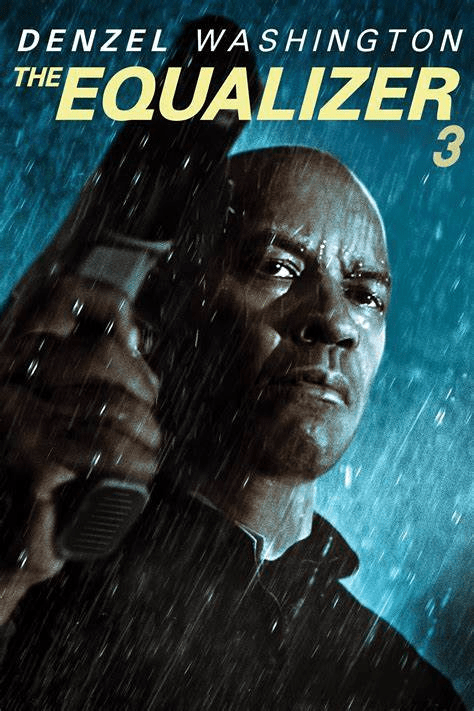


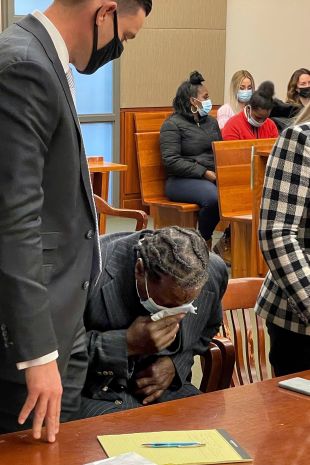





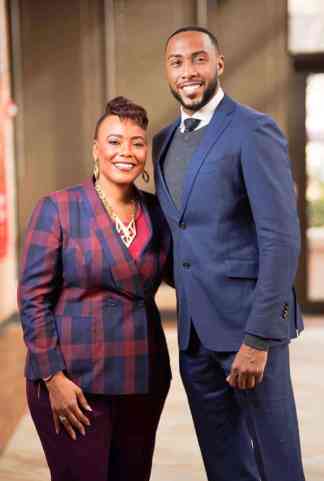


![White Female Burbank Cop Stops a Black Man Walking Down the Street, Because of His Visible Tattoos [VIDEO]](https://i0.wp.com/ourblackunion.com/wp-content/uploads/2023/01/AA16WGQc.jpg?resize=450%2C337&ssl=1)